Adhyaya 68
अर्जुनस्य प्रतिघातः — श्रुताय्वच्युतायुवधः तथा गजसैन्यविदारणम् (Arjuna’s Counterstroke: Slaying of Śrutāyu and Acyutāyu; Breaking the Elephant Corps)
Upa-parva: Arjuna’s Counter-offensive against Śrutāyu, Acyutāyu, and the Elephant Corps (Droṇa-parva battle-episode)
Saṃjaya reports that, following earlier losses, multiple Kaurava-aligned units rush Arjuna and shower him with arrows. Arjuna answers with lethal precision, cutting down attackers and forcing a temporary recoil, after which the forces re-form to encircle him. Śrutāyu and Acyutāyu—portrayed as strong, competitive, high-born archers—launch a concentrated barrage and strike Arjuna with heavy weapons (tomara and śūla), producing a moment of stupor; Kṛṣṇa stabilizes Arjuna through reassurance. Arjuna then unveils a Śākra-associated astric discharge, neutralizes the opponents’ missiles, and kills both Śrutāyu and Acyutāyu; their immediate followers and later their sons are also rapidly dispatched. The narrative expands into mass-combat imagery: elephant units and allied contingents attempt to contain Arjuna, but repeated head-and-arm severing strikes, routs, and battlefield terror are described. A further duel occurs with Ambaṣṭha, who attacks Kṛṣṇa with a mace; Arjuna shatters the mace, severs Ambaṣṭha’s arms, and kills him. The chapter closes with Arjuna momentarily obscured amid dense chariot and elephant formations, emphasizing the scale and volatility of the engagement.
Chapter Arc: संजय के युद्ध-वृत्तांत के बीच नारद का स्वर उठता है—दुष्यन्त-पुत्र भरत की कथा, मानो मृत्यु के सामने मनुष्य-गौरव की परीक्षा का दर्पण। → बालक भरत हिम-श्वेत सिंहों को नख-दंष्ट से परास्त कर बाँधता, गेंड़ों-हिंसक पशुओं को वश में कर छोड़ देता; ब्राह्मण उसे ‘सर्वदमन’ कहते हैं, पर माता शकुन्तला उसे रोकती है—बल का धर्म क्या है? → भरत के महायज्ञों का उत्कर्ष—अग्निष्टोम, अतिरात्र, विश्वजित, वाजपेय-सहस्र; इन्द्रादि देव और द्विज मिलकर यज्ञ में स्वर्ण-निर्मित महान् दान-वैभव का साक्ष्य देते हैं—फिर भी निष्कर्ष कठोर है: इतने पुण्यवान भी मृत्यु से नहीं बचे। → नारद संजय को उपदेश देता है—जब चारों कल्याणकारी गुणों से युक्त, तुमसे श्रेष्ठ और तुम्हारे पुत्रों से भी अधिक पुण्यात्मा भी काल से नहीं बचे, तो शोक में डूबकर क्या लाभ? पुत्र-शोक से ऊपर उठो। → युद्धभूमि की ओर लौटने का संकेत—उपाख्यान का नैतिक बोध अब धृतराष्ट्र-शोक और कुरुक्षेत्र के रक्त-यथार्थ पर लागू होने को है।
Shlokas
Verse 1
अपन का छा | अफड-एक्रा् अष्टषष्टितमो< ध्याय: राजा भरतका चरित्र नारद उवाच दौष्यन्तिं भरतं चापि मृतं सृज्जय शुश्रुम । कर्माण्यसुकराण्यन्यै: कृतवान् यः शिशुर्वने,नारदजी कहते हैं--सूंजय! दुष्यन्तपुत्र राजा भरतकी भी मृत्यु हुई सुनी गयी है, जिन्होंने शैशवावस्थामें ही वनमें ऐसे-ऐसे कर्म किये थे, जो दूसरोंके लिये सर्वथा दुष्कर है
Narada said: “O Sṛñjaya, we have also heard that Bharata, the son of Duṣyanta, has died. Even as a mere child in the forest, he accomplished deeds so difficult that they are virtually impossible for others.”
Verse 2
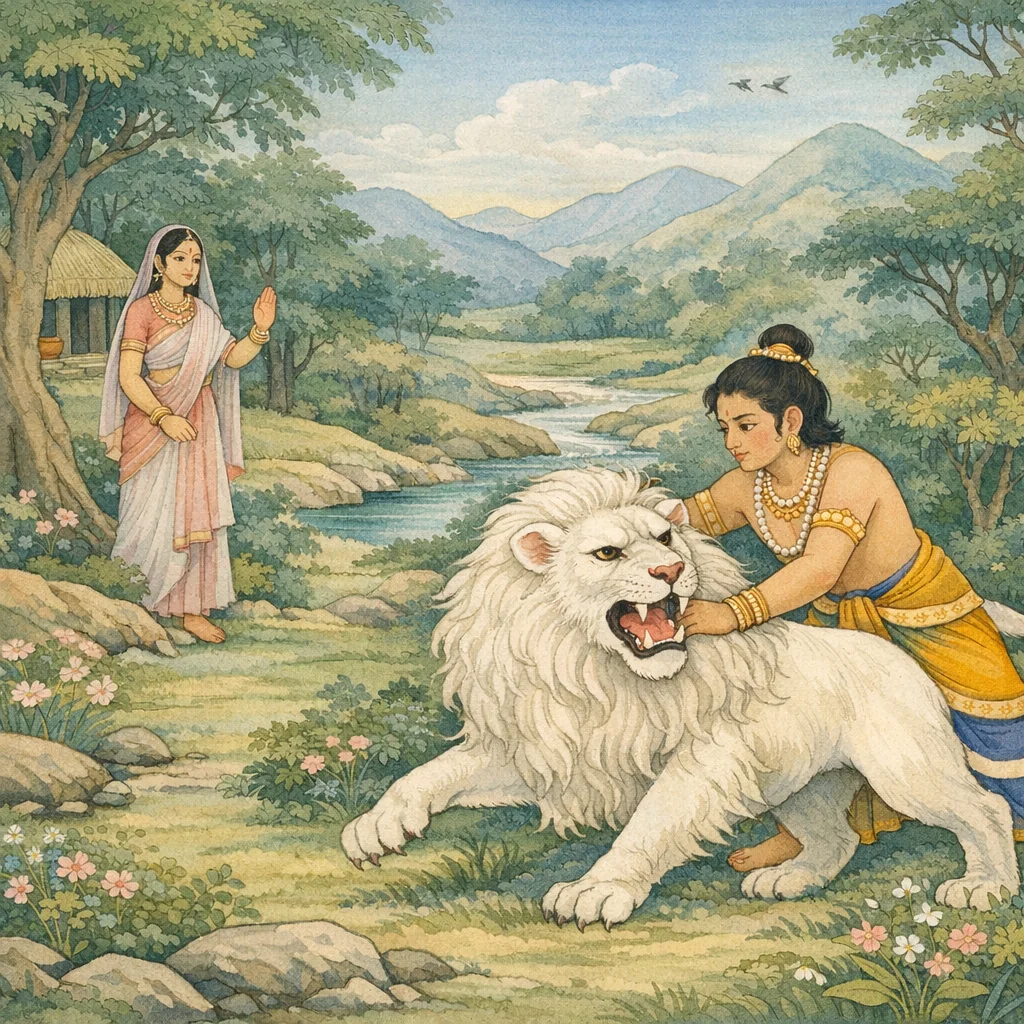
हिमावदातान् यः सिंहान् नखदंष्टायुधान् बली । निर्वीर्यास्तरसा कृत्वा विचकर्ष बबन्ध च
Nārada said: The mighty one subdued those snow-white lions—armed with claws and fangs—stripping them of their strength by sheer force; he dragged them away and bound them fast.
Verse 3
बलवान् भरत बाल्यावस्थामें ही नखों और दाढ़ोंसे प्रहार करनेवाले बरफके समान सफेद रंगके सिंहोंको अपने बाहुबलके वेगसे पराजित एवं निर्बल करके उन्हें खींच लाते क्रूरांश्नोग्रतरान् व्याप्रान् दमित्वा चाकरोद् वशे । मन:शिला इव शिला: संयुक्ता जतुराशिभि:,वे अत्यन्त भयंकर और क्रूर स्वभाववाले व्याप्रोंका दमन करके उन्हें अपने वशमें कर लेते थे। मैनसिलके समान पीली और लाक्षाराशिसे संयुक्त लाल रंगकी बड़ी-बड़ी शिलाओंको वे सुगमतापूर्वक हाथसे उठा लेते थे
Nārada said: Even in his boyhood, that mighty Bharata would, with the force of his arms, overpower and weaken lions—white as snow—striking them with nails and teeth and dragging them along. He would also subdue exceedingly fierce and cruel tigers and bring them under his control. And boulders—yellow like manaḥśilā and red with masses of lac—he could easily lift with his hand.
Verse 4
व्यालादींश्वातिबलवान् सुप्रतीकान् गजानपि । दंष्टासु गृह्ा विमुखान् शुष्कास्यानकरोद् वशे,अत्यन्त बलवान् भरत सर्प आदि जन्तुओंको और सुप्रतीक जातिके गजराजोंके भी दाँत पकड़ लेते और उनके मुख सुखाकर उन्हें विमुख करके अपने अधीन कर लेते थे
Nārada said: “He was exceedingly powerful. Even serpents and other fierce creatures, and even elephants of the Supratīka breed, he would seize by their tusks; drying their mouths and forcing them to turn away, he brought them completely under his control.”
Verse 5
महिषानप्यतिबलो बलिनो विचकर्ष ह । सिंहानां च सुदृप्तानां शतान्याकर्षयद् बलात्,भरतका बल असीम था। वे बलवान भैंसों और सौ-सौ गर्वीले सिंहोंको भी बलपूर्वक घसीट लाते थे
Nārada said: His might was immeasurable. By sheer force he would drag along even powerful buffaloes, and he could haul in hundreds of proud, raging lions as well. The words proclaim an extraordinary, almost superhuman strength, casting him as a fearsome figure in the war-epic’s grim arena.
Verse 6
बलिन: सूमरान् खड्गान् नानासत्त्वानि चाप्युत । कृच्छुप्राणं वने बद्ध्वा दमयित्वाप्पवासृजत्,बलवान सामरों, गेंड़ों तथा अन्य नाना प्रकारके हिंसक जन्तुओंको वे वनमें बाँध लेते और उनका दमन करते-करते उन्हें अधमरा करके छोड़ते थे
Nārada said: “Those powerful men would capture fierce creatures—śūmara-beasts, rhinoceroses, and many other kinds of wild animals. Binding them in the forest, they would subdue them again and again, and then, leaving them barely alive, would let them go.”
Verse 7
त॑ सर्वदमनेत्याहुरद्धिजास्तेनास्य कर्मणा । त॑ प्रत्यषेधज्जननी मा सत्त्वानि विजीजहि,उनके इस कर्मसे ब्राह्मणोंने उनका नाम सर्वदमन रख दिया। माता शकुन्तलाने भरतको मना किया कि तू जंगली जीवोंको सताया न कर
Nārada said: “Because of that deed, the Brahmins indeed called him ‘Sarvadamana’—the tamer of all. But his mother restrained him, saying, ‘Do not torment the creatures (of the forest).’”
Verse 8
सो<श्वमेधशतेनेष्टवा यमुनामनु वीर्यवान् | त्रिशताश्वान् सरस्वत्यां गज़्ामनु चतुःशतान्,पराक्रमी महाराज भरत जब बड़े हुए, तब उन्होंने यमुनाके तटपर सौ, सरस्वतीके तटपर तीन सौ और गंगाजीके किनारे चार सौ अश्वमेध यज्ञोंका अनुष्ठान करके पुनः उत्तम दक्षिणाओंसे सम्पन्न एक हजार अश्वमेध और सौ राजसूय महायज्ञोंद्वारा भगवानका यजन किया
Nārada said: When the mighty and valorous King Bharata came of age, he performed a hundred Aśvamedha sacrifices on the banks of the Yamunā, three hundred on the Sarasvatī, and four hundred on the Gaṅgā. Thereafter, enriched with excellent sacrificial gifts (dakṣiṇā), he worshipped the Lord through a further thousand Aśvamedhas and a hundred great Rājasūya rites.
Verse 9
सो<श्वमेधसहस्रेण राजसूयशतेन च । पुनरीजे महायज्ञै: समाप्तवरदक्षिणै:,पराक्रमी महाराज भरत जब बड़े हुए, तब उन्होंने यमुनाके तटपर सौ, सरस्वतीके तटपर तीन सौ और गंगाजीके किनारे चार सौ अश्वमेध यज्ञोंका अनुष्ठान करके पुनः उत्तम दक्षिणाओंसे सम्पन्न एक हजार अश्वमेध और सौ राजसूय महायज्ञोंद्वारा भगवानका यजन किया
Narada said: “That mighty king again worshipped the Lord through great sacrifices—complete in every respect and endowed with excellent sacrificial gifts—performing a thousand Aśvamedhas and a hundred Rājasūyas.”
Verse 10
अग्निष्टोमातिरात्राभ्यामिष्टवा विश्वजिता अपि | वाजपेयसहस्राणां सहसैश्न सुसंवृतैः
Nārada said: “Even after performing the Agniṣṭoma and Atirātra sacrifices, and even after offering the Viśvajit rite as well—indeed, even after completing thousands of Vājapeya sacrifices, each carried out with full and proper ritual completeness—one should understand that mere abundance of sacrifice is not, by itself, the final measure of righteousness (dharma).”
Verse 11
इष्ट्वा शाकुन्तलो राजा तर्पयित्वा द्विजान् धनै: । सहस्रं यत्र पद्मानां कण्वाय भरतो ददौ
Nārada said: Having performed the prescribed rites, King Bharata—the son of Śakuntalā—satisfied the twice-born (brāhmaṇas) with gifts of wealth. In that very context, he bestowed upon Kaṇva a thousand lotus-flowers, marking his reverence for the sage and his commitment to righteous generosity.
Verse 12
जाम्बूनदस्य शुद्धस्य कनकस्य महायशा: । इसके बाद भरतने अग्निष्टोम और अतिरात्र याग करके विश्वजित् नामक यज्ञ किया। तत्पश्चात् सर्वथा सुरक्षित दस लाख वाजपेय यज्ञोंद्वारा भगवान् यज्ञपुरुषकी आराधना करके महायशस्वी शकुन्तलाकुमार राजा भरतने धनद्वारा ब्राह्मणोंको तृप्त करते हुए आचार्य कण्वको विशुद्ध जम्बूनद सुवर्णके बने हुए एक हजार कमल भेंट किये ।। १०-११ कल | यस्य यूप: शतव्याम: परिणाहेन काउ्चन:
Nārada said: The highly renowned king offered gifts made of pure Jāmbūnada gold. In the surrounding narrative, Bharata—son of Śakuntalā—after performing great Soma-sacrifices (Agnīṣṭoma and Atirātra) and the Viśvajit rite, worshipped the Lord as Yajñapuruṣa through vast and well-protected Vājapeya sacrifices, and satisfied the brāhmaṇas with wealth, presenting to his teacher Kaṇva a thousand lotus-flowers fashioned from flawless Jāmbūnada gold. The ethical emphasis is on royal dharma expressed through yajña, generosity, and reverence to one’s guru.
Verse 13
अलंकृतान् राजमानान् सर्वरत्नैर्मनोहरै:
Nārada said: “(They were) adorned and resplendent, made captivating by every kind of delightful jewel.”
Verse 14
हैरण्यानश्चान् द्विरदान् रथानुष्टानजाविकम् | दासीदासं धन धान्यं गा: सवत्सा: पयस्विनी:
Nārada said: “(He bestowed) gold and golden treasures, elephants, chariots, camels, and flocks of goats and sheep; female and male servants; wealth and stores of grain; and cows—each with her calf, rich in milk.”
Verse 15
ग्रामान् गृहांश्व क्षेत्राणि विविधांश्व॒ परिच्छदान् । कोटीशतायुतांश्वैव ब्राह्मणेभ्यो हमन्यत
Nārada said: “He set apart for the Brāhmaṇas villages, houses, and fields of many kinds, together with diverse household goods and provisions—gifts indeed amounting to hundreds of crores and tens of thousands.”
Verse 16
चक्रवर्ती हृदीनात्मा जितारिहाजित: परै: | शत्रुविजयी, दूसरोंसे पराजित न होनेवाले अदीनचित्त चक्रवर्ती सम्राट् भरतने ब्राह्मणोंको सम्पूर्ण मनोहर रत्नोंसे विभूषित, कान्तिमान् एवं सुवर्णशोभित घोड़े, हाथी, रथ, ऊँट, बकरी, भेड़, दास, दासी, धन-धान्य, दूध देनेवाली सवत्सा गायें, गाँव, घर, खेत तथा वस्त्राभूषण आदि नाना प्रकारकी सामग्री एवं दस लाख कोटि स्वर्णमुद्राएँ दी थीं ।। १३-- १५३ || स चेन्ममार सृज्जय चतुर्भद्रतरस्त्वया
Nārada said: “Bharata, the universal monarch—steadfast in heart, master of himself, conqueror of his foes and unconquered by others, never dejected—made vast gifts to the Brāhmaṇas. He bestowed radiant horses, elephants, chariots, camels, goats and sheep; male and female servants; wealth and grain; milk-giving cows with their calves; villages, houses, fields; garments and ornaments of many kinds; and an immense treasury of gold coins.”
Verse 17
पुत्रात् पुण्यतरस्तुभ्यं मा पुत्रमनुतप्यथा: । अयज्वानमदाक्षिण्यमश्रि श्वैत्येत्युदाहरत्
Nārada said: “For you, something even more meritorious than a son exists; therefore do not grieve over the son. One who does not perform sacrifices and one who gives no dakṣiṇā (sacrificial fees)—such a person is cited as ‘without offerings and without gifts,’ and is held up as an example (of spiritual deficiency).”
Verse 67
इस प्रकार श्रीमह्ाभारत द्रोणपर्वके अन्तर्गत अभिमनन््युवधपर्वमें षोडशराजकीयो- पाख्यानविषयक सरसठवाँ अध्याय पूरा हुआ
Thus ends the sixty-eighth chapter of the Śrī Mahābhārata in the Droṇa Parvan, within the section on the slaying of Abhimanyu, dealing with the episode concerning the sixteen kings.
Verse 68
वैत्य सुंजय! चारों कल्याणकारी गुणोंमें वे तुमसे बढ़-चढ़कर थे और तुम्हारे पुत्रसे भी अधिक पुण्यात्मा थे। जब वे भी मृत्युसे बच न सके, तब दूसरे कैसे बच सकते हैं? अतः तुम यज्ञ और दान-दक्षिणासे रहित अपने पुत्रके लिये शोक न करो। ऐसा नारदजीने कहा ।। इति श्रीमहा भारते द्रोणपर्वणि अभिमन्युवधपर्वणि षोडशराजकीये अष्टषष्टितमो<5 ध्याय:,इस प्रकार श्रीमह्ाभारत द्रोणपर्वके अन्तर्गत अभिमनन््युवधपर्वमें षोडशराजकीयोपाख्यानविषयक अड़सठवाँ अध्याय पूरा हुआ
Nārada said: “O Sañjaya, those men surpassed you in the four auspicious virtues and were even more righteous than your son. If even they could not escape death, how could others? Therefore, do not grieve for your son—one who was devoid of sacrifice and of gifts with due dakṣiṇā.” Thus spoke Nārada.
Verse 123
समागम्य द्विजै: सार्ध सेन्द्रैदेवै: समुच्छित: । इन्द्र आदि देवताओंने वहाँ ब्राह्मणोंक साथ मिलकर राजा भरतके यज्ञमें सोनेके बने हुए सौ व्याम (चार सौ हाथ) लंबे सुवर्णमय यूपका आरोपण किया
Nārada said: Having assembled there together with the twice-born Brahmins, the gods—led by Indra—raised and set up at King Bharata’s sacrifice a golden sacrificial post (yūpa), a hundred vyāmas in length (about four hundred cubits). The episode proclaims the sanctity of a yajña rightly performed and the honor of righteous kingship: when ritual stands aligned with dharma, divine powers themselves uphold the order of sacrifice.
Frequently Asked Questions
The chapter frames a practical dilemma of kṣātra-dharma: how a principal defender responds when massed forces and commanders attempt annihilation—balancing protection of allies and chariot integrity with the necessity of decisive, escalating countermeasures.
Operational clarity after shock is portrayed as essential: counsel (Kṛṣṇa’s reassurance), rapid reassessment, and targeted action against command nodes can restore initiative even when a force is temporarily overwhelmed.
No explicit phalaśruti is stated in the provided passage; the chapter’s meta-significance is conveyed indirectly through exemplified consequences of leadership, morale, and the cascading effects of commander losses within coalition warfare.