Adhyaya 63
Droṇa’s Cakra-Śakaṭa Vyūha and the Protection of Jayadratha (द्रोणकृतः चक्रशकटव्यूहः)
Upa-parva: Vyūha-nirmāṇa (Cakra-Śakaṭa) Episode
Sañjaya reports the dawn after night’s passing: Droṇa, foremost among weapon-bearers, advances to array all Kaurava divisions. The battlefield atmosphere is marked by martial acclamation—warriors string bows, draw blades, practice weapon-paths, and call out for Arjuna, Govinda, and Bhīma, signaling a deliberate psychological posture. Droṇa accelerates preparations by sounding the conch and personally directing placements. He addresses Jayadratha with assurance, naming supporting leaders (e.g., Saumadatti, Karṇa, Aśvatthāmā, Śalya, Vṛṣasena, Kṛpa) and enumerating substantial troop complements across cavalry, chariots, elephants, and infantry, instructing Jayadratha to hold at a measured distance. The army is then formed into an extended cakra-śakaṭa vyūha, with a difficult-to-breach padma-like rear, a concealed sūcī element, and designated guardians. Droṇa occupies the front of the śakaṭa; Jayadratha is placed behind under heavy protection. The formation’s scale evokes awe among observers, likened to a churning ocean capable of ‘engulfing’ the earth in metaphorical appraisal.
Chapter Arc: रणभूमि की धूल और शोक के बीच कथावाचक का स्वर युद्ध से हटकर राजाओं के भाग्य पर टिकता है—नारद संजय से कहते हैं कि महान ययाति भी मृत्यु को प्राप्त हुए; फिर किसका वैभव स्थायी है? → ययाति के असंख्य यज्ञों और दान-धर्म का विस्तार आता है—राजसूय, अश्वमेध, पुण्डरीक, वाजपेय, अतिरात्र, चातुर्मास्य, अग्निष्टोम—और प्रकृति तक (सरस्वती, समुद्र, पर्वत) उस पुण्यराज के लिए घृत-पय दुहने लगती है; पर भीतर की अशान्ति बनी रहती है। → भोगों से तृप्ति न मिलने पर ययाति गाथा गाते हैं—पृथ्वी का समस्त धान-जौ, सुवर्ण, पशु, स्त्रियाँ भी एक मनुष्य की तृष्णा को ‘पर्याप्त’ नहीं कर सकतीं; इसलिए शम (वैराग्य) की ओर जाना चाहिए। → ययाति कामों का परित्याग कर धैर्य धारण करते हैं, पूरु को राज्य में प्रतिष्ठित करते हैं और सदार (पत्नी सहित) वन की ओर प्रस्थान करते हैं—राजधर्म से निवृत्ति और आत्मधर्म की ओर गमन। → ययाति के उदाहरण से संजय को संकेत मिलता है कि युद्ध के बीच भी अंतिम सत्य वैराग्य है—अब यह उपदेश धृतराष्ट्र/शोकाकुल जन के निर्णयों को कैसे मोड़ेगा?
Shlokas
Verse 2
पुण्डरीकसहस्रेण वाजपेयशतैस्तथा । अतिरात्रसहस्रेण चातुर्मास्यैश्व कामत: । अग्निष्टोमैश्व विविधै: सत्रैश्व॒ प्राज्यदक्षिणै:
Nārada said: “By a thousand Puṇḍarīka sacrifices, by hundreds of Vājapeya rites, by a thousand Atirātra offerings, and by Cāturmāsya ceremonies performed as one wishes; and likewise by many kinds of Agniṣṭoma sacrifices and by sacrificial sessions (satra) rich in priestly gifts—(one may accumulate immense ritual merit).”
Verse 3
नारदजी कहते हैं--सूंजय! नहुषनन्दन राजा ययातिकी भी मृत्यु हुई थी, यह मैंने सुना है। राजाने सौ राजसूय, सौ अश्वमेध, एक हजार पुण्डरीक याग, सौ वाजपेय-यज्ञ, एक सहस्र अतिरात्र याग तथा अपनी इच्छाके अनुसार चातुर्मास्य और अग्निष्टोम आदि नाना प्रकारके प्रचुर दक्षिणावाले यज्ञोंका अनुष्ठान किया ।। अब्राह्माणानां यद् वित्त पृथिव्यामस्ति किंचन । तत् सर्व परिसंख्याय ततो ब्राह्मणसात्करोत्,इस पृथ्वीपर ब्राह्मणद्रोहियोंक पास जो कुछ धन था, वह सब उनसे छीनकर उन्होंने ब्राह्मणोंक अधीन कर दिया
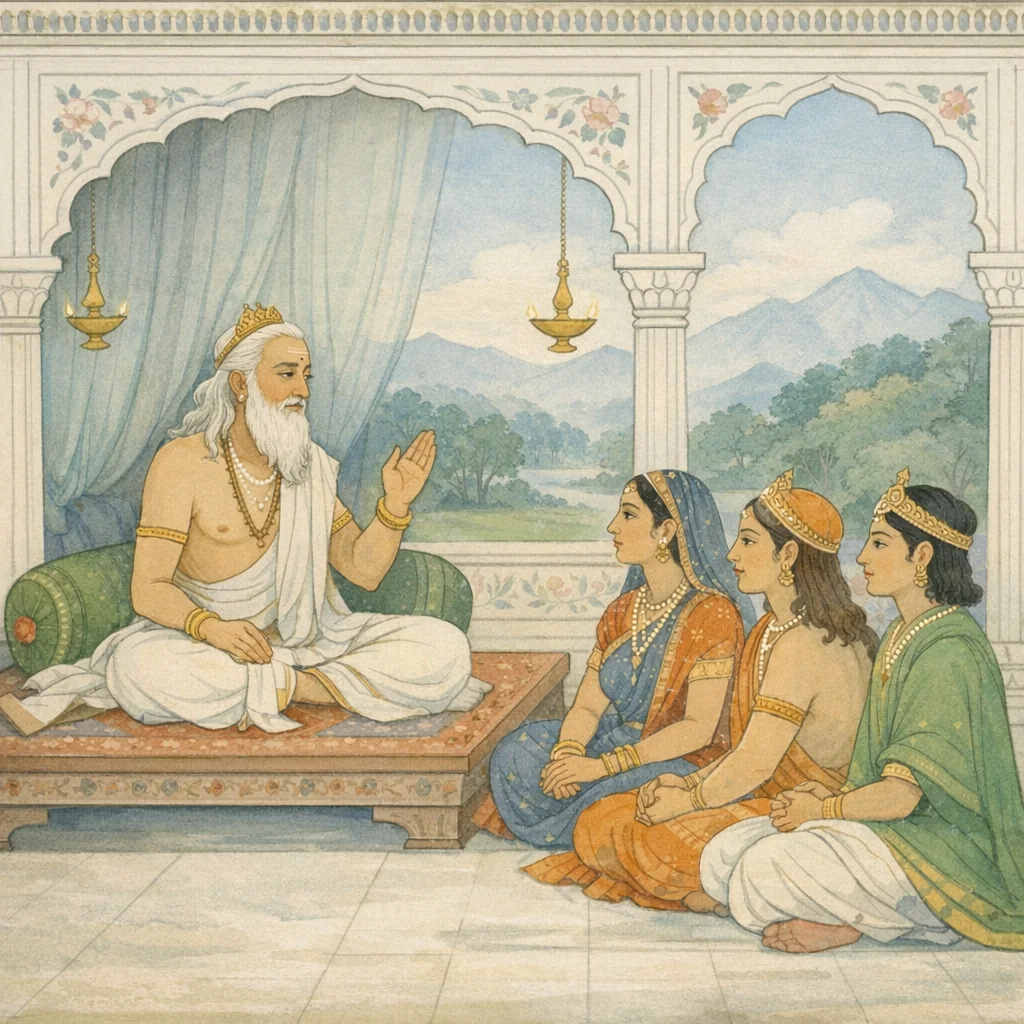
Nārada said: “Sañjaya, I have heard that even King Yayāti, the son of Nahuṣa, met with death. That king performed a hundred Rājasūya sacrifices, a hundred Aśvamedhas, a thousand Puṇḍarīka rites, a hundred Vājapeyas, and a thousand Atirātra offerings; and, as he wished, he also undertook many other sacrifices such as the Cāturmāsya and Agniṣṭoma, each accompanied by abundant gifts. Then, after reckoning all the wealth that existed on earth in the hands of those hostile to brāhmaṇas, he seized it and placed it under the control of the brāhmaṇas.”
Verse 4
सरस्वती पुण्यतमा नदीनां तथा समुद्रा: सरित: साद्रयश्न । ईजानाय पुण्यतमाय राज्ञे घृतं पयो दुदुहुनाहुषाय,नदियोंमें परम पवित्र सरस्वती नदी, समुद्रों, पर्वतों तथा अन्य सरिताओं ने यज्ञमें लगे हुए परम पुण्यात्मा राजा ययातिको घी और दूध प्रदान किये
Narada said: “Among rivers, the Sarasvatī is most holy. Likewise the oceans, the streams, and the mountains—moved by reverence—yielded ghee and milk for the sacrifice of the supremely meritorious king Nāhuṣa.”
Verse 5
व्यूढे देवासुरे युद्धे कृत्वा देवसहायताम् । चतुर्धा व्यभजत् सर्वा चतुर्भ्य: पृथिवीमिमाम्,देवासुरसंग्राम छिड़ जानेपर उन्होंने देवताओंकी सहायता करके नाना प्रकारके यज्ञोंद्वारा परमात्माका यजन किया और इस सारी पृथ्वीको चार भागोंमें विभक्त करके उसे ऋत्विज, अध्वर्यु, होता तथा उदगाता--इन चार प्रकारके ब्राह्मणोंको बाँट दिया। फिर शुक्रकन्या देवयानी और दानवराजकी पुत्री शर्मिष्ठाके गर्भसे धर्मतः उत्तम संतान उत्पन्न करके वे देवोपम नरेश दूसरे इन्द्रकी भाँति समस्त देवकाननोंमें अपनी इच्छाके अनुसार विहार करते रहे
Nārada said: “When the battle between the gods and the asuras had been arrayed, he rendered aid to the gods. Thereafter he divided this entire earth into four portions and distributed it among the four priestly functions—ṛtvij, adhvaryu, hotṛ, and udgātṛ—thereby establishing a dharmic order in which sacrifice and sacred duty were properly supported.”
Verse 6
यज्ञैर्ननाविधैरिष्टवा प्रजामुत्पाद्य चोत्तमाम् । देवयान्यां चौशनस्यां शर्मिष्ठायां च धर्मत:,देवासुरसंग्राम छिड़ जानेपर उन्होंने देवताओंकी सहायता करके नाना प्रकारके यज्ञोंद्वारा परमात्माका यजन किया और इस सारी पृथ्वीको चार भागोंमें विभक्त करके उसे ऋत्विज, अध्वर्यु, होता तथा उदगाता--इन चार प्रकारके ब्राह्मणोंको बाँट दिया। फिर शुक्रकन्या देवयानी और दानवराजकी पुत्री शर्मिष्ठाके गर्भसे धर्मतः उत्तम संतान उत्पन्न करके वे देवोपम नरेश दूसरे इन्द्रकी भाँति समस्त देवकाननोंमें अपनी इच्छाके अनुसार विहार करते रहे
Nārada said: “Having performed worship through many kinds of sacrifices, and having lawfully begotten excellent offspring, he fathered children in Devayānī—the daughter of Śukra—and also in Śarmiṣṭhā, in accordance with dharma. By these acts of ritual devotion and righteous conduct, he is portrayed as a king who sustains order and prosperity through both sacred rites and moral restraint.”
Verse 7
देवारण्येषु सर्वेषु विजहारामरोपम: । आत्मन: कामचारेण द्वितीय इव वासव:,देवासुरसंग्राम छिड़ जानेपर उन्होंने देवताओंकी सहायता करके नाना प्रकारके यज्ञोंद्वारा परमात्माका यजन किया और इस सारी पृथ्वीको चार भागोंमें विभक्त करके उसे ऋत्विज, अध्वर्यु, होता तथा उदगाता--इन चार प्रकारके ब्राह्मणोंको बाँट दिया। फिर शुक्रकन्या देवयानी और दानवराजकी पुत्री शर्मिष्ठाके गर्भसे धर्मतः उत्तम संतान उत्पन्न करके वे देवोपम नरेश दूसरे इन्द्रकी भाँति समस्त देवकाननोंमें अपनी इच्छाके अनुसार विहार करते रहे
Nārada said: Resembling a god, he roamed and sported in all the divine forests, moving freely according to his own desire—like a second Indra. In the wider narrative, this line highlights the king’s exalted, almost celestial status gained through righteous conduct and meritorious acts, portraying prosperity and freedom as the fruit of dharma rather than mere power.
Verse 8
यदा नाभ्यगमच्छान्तिं कामानां सर्ववेदवित् । ततो गाथामिमां गीत्वा सदार: प्राविशद् वनम्,जब भोगोंके उपभोगसे उन्हें शान्ति नहीं मिली, तब सम्पूर्ण वेदोंके ज्ञाता राजा ययाति निम्नांकित गाथाका गान करके अपनी पत्नियोंके साथ वनमें चले गये
When he could not attain peace through the gratification of desires, King Yayāti—knower of all the Vedas—then sang this very gāthā and, together with his wives, entered the forest. The passage underscores that indulgence does not culminate in inner tranquility, and that true resolution is sought through renunciation and a turn toward a disciplined life.
Verse 9
यत् पृथिव्यां व्रीहियवं हिरण्यं पशव: स्त्रिय: । नालमेकस्य तत् सर्वमिति मत्वा शमं व्रजेत्,वह गाथा इस प्रकार है--इस पृथ्वीपर जितने भी धान, जौ, सुवर्ण, पशु और स्त्री आदि भोग्य पदार्थ हैं, वे सब एक मनुष्यको भी संतोष करानेके लिये पर्याप्त नहीं हैं; ऐसा समझकर मनको शान्त करना चाहिये
Nārada said: “Whatever there is on this earth—rice and barley, gold, cattle, women and other objects of enjoyment—none of it, even all together, is sufficient to satisfy even a single person. Knowing this, one should turn the mind toward calmness and self-restraint.”
Verse 10
एवं कामान् परित्यज्य ययातिर्धुतिमेत्य च । पूरुं राज्ये प्रतिष्ठाप्प प्रयातो वनमी श्वर:,इस प्रकार ऐश्वर्यशाली राजा ययातिने धैर्यका आश्रय ले कामनाओंका परित्याग करके अपने पुत्र पूरुको राज्यसिंहासनपर बिठाकर वनको प्रस्थान किया
Thus King Yayāti, having steadied himself with resolve, renounced his cravings. Installing his son Pūru firmly upon the royal throne, the sovereign departed for the forest—choosing restraint and inner discipline over the pursuit of pleasure and power.
Verse 11
स चेन्ममार सृञ्जय चतुर्भद्रतरस्त्वया । पुत्रात् पुण्यतरस्तुभ्यं मा पुत्रमनुतप्यथा: । अयज्वानमदाक्षिण्यमश्रि श्रैत्येत्युदाहरत्,वैत्य सूंजय! वे धर्म, ज्ञान, वैराग्य और ऐश्वर्य--इन चारों कल्याणकारी गुणोंमें तुमसे बहुत बढ़े-चढ़े थे और तुम्हारे पुत्रसे भी अधिक पुण्यात्मा थे। जब वे भी जीवित न रह सके, तब औरोंकी तो बात ही क्या है? अतः तुम अपने उस पुत्रके लिये शोक न करो, जिसने न तो यज्ञ किया था और न दक्षिणा ही दी थी। ऐसा नारदजीने कहा
Nārada said: “O Sṛñjaya, if even those who were fourfold more auspicious than you—surpassing you in dharma, knowledge, dispassion, and lordly prosperity—and who were even more meritorious than your son, could not remain alive, then what need be said of others? Therefore do not grieve for that son of yours, who performed no sacrifices and gave no sacrificial gifts (dakṣiṇā).” Thus did Nārada speak.
Verse 63
इति श्रीमहाभारते द्रोणपर्वणि अभिमन्युवधपर्वणि षोडशराजकीये त्रिषष्टितमो5 ध्याय:,इस प्रकार श्रीमह्ाभारत द्रोणपर्वके अन्तर्गत अभिमनन््युवधपर्वमें षोडशराजकीयोपाख्यानविषयक तिरसठवाँ अध्याय पूरा हुआ
Thus ends the sixty-third chapter in the Droṇa Parva of the Śrī Mahābhārata, within the section concerning the slaying of Abhimanyu—specifically the episode known as the “Tale of the Sixteen Kings.” This colophon closes the narrative unit, reminding the listener that the epic’s war-accounts are preserved as moral history: each episode is named, kept, and carefully concluded so its ethical meaning is remembered alongside its events.
Frequently Asked Questions
The implicit tension lies in prioritizing a tactical objective—shielding a key ally through layered formations—while the epic’s broader ethic continually questions how far strategic necessity may press against ideals of fair engagement and proportionality.
The chapter functions as a case study in organized command: effective leadership combines morale management, clear role assignment, multi-layered defense, and coherent integration of mixed troop types to create controlled access and resilience under pressure.
No explicit phalaśruti is stated here; the meta-level significance is conveyed through simile and witness-response (awe among siddhas and cāraṇas), framing the vyūha as an exemplary instance of strategic form shaping narrative causality.