Adhyaya 48
Adhyāya 48: Brahmopadeśa on Prāṇāyāma, Sāttvika Vṛtti, and the Sattva–Kṣetrajña Question
Upa-parva: Brahmopadeśa / Sattva–Kṣetrajña-saṃvāda (Philosophical Instruction Unit)
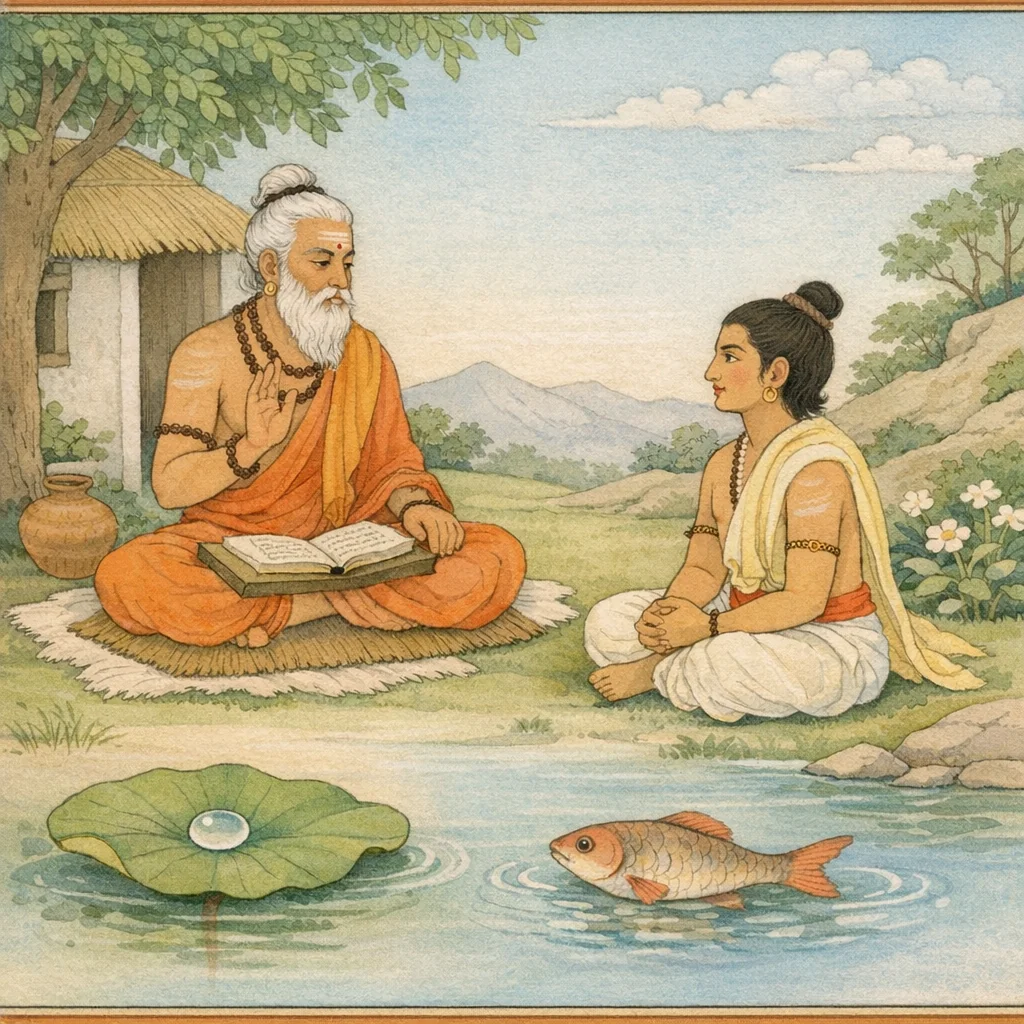
The chapter opens with Brahmā reporting divergent metaphysical identifications—some posit a Brahman-filled cosmic tree or greatness, others an unmanifest puruṣa, others the supreme unailing principle—yet all are traced to the imperishable unmanifest source. A practical soteriology follows: even a breath’s measure of equanimity at the final time, or a moment’s inward restraint, is said to conduce toward the imperishable attainment through self-clarity. Repeated prāṇāyāma is quantified (counts such as ten, twelve, and beyond), and a serene mind is described as capable of obtaining desired outcomes while elevating sattva toward immortality. The discourse then defines sāttvika conduct (forbearance, steadiness, non-harm, equality, truth, straightforwardness, knowledge, relinquishment, renunciation) and introduces a debated point: some infer an identity of sattva and puruṣa, while others deny the identity of kṣetrajña and sattva, arguing for an inherent distinction alongside experienced unity-and-difference (illustrated by analogies of insect–udumbara, fish-in-water, and water-drops on a lotus leaf). A guru-narration frame notes that the sages, still doubtful, question what dharma is most to be practiced; they list contradictory doctrines and practices, confess confusion about śreyas, and request the hidden explanation of the sattva–kṣetrajña relationship. The chapter closes with the authoritative teacher agreeing to explain truthfully and systematically.
Chapter Arc: ब्रह्मोवाच—कुछ मुनि ब्रह्म को ‘वृक्ष’ कहते हैं, कुछ उसे ‘महावन’; उसी एक सत्य के अनेक रूपक सुनकर शिष्य-मन में जिज्ञासा जागती है कि आत्मा-परमात्मा का वास्तविक स्वरूप क्या है। → गुरु आत्म-संयम की सूक्ष्मतम कसौटी रखते हैं—अन्तकाल में श्वास-मात्र जितनी देर भी आत्म-ध्यान हो, या निमेष-भर मन आत्मा में टिके, तो अमृतत्व/अव्यय-प्राप्ति का द्वार खुलता है; पर साथ ही वे बताते हैं कि पुरुष का सत्त्व-आश्रय अनुमान-प्रमाण से जाना जाता है, प्रत्यक्ष से नहीं—यहीं शिष्य का संशय गहराता है। → सात्त्विक वृत्त का निर्णायक विधान—क्षमा, धृति, अहिंसा, समता, सत्य, आर्जव, ज्ञान, त्याग, संन्यास—इन गुणों को आत्म-ज्ञान की अनिवार्य भूमि बताकर गुरु ज्ञान को केवल वाणी नहीं, आचरण की अग्नि में तपाकर स्थापित करते हैं। → गुरु आत्मा और जगत के सम्बन्ध को रूपक से स्पष्ट करते हैं—जैसे मछली जल से भिन्न होते हुए भी जल में ही संयोग से रहती है, या कमल-पत्र पर जल-बिन्दु का सम्बन्ध; वैसे ही जीव देह-प्रकृति में रहते हुए भी उनसे असंग रह सकता है। अन्त में सत्त्व की सर्वोच्चता का प्रतिपादन—सत्त्व से परे यहाँ कोई श्रेष्ठ नहीं—और अन्तःकरण-शुद्धि से इच्छित फल की सिद्धि का संकेत। → मुनि-श्रेष्ठ ब्राह्मण पुनः संशय में पड़कर लोकपिता (ब्रह्मा) से प्रश्न करते हैं—अगले प्रसंग में वही संशय-भेदन आगे बढ़ता है।
Shlokas
Verse 1
ऑपन---र< बक। ] अति्णऑकफा:<ह अष्टचत्वारिशो<्ध्याय: आत्मा और परमात्माके स्वरूपका विवेचन ब्रह्मोवाच केचिद् ब्रह्ममयं वृक्ष केचिद् ब्रह्मवनं महत् । केचित्तु ब्रह्म चाव्यक्ते केचित् परमनामयम् | मन्यन्ते सर्वमप्येतदव्यक्तप्रभवाव्ययम्,ब्रह्माजीने कहा--महर्षिगण! इस अव्यक्त, उत्पत्तिशील, अविनाशी सम्पूर्ण वृक्षको कोई ब्रह्म-स्वरूप मानते हैं और कोई महान ब्रह्मवन मानते हैं। कितने ही इसे अव्यक्त ब्रह्म और कितने ही परम अनामय मानते हैं
Brahmā said: “O great seers, some regard this entire tree as of the very nature of Brahman; others call it a vast ‘forest of Brahman’. Some speak of Brahman as present in the Unmanifest, while others describe it as the supreme, sorrowless Reality. Yet all of them hold that this whole arises from the Unmanifest and is imperishable.”
Verse 2
उच्छवामात्रमपि चेद् यो5न्तकाले समो भवेत् । आत्मानमुपसड्ुम्य सो$मृतत्वाय कल्पते,जो मनुष्य अन्तकालमें आत्माका ध्यान करके, साँस लेनेमें जितनी देर लगती है, उतनी देर भी, समभावमें स्थित होता है, वह अमृतत्व (मोक्ष) प्राप्त करनेका अधिकारी हो जाता है
Vāyu said: Even if, at the final moment of life, a person can remain even-minded for as long as a single breath lasts, and, drawing the mind inward to the Self (Ātman), he becomes fit for immortality—liberation (mokṣa).
Verse 3
निमेषमात्रमपि चेत् संयम्यात्मानमात्मनि । गच्छत्यात्मप्रसादेन विदुषां प्राप्तिमव्ययाम्,जो एक निमेष भी अपने मनको आत्मामें एकाग्र कर लेता है, वह अन्त:करणकी प्रसन्नताको पाकर विद्दानोंको प्राप्त होनेवाली अक्षय गतिको पा जाता है
Vāyudeva said: “Even if a person restrains the self for only the span of a single blink and gathers the mind into the Self (Ātman), by the serenity and grace that arises within, he attains the imperishable state that the wise reach.”
Verse 4
प्राणायामैरथ प्राणान् संयम्य स पुनः पुनः । दशद्वादशभिर्वापि चतुर्विशात् परं तत:,दस अथवा बारह प्राणायामोंके द्वारा पुनः-पुनः प्राणोंका संयम करनेवाला पुरुष भी चौबीस तत्त्वोंसे परे पचीसवें तत्त्व परमात्माको प्राप्त होता है
Vāyu-deva said: By repeatedly restraining the vital breaths through the disciplines of prāṇāyāma—whether by ten or by twelve such breath-controls—a practitioner goes beyond the twenty-four principles and attains the twenty-fifth principle, the Supreme Self (Paramātman).
Verse 5
एवं पूर्व प्रसन्नात्मा लभते यद् यदिच्छति । अव्यक्तात् सनत्त्वमुद्रिक्तममृतत्वाय कल्पते
Thus, when one’s inner self has first become clear and serene, one attains whatever one truly seeks. From the Unmanifest (Avyakta) arises an exalted, enduring state of being, which becomes fit for immortality.
Verse 6
अनुमानाद् विजानीम: पुरुष सत्त्वसंश्रयम् । न शक््यमन्यथा गन्तुं पुरुष द्विजसत्तमा:,द्विजवरो! इस अनुमान-प्रमाणके द्वारा इस बातको अच्छी तरह जानते हैं कि अन्तर्यामी परमात्मा सत्त्वस्वरूप आत्मामें स्थित हैं। इस तत्त्वको समझे बिना परम पुरुषको प्राप्त करना सम्भव नहीं है
Vāyu said: “By inference (anumāna) we come to know that the Supreme Person (Puruṣa) abides, taking refuge in sattva—the pure, luminous principle. O best of the twice-born, there is no other way to reach that Supreme Person; without grasping this truth, attainment is not possible.”
Verse 7
क्षमा धृतिरहिंसा च समता सत्यमार्जवम् | ज्ञानं त्यागो5थ संन्यास: सात्त्विकं वृत्तमिष्यते,क्षमा, धैर्य, अहिंसा, समता, सत्य, सरलता, ज्ञान, त्याग तथा संन्यास--ये साच्चिक बर्ताव बताये गये हैं
Vāyudeva said: “Forbearance, steadfastness, non-violence, even-mindedness, truthfulness, straightforwardness, knowledge, generosity, and renunciation—these are held to be the conduct of sattva.” In this teaching, the god of wind sets forth the inner virtues and disciplined way of life that mark a pure, dharmic character beyond mere ritual and outward show.
Verse 8
एतेनैवानुमानेन मन्यन्ते वै मनीषिण: । सत्त्वं च पुरुषश्चैव तत्र नास्ति विचारणा,मनीषी पुरुष इसी अनुमानसे उस सत्त्वस्वरूप आत्माका और परमात्माका मनन करते हैं। इसमें कोई विचारणीय बात नहीं है
By this very inference, the wise reflect upon the Self as pure being (sattva) and upon the Supreme Person. In this matter, they hold that there is nothing further to dispute or re-argue—one should grasp the truth and live accordingly.
Verse 9
आहुरेके च विद्वांसो ये ज्ञानपरिनिष्ठिता: । क्षेत्रज्ञसत्त्वयोरैक्यमित्येतन्नोपपद्यते,ज्ञानमें भलीभाँति स्थित कितने ही विद्वान् कहते हैं कि क्षेत्रज्ष और सत्त्वकी एकता युक्तिसंगत नहीं है
Vāyu said: “Some learned men, firmly established in true knowledge, declare that the identity of the Knower of the Field (kṣetrajña, the conscious self) and sattva (the material quality of clarity) is not logically tenable.”
Verse 10
पृथग्भूतं ततः सत्त्वमित्येतदविचारितम् | पृथग्भावश्न विज्ञेय: सहजश्नापि तत्त्वतः,उनका कहना है कि उस क्षेत्रज्ञसे सत्त्व पृथक् है, क्योंकि यह सत्त्व अविचारसिद्ध है। ये दोनों एक साथ रहनेवाले होनेपर भी तत्त्वतः अलग-अलग हैं--ऐसा समझना चाहिये
Vāyu said: “They assert that the principle of sattva is distinct from the Knower of the Field (kṣetrajña), and this is taken as self-evident without due inquiry. Yet one should understand that, although these two abide together by nature, in truth they are to be known as separate in essence.”
Verse 11
तथैवैकत्वनानात्वमिष्यते विदुषां नय: । मशकोदुम्बरे चैक्यं पृथक्त्वमपि दृश्यते,इसी प्रकार दूसरे विद्वानोंका निर्णय दोनोंके एकत्व और नानात्वको स्वीकार करता है; क्योंकि मशक और उदुम्बरकी एकता और पृथक्ता देखी जाती है
“In the same way, the considered conclusion of the learned accepts both unity and diversity. For in the case of the gnat and the udumbara (cluster-fig), one can observe both their oneness (as mutually connected) and their separateness (as distinct entities).”
Verse 12
मत्स्यो यथान्य: स्यादप्सु सम्प्रयोगस्तथा तयो: । सम्बन्धस्तोयबिन्दूनां पर्ण कोकनदस्य च,जैसे जलसे मछली भिन्न है तो भी मछली और जल--दोनोंका संयोग देखा जाता है एवं जलकी बूँदोंका कमलके पत्तेसे सम्बन्ध देखा जाता है
Vāyu said: “Just as a fish may be distinct from the water, yet the union of fish and water is plainly seen, so too one observes the connection between drops of water and the leaf of the kokanada-lotus. In the same way, difference in nature does not prevent relationship or association when conditions and purpose join them.”
Verse 13
गुरुऱ्वाच इत्युक्तवन्तस्ते विप्रास्तदा लोकपितामहम् । पुन: संशयमापन्ना: पप्रच्छुर्मुनिसत्तमा:,गुरुने कहा--इस प्रकार कहनेपर उन मुनिनश्रेष्ठ ब्राह्मणोंने पुन: संशयमें पड़कर उस समय लोकपितामह ब्रह्माजीसे पूछा
Vāyu said: “When the Teacher had spoken thus, those brāhmaṇa sages, addressing the Grandfather of the worlds (Brahmā), again fell into doubt. Therefore, at that time, those foremost among ascetics questioned him once more—seeking clarity so that their understanding might rest on firm discernment rather than uncertainty.”
Verse 47
इस प्रकार श्रीमह्याभारत आश्वमेधिकपर्वके अन्तर्गत अनुगीतापर्वमें गुरु-शिष्य- संवादविषयक सैंतालीसवाँ अध्याय पूरा हुआ
Thus ends the forty-seventh chapter, concerned with the dialogue between teacher and disciple, in the Anugītā section contained within the Āśvamedhika Parva of the sacred Mahābhārata. The closing formula signals the completion of a unit of instruction, framing the preceding discourse as a structured transmission of ethical and spiritual teaching.
Verse 48
इति श्रीमहाभारते आश्वमेधिके पर्वणि अनुगीतापर्वणि गुरुशिष्यसंवादे अष्टचत्वारिंशो5ध्याय:
Thus ends the forty-eighth chapter of the Guru–Disciple dialogue in the Anugītā section of the Aśvamedhika Parva of the Śrī Mahābhārata. This closing colophon signals the completion of a unit of instruction, emphasizing the traditional transmission of dharma through disciplined listening, questioning, and teaching.
Verse 53
सत्त्वात् परतरं नान्यत् प्रशंसन्तीह तद्विद: । इस प्रकार जो पहले अपने अन्तःकरणको शुद्ध कर लेता है, वह जो-जो चाहता है उसी-उसी वस्तुको पा जाता है। अव्यक्तसे उत्कृष्ट जो सत्-स्वरूप आत्मा है, वह अमर होनेमें समर्थ है। अतः सत्त्वस्वरूप आत्माके महत्त्वको जाननेवाले विद्वान् इस जगतमें सत्त्वसे बढ़कर और किसी वस्तुकी प्रशंसा नहीं करते
Vāyu said: “Those who truly know do not praise anything in this world as higher than sattva (the pure, lucid principle). When a person first purifies the inner instrument (mind and heart), whatever he seeks, that very thing he attains. The Self, whose nature is pure being (sat) and which transcends the unmanifest, is capable of immortality; therefore, the wise who understand the greatness of the sattvic Self commend nothing above sattva here.”
Frequently Asked Questions
The dilemma is epistemic and practical: with many mutually conflicting dharma-claims and ascetic practices in circulation, the sages cannot determine which discipline truly constitutes śreyas and how metaphysical doctrines should guide conduct.
The chapter links liberation-oriented knowledge to disciplined practice: brief but genuine equanimity and inward restraint, supported by prāṇāyāma and sāttvika virtues, are presented as reliable means toward imperishable attainment, while metaphysical claims are tested via inference and analogy.
No formal phalaśruti is stated; instead, the meta-claim is functional: even minimal moments of self-collection (breath-measure or blink-measure) are described as efficacious for amṛtatva when grounded in serenity and sāttvika transformation.