Adhyaya 3
अश्वमेध-उपदेशः तथा मरुत्त-यज्ञ-धन-प्रसङ्गः (Counsel on Aśvamedha and the Marutta-treasure episode)
Upa-parva: Aśvamedha-vidhāna and counsel on purification (Yudhiṣṭhira–Vyāsa dialogue)
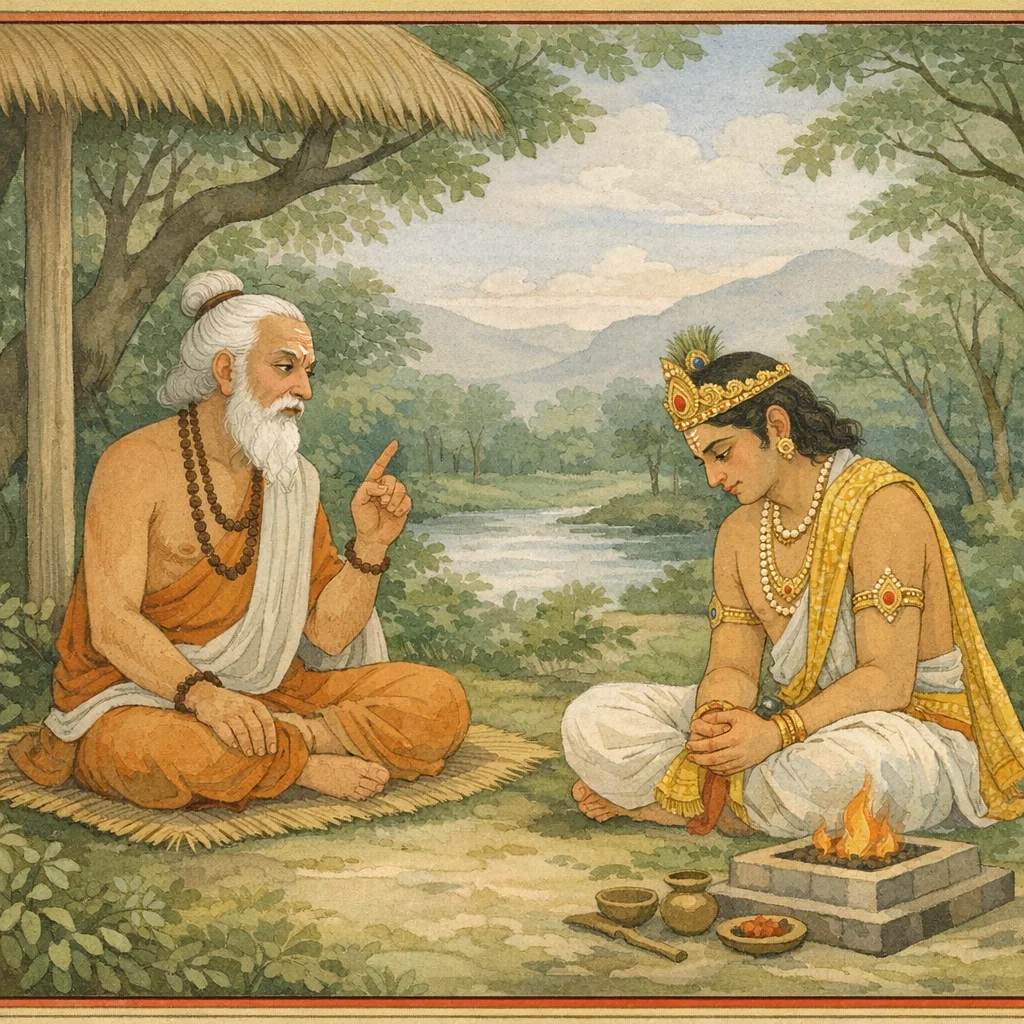
This adhyāya opens with Vyāsa critiquing Yudhiṣṭhira’s self-assessment and reframing agency: human action occurs under appointment/impulsion (īśvara-niyoga), so excessive lamentation is unproductive. Vyāsa then outlines purificatory modalities for wrongdoing—tapas (austerity), kratu/yajña (sacrificial rites), and dāna (charitable giving)—asserting their capacity to ‘carry across’ moral fault and purify doers of harmful acts. He elevates yajña as a paradigmatic means of accruing merit, citing cosmological-historical exempla in which devas gained superiority through sacrificial performance. Vyāsa urges Yudhiṣṭhira to undertake major royal sacrifices (rājasūya, aśvamedha, sarvamedha, naramedha) and specifically an Aśvamedha with proper procedure and dakṣiṇā, comparing him to idealized royal precedents (Rāma Dāśarathi; Bharata Dauḥṣanti). Yudhiṣṭhira agrees on the rite’s purificatory power but presents an ethical-economic dilemma: after extensive kin-slaying and devastation attributed to Duryodhana’s policies, the treasury is depleted; he refuses to solicit wealth from vulnerable dependents or impose taxes on a grieving populace, and he rejects using a substitute for the prescribed dakṣiṇā (noting the classical rule where ‘the earth’ itself may serve as dakṣiṇā, yet treating deviations as problematic). Vaiśaṃpāyana narrates Vyāsa’s reflective pause, after which Vyāsa provides a practical resolution: sufficient wealth lies in the Himalayas, left from King Marutta’s sacrifice by brāhmaṇas; Yudhiṣṭhira is instructed to retrieve it. The chapter closes with Yudhiṣṭhira’s inquiry into Marutta’s identity and era, and Vyāsa’s transition into that historical account.
Chapter Arc: कुरुक्षेत्र-विजय के बाद भी युधिष्ठिर के मन में पाप-बोध और राज्य-कोष की रिक्तता—अश्वमेध का संकल्प है, पर साधन नहीं। → व्यास युधिष्ठिर के आत्म-दोषारोपण को काटते हैं—युद्ध-धर्म के भीतर भी कर्म का भार जटिल है; फिर वे यज्ञों की महिमा बताते हैं कि देव-दानव तक पुण्य हेतु यज्ञ-क्रिया में प्रवृत्त होते हैं और यज्ञ से ही देवताओं का उत्कर्ष हुआ। पर प्रश्न बना रहता है: अश्वमेध के लिए धन कहाँ से आए? → व्यास निर्णायक उपाय बताते हैं—महात्मा मरुत्त के यज्ञ में ब्राह्मणों द्वारा ‘उत्सृष्ट’ (त्यागा/छोड़ा) अपार द्रविण अभी भी उपलब्ध है; उसे लाकर यज्ञ सम्पन्न करो। साथ ही दुर्योधन के धन-लोभ से पृथ्वी-क्षय और कौरव-कोष के नाश का स्मरण कराकर वे संकेत देते हैं कि अब धन का प्रयोजन ‘लोभ’ नहीं, ‘धर्म-यज्ञ’ है। → युधिष्ठिर को आश्वासन मिलता है कि रिक्त कोष भी धर्म-कार्य में बाधा नहीं बनेगा; मरुत्त-यज्ञ का धन पर्याप्त होगा। युधिष्ठिर व्यास से मरुत्त के यज्ञ-धन के संचय और मरुत्त के काल-परिचय का प्रश्न करते हैं। → व्यास कथा-प्रवेश करते हैं—करन्धम (कारन्धम) नरेश के समय का प्रसंग, जहाँ मरुत्त का वैभव और यज्ञ-धन का रहस्य खुलने वाला है।
Shlokas
Verse 1
/ (दाक्षिणात्य अधिक पाठके २ श्लोक मिलाकर कुल २२ श्लोक हैं) ऑपनआक्राता बछ। अकाल तृतीयो<थध्याय: व्यासजीका युधिष्ठटिरको अश्वमेध यज्ञके लिये धनकी प्राप्तिका उपाय हक संवर्त और मरुत्तका प्रसंग करना व्यास उवाच युधिष्ठिर तव प्रज्ञा न सम्यगिति मे मति: । न हि वक्रित्स्वयं मर्त्य: स्ववश: कुरुते क्रियाम्,व्यासजीने कहा--युधिष्ठिर! मुझे तो ऐसा जान पड़ता है कि तुम्हारी बुद्धि ठीक नहीं है। कोई भी मनुष्य स्वाधीन होकर अपने-आप कोई काम नहीं करता है
Vyāsa said: “Yudhiṣṭhira, it seems to me that your understanding is not fully aligned. For no mortal, acting entirely by himself and under his own control, truly performs an action; deeds arise under forces beyond mere personal will.”
Verse 2
इस प्रकार श्रीमह्याभारत आश्वमेधिकपववके अन्तर्गत अश्वमेधपर्वमें दूसरा अध्याय पूरा हुआ,ईश्वरेण च युक्तोडयं साध्वसाधु च मानव: । करोति पुरुष: कर्म तत्र का परिदेवना यह मनुष्य अथवा पुरुषसमुदाय ईश्वरसे प्रेरित होकर ही भले-बुरे काम करता है।- अतः इसके लिये शोक करनेकी क्या आवश्यकता है?
Yudhiṣṭhira said: “A human being, impelled and connected with the Lord, performs actions that are good or bad. If deeds arise under such divine prompting, what room is there for lamentation over them?”
Verse 3
आत्मानं मन्यसे चाथ पापकर्माणमन्ततः: । शृणु तत्र यथापापमपकृष्येत भारत,भरतनन्दन! यदि तुम अन्ततोगत्वा अपने-आपको ही युद्धरूपी पापकर्मका प्रधान हेतु मानते हो तो वह पाप जिस प्रकार नष्ट हो सकता है, वह उपाय बताता हूँ, सुनो इति श्रीमहाभारते आश्वमेधिके पर्वणि अश्वमेधपर्वणि संवर्तमरुत्तीये तृतीयो<5ध्याय:
Vyāsa said: “If, in the end, you regard yourself as the chief cause of the sinful act that is war, then listen, O Bhārata, joy of the Bharatas: I shall tell you the means by which that sin may be removed.”
Verse 4
तपोभि: क्रतुभिश्वैव दानेन च युधिष्िर । तरन्ति नित्यं पुरुषा ये सम पापानि कुर्वते,युधिष्ठिर! जो लोग पाप करते हैं, वे तप, यज्ञ और दानके द्वारा ही सदा अपना उद्धार करते हैं
Vyāsa said: “O Yudhiṣṭhira, those who commit sins can cross beyond them only through austerity, sacrificial rites, and charitable giving; by these means they continually secure their deliverance.”
Verse 5
यज्ञेन तपसा चैव दानेन च नराधिप । पूयन्ते नरशार्दूल नरा दुष्कृतकारिण:,नरेश्वर! पुरुषसिंह! पापाचारी मनुष्य यज्ञ, दान और तपस्यासे ही पवित्र होते हैं
Vyāsa said: “O king, O tiger among men: even those who have committed wrongful deeds become purified through sacrifice, austerity, and charitable giving.”
Verse 6
असुराश्च सुराश्चैव पुण्यहेतोर्मखक्रियाम् । प्रयतन्ते महात्मानस्तस्माद् यज्ञा: परायणम्,महामना देवता और दैत्य पुण्यके लिये यज्ञ करनेका ही प्रयत्न करते हैं, अत: यज्ञ परम आश्रय है
Vyāsa said: “Both the Asuras and the Devas, seeking merit, strive to perform sacrificial rites. Therefore, sacrifice (yajña) is declared to be the highest refuge and ultimate recourse.”
Verse 7
यज्ैरेव महात्मानो बभूवुरधिका: सुरा: । ततो देवा: क्रियावन्तो दानवानभ्यधर्षयन्,यज्ञोंद्वारा ही महामनस्वी देवताओंका महत्त्व अधिक हुआ है और यज्ञोंसे ही क्रियानिष्ठ देवताओंने दानवोंको परास्त किया है
Vyāsa said: “It was through sacrifices (yajñas) that the great-souled gods attained superior eminence. Thereafter, being steadfast in sacred rites and disciplined action, the gods overcame and subdued the Dānavas.”
Verse 8
राजसूयाश्बदमेधौ च सर्वमेधं च भारत । नरमेधं च नृपते त्वमाहर युधिष्ठिर,भरतवंशी नरेश युधिष्ठछिर! तुम राजसूय, अश्वमेध, सर्वमेध और नरमेध यज्ञ करो
Vyāsa said: “O Bhārata, O king Yudhiṣṭhira, undertake the great sacrifices—Rājasūya and Aśvamedha, as well as Sarvamedha and Naramedha.”
Verse 9
यजस्व वाजिमेधेन विधिवद् दक्षिणावता । बहुकामान्नवित्तेन रामो दाशरथिर्यथा,विधिवत् दक्षिणा देकर बहुत-से मनोवांछित पदार्थ, अन्न और धनसे सम्पन्न अश्वमेध यज्ञके द्वारा दशरथनन्दन श्रीरामकी भाँति यजन करो
Vyāsa said: “Perform the Aśvamedha sacrifice in the proper manner, complete with the prescribed gifts (dakṣiṇā) to the officiants. Let it be abundant in desired blessings, food, and wealth—worshipping through this rite just as Rāma, the son of Daśaratha, once did—so that your rule is re-established on a foundation of dharma and public welfare.”
Verse 10
यथा च भरतो राजा दौष्यन्ति: पृथिवीपति: । शाकुन्तलो महावीर्यस्तव पूर्वपितामह:,तथा तुम्हारे पूर्वपितामह महापराक्रमी दुष्यन्तकुमार शकुन्तलानन्दन पृथ्वीपति राजा भरतने जैसे यज्ञ किया था, उसी प्रकार तुम भी करो
Vyāsa said: “Just as King Bharata—son of Duṣyanta, lord of the earth, Śakuntalā’s son, and your mighty forefather—performed the sacrifice, so too should you perform it in the same manner.”
Verse 11
युधिषछ्िर उवाच असंशयं वाजिमेध: पावयेत् पृथिवीमपि । अभिप्रायस्तु मे कश्रित् त॑ त्वं श्रोतुमिहाहसि,युधिछिरने कहा--विप्रवर! इसमें संदेह नहीं कि अश्वमेध यज्ञ सारी पृथ्वीको भी पवित्र कर सकता है, किंतु इसके विषयमें मेरा एक अभिप्राय है, उसे आप यहाँ सुन लें
Yudhiṣṭhira said: “O best of Brahmins, there is no doubt that the Aśvamedha sacrifice can purify even the whole earth. Yet I have a thought about this matter—please hear it here.”
Verse 12
इमं ज्ञातिवर्ध॑ कृत्वा सुमहान्तं द्विजोत्तम । दानमल्पं न शक्नोमि दातुं वित्तं च नास्ति मे,द्विजश्रेष्ठ] अपने जाति-भाइयोंका यह महान् संहार करके अब मुझमें थोड़ा-सा भी दान देनेकी शक्ति नहीं रह गयी है; क्योंकि मेरे पास धन नहीं है
Yudhiṣṭhira said: “O best of Brahmins, having brought about this vast destruction among my own kinsmen, I no longer have the strength even to give a small gift; for I have no wealth left with me.”
Verse 13
न तु बालानिमान् दीनानुत्सहे वसु याचितुम् । तथैवार्द््रणान् कृच्छे वर्तमानान् नृपात्मजान्,यहाँ जो राजकुमार उपस्थित हैं, ये सब-के-सब बालक और दीन हैं, महान् संकटमें पड़े हुए हैं और इनके शरीरका घाव भी अभी सूखने नहीं पाया है; अतः इन सबसे मैं धनकी याचना नहीं कर सकता
Yudhiṣṭhira said: “But I cannot bring myself to ask wealth from these boys who stand here—poor and still tender in years. They are in severe distress, and their wounds have not yet dried. Therefore, I cannot seek money from these princes.”
Verse 14
स्वयं विनाश्य पृथिवीं यज्ञार्थ द्विजसत्तम । करमाहारयिष्यामि कथं शोकपरायण:,द्विजश्रेष्ठ! स्वयं ही सारी पृथ्वीका विनाश कराकर शोकमग्न हुआ मैं इनसे यज्ञके लिये कर किस तरह वसूल करूँगा
Yudhiṣṭhira said: “O best of the twice-born, after I myself have brought devastation upon the earth, how can I—overwhelmed and driven by grief—collect taxes from the people for the sake of a sacrifice?”
Verse 15
दुर्योधनापराधेन वसुधा वसुधाधिपा: । प्रणष्टा योजयित्वास्मानकीर्त्या मुनिसत्तम,मुनिश्रेष्ठ! दुर्योधनके अपराधसे यह पृथ्वी और अधिकांश राजा हमलोगोंके माथे अपयशका टीका लगाकर नष्ट हो गये
Yudhiṣṭhira said: “Because of Duryodhana’s wrongdoing, the earth has been devastated and many kings, lords of the land, have perished—after first fastening upon us the stigma of disgrace, O best of sages.”
Verse 16
दुर्योधनेन पृथिवी क्षयिता वित्तकारणात् । कोशश्चापि विशीर्णोडसौ धार्तराष्ट्रस्य दुर्मते:,दुर्योधनने धनके लोभसे समस्त भूमण्डलका संहार कराया; किन्तु धन मिलना तो दूर रहा, उस दुर्बुद्धिका अपना खजाना भी खाली हो गया
Yudhiṣṭhira said: “For the sake of wealth, Duryodhana brought the earth to ruin; and yet that evil-minded son of Dhṛtarāṣṭra ended with his own treasury shattered and emptied. Thus greed, which destroys others, finally destroys the greedy as well.”
Verse 17
पृथिवी दक्षिणा चात्र विधि: प्रथमकल्पित: । विद्वद्धिः परिदृष्टोड्यं शिष्टो विधिविपर्यय:,अश्वमेध यज्ञमें समूची पृथ्वीकी दक्षिणा देनी चाहिये। यही विद्वानोंने मुख्य कल्प माना है। इसके सिवा जो कुछ किया जाता है, वह विधिके विपरीत है
Yudhiṣṭhira said: “In this rite, the proper sacrificial fee is the earth itself; this is the foremost arrangement laid down by rule. The learned have recognized this as the correct and authoritative procedure—whatever is done otherwise is a reversal of the prescribed ordinance.”
Verse 18
न च प्रतिनिधिं कर्तु चिकीर्षामि तपोधन । अत्र मे भगवन् सम्यक् साचिव्यं कर्तुमहसि,तपोधन! मुख्य वस्तुके अभावमें जो दूसरी कोई वस्तु दी जाती है, वह प्रतिनिधि दक्षिणा कहलाती है; किंतु प्रतिनिधि दक्षिणा देनेकी मेरी इच्छा नहीं होती; अतः भगवन्! इस विषयमें आप मुझे उचित सलाह देनेकी कृपा करें
Yudhiṣṭhira said: “O ascetic rich in austerity, I do not wish to offer a substitute gift in place of what is truly required. Therefore, O venerable one, please give me sound counsel here—guide me rightly in this matter.”
Verse 19
एवमुक्तस्तु पार्थेन कृष्णद्वैपायनस्तदा । मुहूर्तमनुसंचिन्त्य धर्मराजानमब्रवीत्,कुन्तीकुमार युधिष्ठिरके इस प्रकार कहनेपर श्रीकृष्णद्वैपायन व्यासने दो घड़ीतक सोच-विचारकर धर्मराजसे कहा--
Thus addressed by Pārtha, Kṛṣṇa-Dvaipāyana (Vyāsa) paused for a while, reflecting carefully. Then he spoke to Dharmarāja Yudhiṣṭhira—signaling that the reply to come would be measured, responsible, and aligned with dharma rather than impulsive emotion.
Verse 20
कोशश्चापि विशीर्णो<5यं परिपूर्णो भविष्यति । विद्यते द्रविणं पार्थ गिरो हिमवति स्थितम्,'पार्थ! यद्यपि तुम्हारा खजाना इस समय खाली हो गया है तथापि वह बहुत शीघ्र भर जायगा। हिमालय पर्वतपर महात्मा मरुत्तके यज्ञमें ब्राह्मणोंने जो धन छोड़ दिया था, वह वहीं पड़ा हुआ है। कुन्तीकुमारं उसे ले आओ। वह तुम्हारे लिये पर्याप्त होगा”
Yudhiṣṭhira said: “Even though our treasury has been exhausted, it will soon be filled again. O Pārtha, there exists wealth lying stored in the Himālaya mountains. Go and bring that treasure; it will be sufficient for our purpose.”
Verse 21
उत्सृष्टं ब्राह्मणैर्यज्ञे मरुत्तस्य महात्मन: । तदानयस्व कौन्तेय पर्याप्तं॑ तद् भविष्यति,'पार्थ! यद्यपि तुम्हारा खजाना इस समय खाली हो गया है तथापि वह बहुत शीघ्र भर जायगा। हिमालय पर्वतपर महात्मा मरुत्तके यज्ञमें ब्राह्मणोंने जो धन छोड़ दिया था, वह वहीं पड़ा हुआ है। कुन्तीकुमारं उसे ले आओ। वह तुम्हारे लिये पर्याप्त होगा”
Yudhiṣṭhira said: “O son of Kuntī, bring that wealth which the brāhmaṇas left behind at the sacrifice of the great-souled Marutta. It will be sufficient.” In context, Yudhiṣṭhira points to a righteous, non-violent means of replenishing resources for the royal duty ahead—securing what was lawfully abandoned after a sacred rite rather than burdening subjects or resorting to coercion.
Verse 22
युधिछिर उवाच कथं यज्ञे मरुत्तस्य द्रविणं तत् समाचितम् | कम्मिंश्व काले स नूपो बभूव वदतां वर,युधिष्ठिरने पूछा--वक्ताओंमें श्रेष्ठ महर्षे! मरुत्तके यज्ञमें इतने धनका संग्रह किस प्रकार किया गया था तथा वे महाराज मरुत्त किस समय इस पृथ्वीपर प्रकट हुए थे?
Yudhiṣṭhira said: “How was that wealth amassed for King Marutta’s sacrifice? And in what period did that king appear upon the earth? O best of speakers, tell me.”
Verse 23
व्यास उवाच यदि शुश्रूषसे पार्थ शूणु कारन्धमं नृपम् । यस्मिन् काले महीवीर्य: स राजासीन्महाधन:,व्यासजीने कहा--पार्थ! यदि तुम सुनना चाहते हो तो करन्धमके पौत्र मरुत्तका वृत्तान्त सुनो। वे महाधनी और महापराक्रमी राजा किस कालमें इस पृथ्वीपर प्रकट हुए थे, यह बता रहा हूँ
Vyāsa said: “Pārtha, if you wish to hear, then listen to the account of Marutta, the grandson of Karandhama. I will tell you in what age that king—mighty in valor and vast in wealth—appeared upon the earth.”
Frequently Asked Questions
Yudhiṣṭhira seeks purification via Aśvamedha but refuses to finance it through burdensome taxation or extracting wealth from distressed dependents; he also hesitates to alter prescribed dakṣiṇā norms, creating a conflict between ritual obligation and compassionate governance.
Vyāsa reframes paridevanā (lamentation) by emphasizing constrained agency under higher appointment and directs the king toward constructive remediation: tapas, yajña, and dāna function as recognized means for ethical purification and restoration of legitimacy.
Rather than an explicit phalaśruti formula, the chapter embeds a functional phala-claim: yajña/tapas/dāna ‘purify’ and ‘carry across’ wrongdoing; this operates as justificatory meta-commentary for undertaking Aśvamedha within a broader mokṣa- and dharma-oriented framework.