Adhyaya 29
धृतराष्ट्रदर्शनाय पाण्डवानां प्रयाणम् | The Pāṇḍavas Prepare to Visit Dhṛtarāṣṭra
Upa-parva: Dhṛtarāṣṭra-darśana-gamana (Journey to see Dhṛtarāṣṭra in the forest)
Vaiśaṃpāyana describes the Pāṇḍavas as overwhelmed by grief while remembering their mother Kuntī; formerly attentive to state affairs, they become inattentive, unresponsive in conversation, and appear mentally stunned (1–4). Their discourse turns to concrete anxieties: how Kuntī, now austere and physically weakened, endures supporting the aged couple; how Dhṛtarāṣṭra, bereaved and without sons, lives in a forest frequented by wild creatures; and how Gāndhārī, herself bereft, accompanies her blind, elderly husband in solitude (5–7). This shared concern becomes resolve: they develop eagerness to go and see Dhṛtarāṣṭra (8). Sahadeva respectfully voices his long-held desire to undertake the journey and to see Kuntī transformed from palace comfort to ascetic hardship, reflecting on the impermanence of human conditions (9–13). Draupadī endorses the plan, framing it as dharmically beneficial and noting the household’s collective wish to see Kuntī, Gāndhārī, and the father-in-law (14–17). Yudhiṣṭhira then orders logistical preparations: mobilizing a substantial force with chariots and elephants, arranging varied conveyances and numerous palanquins, deploying artisans and treasurers, allowing citizens to accompany under protection, transporting kitchens and provisions by carts, publicly announcing imminent departure, and organizing route accommodations (18–24). The following day, the king departs with his brothers, women, children, and attendants; after managing the crowd and halting at day’s end, he proceeds toward the forest (25–26).
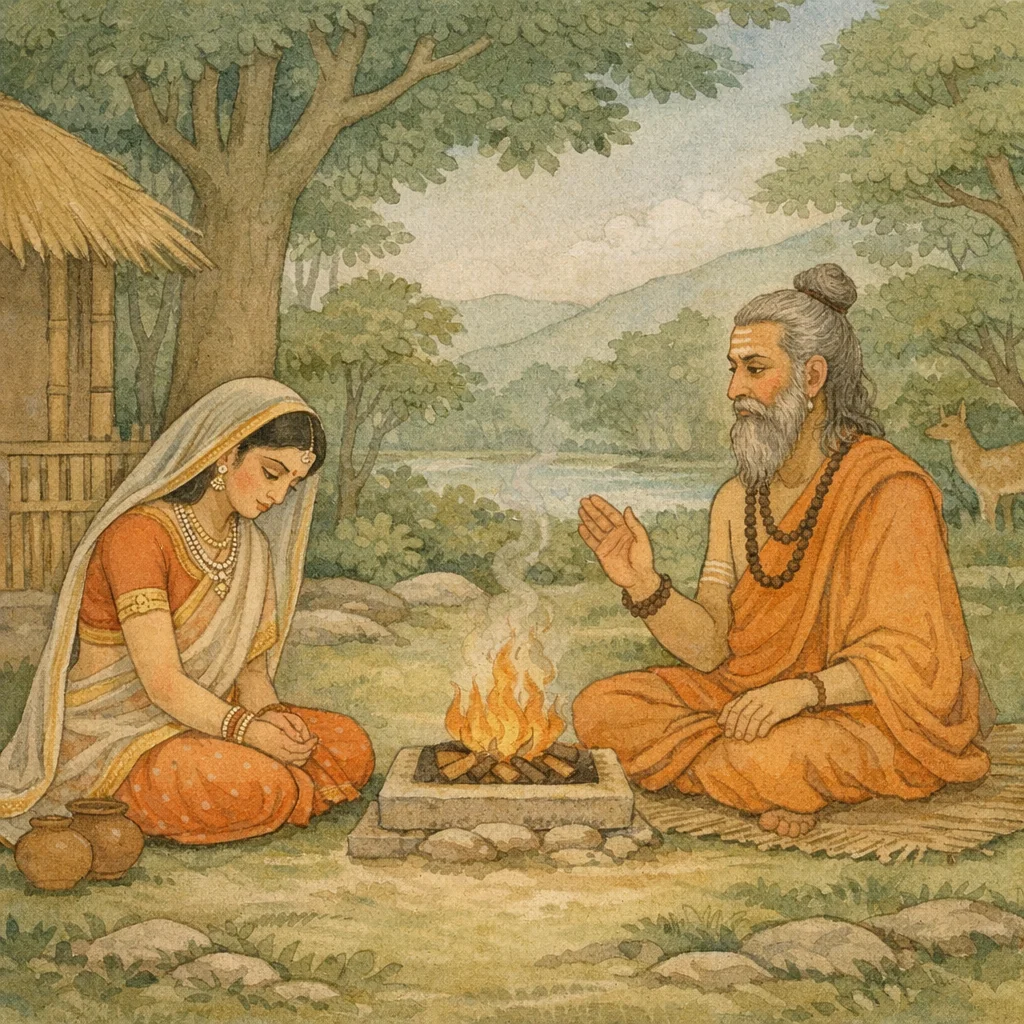
Chapter Arc: वन-आश्रम की निस्तब्धता में कुन्ती अपने हृदय का सबसे गुप्त भार उठाती हैं—कर्ण-जन्म का रहस्य—और उसे व्यास के सम्मुख खोलने का साहस करती हैं। → कुन्ती दुर्वासा के आगमन, उनकी सेवा, और प्राप्त वरदान का वृत्तान्त कहती हैं; फिर शाप-भय, कौमार्य-लज्जा, और अनजाने में देव-आह्वान से उत्पन्न गर्भ की स्मृति कथा को भीतर-ही-भीतर कसती जाती है। → व्यास देव-धर्म का कठोर, पर यथार्थ विधान उद्घाटित करते हैं—देव संकल्प, वाणी, दृष्टि, स्पर्श आदि से भी सन्तान उत्पन्न कर सकते हैं; और कुन्ती को यह बोध कराते हैं कि इस घटना में उनका अपराध नहीं, यह दैवी-नियम का प्रसंग है। → व्यास कुन्ती को सांत्वना देते हैं, उनके अपराध-बोध को शान्त करते हैं, और यह स्थापित करते हैं कि मनुष्य-धर्म की दृष्टि से जो कलंक-सा लगता है, वह दैव-धर्म के क्षेत्र में दोष नहीं बनता।
Shlokas
Verse 1
2: छा अकाल त्रिशो&्थ्याय: कुन्तीका कर्णके जन्मका गुप्त रहस्य बताना और व्यासजीका उन्हें सान्त्वना देना कुन्त्युवाच भगवन् श्वशुरो मेडसि दैवतस्यापि दैवतम् | स मे देवातिदेवस्त्वं शृणु सत्यां गिरं मम
Kuntī said: “Revered one, you are my father-in-law, and even the god of my gods. Therefore, to me you are greater than the gods themselves. Hear now my truthful words—today I will disclose before you a secret matter of my life.”
Verse 2
तपस्वी कोपनो वित्रो दुर्वासा नाम मे पितु: । भिक्षामुपागतो भोक्तुं तमहं पर्यतोषयम्
Vaiśaṃpāyana said: “There was an austere ascetic, quick to anger, named Durvāsā—one connected with my father’s line. He came seeking alms for his meal, and I satisfied him with due hospitality.”
Verse 3
एक समयकी बात है, परम क्रोधी तपस्वी ब्राह्मण दुर्वासा मेरे पिताके यहाँ भिक्षाके लिये आये थे। मैंने उन्हें अपने द्वारा की गयी सेवाओंसे संतुष्ट कर लिया ।।
Vaiśampāyana said: “Once, the exceedingly irascible ascetic brāhmaṇa Durvāsā came to my father’s house seeking alms. By the service I rendered, I satisfied him. Through purity of conduct, by avoiding wrongdoing, and with a cleansed mind, I continued to honor him; even when great provocations for anger arose, I never became angry with him.”
Verse 4
स प्रीतो वरदो मे5भूत् कृतकृत्यो महामुनि: । अवश्यं ते गृहीतव्यमिति मां सो5ब्रवीद् वच:
Vaiśampāyana said: “The great sage, pleased with me and ready to grant a boon, felt his purpose fulfilled. Then he spoke to me these words: ‘You must certainly accept the boon I give you.’”
Verse 5
ततः शापभयाद् विप्रमवोचं पुनरेव तम् । एवमस्त्विति च प्राह पुनरेव स मे द्विज:,उनकी बात सुनकर मैंने शापके भयसे पुनः उन ब्रह्मर्षिसि कहा--“भगवन्! ऐसा ही हो।' तब वे ब्राह्मणदेवता फिर मुझसे बोले--
Then, out of fear of a curse, I addressed that brahmin again and said, “So be it.” Hearing this, that twice-born sage spoke to me once more—
Verse 6
धर्मस्य जननी भद्रे भवित्री त्वं शुभानने । वशे स्थास्यन्ति ते देवा यांस्त्वमावाहयिष्यसि,'भद्रे! तुम धर्मकी जननी होओगी। शुभानने! तुम जिन देवताओंका आवाहन करोगी, वे तुम्हारे वशमें हो जायँगे'
Vaiśampāyana said: “O auspicious lady, you are destined to become the mother of Dharma. O fair-faced one, whichever gods you invoke will come under your control.”
Verse 7
इत्युक्त्वान्तहिंतो विप्रस्ततो5हं विस्मिताभवम् | न च सर्वास्ववस्थासु स्मृतिर्मे विप्रणश्यति
Vaiśampāyana said: “Having spoken thus, the brahmarṣi vanished from sight. At that moment I was struck with wonder. And in whatever condition I may be, the memory of his words does not fade from me.”
Verse 8
अथ हर्म्यतलस्थाहं रविमुद्यन्तमीक्षती । संस्मृत्य तदृषेर्वाक््यं स्पृहयन्ती दिवानिशम्
Vaiśaṃpāyana said: Then, standing on the terrace of my palace, I looked upon the sun as it was rising. Remembering the words of that sage, I began to yearn for the Sun-god day and night.
Verse 9
स्थिता5हं बालभावेन तत्र दोषमबुद्ध्यती । अथ देव: सहस्रांशुर्मत्समीपगतो भवत्
I was then in the innocence of childhood and did not understand what fault might arise from it. Then the god of a thousand rays—the Sun—came and stood near me, responding to my summons.
Verse 10
द्विधाकृत्वा55त्मनो देहं भूमौ च गगनेडपि च । तताप लोकानेकेन द्वितीयेनागमत् स माम्,वे अपने दो शरीर बनाकर एकसे आकाशमें रहकर सम्पूर्ण विश्वको प्रकाशित करने लगे और दूसरेसे पृथ्वीपर मेरे पास आ गये
Vaiśampāyana said: Having divided his own body into two, he remained in the sky with one form, radiating light upon the worlds, and with the second he came down to the earth and approached me.
Verse 11
स मामुवाच वेपन्तीं वरं मत्तो वृणीष्व ह । गम्यतामिति त॑ चाहं प्रणम्य शिरसावदम्
Seeing him, I began to tremble. He said to me, 'Lady, choose a boon from me.' Then, bowing my head in reverence, I replied, 'Please depart from here.'
Verse 12
स मामुवाच तिग्मांशुर्वथा55द्वानं न मे क्षमम् । थक्ष्यामि त्वां च विप्रं च येन दत्तो वरस्तव
Vaiśampāyana said: Then the fierce-rayed Sun spoke to me: “My summons cannot be rendered futile. Ask for some boon without fail; otherwise I shall reduce to ashes both you and the brāhmaṇa by whom this boon was granted to you.”
Verse 13
तमहं रक्षती विप्रं शापादनपकारिणम् | पुत्रो मे त्वत्समो देव भवेदिति ततो5ब्रवम्,तब मैं उन निरपराध ब्राह्मणको शापसे बचाती हुई बोली--'देव! मुझे आपके समान पुत्र प्राप्त हो।।
Vaiśampāyana said: “While protecting that blameless brāhmaṇa from the curse, I then spoke: ‘O god, may I obtain a son equal to you.’”
Verse 14
ततो मां तेजसा5<विश्य मोहयित्वा च भानुमान् । उवाच भविता पुत्रस्तवेत्यभ्यगमद् दिवम्,तब मैं उन निरपराध ब्राह्मणको शापसे बचाती हुई बोली--'देव! मुझे आपके समान पुत्र प्राप्त हो।।
Then the Sun-god, entering into me by his radiance and casting me into a bewildered state, declared, “A son will be born to you.” Having spoken thus, he departed to the heavens.
Verse 15
ततो5हमन्तर्भवने पितृर्वृत्तान्तरक्षिणी | गूढोत्पन्नं सुतं बाल॑ जले कर्णमवासृजम्
Then, in order to keep this matter hidden from my elders, I remained within the inner apartments. And when a child was secretly born to me, I set that infant adrift in the water. That child was my son Karṇa.
Verse 16
नूनं तस्यैव देवस्य प्रसादात् पुनरेव तु । कन्याहमभवं विप्र यथा प्राह स मामृषि:
Surely, by the grace of that very deity (the Sun), I again became a maiden, O brāhmaṇa—exactly as the sage had foretold to me.
Verse 17
स मया मूढया पुत्रो ज्ञायमानोडप्युपेक्षित: । तन्मां दहति विप्रर्षे यथा सुविदितं तव
That son—though I recognized him—was still neglected by me in my delusion. That fault burns me like a fire of grief, O best of Brahmins; indeed, O Brahman, this is well known to you.
Verse 18
यदि पापमपापं वा तवैतद् विवृतं मया । तन्मे दहन्तं भगवन् व्यपनेतुं त्वमहसि,भगवन्! मेरा यह कार्य पाप हो या पुण्य, मैंने इसे आपके सामने प्रकट कर दिया। आप मेरे उस दाहक शोकको दूर कर दें
Vaiśampāyana said: “Whether this deed of mine be sinful or not, I have laid it open before you. O Blessed One, you ought to remove the burning anguish that consumes me.”
Verse 19
यच्चास्य राज्ञो विदितं हृदिस्थं भवतोडनघ । त॑ चायं लभतां काममप्यैव मुनिसत्तम
Vaiśampāyana said: “O sinless one, you already know what lies hidden in the king’s heart. Therefore, O best of sages, please grant that he may attain that cherished desire—indeed, let him obtain his wish today.”
Verse 20
इत्युक्त: प्रत्युवाचेदं व्यासो वेदविदां वर: । साधु सर्वमिदं भाव्यमेवमेतद् यथा55तथ माम्
Thus addressed, Vyāsa—foremost among the knowers of the Veda—replied: “Well spoken. All that you have said is fitting and must be accepted as what was destined; indeed, it has turned out exactly so.”
Verse 21
“इसमें तुम्हारा कोई अपराध नहीं है; क्योंकि उस समय तुम अभी कुमारी बालिका थी। देवतालोग अणिमा आदि ऐश्वर्योंसे सम्पन्न होते हैं; अतः दूसरेके शरीरोंमें प्रविष्ट हो जाते हैं
Vaiśampāyana said: “In this there is no fault of yours, for at that time you were still an unmarried young girl. The gods possess powers such as aṇimā and other supernatural perfections; therefore they are able to enter into the bodies of others.”
Verse 22
सन्ति देवनिकायाश्न संकल्पाज्जनयन्ति ये । वाचा दृष्ट्या तथा स्पर्शात् संघर्षणेति पठचधा,“बहुत-से ऐसे देवसमुदाय हैं, जो संकल्प, वचन, दृष्टि, स्पर्श तथा समागम--इन पाँचों प्रकारोंसे पुत्र उत्पन्न करते हैं
Vaiśampāyana said: “There exist many classes of divine beings who beget offspring in five distinct ways—by mere intention, by spoken word, by a glance, by touch, and by physical union.”
Verse 23
अपराधकश्ष ते नास्ति कन्याभावं॑ गता हाूसि । देवाश्नैश्वर्यवन्तो वै शरीराण्याविशन्ति वै
Vaiśampāyana said: “You are not at fault, for you had attained maidenhood. The gods, endowed with sovereign power, can indeed enter into bodies. Human duty is not tainted by divine law. Know this, Kuntī—let the fever of your mind, your anxious torment, be dispelled.”
Verse 24
सर्व बलवतां पथ्यं सर्व बलवतां शुचि । सर्व बलवतां धर्म: सर्व बलवतां स्वकम्
Vaiśampāyana said: “For the powerful, everything is deemed ‘wholesome’ and advantageous; for the powerful, every act is treated as pure. For the powerful, everything is called ‘dharma,’ and for the powerful, all things are regarded as their own.”
Verse 29
इस प्रकार श्रीमहाभारत आश्रमवासिकपव॑के अन्तर्गत पुत्रदर्शनपर्वमें धतराष्ट आदिकी की हुई प्रार्थगविषयक उन्तीसवाँ अध्याय पूरा हुआ
Thus ends the twenty-ninth chapter of the Mahābhārata’s Āśramavāsika Parva, within the section called Putradarśana Parva, dealing with the prayers offered by Dhṛtarāṣṭra and others.
Verse 30
इति श्रीमहाभारते आश्रमवासिके पर्वणि पुत्रदर्शनपर्वणि व्यासकुन्तीसंवादे त्रिंशोडथ्याय:
Thus, in the Śrī Mahābhārata, within the Āśramavāsika Parva, in the section called the ‘Vision of the Sons’, the dialogue between Vyāsa and Kuntī concludes the thirtieth chapter.
Frequently Asked Questions
The survivors must balance ongoing royal administration with an immediate moral obligation to elders—especially Kuntī and Dhṛtarāṣṭra—whose vulnerability in forest life demands personal attention, respect, and care.
Sahadeva’s speech frames life conditions as unstable (anitya): a mother raised in palace comfort may endure ascetic hardship, prompting humility, compassion, and a renewed commitment to duty beyond political success.
No explicit phalaśruti is stated here; the chapter’s meta-logic is implicit—ethical maturation is shown through grief-informed responsibility, reverence to elders, and disciplined governance during the journey.
Read Mahabharata in the Vedapath app
Scan the QR code to open this directly in the app, with audio, word-by-word meanings, and more.