Adhyaya 12
धृतराष्ट्रोपदेशः (Dhṛtarāṣṭra’s Instruction on Rājadharma and Bala)
Upa-parva: Rājadharma-Nīti Upadeśa (Dhṛtarāṣṭra’s Counsel to Yudhiṣṭhira)
Chapter 12 records Dhṛtarāṣṭra’s technical counsel to Yudhiṣṭhira on prudent kingship. He outlines the ruler’s need to understand saṃdhi and vigraha (modes of political engagement), to apply strategic upāyas with attention to timing (e.g., differing conduct during paryupāsana versus āmarda phases), and to weaken adversaries through internal disruption and calibrated pressure. The king is urged to assess strength in a threefold manner, grounded in utsāha (initiative), prabhu-śakti (authority/capacity), and mantra-śakti (counsel/strategic deliberation). The discourse enumerates types of bala: maula (core), mitra (allied), aṭavī (forest/terrain-associated), bhṛta (hired), śreṇī (guild-based), and cāra (intelligence), stressing their situational equivalences and proper recognition when time demands. Dhṛtarāṣṭra then treats āpadaḥ (crises) as multiform and manageable through policy options, recommending readiness for yātrā (campaign/mobilization) only when equipped with appropriate balas and contextual fitness (deśa-kāla). He concludes with an explicitly ethical teleology: sustaining the body for duty, ruling by dharma, earning good repute, and attaining auspicious results—stating that dharmic protection of subjects yields merit comparable to grand sacrifices (aśvamedha).
Chapter Arc: वैशम्पायन धृतराष्ट्र के पास विदुर के लौटने का वृत्तान्त उठाते हैं—पाण्डवों के संदेश और उनके हृदय की उदारता अब अन्धे राजा के सामने शब्द बनकर खड़ी है। → विदुर युधिष्ठिर और अर्जुन के वचन सुनाते हैं: ‘आप राज्य के भी स्वामी हैं, हमारे प्राणों के भी’—और दान, श्राद्ध, ब्राह्मण-तर्पण, तथा गृह-समर्पण तक की तत्परता प्रकट करते हैं। पर भीतर-भीतर भीम का पुराना दुःख और क्षत्रिय-धर्म की कठोर स्मृति उभरती है; उसे मनाना पड़ता है, ताकि वैर की राख फिर न सुलगे। → विदुर के मुख से पाण्डवों की बार-बार की विनय-याचना और दान-धर्म का आग्रह सुनकर धृतराष्ट्र का मन ‘महादान’ पर स्थिर हो जाता है—वह क्षण जब शोक, अपराध-बोध और राज-गौरव एक साथ पिघलकर दान-प्रतिज्ञा बनते हैं। → धृतराष्ट्र पाण्डवों की प्रशंसा करता है और विदुर के परामर्श से आगे के कर्तव्य—दान, ब्राह्मणों को भूमि/धन, पुत्रों के श्राद्ध—की दिशा में प्रवृत्त होता है; परिवार-सम्बन्धों में क्षमा और औदार्य का सेतु बनता है। → विदुर द्वारा सुझाए गए दान-कर्म और श्राद्ध की वास्तविक तैयारी/क्रियान्विति तथा धृतराष्ट्र-गान्धारी का आगे का वन-गमन अभी शेष है।
Shlokas
Verse 1
भीकम (2 अमान त्रयोदशो< ध्याय: विदुरका धृतराष्ट्रको युधिष्ठिरका उदारतापूर्ण उत्तर सुनाना वैशम्पायन उवाच एवमुक्तस्तु राज्ञा स विदुरो बुद्धिसत्तम: । धृतराष्ट्रमुपेत्यैवं वाक्यमाह महार्थवत्,वैशम्पायनजी कहते हैं--जनमेजय! राजा युधिष्ठिरके इस प्रकार कहनेपर बुद्धिमानोंमें श्रेष्ठ विदुरजी धृतराष्ट्रकरे पास जाकर यह महान् अर्थसे युक्त बात बोले --
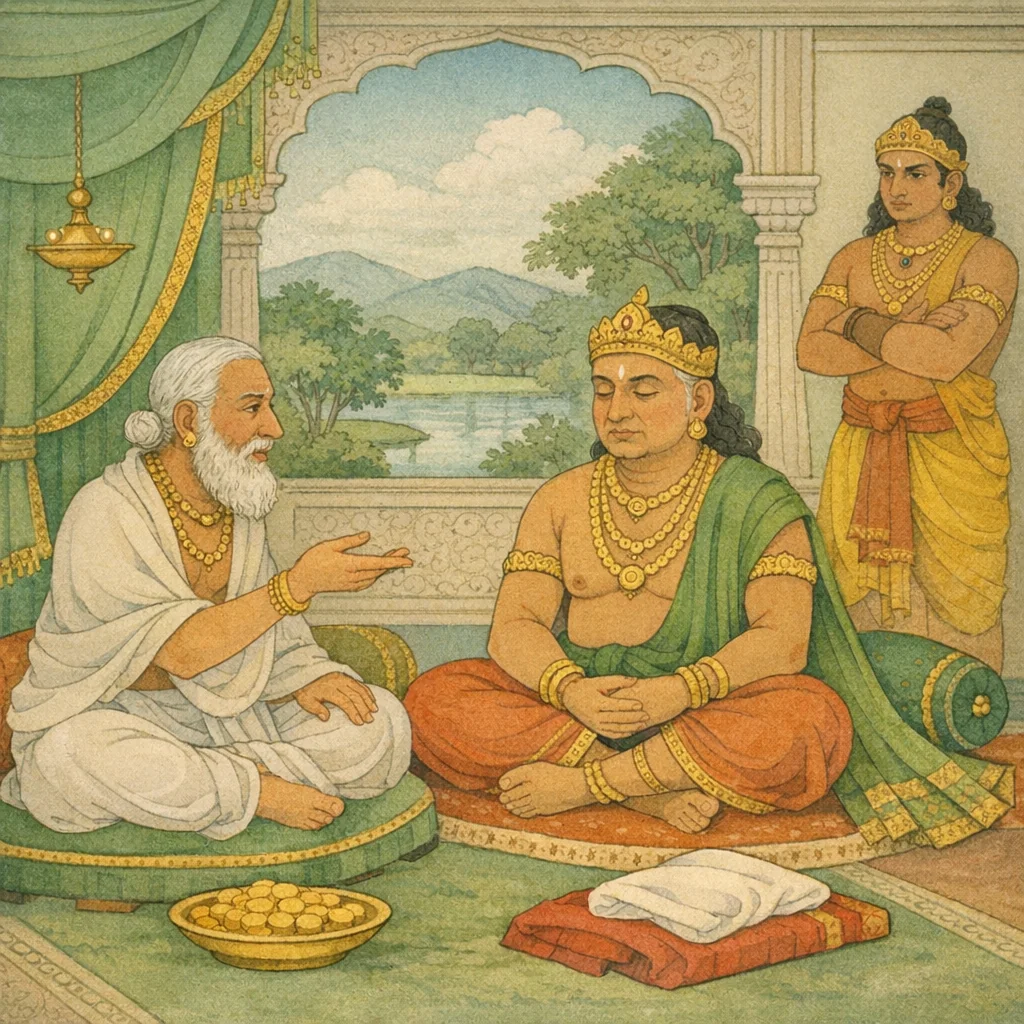
Vaiśampāyana said: When King Yudhiṣṭhira had spoken thus, Vidura—foremost among the wise—went to Dhṛtarāṣṭra and addressed him with words of profound meaning.
Verse 2
उक्तो युधिष्ठिरो राजा भवद्वचनमादित: । सच संभश्रुत्य वाक्यं ते प्रशशंस महाद्युति:,“महाराज! मैंने महातेजस्वी राजा युधिष्ठिरके यहाँ जाकर आपका संदेश आरम्भसे ही कह सुनाया। उसे सुनकर उन्होंने आपकी बड़ी प्रशंसा की
Vaiśampāyana said: “Having been addressed, King Yudhiṣṭhira heard your message from the very beginning. After listening, that radiant king praised your words highly.”
Verse 3
बीभत्सुश्न महातेजा निवेदयति ते गृहान् । वसु तस्य गृहे यच्च प्राणानपि च केवलान्,“महातेजस्वी अर्जुन भी आपको अपना सारा घर सौंपते हैं। उनके घरमें जो कुछ धन है, उसे और अपने प्राणोंको भी वे आपकी सेवामें समर्पित करनेको तैयार हैं
Vaiśampāyana said: The mighty and illustrious Bībhatsu (Arjuna) offers you his houses. Whatever wealth is in his home—and even his very life—he is ready to place entirely at your service.
Verse 4
धर्मराज श्र पुत्रस्ते राज्यं प्राणान् धनानि च । अनुजानाति राजर्षे यच्चान्यदपि किंचन,*राजर्षे! आपके पुत्र धर्मराज युधिष्ठिर अपना राज्य, प्राण, धन तथा और जो कुछ उनके पास है, सब आपको दे रहे हैं
Vaiśampāyana said: “O royal sage, your son Dharmarāja (Yudhiṣṭhira) is placing at your disposal his kingdom, his very life-breath, his wealth—indeed, whatever else he possesses.”
Verse 5
भीमश्च सर्वदुःखानि संस्मृत्य बहुलान्युत । कृच्छादिव महाबाहुरनुजज्ञे विनि:श्वसन्,“परंतु महाबाहु भीमसेनने पहलेके समस्त क्लेशोंका, जिनकी संख्या अधिक है, स्मरण करके लंबी साँस खींचते हुए बड़ी कठिनाईसे धन देनेकी अनुमति दी है
Vaiśaṃpāyana said: Then Bhīma, the mighty-armed, recalling the many sufferings they had endured, heaved a long sigh and, as if with great difficulty, gave his consent for the giving of wealth.
Verse 6
स राजन् धर्मशीलेन राज्ञा बीभत्सुना तथा । अनुनीतो महाबाहु: सौहदे स्थापितोडपि च,“राजन! धर्मशील राजा युधिष्ठिर तथा अर्जुनने भी महाबाहु भीमसेनको भलीभाँति समझाकर उनके हृदयमें भी आपके प्रति सौहार्द उत्पन्न कर दिया है
Vaiśampāyana said: O King, the mighty-armed Bhīmasena was gently persuaded by the righteous king Yudhiṣṭhira, and likewise by Bībhatsu (Arjuna). Though previously unsettled, he was also established in goodwill—his heart being set in friendly feeling toward you.
Verse 7
न च मन्युस्त्वया कार्य इति त्वां प्राह धर्मराट् । संस्मृत्य भीमस्तद्वैरं यदन््यायवदाचरत्,“धर्मराजने आपसे कहलाया है कि भीमसेन पूर्व वैरका स्मरण करके जो कभी-कभी आपके साथ अन्याय-सा कर बैठते हैं, उसके लिये आप इनपर क्रोध न कीजियेगा
Vaiśampāyana said: “The king of Dharma addressed you thus: ‘You should not give way to anger.’ For Bhīma, recalling the old enmity, sometimes behaves in a manner that seems unjust toward you; for that, you should not be wrathful with him.”
Verse 8
एवं प्रायो हि धर्मो<यं क्षत्रियाणां नराधिप । युद्धे क्षत्रियधर्मे च निरतो5यं वृकोदर:
Vaiśampāyana said: “O lord of men, such is, for the most part, the dharma of the Kṣatriyas: this Vṛkodara is devoted both to battle and to the warrior’s code. His conduct follows the hard ethic of kingship, where duty is often fulfilled through conflict.”
Verse 9
“नरेश्वर! क्षत्रियोंका यह धर्म प्राय: ऐसा ही है। भीमसेन युद्ध और क्षत्रिय-धर्ममें प्राय: निरत रहते हैं ।। वृकोदरकृते चाहमर्जुनश्व पुनः पुनः । प्रसीद याचे नूपते भवान् प्रभुरिहास्ति यत्,'भीमसेनके कट बर्तावके लिये मैं और अर्जुन दोनों आपसे बार-बार क्षमायाचना करते हैं। नरेश्वर! आप प्रसन्न हों। मेरे पास जो कुछ भी है, उसके स्वामी आप ही हैं
Vaiśampāyana said: “O king, such is, for the most part, the way of kṣatriyas. Bhīmasena (Vṛkodara) is almost always absorbed in battle and in the duties of the warrior order. Therefore, on account of Vṛkodara, both Arjuna and I repeatedly beg your forgiveness. Be gracious, O ruler; whatever I possess here, you are its master.”
Verse 10
तद् ददातु भवान् वित्तं यावदिच्छसि पार्थिव । त्वमी श्वरो 5स्य राज्यस्य प्राणानामपि भारत,'पृथ्वीनाथ! भरतनन्दन! आप जितना धन दान करना चाहें, करें। आप मेरे राज्य और प्राणोंके भी ईश्वर हैं!
Vaiśampāyana said: “Therefore, O king, give as much wealth in charity as you desire. O Bhārata, you are the lord of this kingdom—and even of my very life.”
Verse 11
ब्रह्मदेयाग्रहारांश्व॒ पुत्राणामौर्ध्वदेहिकम् । इतो रत्नानि गाश्चैव दासीदासमजाविकम्
Vaiśaṃpāyana said: “(He distributed) Brahmin endowments and tax-free villages, and also performed the post-funeral rites due to his sons. He then gave away jewels, cows, and likewise female and male servants, along with goats and sheep.”
Verse 12
इस प्रकार श्रीमहाभारत आश्रमवासिकपर्वके अन्तर्गत आश्रमवासपर्वमें युधिष्ठिरका अनुमोदनविषयक बारहवाँ अध्याय पूरा हुआ,दीनान्धकृपणेभ्यश्व तत्र तत्र नृपाज्ञया “विदुरजी! आप राजा धृतराष्ट्रकी आज्ञासे दीनों, अन्धों और कंगालोंके लिये भिन्न-भिन्न स्थानोंमें प्रचुर अन्न, रस और पीनेयोग्य पदार्थोंसे भरी हुई अनेक धर्मशालाएँ बनवाइये तथा गौओंके पानी पीनेके लिये बहुत-से पौंसलोंका निर्माण कीजिये। साथ ही दूसरे भी विविध प्रकारके पुण्य कीजिये
Thus, in the Śrī Mahābhārata, within the Āśramavāsika Parva, the twelfth chapter of the Āśramavāsa section—concerning Yudhiṣṭhira’s assent—comes to an end. And, by the king’s command in various places for the benefit of the poor, the blind, and the destitute, Vidura is instructed: “By King Dhṛtarāṣṭra’s order, arrange for many charitable rest-houses to be built—well supplied with abundant food, nourishing drinks, and potable water—for the needy in different locations. Also construct numerous watering-troughs for cattle, and undertake other diverse acts of merit as well.”
Verse 13
बद्धन्नरसपानाढ्या: सभा विदुर कारय । गवां निपानान्यन्यच्च विविध पुण्यकं कुरु,“विदुरजी! आप राजा धृतराष्ट्रकी आज्ञासे दीनों, अन्धों और कंगालोंके लिये भिन्न-भिन्न स्थानोंमें प्रचुर अन्न, रस और पीनेयोग्य पदार्थोंसे भरी हुई अनेक धर्मशालाएँ बनवाइये तथा गौओंके पानी पीनेके लिये बहुत-से पौंसलोंका निर्माण कीजिये। साथ ही दूसरे भी विविध प्रकारके पुण्य कीजिये इति श्रीमहाभारते आश्रमवासिके पर्वणि आश्रमवासपर्वणि विदुरवाक्ये त्रयोदशो 5 ध्याय: इस प्रकार श्रीमह्याभारत आश्रमवासिकपवके अन्तर्गत आश्रमवासपर्वमें विदुरका वाक्यविषयक तेरहवाँ अध्याय पूरा हुआ
Vaiśampāyana said: “Vidura, have shelters and halls built—well supplied with prepared food, nourishing drinks, and potable refreshments—for the poor, the blind, and the destitute in various places. Also construct many watering-troughs for cattle, and undertake other diverse acts of merit as well.”
Verse 14
इति मामब्रवीद् राजा पार्थश्चवैव धनंजय: । यदत्रानन्तरं कार्य तद् भवान् वक्तुमरहति,“इस प्रकार राजा युधिष्ठिर और अर्जुनने मुझसे बार-बार कहा है। अब इसके बाद जो कार्य करना हो, उसे आप बताइये”
Vaiśampāyana said: “Thus did King Yudhiṣṭhira and Arjuna—the son of Pṛthā, Dhanañjaya—repeatedly address me: ‘What should be done next in this matter? You are the one fit to tell us.’”
Verse 15
इत्युक्ते विदुरेणाथ धृतराष्ट्रो5भिनन्द्य तान् । मनश्षक्रे महादाने कार्तिक्यां जनमेजय,जनमेजय! विदुरके ऐसा कहनेपर धुृतराष्ट्रने पाण्डवोंकी बड़ी प्रशंसा की और कार्तिककी तिथियोंमें बहुत बड़ा दान करनेका निश्चय किया
Vaiśampāyana said: When Vidura had spoken thus, Dhṛtarāṣṭra, approving of his words, praised the Pāṇḍavas and resolved, O Janamejaya, to undertake a great act of charity during the sacred days of Kārttika.
Verse 113
आनयित्वा कुरुश्रेष्ठो ब्राह्मुणे भ्य: प्रयच्छतु । “ब्राह्मणोंको माफी जमीन दीजिये और पुत्रोंका श्राद्ध कीजिये।” युधिष्ठिरने यह भी कहा है कि “महाराज धृतराष्ट्र मेरे यहाँसे नाना प्रकारके रत्न, गौएँ, दास, दासियाँ और भेंड़ बकरे मँगवाकर ब्राह्मणोंको दान करें
The foremost of the Kurus said: “Let it be brought and given to the Brahmins. Grant land to the Brahmins, and perform the śrāddha rites for the sons.” Yudhiṣṭhira also said: “Let King Dhṛtarāṣṭra have brought from my house many kinds of jewels, cattle, male and female servants, and sheep and goats, and bestow them in dāna upon the Brahmins.”
Frequently Asked Questions
How a ruler should choose between engagement modes (peace, pressure, or conflict) by evaluating timing, strategic instruments (upāyas), and comparative strength of self and adversary.
That effective rule requires disciplined assessment—initiative, institutional capacity, and counsel—along with calibrated use of diverse forces (including intelligence), always oriented toward stability and prajā welfare.
Yes. It asserts that dharmic protection of subjects yields merit comparable to extensive sacrificial performance (e.g., many aśvamedhas), linking ethical governance to lasting reputation and favorable posthumous outcomes.