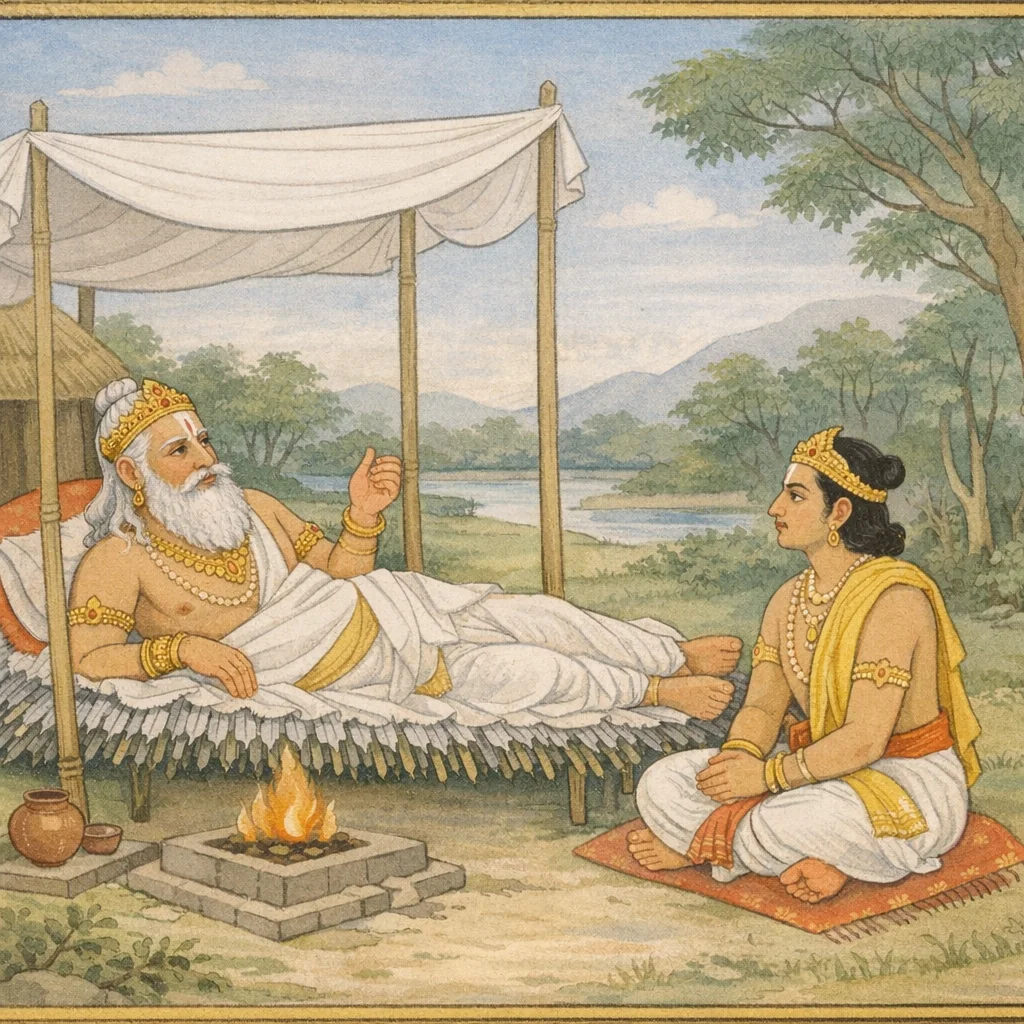
Adhyaya 143
Brahmapūjā-kāraṇa-prśnaḥ and Keśava–Viṣvaksena-stuti (Question on Brahmin veneration; hymn on Kṛṣṇa as cosmic order)
Upa-parva: Brahmapūjā–Kṛṣṇa-stuti (Upa-parvan context within Anuśāsana-parva)
Yudhiṣṭhira asks the ruler (addressed as narādhipa/mahāvrata) why he continually venerates Brahmins of strict vows and what ‘karmodaya’ (observable ethical-spiritual yield) motivates such worship. Bhīṣma responds that Keśava will explain fully, indicating his own waning strength and clarity, and advising that remaining dharmic instruction be learned from Kṛṣṇa. The discourse then expands into a doctrinal stuti portraying Kṛṣṇa as primordial agent and sustaining principle: creator of earth, sky, and directions; source of lotus-born emergence; regulator of yugas and the decline of dharma; victor over daityas; the one praised in sacrifice by Vedic specialists; embodiment of cosmic functions (time divisions, celestial bodies, seasons), and the ground of both auspicious and inauspicious phenomena. The chapter culminates in identifying Keśava/Nārāyaṇa as self-born, imperishable, the origin and dissolution of beings, thereby linking practical reverence (Brahmin worship) to a metaphysical account of dharma’s ultimate source and governance of reality.
Chapter Arc: युधिष्ठिर, पितामह भीष्म के सत्यव्रत और धर्म-पराक्रम का स्मरण कर दान-धर्म के सूक्ष्म नियम जानने की उत्कंठा प्रकट करते हैं—दान कितने प्रकार का है, किसे, कैसे, और किस फल के लिए दिया जाए? → प्रश्न गहराते जाते हैं: दान का हेतु क्या हो—धर्म, अर्थ, भय, काम, या करुणा? और क्या दान का मूल्य केवल वस्तु में है या दाता के मनोभाव में? भीष्म दान के कारणों के आधार पर वर्गीकरण की ओर बढ़ते हैं, जहाँ हर हेतु अपने साथ एक नैतिक जोखिम भी लाता है। → भीष्म निर्णायक रूप से कहते हैं—दान पाँच प्रकार का है: धर्म से, अर्थ (लाभ/प्रतिफल) से, भय से, काम (स्नेह/आसक्ति/इच्छा) से, और करुणा से। साथ ही वे याचक के सामने ‘मैंने दिया/दूँगा/उसने मुझे दिया’ जैसी गणना-भावना से ऊपर उठकर यथाशक्ति देने की शिक्षा देते हैं, और भय-प्रेरित दान में भी ‘अपमान/पाप-भय’ की मनोवृत्ति को स्पष्ट करते हैं। → अध्याय का निष्कर्ष प्रजापति-वचन के रूप में आता है—यह पंचविध दान पुण्य और कीर्ति बढ़ाने वाला है; अतः यथाशक्ति दान करना चाहिए। दान का आदर्श ‘समर्थ्य के अनुसार, याचक के प्रति उदारता’ और ‘हेतु की शुद्धि’ में प्रतिष्ठित होता है।
Shlokas
Verse 1
अत्-#-रा- जा अष्टत्रिशदाधिकशततमो< ध्याय: पाँच प्रकारके दानोंका वर्णन युधिछिर उवाच श्रुतं ते भवतस्तात सत्यव्रतपराक्रम । दानधर्मेण महता ये प्राप्तास्त्रिदिवं नूपा:,(दूसरे दिन प्रातःकाल) युधिष्ठिरने पूछा--सत्यव्रती और पराक्रमसम्पन्न तात! दानजनित महान् धर्मके प्रभावसे जो-जो नरेश स्वर्गलोकमें गये हैं, उन सबका परिचय मैंने आपके मुखसे सुना है
Yudhiṣṭhira said: “O revered father-figure, steadfast in truth and rich in valor— I have heard from your own lips the accounts of those kings who, through the great merit born of the dharma of giving, attained the heaven-world.”
Verse 2
इमांस्तु श्रोतुमिच्छामि धर्मान् धर्मभूतां वर । दानं कतिविध॑ देयं कि तस्य च फलं लभेत्,धर्मात्माओंमें श्रेष्ठ पितामह! अब मैं दानके सम्बन्धमें इन धर्मोंको सुनना चाहता हूँ कि दानके कितने भेद हैं? और जो दान दिया जाता है, उसका क्या फल मिलता है?
Yudhiṣṭhira said: “O grandsire, best among the righteous, I wish to hear of these duties that are themselves forms of dharma. In how many ways is charity to be given, and what fruit does one obtain from the gift that is given?”
Verse 3
कथं केभ्यश्न धर्म्य च दानं दातव्यमिष्यते । कै: कारणै: कतिविध॑ श्रोतुमिच्छामि तत्त्वतः,कैसे और किन लोगोंको धर्मके अनुसार दान देना अभीष्ट है? किन कारणोंसे देना चाहिये? और दानके कितने भेद हो जाते हैं? यह सब मैं यथार्थरूपसे सुनना चाहता हूँ
Yudhiṣṭhira said: “How, and to whom, is righteous giving considered proper? For what reasons should one give? And into how many kinds is charity classified? I wish to hear all this in its true and exact form.”
Verse 4
भीष्म उवाच शृणु तत्त्वेन कौन्तेय दानं॑ प्रति ममानघ । यथा दान प्रदातव्यं सर्ववर्णेषु भारत,भीष्मजीने कहा--निष्पाप कुन्तीकुमार!ं भरतनन्दन! दानके सम्बन्धमें मैं यथार्थरूपसे जो कुछ कहता हूँ, सुनो। सभी वर्णोके लोगोंको दान किस प्रकार करना चाहिये--यह बता रहा हूँ
Bhīṣma said: “Listen in truth, O son of Kuntī, blameless one, O descendant of Bhārata, to what I say concerning charity. I shall tell how giving ought to be done among all the varṇas.”
Verse 5
धर्मादर्थाद् भयात् कामात् कारुण्यादिति भारत | दानं पञठ्चविध॑ ज्ञेयं कारणैर्यर्निबोध तत्
Bhīṣma said: “O Bhārata, giving (dāna) is to be understood as fivefold—prompted by dharma, by the pursuit of wealth or advantage, by fear, by desire, and by compassion. Learn from me the distinct motives behind these.”
Verse 6
भारत! धर्म, अर्थ, भय, कामना और दया--इन पाँच हेतुओंसे दानको पाँच प्रकारका जानना चाहिये। अब जिन कारणोंसे दान देना उचित है, उनको सुनो ।। इह कीर्तिमवाप्रोति प्रेत्य चानुत्तमं सुखम् । इति दान प्रदातव्यं ब्राह्मणेभ्योडनसूयता,दान करनेवाला मनुष्य इहलोकमें कीर्ति और परलोकमें सर्वोत्तम सुख पाता है। इसलिये ईर्ष्यारहित होकर मनुष्य ब्राह्मणोंको अवश्य दान दे (यह धर्ममूलक दान है)
Bhīṣma said: “O Bhārata, giving is to be understood as fivefold, according to five motives—dharma, material gain, fear, desire, and compassion. Now listen to the reasons for which giving is truly proper. One who gives attains fame in this world and, after death, the highest happiness. Therefore, without envy or resentment, one should give to Brahmins.”
Verse 7
ददाति वा दास्यति वा महां दत्तमनेन वा | इत्यर्थिभ्यो निशम्यैव सर्व दातव्यमर्थिने,'ये दान देते हैं, ये दान देंगे अथवा इन्होंने मुझे दान दिया है' याचकोंके मुखसे ये बातें सुनकर अपनी कीर्तिकी इच्छासे प्रत्येक याचकको उसकी इच्छाके अनुसार सब कुछ देना चाहिये (यह अर्थमूलक दान है)
Bhishma said: “If one merely hears from supplicants such words as ‘He gives,’ ‘He will give,’ or ‘He has given me a great gift,’ then—seeking to increase one’s good fame—one should give to each petitioner, according to his desire, whatever is asked.”
Verse 8
नास्याहं न मदीयो<यं पापं कुर्याद् विमानित: । इति दद्याद् भयादेव दृढं मूढाय पण्डित:,“न मैं इसका हूँ न यह मेरा है तो भी यदि इसको कुछ न दूँ तो अपमानित होकर मेरा अनिष्ट कर डालेगा।” इस भयसे ही विद्वान् पुरुष जब किसी मूर्खको दान दे तो यह भयमूलक दान है
Bhishma said: “I do not belong to him, nor does he belong to me; yet, if I give him nothing, then, feeling insulted, he may commit a sinful act against me.” Therefore, a wise man may give firmly—only out of fear—to a foolish person. Such giving is a fear-driven gift, not a gift born of goodwill or righteousness.
Verse 9
प्रियो मे5यं प्रियोडस्पाहमिति सम्प्रेक्ष्य बुद्धिमान् वयस्यायैवमक्लिष्टं दानं दद्यादतन्द्रित:,“यह मेरा प्रिय है और मैं इसका प्रिय हूँ” यह विचारकर बुद्धिमान् मनुष्य आलस्य छोड़कर अपने मित्रको प्रसन्नतापूर्वक दान दे (यह कामनामूलक दान है)
Bhishma said: Reflecting, “This person is dear to me, and I am dear to him,” a wise man should, without laziness, give a willing and untroubled gift to his friend. This describes giving motivated by personal affection and desire to please (kāmanā-based giving).
Verse 10
दीनश्न याचते चायमल्पेनापि हि तुष्यति । इति दद्याद् दरिद्राय कारुण्यादिति सर्वथा,“यह बेचारा बड़ा गरीब है और मुझसे याचना कर रहा है। थोड़ा देनेसे भी संतुष्ट हो जायगा।' यह सोचकर दरिद्र मनुष्यके लिये सर्वथा दयावश दान देना चाहिये
Bhishma teaches that when a poor, distressed person comes begging, one should give out of compassion—thinking, “This wretched man is very needy and is asking me; even a small gift will satisfy him.” Thus, charity to the destitute should be offered in every way from mercy, not from pride or calculation.
Verse 11
यह पाँच प्रकारका दान पुण्य और कीर्तिको बढ़ानेवाला है। यथाशक्ति सबको दान देना चाहिये। ऐसा प्रजापतिका कथन है
Bhishma said: “This fivefold form of giving increases both merit and good renown. One should give to all according to one’s capacity—such is the teaching attributed to Prajapati.”
Verse 13
इति पञ्चविध॑ दान पुण्यकीर्तिविवर्धनम् । यथाशकत्या प्रदातव्यमेवमाह प्रजापति:
Bhīṣma said: “Thus, this fivefold form of giving increases both merit and good renown. One should give according to one’s capacity—so declared Prajāpati.”
Verse 138
इति श्रीमहाभारते अनुशासनपर्वणि दानधर्मपर्वणि अष्टत्रिंयधिकशततमो<ध्याय:
Thus ends the one-hundred-and-thirty-eighth chapter (138th) in the Dāna-dharma section of the Anuśāsana Parva of the sacred Mahābhārata.
Frequently Asked Questions
The inquiry concerns justification and observable value: why a ruler repeatedly honors vow-observant Brahmins, and what ‘karmodaya’—practical or ethical-spiritual outcome—supports the practice beyond mere convention.
Ethical practice is anchored in a metaphysical order: dharma is not only social regulation but participation in a cosmic governance identified with Keśava, who is described as sustaining time, worlds, and the conditions under which moral life is intelligible.
Rather than a formal phalaśruti, the chapter offers meta-authority claims: Bhīṣma frames Kṛṣṇa as the reliable resolver of dharma in doubt, implying that correct understanding and alignment with this cosmic-dharmic principle is itself the operative ‘fruit’ of the teaching.