Adhyaya 136
Brāhmaṇa-pūjā and Namaskāra: Criteria of Reverence and Non-Offense (ब्राह्मणपूजा-नमस्कारविधिः)
Upa-parva: Ācāra–Brāhmaṇa-māhātmya (Conduct and the Esteem of Brāhmaṇas) — Adhyāya 136
Yudhiṣṭhira asks Bhīṣma who should be worshipped and saluted, how one should behave toward them, and what conduct prevents offense (riṣ). Bhīṣma responds by asserting that contempt toward brāhmaṇas is portrayed as severely destabilizing, whereas one who offers them salutations remains protected from harm. He then elaborates an ideal typology: brāhmaṇas as ‘dharmasetus’ (bridges of dharma), devoted to generosity, disciplined speech, vows, learning, and austerity; as guides and ‘lamps’ for society; as subtle discerners of inner and outer paths; and as worthy of honor irrespective of circumstance, analogized to fire that remains pure even in adverse locations. The chapter’s didactic thrust is normative: cultivate respectful conduct and restraint, recognize institutional custodians of knowledge and ritual, and avoid behaviors framed as socially and spiritually injurious.
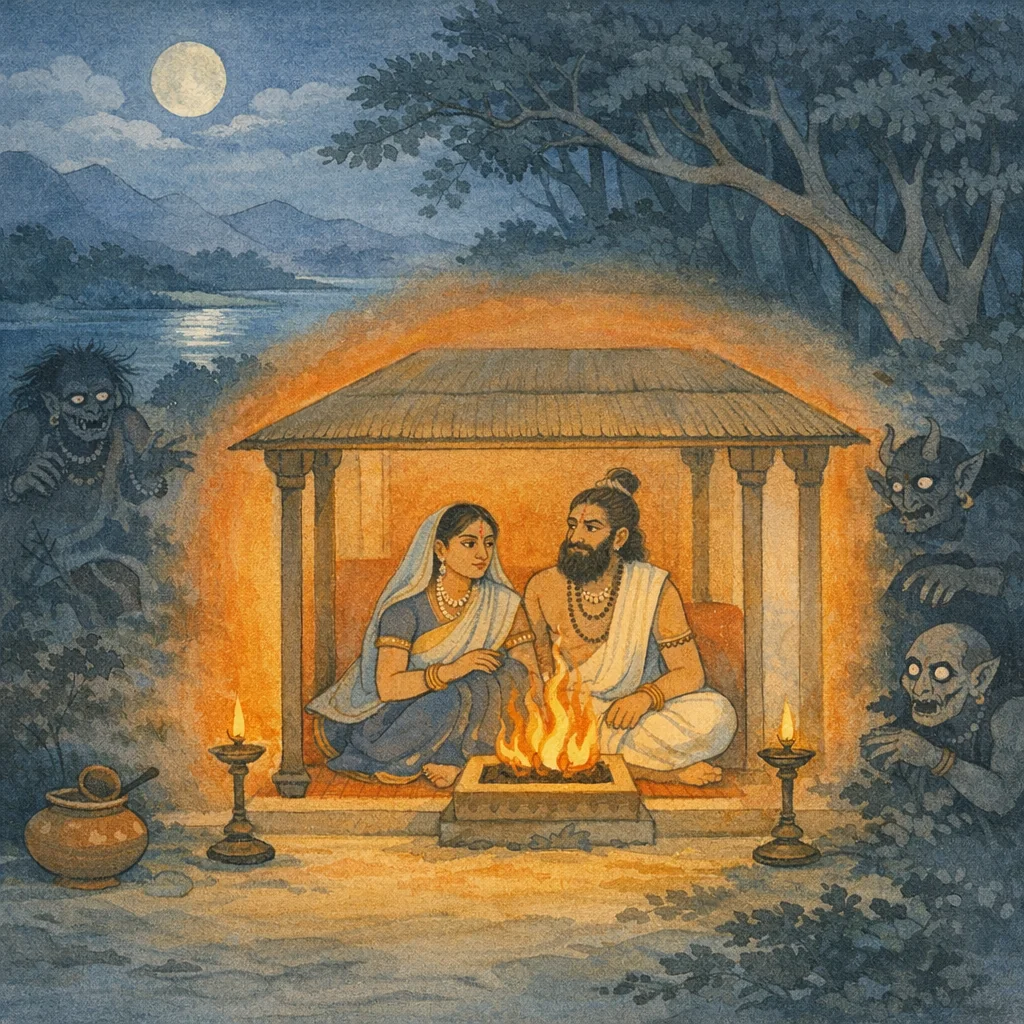
Chapter Arc: भीष्म युधिष्ठिर को एक विचित्र रहस्य-कथा की ओर ले जाते हैं—रात्रि में विचरने वाले प्रमथगण (निशाचर) स्वयं धर्म-अधर्म की पहचान बताने को उपस्थित हैं, और मनुष्यों की हिंसा का कारण-नियम स्पष्ट करने वाले हैं। → युधिष्ठिर-जिज्ञासा (या श्रोता की जिज्ञासा) तीव्र होती है: “आप प्रत्यक्ष निशाचर हैं—फिर किन मनुष्यों को आप हिंसते हैं, किन्हें नहीं? कौन-से ‘प्रतीघात’ (प्रतिरोध/निवारक) हैं? और कौन-सी रक्षोघ्न वस्तुएँ हैं जिनसे आप गुप्त स्थानों में भी नष्ट हो जाते हैं?” प्रमथगण मनुष्यों की अशुचिता, उच्छिष्टता, काम-दूषण, और गृह-धर्म के पतन को हिंसा-योग्य कारणों की तरह गिनाने लगते हैं। → प्रमथगण निर्णायक विधान करते हैं: जिन गृहों में अग्निहोत्र की अग्नि नित्य प्रज्वलित रहती है और जिनमें शुद्ध आचार, अतिथि-सत्कार, तथा गृहस्थ-धर्म की रक्षा होती है—वे गृह ‘अधृष्य’ हैं; पिशिताशन निशाचर वहाँ प्रवेश नहीं कर सकते। यही ‘रक्षोघ्न’ रहस्य है—धर्माचरण स्वयं रक्षा-कवच बन जाता है। → वे स्पष्ट कर देते हैं कि हमारे-जैसे निशाचर लोकों में स्वच्छंद विचरते हुए भी उन घरों को हानि नहीं पहुँचा सकते जहाँ रक्षोघ्न साधन/आचार उपस्थित हैं; अतः राजा को अपने गृहों में उन धर्म-रक्षक उपायों की स्थापना करनी चाहिए। हिंसा का नियम मनमाना नहीं—आचार-भ्रष्टता और धर्म-रक्षा के अनुसार चलता है।
Shlokas
Verse 1
अपना बा | अप्--का+ एकत्रिशर्दाधेकशततमो< ध्याय: प्रमथगणोंके द्वारा धर्माधर्मसम्बन्धी रहस्यका कथन भीष्म उवाच ततः सर्वे महाभागा देवाश्न पितरश्न ह । ऋषयश्च महाभागा: प्रमथान् वाक्यमत्रुवन्,भीष्मजी कहते हैं--राजन्! तदनन्तर सभी महाभाग देवता, पितर तथा महान् भाग्यशाली महर्षि प्रमथगणोंसे बोले--
Bhishma said: “O King, thereafter all those illustrious ones—the gods, the ancestral Fathers, and the highly fortunate sages—addressed the Pramathas with their words.”
Verse 2
भवन्तो वै महाभागा अपरोक्षनिशाचरा: । उच्छिष्टानशुचीन क्षुद्रान् कथं हिंसथ मानवान्,“महाभागगण! आपलोग प्रत्यक्ष निशाचर हैं। बताइये, अपवित्र, उच्छिष्ट और शाद्र मनुष्योंकी किस तरह और क्यों हिंसा करते हैं?
Bhishma said: “You indeed are fortunate and eminent beings—visible, present-before-the-eyes night‑wanderers. Tell me: how and for what reason do you harm human beings—those who are impure, tainted by leftovers, and of mean conduct?”
Verse 3
के च स्मृता: प्रतीघाता येन मर्त्यान् न हिंसथ । रक्षोघ्नानि च कानि स्पुर्यर्गुहिषु प्रणश्यथ । श्रोतुमिच्छाम युष्माकं सर्वमेतन्निशाचरा:,“वे कौन-से प्रतिघात (शत्रुके आघातोंको रोक देनेवाले उपाय) हैं, जिनका आश्रय लेनेसे आपलोग उन मनुष्योंकी हिंसा नहीं करते। वे रक्षोघ्न मन्त्र कौन-से हैं, जिनका उच्चारण करनेसे आपलोग घरमें ही नष्ट हो जायूँ या भाग जायँ? निशाचरो! ये सारी बातें हम आपके मुखसे सुनना चाहते हैं!
Bhīṣma said: “What are those remembered counter-measures by which you do not harm human beings? And what are those demon-slaying spells whose utterance would make you perish within the very houses—or flee away? O night-roamers, we wish to hear all this from your own mouths.”
Verse 4
प्रमथा ऊचु. मैथुनेन सदोच्छिष्टा: कृते चैवाधरोत्तरे मोहान्मांसानि खादेत वृक्षमूले च यः स्वपेत्,प्रमथ बोले--जो मनुष्य सदा स्त्री-सहवासके कारण दूषित रहते, बड़ोंका अपमान करते, मूर्खतावश मांस खाते, वृक्षकी जड़में सोते, सिरपर मांसका बोझा ढोते, बिछौनोंपर पैर रखनेकी जगह सिर रखकर सोते, वे सब-के-सब मनुष्य उच्छिष्ट (अपवित्र) तथा बहुत- से छिद्रोंवाले माने गये हैं। जो पानीमें मल-मूत्र एवं थूक फेकते हैं, वे भी उच्छिष्टकी ही कोटिमें आते हैं। ये सभी मानव हमारी दृष्टिमें भक्षण और वधके योग्य हैं। इसमें संशय नहीं है
The Pramathas spoke: “Those who are perpetually defiled through sexual indulgence, who in their conduct invert what is higher and lower (showing disrespect to elders and superiors), who out of delusion eat flesh, and who sleep at the foot of trees—such people are regarded as impure (as if ‘leftover’ and unfit), and as having many moral ‘flaws’ or ‘openings.’ In our view they fall into the class of those fit to be consumed and slain; of this there is no doubt.”
Verse 5
आमिषं शीर्षतो यस्य पादतो यश्च संविशेत् । तत उच्छिष्टका: सर्वे बहुच्छिद्राक्ष मानवा:,प्रमथ बोले--जो मनुष्य सदा स्त्री-सहवासके कारण दूषित रहते, बड़ोंका अपमान करते, मूर्खतावश मांस खाते, वृक्षकी जड़में सोते, सिरपर मांसका बोझा ढोते, बिछौनोंपर पैर रखनेकी जगह सिर रखकर सोते, वे सब-के-सब मनुष्य उच्छिष्ट (अपवित्र) तथा बहुत- से छिद्रोंवाले माने गये हैं। जो पानीमें मल-मूत्र एवं थूक फेकते हैं, वे भी उच्छिष्टकी ही कोटिमें आते हैं। ये सभी मानव हमारी दृष्टिमें भक्षण और वधके योग्य हैं। इसमें संशय नहीं है
Bhīṣma said: “Those who carry meat upon their heads, or who lie down placing their feet where the head should be—such people are all regarded as ‘ucchiṣṭa’ (ritually tainted, like remnants), and as humans marked by many ‘openings’ (impure vulnerabilities).”
Verse 6
उदके चाप्यमेध्यानि श्लेष्माणं च प्रमुडचति । एते भक्ष्याश्न वध्याश्न मानुषा नात्र संशय:,प्रमथ बोले--जो मनुष्य सदा स्त्री-सहवासके कारण दूषित रहते, बड़ोंका अपमान करते, मूर्खतावश मांस खाते, वृक्षकी जड़में सोते, सिरपर मांसका बोझा ढोते, बिछौनोंपर पैर रखनेकी जगह सिर रखकर सोते, वे सब-के-सब मनुष्य उच्छिष्ट (अपवित्र) तथा बहुत- से छिद्रोंवाले माने गये हैं। जो पानीमें मल-मूत्र एवं थूक फेकते हैं, वे भी उच्छिष्टकी ही कोटिमें आते हैं। ये सभी मानव हमारी दृष्टिमें भक्षण और वधके योग्य हैं। इसमें संशय नहीं है
Bhīṣma said: “Those who cast impure things into water, and those who discharge phlegm into it as well—such people are to be regarded as defiled. In our view they become fit to be shunned and even punished; of this there is no doubt.”
Verse 7
एवंशीलसमाचारान् धर्षयामो हि मानवान् | श्रूयतां च प्रतीघातान् यैर्न शकक्नुम हिंसितुम्,जिनके ऐसे शील और आचार हैं, उन मनुष्योंको हम धर दबाते हैं। अब उन प्रतिरोधक उपायोंको सुनिये, जिनके कारण हम मनुष्योंकी हिंसा नहीं कर पाते
Bhīṣma said: “Indeed, we are able to overpower men who possess such a disposition and conduct. Now listen to the counter-measures—those forms of resistance by which we are not able to harm such people.”
Verse 8
गोरोचनासमालम्भो वचाहस्तश्न यो भवेत् । घृताक्षतं च यो दद्यान्मस्तके तत्परायण:
Bhīṣma said: “One who anoints (the body) with gorocanā, keeps vacā in hand, and, devotedly intent on the rite, places ghee-mixed unbroken grains (akṣata) upon the head—such a person performs an auspicious, protective observance.”
Verse 9
ये च मांसं न खादन्ति तान् न शकनुम हिंसितुम् । जो अपने शरीरमें गोरोचन लगाता, हाथमें वच नामक औषध लिये रहता, ललाटमें घी और अक्षत धारण करता तथा मांस नहीं खाता-ऐसे मनुष्योंकी हिंसा हम नहीं कर सकते ।। ८$ || यस्य चान्निग्गहे नित्यं दिवारात्रौ च दीप्यते,जिसके घरमें अग्निहोत्रकी अग्नि नित्य--दिन-रात देदीप्यमान रहती है, छोटे जातिके बाघ (जरख) का चर्म, उसीकी दाढ़ें तथा पहाड़ी कछुआ मौजूद रहता है, घीकी आहुतिसे सुगन्धित धूम निकलता रहता है, बिलाव तथा काला या पीला बकरा रहता है, जिन गृहस्थोंके घरोंमें ये सभी वस्तुएँ स्थित होती हैं, उन घरोंपर भयंकर मांसभक्षी निशाचर आक्रमण नहीं करते हैं
Bhīṣma said: “Those who do not eat meat—we are not able to harm them.”
Verse 10
तरक्षोश्ष्म दंष्टाश्न तथैव गिरिकच्छप: । आज्यधूमो बिडालश्नच्छाग: कृष्णोडथ पिड्ूल:,जिसके घरमें अग्निहोत्रकी अग्नि नित्य--दिन-रात देदीप्यमान रहती है, छोटे जातिके बाघ (जरख) का चर्म, उसीकी दाढ़ें तथा पहाड़ी कछुआ मौजूद रहता है, घीकी आहुतिसे सुगन्धित धूम निकलता रहता है, बिलाव तथा काला या पीला बकरा रहता है, जिन गृहस्थोंके घरोंमें ये सभी वस्तुएँ स्थित होती हैं, उन घरोंपर भयंकर मांसभक्षी निशाचर आक्रमण नहीं करते हैं
Bhishma said: In a house where the sacred Agnihotra fire is kept ever blazing day and night; where there is the hide of a small tiger-like beast (hyena or jackal) together with its teeth, and a mountain tortoise; where fragrant smoke rises from offerings of ghee; and where there is a cat and a goat—black or tawny—when all these are present in a householder’s home, dreadful flesh-eating night-roamers do not attack that household.
Verse 11
येषामेतानि तिष्ठन्ति गृहेषु गृहमेधिनाम् । तान्यधृष्याण्यगाराणि पिशिताशै: सुदारुणै:,जिसके घरमें अग्निहोत्रकी अग्नि नित्य--दिन-रात देदीप्यमान रहती है, छोटे जातिके बाघ (जरख) का चर्म, उसीकी दाढ़ें तथा पहाड़ी कछुआ मौजूद रहता है, घीकी आहुतिसे सुगन्धित धूम निकलता रहता है, बिलाव तथा काला या पीला बकरा रहता है, जिन गृहस्थोंके घरोंमें ये सभी वस्तुएँ स्थित होती हैं, उन घरोंपर भयंकर मांसभक्षी निशाचर आक्रमण नहीं करते हैं
Bhishma said: In the homes of those householders where these prescribed things are kept and maintained, such houses become unassailable; the most dreadful flesh-eating night-roamers do not attack them.
Verse 12
लोकानस्मद्विधा ये च विचरन्ति यथासुखम् । तस्मादेतानि गेहेषु रक्षोघ्नानि विशाम्पते । एतद् व: कथितं सर्व यत्र व: संशयो महान्
Bhishma said: “There are beings like us who roam about the worlds as they please. Therefore, O lord of the people, these protective measures that destroy hostile spirits should be kept in households. I have now told you everything on the very point where your doubt was great.”
Verse 130
इस प्रकार श्रीमह्याभारत अनुशासनपर्वके अन्तर्गत दानधर्मपर्वमें अरुन्धती और चित्रगुप्तका धर्मसम्बन्धी रहस्यविषयक एक सौ तीसवाँ अध्याय पूरा हुआ
Thus ends the one hundred and thirtieth chapter in the Dāna-dharma section within the Anuśāsana Parva of the sacred Mahābhārata, presenting a confidential teaching on dharma connected with Arundhatī and Citragupta.
Verse 131
इस प्रकार श्रीमहाभारत अनुशासनपर्वके अन्तर्गत दानधर्मपर्वमें प्रमथगणोंका धर्मसम्बन्धी रहस्यविषयक एक सौ एकतीसवाँ अध्याय पूरा हुआ
Thus concludes the one hundred and thirty-first chapter, dealing with the secret principles of dharma as taught in connection with the Pramatha hosts, within the Dāna-dharma section of the Anuśāsana Parva of the Śrī Mahābhārata.
Verse 1331
हमारे-जैसे जो भी निशाचर अपनी मौजसे सम्पूर्ण लोकोंमें विचरते हैं, वे उपर्युक्त घरोंको कोई हानि नहीं पहुँचा सकते; अतः प्रजानाथ! अपने घरोंमें इन रक्षोघ्न वस्तुओंको अवश्य रखना चाहिये। यह सब विषय, जिसमें आपलोगोंको महान् संदेह था, मैंने कह सुनाया ।। इति श्रीमहाभारते अनुशासनपर्वणि दानधर्मपर्वणि प्रमथरहस्ये एकत्रिंशदिधिकशततमो< ध्याय:
Whatever night-roamers (niśācara) there may be like us, though they wander at will through all the worlds, they cannot harm the houses spoken of above. Therefore, O lord of the people, these rākṣasa-slaying objects should certainly be kept in your homes. This whole matter, in which you all had great doubt, I have now told and explained.
Frequently Asked Questions
It asks for criteria of reverence—who merits worship and salutation—and the practical conduct that prevents offense or harm in social-religious relations.
Maintain respectful behavior and disciplined speech toward brāhmaṇas, portrayed as custodians of learning, ritual continuity, and moral discernment within the epic’s dharma framework.
Yes: it contrasts harm associated with contempt (paribhava) and the protective merit attributed to salutations (namaskāra), using analogies (e.g., fire’s purity) to reinforce unconditional esteem.