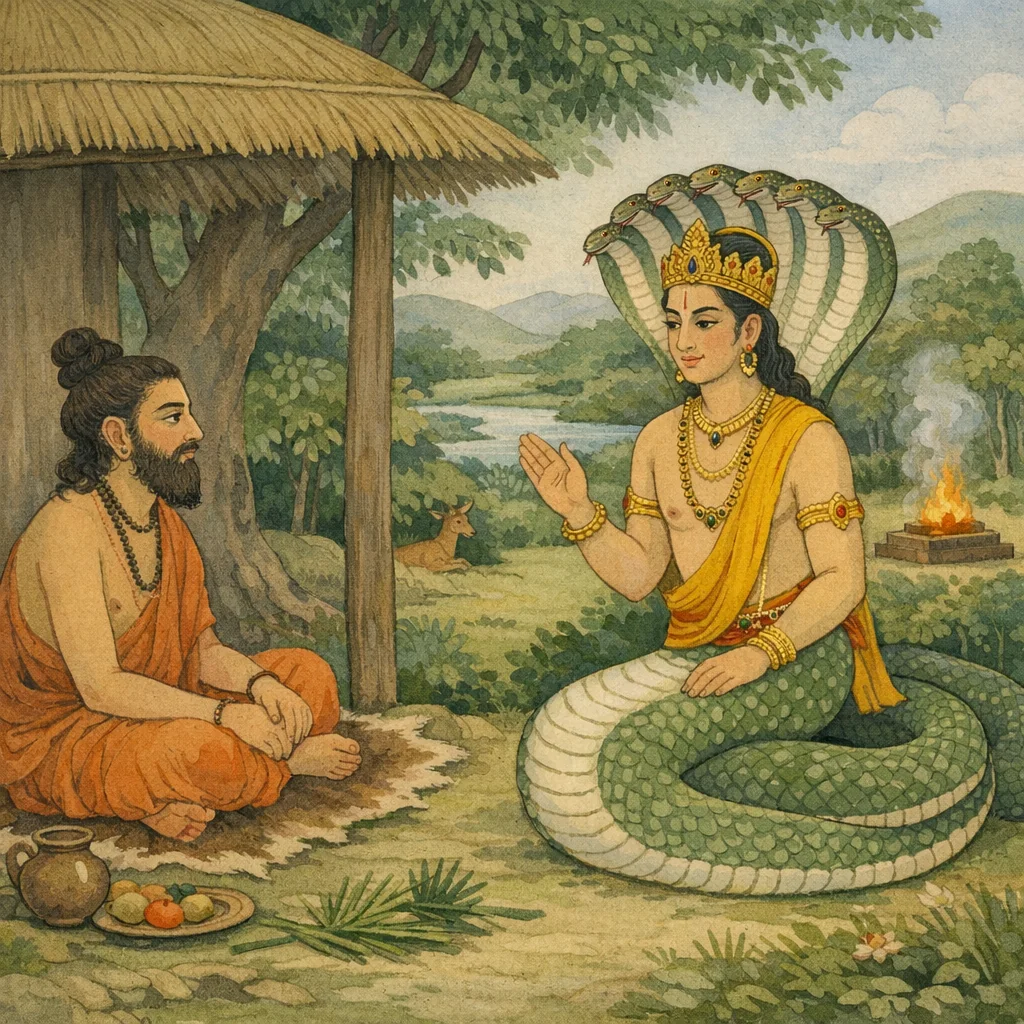
Adhyaya 48
सर्पसत्रे ऋत्विजः सदस्याश्च — Officiants and Assembly at Janamejaya’s Serpent-Sacrifice
Upa-parva: Janamejaya-Sarpasatra Parva (Serpent-Sacrifice Episode)
Śaunaka asks Sauti to identify the principal ṛtvij priests and the learned assembly-members (sadasya) present at King Janamejaya’s sarpasatra, described as severe and fear-inducing for the Nāgas. Sauti enumerates the ritual roles: Caṇḍabhārgava as hotṛ; Kautsārya Jaimini as udgātṛ; Śārṅgarava as brahmā; and Bodhapiṅgala as adhvaryu. He then lists prominent sages as sadasyas, including Vyāsa (with son and disciples), Uddālaka, Śamaṭhaka, Śvetaketu, Asita Devala, Nārada, Parvata, Ātreya, Kuṇḍajaṭhara, Kuṭighaṭa, Vātsya, Śrutaśravā, Kahoḍa, Devaśarmā, Maudgalya, and Śamasaubhara, among others. As the priests pour offerings, serpents are drawn into the fire; the text depicts the sensory and corporeal consequences (sounds, burning, flowing fat/grease channels), emphasizing the scale of suffering. Takṣaka, hearing of the consecrated king, seeks refuge in Indra’s abode; Indra reassures him, citing prior appeasement of Pitāmaha (Brahmā). Meanwhile Vāsuki, with diminished retinue, experiences acute distress and turns to his sister, recalling her earlier marriage to Jaratkāru for the Nāgas’ protection, and points to Āstīka as the anticipated agent who can halt the rite and secure release.
Chapter Arc: सर्पों के भविष्य पर छाया भय—जनमेजय के सर्पसत्र की अग्नि का पूर्वाभास—और उसी अंधकार में एक आशा का नाम उभरता है: ‘आस्तीक’। → वासुकि को अत्यन्त अप्रिय समाचार सुनाया जाता है कि आगे चलकर सर्पों का विनाश निश्चित-सा है; फिर भी देव-सहित पितामह की पुरानी वाणी स्मरण कराई जाती है कि एक मुनिकुमार उस यज्ञ से उन्हें छुड़ाएगा। वासुकि के सामने उपाय एक ही है—बहन जरत्कारु को ऐसे संयोग के लिए तैयार करना जिससे वह उद्धारक पुत्र जन्मे। → वासुकि, जो स्वयं ‘दीनतर’ हो उठता है, बहन से वह वचन ग्रहण करता है—‘एवमस्तु’—और उद्धार की योजना को संकल्प का रूप देता है: पन्नग-हितार्थ एक पुत्र होगा, जो सर्पसत्र से मोक्ष दिलाएगा। → आस्तीक के नाम और उत्पत्ति का सूत्र स्थिर होता है—गर्भस्थ शिशु के लिए पिता का ‘अस्ति’ कहना ही आगे चलकर उसके नाम ‘आस्तीक’ का कारण बनता है; बाल्यावस्था में ही उसका ब्रह्मचर्य, तेज और देवतुल्य आभा सर्पों में हर्ष जगाती है। → जिस पुत्र से मुक्ति की आशा बंधी है, वही आगे चलकर जनमेजय के सर्पयज्ञ के बीच किस प्रकार वाणी और धर्म से अग्नि को रोकेगा—यह अभी शेष है।
Shlokas
Verse 1
3 5 >> > ब्ैतकाकका अर्थ यह है--श्वा, एत और काक; जिसका क्रमशः अर्थ है--कुत्ता, हरिण और कौआ (श्वा+एतमें पररूप हुआ है)। तात्पर्य यह है कि यह कुतियाकी भाँति सदा जागती और कम सोती थी, हरिणीके समान भयसे चकित रहती और कौएकी भाँति उनके इंगित (इशारे) समझनेके लिये सावधान रहती थी। अष्टचत्वारिशो<5् ध्याय: वासुकि नागकी चिन्ता, बहिनद्वारा उसका निवारण तथा आस्तीकका जन्म एवं विद्याध्ययन सौतिरुवाच गतमात्र तु भर्तारें जरत्कारुरवेदयत् । भ्रातुः: सकाशमागत्य याथातथ्यं तपोधन,उग्रश्रवाजी कहते हैं--तपोधन शौनक! पतिके निकलते ही नागकन्या जरत्कारुने अपने भाई वासुकिके पास जाकर उनके चले जानेका सब हाल ज्यों-का-त्यों सुना दिया
Sauti said: As soon as her husband had departed, Jaratkāru, the Nāga maiden, went to her brother Vāsuki and reported the matter exactly as it had happened. O ascetic Śaunaka, she conveyed the full account of his leaving, without distortion.
Verse 2
ततः स भुजगश्रेष्ठ: श्रुत्वा सुमहदप्रियम् । उवाच भगिनीं दीनां तदा दीनतर: स्वयम्,यह अत्यन्त अप्रिय समाचार सुनकर सर्पॉमें श्रेष्ठ वासुकि स्वयं भी बहुत दुःखी हो गये और दु:खमें पड़ी हुई अपनी बहिनसे बोले
Then Vasuki, foremost among serpents, having heard the grievous and unwelcome tidings, spoke to his sister who was already distressed—while he himself grew even more downcast.
Verse 3
वायुकिरुवाच जानासि भद्रे यत् कार्य प्रदाने कारणं च यत् । पन्नगानां हितार्थाय पुत्रस्ते स्थात् ततो यदि,वासुकिने कहा--भद्रे! सर्पोंका जो महान् कार्य है और मुनिके साथ तुम्हारा विवाह होनेमें जो उद्देश्य रहा है, उसे तो तुम जानती ही हो। यदि उनके द्वारा तुम्हारे गर्भसे कोई पुत्र उत्पन्न हो जाता तो उससे सर्पोंका बहुत बड़ा हित होता
Vāyuki said: “O noble lady, you already know the purpose of this undertaking and the reason for giving you in marriage. If, through that union, a son were to be born from your womb, it would bring great benefit to the race of serpents.”
Verse 4
स सर्पसत्रात् किल नो मोक्षयिष्यति वीर्यवान् | एवं पितामह: पूर्वमुक्तवांस्तु सुरै: सह,वह शक्तिशाली मुनिकुमार ही हमलोगोंको जनमेजयके सर्पयज्ञमें जलनेसे बचायेगा; यह बात पहले देवताओंके साथ भगवान् ब्रह्माजीने कही थी
Takṣaka said: “That mighty one will indeed deliver us from the serpent-sacrifice. This was declared long ago by the Grandsire Brahmā, together with the gods.”
Verse 5
अप्यस्ति गर्भ: सुभगे तस्मात् ते मुनिसत्तमात् । न चेच्छाम्यफलं तस्य दारकर्म मनीषिण:,सुभगे! क्या उन मुनिश्रेष्ठसे तुम्हें गर्भ रह गया है? तुम्हारे साथ उन मनीषी महात्माका विवाह-कर्म निष्फल हो, यह मैं नहीं चाहता। मैं तुम्हारा भाई हूँ, ऐसे कार्य (पुत्रोत्पत्ति)-के विषयमें तुमसे कुछ पूछना मेरे लिये उचित नहीं है, परंतु कार्यके गौरवका विचार करके मैंने तुम्हें इस विषयमें सब बातें बतानेके लिये प्रेरित किया है
Takṣaka said: “O fortunate lady, have you conceived a child from that foremost of sages? I do not wish the marriage-rite of that wise seer to remain fruitless. Though, as your brother, it is not proper for me to question you about the intimate matter of begetting a son, yet considering the gravity of the purpose, I urge you to disclose everything about it.”
Verse 6
कार्य च मम न न्याययं प्रष्ठं त्वां कार्यमीदृशम्। किंतु कार्यगरीयस्त्वात् ततस्त्वाहमचूचुदम्,सुभगे! क्या उन मुनिश्रेष्ठसे तुम्हें गर्भ रह गया है? तुम्हारे साथ उन मनीषी महात्माका विवाह-कर्म निष्फल हो, यह मैं नहीं चाहता। मैं तुम्हारा भाई हूँ, ऐसे कार्य (पुत्रोत्पत्ति)-के विषयमें तुमसे कुछ पूछना मेरे लिये उचित नहीं है, परंतु कार्यके गौरवका विचार करके मैंने तुम्हें इस विषयमें सब बातें बतानेके लिये प्रेरित किया है
Takṣaka said: “It is not proper for me to question you about such a matter. Yet, because the importance of the task is weighty, I have urged you, O fortunate one, to speak about it.”
Verse 7
दुर्वार्यतां विदित्वा च भर्तुस्तेडतितपस्विन: । नैनमन्वागमिष्यामि कदाचिद्धि शपेत् स माम्,तुम्हारे महातपस्वी पतिको जानेसे रोकना किसीके लिये भी अत्यन्त कठिन है, यह जानकर मैं उन्हें लौटा लानेके लिये उनके पीछे नहीं जा रहा हूँ। लौटनेका आग्रह करूँ तो कदाचित् वे मुझे शाप भी दे सकते हैं
Takṣaka said: “Knowing that your husband—so exceedingly austere—is not one whom anyone can restrain, I will not go after him to bring him back. If I were to press him to return, he might even curse me.”
Verse 8
आचक्ष्व भदरे भर्तु: स्वं सर्वमेव विचेष्टितम् । उद्धरस्व च शल्यं मे घोरं हृदि चिरस्थितम्,अतः भठद्रे! तुम अपने पतिकी सारी चेष्टा बताओ और मेरे हृदयमें दीर्घकालसे जो भयंकर काँटा चुभा हुआ है, उसे निकाल दो
Takṣaka said: “O noble lady, tell me in full everything your husband has been doing. And draw out from my heart the dreadful barb that has long been lodged there.”
Verse 9
जरत्कारुस्ततो वाक्यमित्युक्ता प्रत्यभाषत । आश्चवासयन्ती संतप्तं वासुकि पन्नगेश्वरम्,भाईके इस प्रकार पूछनेपर तब जरत्कारु अपने संतप्त भ्राता नागराज वासुकिको धीरज बँधाती हुई इस प्रकार बोली
Then Jaratkāru, thus addressed, replied. Seeking to console Vāsuki, the lord of serpents, who was burning with distress, she spoke words meant to steady his mind and restore his courage.
Verse 10
जरत्कारुस्वाच पृष्टो मयापत्यहेतो: स महात्मा महातपा: । अस्तीत्युत्तरमुद्दिश्य ममेदं गतवांश्ष सः,जरत्कारुने कहा--भाई! मैंने संतानके लिये उन महातपस्वी महात्मासे पूछा था। मेरे गर्भके विषयमें “अस्ति' (तुम्हारे गर्भमें पुत्र है) इतना ही कहकर वे चले गये
Jaratkāru said: “When I questioned that great-souled, highly austere sage for the sake of offspring, he gave only this reply, indicating me: ‘There is (a child).’ Having said just that about my pregnancy, he departed.”
Verse 11
स्वैरेष्वपि न तेनाहं स्मरामि वितथं वच: । उक्तपूर्व कुतो राजन् साम्पराये स वक्ष्यति,राजन! उन्होंने पहले कभी विनोदमें भी झूठी बात कही हो, यह मुझे स्मरण नहीं है। फिर इस संकटके समय तो वे झूठ बोलेंगे ही क्यों? भैया! मेरे पति तपस्याके धनी हैं। उन्होंने जाते समय मुझसे यह कहा--“नागकन्ये! तुम अपनी कार्य-सिद्धिके सम्बन्धमें कोई चिन्ता न करना। तुम्हारे गर्भसे अग्नि और सूर्यके समान तेजस्वी पुत्र उत्पन्न होगा।” इतना कहकर वे तपोवनमें चले गये। अतः भैया! तुम्हारे मनमें जो महान् दुःख है, वह दूर हो जाना चाहिये
“Even in moments of ease and play, I do not recall him ever speaking a false word. How then, O King, would he speak untruth at a time of crisis? My husband is rich in austerity. When he departed, he told me: ‘O Nāga maiden, do not worry about the fulfillment of your purpose; from your womb will be born a son radiant like fire and the sun.’ Having said this, he went to the forest of penance. Therefore, brother, the great sorrow in your heart should pass away.”
Verse 12
न संतापस्त्वया कार्य: कार्य प्रति भुजड़मे । उत्पत्स्यति च ते पुत्रो ज्वलनार्कसमप्रभ:,राजन! उन्होंने पहले कभी विनोदमें भी झूठी बात कही हो, यह मुझे स्मरण नहीं है। फिर इस संकटके समय तो वे झूठ बोलेंगे ही क्यों? भैया! मेरे पति तपस्याके धनी हैं। उन्होंने जाते समय मुझसे यह कहा--“नागकन्ये! तुम अपनी कार्य-सिद्धिके सम्बन्धमें कोई चिन्ता न करना। तुम्हारे गर्भसे अग्नि और सूर्यके समान तेजस्वी पुत्र उत्पन्न होगा।” इतना कहकर वे तपोवनमें चले गये। अतः भैया! तुम्हारे मनमें जो महान् दुःख है, वह दूर हो जाना चाहिये
Takṣaka said: “Do not yield to grief, O serpent-maiden. Concerning the matter at hand, be not anxious. A son will be born to you, radiant like fire and the sun.” In context, the speaker urges steadiness and trust in a truthful ascetic’s word: even in crisis, one should not suspect falsehood in those known for integrity, but meet distress with patience grounded in dharma and confidence in the promised outcome.
Verse 13
इत्युक्त्वा स हि मां भ्रातर्गतो भर्ता तपोधन: । तस्माद् व्येतु परं दुःखं तवेदं॑ मनसि स्थितम्,राजन! उन्होंने पहले कभी विनोदमें भी झूठी बात कही हो, यह मुझे स्मरण नहीं है। फिर इस संकटके समय तो वे झूठ बोलेंगे ही क्यों? भैया! मेरे पति तपस्याके धनी हैं। उन्होंने जाते समय मुझसे यह कहा--“नागकन्ये! तुम अपनी कार्य-सिद्धिके सम्बन्धमें कोई चिन्ता न करना। तुम्हारे गर्भसे अग्नि और सूर्यके समान तेजस्वी पुत्र उत्पन्न होगा।” इतना कहकर वे तपोवनमें चले गये। अतः भैया! तुम्हारे मनमें जो महान् दुःख है, वह दूर हो जाना चाहिये
Takṣaka said: “Having spoken thus, my husband—rich in ascetic power—departed, O brother. Therefore, O king, let this intense sorrow that has settled in your mind be dispelled.”
Verse 14
सौतिरुवाच 2 नागेन्द्रो वासुकि: परया मुदा | एवमस्त्विति तद् वाक््यं भगिन्या: प्रत्यगृह्लत,उग्रश्रवाजी कहते हैं--शौनक! यह सुनकर नागराज वासुकि बड़ी प्रसन्नतासे बोले --'एवमस्तु” (ऐसा ही हो)। इस प्रकार उन्होंने बहिनकी बातको विश्वासपूर्वक ग्रहण किया
Sauti said: The lord of serpents, Vāsuki, filled with great joy, replied, “So be it.” In this way he accepted his sister’s words with trust, affirming her request and consenting to the course she proposed.
Verse 15
सान्त्वमानार्थदानैश्न पूजया चानुरूपया । सोदर्या पूजयामास स्वसारं पन्नगोत्तम:,सर्पोमें श्रेष्ठ वासुकि अपनी सहोदरा बहिनको सान्त्वना, सम्मान तथा धन देकर एवं सुन्दररूपसे उसका स्वागत-सत्कार करके उसकी समाराधना करने लगे
Takṣaka said: “With soothing words, with gifts of wealth, and with fitting honors, the foremost of serpents began to pay reverent attention to his own sister, receiving her with courtesy and care.” The verse highlights a conciliatory ethic: when family bonds are strained, one should restore harmony through gentle speech, appropriate respect, and responsible generosity rather than coercion.
Verse 16
ततः प्रववृधे गर्भो महातेजा महाप्रभ: । यथा सोमो द्विजश्रेष्ठ शुक्लपक्षोदितों दिवि,द्विजश्रेष्ठ! जैसे शुक्लपक्षमें आकाशमें उदित होनेवाला चन्द्रमा प्रतिदिन बढ़ता है, उसी प्रकार जरत्कारुका वह महातेजस्वी और परम कान्तिमान् गर्भ बढ़ने लगा
Thereafter the embryo—radiant with great spiritual power and resplendent in glory—began to grow steadily, just as the moon, O best of twice-born ones, waxes day by day when it has risen in the sky during the bright fortnight. The simile underscores the auspicious, orderly unfolding of life and the fruition of rightful aims through dharma.
Verse 17
अथ काले तु सा ब्रह्मन् प्रजज्ञे भुजगस्वसा । कुमार देवगर्भाभ॑ पितृमातृभयापहम्,ब्रह्म! तदनन्तर समय आनेपर वासुकिकी बहिनने एक दिव्य कुमारको जन्म दिया, जो देवताओंके बालक-सा तेजस्वी जान पड़ता था। वह पिता और माता-ोनों पक्षोंके भयको नष्ट करनेवाला था
Takṣaka said: “Then, when the time was ripe, O Brāhmaṇa, she—the sister of the serpents—gave birth to a son, radiant like a child of the gods. That boy was destined to remove the fears that threatened both his father’s and his mother’s lineages.”
Verse 18
ववृधे स तु तत्रैव नागराजनिवेशने । वेदांश्नाधिजगे साड्रान् भार्गवाच्च्यवनान्मुने:,वह वहीं नागराजके भवनमें बढ़ने लगा। बड़े होनेपर उसने भृगुकुलोत्पन्न च्यवन मुनिसे छहों अंगोंसहित वेदोंका अध्ययन किया
There, in the very residence of the king of serpents, he grew up. When he came of age, he studied the Vedas together with their six auxiliary disciplines, learning them in full from the sage Cyavana of the Bhṛgu lineage.
Verse 19
चीर्णव्रतो बाल एव बुद्धिसत्त्वगुणान्वित: । नाम चास्याभवत् ख्यातं लोकेष्वास्तीक इत्युत,वह बचपनसे ही ब्रह्मचर्यव्रतका पालन करनेवाला, बुद्धिमान् तथा सत्त्वगुणसम्पन्न हुआ। लोकमें आस्तीक नामसे उसकी ख्याति हुई
Even from childhood he faithfully observed the vow of disciplined conduct (brahmacarya). Endowed with intelligence and the quality of sattva, he became renowned among people by the name ‘Āstīka’.
Verse 20
अस्तीत्युक्त्वा गतो यस्मात् पिता गर्भस्थमेव तम् | वन॑ तस्मादिदं तस्य नामास्तीकेति विश्रुतम्,वह बालक अभी गर्भमें ही था, तभी उसके पिता “अस्ति” कहकर वनमें चले गये थे। इसलिये संसारमें उसका आस्तीक नाम प्रसिद्ध हुआ
Because his father departed for the forest after uttering the word “asti” (“it is / there is”) while the child was still in the womb, the boy became widely known in the world by the name Āstīka.
Verse 21
स बाल एव तत्रस्थश्नरन्नमितबुद्धिमान् | गृहे पन्नगराजस्य प्रयत्नात् परिरक्षित:,अमित बुद्धिमान् आस्तीक बाल्यावस्थामें ही वहाँ रहकर ब्रह्मचर्यका पालन एवं धर्मका आचरण करने लगा। नागराजके भवनमें उसका भलीभाँति यत्नपूर्वक लालन-पालन किया गया। सुवर्णके समान कान्तिमान् शूलपाणि देवेश्वर भगवान् शिवकी भाँति वह बालक दिनोदिन बढ़ता हुआ समस्त नागोंका आनन्द बढ़ाने लगा
Even while still a boy, he stayed there and, with remarkable intelligence, took refuge in disciplined living—observing brahmacarya and practicing dharma. In the house of the king of serpents he was carefully protected and nurtured with great effort. Growing day by day, radiant like gold and likened to Lord Śiva, he became a source of joy to all the Nāgas.
Verse 22
भगवानिव देवेश: शूलपाणिहिरिण्मय: । विवर्धमान: सर्वास्तान् पन्नगानभ्यहर्षयत्,अमित बुद्धिमान् आस्तीक बाल्यावस्थामें ही वहाँ रहकर ब्रह्मचर्यका पालन एवं धर्मका आचरण करने लगा। नागराजके भवनमें उसका भलीभाँति यत्नपूर्वक लालन-पालन किया गया। सुवर्णके समान कान्तिमान् शूलपाणि देवेश्वर भगवान् शिवकी भाँति वह बालक दिनोदिन बढ़ता हुआ समस्त नागोंका आनन्द बढ़ाने लगा
Takṣaka said: “Like a blessed lord—radiant as gold, and like Śiva, the divine Lord who bears the trident—he grew day by day; and by his very flourishing he gladdened all those serpents.” (In context, the passage goes on to say that Āstīka, even in childhood, stayed there observing brahmacarya and righteous conduct, was carefully nurtured in the Nāga-king’s abode, and as he matured he increased the joy of the Nāgas.)
Verse 47
इस प्रकार श्रीमहाभारत आदिपव॑के अन्तर्गत आस्तीकपर्वमें जरत्कारुका तपस्याके लिये निष्क्रणविषयक सैंतालीसवाँ अध्याय पूरा हुआ
Thus ends the forty-seventh chapter of the Āstīka section within the Ādi Parva of the Śrī Mahābhārata, concerning Jaratkāru’s departure for austerities. This closing note frames the episode as a turning from worldly ties toward ascetic discipline, highlighting the ethical tension between personal renunciation and responsibilities still bound to lineage and consequence.
Verse 48
इति श्रीमहाभारते आदिपर्वणि आस्तीकपर्वणि आस्तीकोत्पत्तौ अष्टचत्वारिंशो5ध्याय:
Thus, in the Śrī Mahābhārata, within the Ādi Parvan, in the Āstīka Parvan, in the account of the birth and origin of Āstīka, ends the forty-eighth chapter. This is a colophon marking the close of a narrative unit, situating the episode within the larger ethical frame of lineage, duty, and the consequences of vows and enmities that will culminate in the serpent-sacrifice narrative.
Frequently Asked Questions
The chapter frames a dilemma of retaliatory justice versus collective harm: a king’s sanctioned ritual response can exceed proportional bounds and endanger an entire community, raising questions about ethical limits on institutional power.
Authority—whether royal or ritual—requires discernment and restraint; learned counsel (sadasya) and informed inquiry are positioned as safeguards against actions whose consequences extend beyond the original grievance.
No explicit phalaśruti occurs here; the meta-function is archival and causal—cataloging ritual personnel and establishing narrative conditions for Āstīka’s later intervention within the dharma–karma framework.