Adhyaya 215
आदि पर्व — खाण्डवदाह प्रसङ्गः: पावकस्य याचनं तथा इन्द्रवर्षनिवारणोपायः (Adi Parva — Khāṇḍava episode: Agni’s request and the means to resist Indra’s rain)
Upa-parva: Khāṇḍava-dāha Parva (Episode: Pāvaka’s request near Khāṇḍava)
Vaiśaṃpāyana reports a dialogue near Khāṇḍava where a brahmin-appearing petitioner asks Arjuna (Pārtha) and Vāsudeva Kṛṣṇa (Vārṣṇeya) for a singular ‘tṛpti’ (satisfaction). When questioned about the appropriate ‘food,’ the petitioner discloses his identity as Pāvaka (Agni) and clarifies that he does not seek ordinary nourishment; his desired ‘food’ is the burning of the Khāṇḍava forest. Agni explains the operational obstacle: Indra continually protects the forest, motivated by Takṣaka’s residence, and extinguishes Agni’s flames through rain. Agni therefore requests strategic partnership: Arjuna and Kṛṣṇa, as expert weapon-users, should block the rain and prevent beings from escaping on all sides while Agni consumes the forest. Arjuna affirms capability in divine weapons but identifies logistical deficiencies—he lacks a bow commensurate with his strength, needs abundant inexhaustible arrows, a chariot capable of bearing the load, and swift divine horses; he also asks for a method to restrain Indra’s rainfall. The chapter thus frames a conditional alliance in which divine intent requires suitable instruments (karaṇa) and coordinated execution.
Chapter Arc: वैशम्पायन समुद्र-तट के तीर्थ-प्रदेश का वर्णन करते हैं, जहाँ अर्जुन तीर्थयात्रा में पहुँचकर पाँच विशिष्ट तीर्थों को देखता है—ऐसे तीर्थ जिनका स्मरण तपस्वी भी विशेष नियमों से करते हैं। → अर्जुन को वहाँ एक दिव्य, तेजस्विनी, अद्भुत रूपवती अप्सरा दिखाई देती है; उसके तेज और सौंदर्य के साथ एक रहस्य भी जुड़ा है। वह अपने साथियों सहित अपनी दुर्दशा का कारण बताती है—एक महातेजस्वी ब्राह्मण तपस्वी की तपस्या भंग करने के प्रयास में वे सब गई थीं, पर तपस्वी अडिग रहा और क्रोध में उन्हें शाप दे बैठा। → अप्सरा की आत्मकथा में निर्णायक क्षण आता है: तपस्वी का शाप—‘तुम सब जल में ग्राह-योनि (जलचर/मगर-रूप) धारण कर सौ वर्षों तक भोगोगी’—और उसी शाप-बंधन से मुक्ति की आशा अर्जुन के सामने रखी जाती है, जिससे अर्जुन का कर्तव्य स्पष्ट होता है। → अर्जुन उस तीर्थ-प्रदेश में अप्सराओं के शाप-बंधन और उनके जल-जीवन के दुःख का कारण जान लेता है; कथा ‘तीर्थ-ग्राह-विमोचन’ की दिशा में स्थिर हो जाती है—अर्जुन को मुक्तिदाता के रूप में स्थापित करते हुए। → अप्सराओं के शाप का उपाय और अर्जुन द्वारा वास्तविक ‘ग्राह-विमोचन’ किस प्रकार होगा—यह आगे के प्रसंग के लिए छोड़ा जाता है।
Shlokas
Verse 1
अत---कात पजञ्चदर्शाधिकद्विशततमो< ध्याय: अर्जुनके द्वारा वर्गा अप्सराका ग्राहयोनिसे उद्धार तथा वर्गाकी आत्मकथाका आरम्भ वैशम्पायन उवाच ततः समुद्रे तीर्थानि दक्षिणे भरतर्षभ । अभ्यगच्छत् सुपुण्यानि शोभितानि तपस्विभि:,वैशम्पायनजी कहते हैं--भरतश्रेष्ठ] तदनन्तर अर्जुन दक्षिण समुद्रके तटपर तपस्वीजनोंसे सुशोभित परम पुण्यमय तीर्थोंमें गये
Vaiśampāyana said: “Then, O bull among the Bharatas, Arjuna went to the sacred fords along the southern sea—places of great merit, made resplendent by ascetics.”
Verse 2
वर्जयन्ति सम तीर्थानि तत्र पठच सम तापसा: । अवकीर्णानि यान्यासन् पुरस्तात् तु तपस्विभि:,वहाँ उन दिनों तपस्वीलोग पाँच तीर्थोंको छोड़ देते थे। ये वे ही तीर्थ थे, जहाँ पूर्वकालमें बहुतेरे तपस्वी महात्मा भरे रहते थे
Vaiśampāyana said: In that place, the ascetics of those days used to avoid five sacred fords. These were the very tīrthas that in earlier times had been thronged and sanctified by many great ascetics.
Verse 3
अगस्त्यतीर्थ सौभद्रं पौलोम॑ च सुपावनम् | कारन्धमं प्रसन्नं च हयमेधफलं च तत्,उनके नाम इस प्रकार हैं--अगस्त्यतीर्थ, सौभद्र-तीर्थ, परम पावन पौलोमतीर्थ, अश्वमेध यज्ञका फल देनेवाला स्वच्छ कारन्धमतीर्थ तथा पापनाशक महान् भारद्वाजतीर्थ। कुरुश्रेष्ठ अर्जुनने इन पाँचों तीर्थोका दर्शन किया
Vaiśampāyana said: “(Arjuna beheld) Agastya-tīrtha, Saubhadra-tīrtha, and the supremely purifying Pauloma-tīrtha; also the clear and serene Kārandhama-tīrtha, famed for bestowing the fruit of the Aśvamedha sacrifice.” The passage underscores the ethical ideal that pilgrimage and reverent encounter with sacred places are means of inner purification and merit, aligning one’s conduct with dharma.
Verse 4
भारद्वाजस्य तीर्थ तु पापप्रशमनं महत् | एतानि पज्च तीर्थानि ददर्श कुरुसत्तम:,उनके नाम इस प्रकार हैं--अगस्त्यतीर्थ, सौभद्र-तीर्थ, परम पावन पौलोमतीर्थ, अश्वमेध यज्ञका फल देनेवाला स्वच्छ कारन्धमतीर्थ तथा पापनाशक महान् भारद्वाजतीर्थ। कुरुश्रेष्ठ अर्जुनने इन पाँचों तीर्थोका दर्शन किया
Vaiśampāyana said: “Great indeed is Bhāradvāja’s sacred ford, renowned for the pacification and removal of sin. The best of the Kurus beheld these five tīrthas,”—a pilgrimage sequence that frames Arjuna’s journey as moral purification, where contact with sanctified places is presented as a means of ethical cleansing and renewed inner discipline.
Verse 5
विविक्तान्युपलक्ष्याथ तानि तीर्थानि पाण्डव: । दृष्टवा च वर्ज्यमानानि मुनिभिर्धर्मबुद्धिभि:,पाए्डुपुत्र अर्जुनने देखा, ये सभी तीर्थ बड़े एकान्तमें हैं, तो भी एकमात्र धर्ममें बुद्धिको लगाये रखनेवाले मुनि भी उन तीर्थोको दूरसे ही छोड़ दे रहे हैं
Vaiśampāyana said: Then the Pāṇḍava, noticing that those sacred fords were secluded, and seeing that even sages of dharma-guided understanding were keeping away from them, took this as a significant sign—suggesting that certain places, though holy in name, may be ethically unfit to approach under particular conditions.
Verse 6
तपस्विनस्ततो<पृच्छत् प्राउजलि: कुरुनन्दन: । तीर्थानीमानि वर्ज्यन्ते किमर्थ ब्रह्मवादिभि:,तब कुरुनन्दन धनंजयने दोनों हाथ जोड़कर तपस्वी मुनियोंसे पूछा--“वेदवक्ता ऋषिगण इन तीर्थोंका परित्याग किसलिये कर रहे हैं?”
Then the Kuru prince, Dhanañjaya, with palms joined in reverence, questioned the ascetic sages: “For what reason are the seers—those who speak of Brahman and the Veda—abandoning these sacred fords?” The moment frames a moral inquiry: when even the spiritually authoritative withdraw from holy places, it signals a disturbance in dharma that demands understanding rather than mere judgment.
Verse 7
तापसा ऊचु: ग्राहा: पठच वसन्त्येषु हरन्ति च तपोधनान् । तत एतानि वर्ज्यन्ते तीर्थानि कुरुनन्दन,तपस्वी बोले--कुरुनन्दन! उन तीर्थोमें पाँच ग्राह रहते हैं, जो नहानेवाले तपोधन ऋषियोंको जलके भीतर खींच ले जाते हैं; इसीलिये ये तीर्थ मुनियोंद्वारा त्याग दिये गये हैं
The ascetics said: “O Kuru prince! In these sacred fords dwell five grahas—fierce water-beasts—who seize the sages rich in austerity when they descend to bathe, dragging them down beneath the waters. Therefore these tīrthas have been forsaken by the munis.”
Verse 8
वैशम्पायन उवाच तेषां भ्रुत्वा महाबाहुर्वार्यमाणस्तपो धनै: । जगाम तानि तीर्थानि द्रष्टू पुरुषसत्तम:,वैशम्पायनजी कहते हैं--उनकी बातें सुनकर कुरुश्रेष्ठ महाबाहु अर्जुन उन तपोधनोंके मना करनेपर भी उन तीर्थोंका दर्शन करनेके लिये गये
Vaiśampāyana said: Hearing their words, Arjuna of mighty arms—the foremost of the Kurus—though dissuaded by those rich in ascetic merit, went to behold those sacred tīrthas, the holy fords.
Verse 9
ततः सौभद्रमासाद्य महर्षेस्तीर्थमुत्तमम् । विगाहा सहसा शूर: स्नान॑ चक्रे परंतप:,तदनन्तर परंतप शूरवीर अर्जुन महर्षि सुभद्रके उत्तम सौभद्रतीर्थमें सहसा उतरकर स्नान करने लगे
Vaiśampāyana said: Then the hero Arjuna, scorcher of foes, reached the excellent sacred ford called Saubhadra, linked with a great seer. Without delay he plunged into the water and performed his ritual bath.
Verse 10
अथ तं॑ पुरुषव्याप्रमन्तर्जलचरो महान् । जग्राह चरणे ग्राह: कुन्तीपुत्रं धनंजयम्,इतनेमें ही जलके भीतर विचरनेवाले एक महान ग्राहने नरश्रेष्ठ कुन्तीकुमार धनंजयका एक पैर पकड़ लिया
Vaiśampāyana said: Just then, a mighty crocodile moving beneath the water seized the foot of Dhanañjaya (Arjuna), the son of Kuntī.
Verse 11
स तमादाय कौन्तेयो विस्फुरन्तं जलेचरम् | उदतिष्ठन्महाबाहुर्बलेन बलिनां वर:,परंतु बलवानोंमें श्रेष्ठ महाबाहु कुन्तीकुमार बहुत उछल-कूद मचाते हुए उस जलचर जीवको लिये-दिये पानीसे बाहर निकल आये
Vaiśampāyana said: But the son of Kuntī, mighty-armed and foremost among the strong, seized that water-creature as it thrashed, and by sheer force rose up and came out of the water.
Verse 12
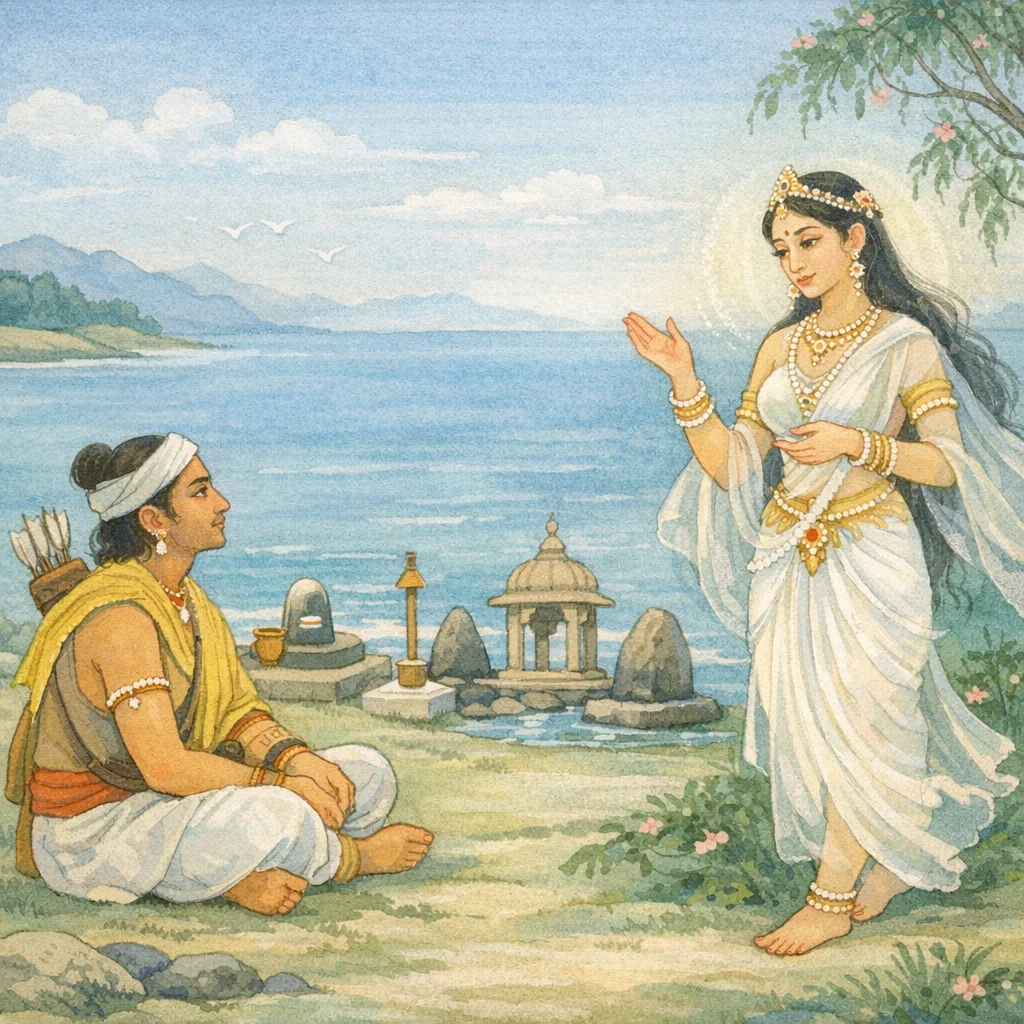
उत्कृष्ट एव ग्राहस्तु सोडर्जुनेन यशस्विना । बभूव नारी कल्याणी सर्वाभरणभूषिता,यशस्वी अर्जुनद्वारा पानीके ऊपर खिंच आनेपर वह ग्राह समस्त आभूषणोंसे विभूषित एक परम सुन्दरी नारीके रूपमें परिणत हो गया
Vaiśampāyana said: When that crocodile was powerfully drawn up by the illustrious Arjuna, it was at once transformed into a noble and auspicious woman, adorned with every kind of ornament.
Verse 13
दीप्यमाना श्रिया राजन् दिव्यरूपा मनोरमा | तदद्भुतं महद् दृष्टवा कुन्तीपुत्रो धनंजय:
Vaiśampāyana said: “O King, she was radiant with splendor—divine in form and captivating to behold. Seeing that great and wondrous sight, Kuntī’s son Dhanañjaya (Arjuna) was struck with amazement.”
Verse 14
तां स्त्रियं परमप्रीत इदं वचनमत्रवीत् । का वै त्वमसि कल्याणि कुतो वासि जलेचरी
Vaiśampāyana said: Delighted beyond measure, he addressed that woman with these words: “Who indeed are you, auspicious lady? From where do you dwell—O one who moves in the waters?”
Verse 15
किमर्थ च महत् पापमिदं कृतवती पुरा | राजन्! वह दिव्यरूपिणी मनोरमा रमणी अपनी अद्भुत कान्तिसे प्रकाशित हो रही थी। यह महान् आश्चर्यकी बात देखकर कुन्तीनन्दन धनंजय बड़े प्रसन्न हुए और उस स्त्रीसे इस प्रकार बोले--“कल्याणी! तुम कौन हो और कैसे जलचरयोनिको प्राप्त हुई थी? तुमने पूर्वकालमें ऐसा महान् पाप किसलिये किया जिससे तुम्हारी यह दुर्गति हुई?” ।। १३-१४ ३ || वर्गोवाच अप्सरास्मि महाबाहो देवारण्यविहारिणी,वर्गा बोली--महाबाहो! मैं नन्दनवनमें विहार करनेवाली एक अप्सरा हूँ
Vaiśampāyana said: “O King, for what reason did she formerly commit this great sin?” (This question is posed in the context of Arjuna’s wonder at a radiant, divine-looking woman who has fallen into an aquatic birth, prompting him to ask what past wrongdoing caused such a degraded condition.)
Verse 16
इष्टा धनपतेर्नित्यं वर्गा नाम महाबल । मम सख्यश्नतस्रो5न्या: सर्वा: कामगमा: शुभा:,महाबल! मेरा नाम वर्गा है। मैं कुबेरकी नित्यप्रेयसी रही हूँ। मेरी चार दूसरी सखियाँ भी हैं। वे सब इच्छानुसार गमन करनेवाली और सुन्दरी हैं
Vaiśampāyana said: “O mighty one, I am Vargā by name, ever the beloved of Dhanapati (Kubera). I have four other companions as well; all of them are auspicious and able to go wherever they wish.”
Verse 17
ताभि: सार्थ प्रयातास्मि लोकपालनिवेशनम् । ततः पश्यामहे सर्वा ब्राह्मणं संशितव्रतम्,उन सबके साथ एक दिन मैं लोकपाल कुबेरके घरपर जा रही थी। मार्गमें हम सबने उत्तम व्रतका पालन करनेवाले एक ब्राह्मणको देखा
Vaiśampāyana said: “Together with those women I set out for the residence of the Lokapāla (the guardian of the world). Then, on the way, we all saw a brāhmaṇa who was steadfast in well-disciplined vows.”
Verse 18
रूपवन्तमधीयानमेकमेकान्तचारिणम् । तस्यैव तपसा राजंस्तद् वनं तेजसा55वृतम्,वे बड़े रूपवान् थे और अकेले एकान्तमें रहकर वेदोंका स्वाध्याय करते थे। राजन! उन्हींकी तपस्यासे वह सारा वनप्रान्त तेजोमय हो रहा था
Vaiśampāyana said: “He was handsome, devoted to Vedic study, and lived alone, moving in seclusion. O King, by the power of his austerities that very forest was enveloped in radiance.”
Verse 19
आदित्य इव त॑ देशं कृत्स्नं सर्व व्यकाशयत् । तस्य दृष्ट्वा तपस्तादूग् रूप॑ चाद्धुतमुत्तमम्
Vaiśampāyana said: “Like the sun, he illuminated that entire region in every direction. Seeing him—his austerity so evident and his form wondrous and supremely excellent—the onlookers were struck with amazement.”
Verse 20
अहं च सौरभेयी च समीची बुद्बुदा लता,भारत! मैं, सौरभेयी, समीची, बुदबुदा और लता--पाँचों एक ही साथ उन ब्राह्मणके समीप गयीं और उन्हें लुभाती हुई हँसने तथा गाने लगीं
Vaiśampāyana said: “I, along with Saurabheyī, Samīcī, Budbudā, and Latā, went together to the brāhmaṇa. Seeking to entice him, we began to laugh and sing before him.”
Verse 21
यौगपद्येन तं विप्रमभ्यगच्छाम भारत । गायन्त्यो5थ हसन्त्यश्न लोभयित्वा च त॑ द्विजम्,भारत! मैं, सौरभेयी, समीची, बुदबुदा और लता--पाँचों एक ही साथ उन ब्राह्मणके समीप गयीं और उन्हें लुभाती हुई हँसने तथा गाने लगीं
Vaiśampāyana said: “O Bhārata, all of us went together at the same moment to that brāhmaṇa. Then, singing and laughing, we sought to entice that twice-born man.”
Verse 22
स च नास्मासु कृतवान् मनो वीर कथंचन । नाकम्पत महातेजा: स्थितस्तपसि निर्मले,परंतु वीरवर! उन्होंने किसी प्रकार भी अपने मनको हमारी ओर नहीं खिंचने दिया। वे महातेजस्वी ब्राह्मण निर्मल तपस्यामें संलग्न थे। वे उससे तनिक भी विचलित नहीं हुए
Vaiśampāyana said: “And that heroic one did not, in any way, let his mind turn toward us. The great-souled, radiant brāhmaṇa remained established in pure austerity; he was not shaken from it even in the slightest.”
Verse 23
सो5शपत् कुपितोअस्मासु ब्राह्मण: क्षत्रियर्षभ । ग्राहभूता जले यूयं चरिष्यथ शतं समा:,क्षत्रियशिरोमणे! हमारी उद्ण्डतासे कुपित होकर उन ब्राह्मणने हमें शाप दे दिया --“तुमलोग सौ वर्षोतक जलमें ग्राह बनकर रहोगी”
Vaiśampāyana said: “O bull among kṣatriyas, the brāhmaṇa, angered at us because of our insolence, pronounced a curse: ‘You shall become crocodile-like creatures and dwell in the waters for a hundred years.’”
Verse 196
अवतीर्णा: सम तं देशं तपोविघ्नचिकीर्षया । वे सूर्यकी भाँति उस सम्पूर्ण प्रदेशको प्रकाशित कर रहे थे। उनकी वैसी तपस्या और वह अद्भुत एवं उत्तम रूप देखकर हम सभी अप्सराएँ उनके तपमें विघ्न डालनेकी इच्छासे उस स्थानमें उतर पड़ीं
Vaiśampāyana said: “With the intention of obstructing his austerities, they descended together into that region. Like the sun, they seemed to illumine the whole countryside. Seeing such severe penance and his wondrous, excellent form, we—the apsarases—alighted there, desiring to create a disturbance in his tapas.”
Verse 215
इति श्रीमहाभारते आदिपर्वण्यर्जुनवनवासपर्वणि तीर्थग्राहविमोचने पजञ्चदशाधिकद्विशततमो< ध्याय:,इस प्रकार श्रीमह्याभारत आदिपरववके अन्तर्गत अर्जुनवनवासपर्वमें तीर्थग्राहविमोचनविषयक दो सौ पंद्रहवाँ अध्याय पूरा हुआ
Thus ends the two-hundred-and-fifteenth chapter of the Ādi Parvan of the Śrī Mahābhārata, within the section on Arjuna’s exile to the forest, dealing with the liberation from the “seizers” at a sacred ford.
Frequently Asked Questions
The dilemma is the ethics of assistance under contested protection: Agni’s objective conflicts with Indra’s guardianship of Khāṇḍava, requiring Arjuna and Kṛṣṇa to assess whether and how to support an act opposed by a higher protective authority.
Intent is insufficient without appropriate means: the chapter emphasizes that effective action requires right instruments, clear constraints, and coordinated roles—an applied lesson in preparedness and conditional commitment.
No explicit phalaśruti appears in this adhyāya; its significance is structural, establishing the rationale and requirements for the ensuing Khāṇḍava undertaking within the epic’s broader causality.