Adhyaya 97
Purification of Substances (Dravya-Śuddhi) and Rules of Ācamana
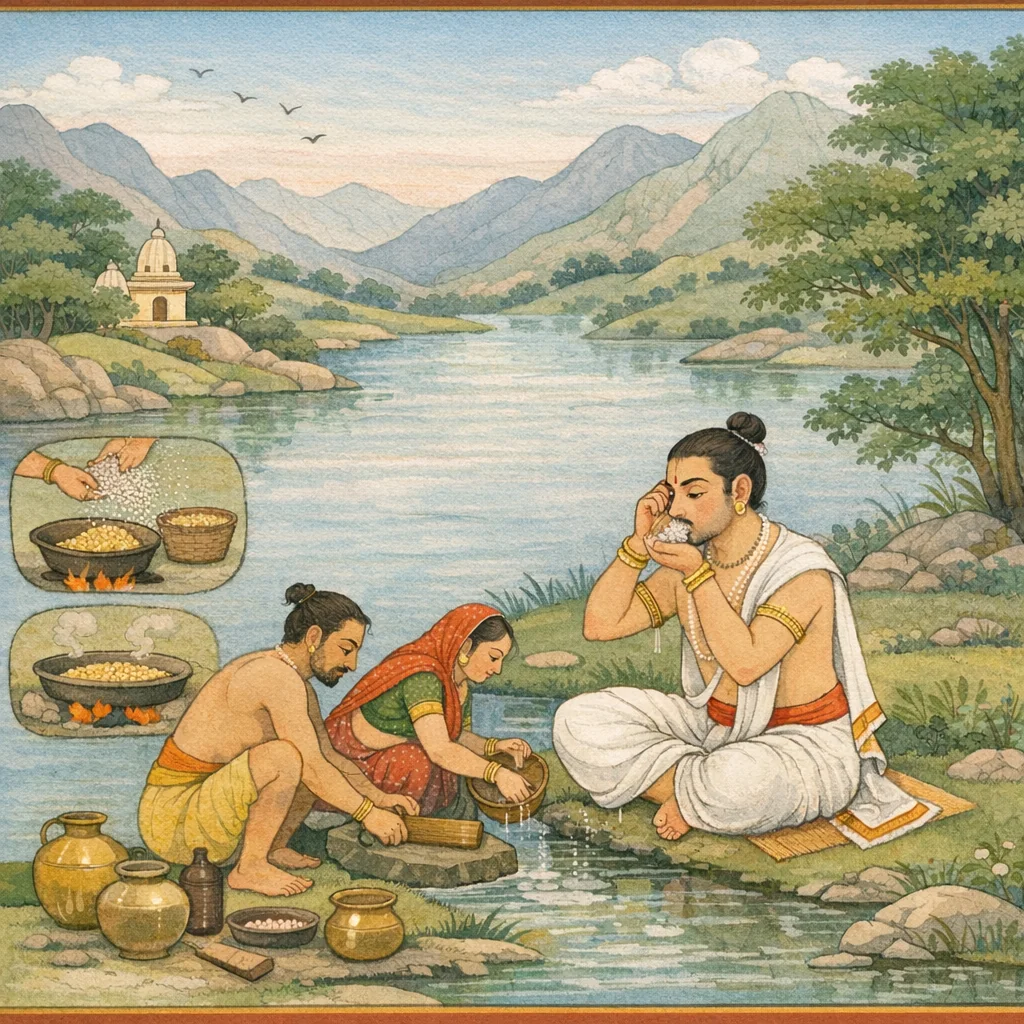
Continuing the Ācāra-kāṇḍa’s practical dharma, Yājñavalkya sets out material-specific rules of purification: gold and silver vessels, and items such as the conch (śaṅkha), rope, and leather are cleansed by prescribed means; seats and vessels by water; offering ladles and grains by sprinkling and by the heat of fire. Wood and horn utensils are purified by scraping and washing, while wool and silk are treated with warm water and cow’s urine. The chapter then turns from objects to conduct: careless eating—gazing at a woman’s face while receiving alms, or consuming re-cooked, dusty, or insect/hair-tainted food—brings sin. Further methods are given (ash, sweeping, alkaline/acidic/plain water for different metals), and “unseen impurity” is acknowledged, with earth and water emphasized for removing odor and coating. It lists what is unsuitable (water that has flowed to the ground after a cow drinks; meat defiled by contact with dogs or caṇḍālas). Finally, it codifies repeated ācamana after common actions (bathing, drinking, sneezing, sleep, eating, moving in public) and specifies five occasions where ear-touch replaces ācamana, establishing a baseline discipline of purity for the chapters that follow.
Shlokas
Verse 1
नाम षण्णवतितमो ऽध्यायः याज्ञवल्क्य उवाच / द्रव्यशुद्धिंप्रवक्ष्यामि तन्निबोधत सत्तमाः / सौवर्णराजताब्जानां शङ्खरज्ज्वादिचर्मणाम्
This is called Chapter Ninety-Seven. Yājñavalkya said: “I shall explain the purification of substances; listen attentively, O best among the virtuous—the purification of vessels made of gold and silver, and of items such as the conch (śaṅkha), rope, and leather.”
Verse 2
पात्राणां चासनानां च वारिणा शुद्धिरिष्यते / उष्णवाभः स्त्रुक्स्त्रुवयोर्धान्यादेः प्रोक्षणेन च
The purification of vessels and seats is ordained by water. For the ritual ladles (struk and struva), and for grains and the like, purification is done by sprinkling, and also by the heat and radiance of the sacred fire (Agni).
Verse 3
तक्षणाद्दारुशृङ्गादेर्यज्ञपात्रस्य मार्जनात् / सोष्णैरुदकगोमूत्रैः शुध्यत्याविककौशिकम्
A sacrificial vessel made of wood, horn, and the like is purified by scraping and by thorough cleansing. Likewise, items of sheep’s wool and of silk are purified by warm water and by cow’s urine (gomūtra).
Verse 4
भैक्ष्यं योषिन्मुखं पश्यन्पुनः पाकान्महीमयम् / गाघ्नाते ऽन्ने तथा केशमक्षिकाकीटदूषिते
One who, while taking alms-food, keeps gazing upon a woman’s face, and who again eats food that has been re-cooked, food tainted by earth’s dust, or food spoiled by hair, flies, or insects—incurs sin through such eating.
Verse 5
भस्मक्षेपाद्विशुद्धिः स्याद्भूशुद्धिर्माजनादिना / त्रपुसीसकताम्राणां क्षाराम्लोदकवारिभिः
Purification is attained by sprinkling (or applying) ashes; purification of the ground is accomplished by sweeping and related acts of cleaning. Vessels made of tin, lead, and copper are purified by washing with alkaline water, acidic water, and plain water.
Verse 6
भस्माद्भिर्लोहकांस्यानामज्ञातं च सदा शुचि / अमेध्याक्तस्य मृत्तोयैर्गन्धलेपापकर्षणात्
Metals and bronze (kāṃsya) are purified by ash and water; even unseen impurity is ever cleansed. When something has been smeared with impure matter, it is purified by earth and water, for they remove foul odor and the clinging stain and coating.
Verse 7
शुचि गोतृप्तिदं तोयं प्रकृतिस्थं महीगतम् / तथा मांसं श्वचाण्डालक्रव्यादादिनिपातितम्
Even pure water that quenches a cow’s thirst, once it has, in its natural course, reached the ground, is to be regarded as unfit; likewise, meat that has fallen through the agency of dogs, Caṇḍālas, carrion-eaters, and the like is deemed impure and unsuitable.
Verse 8
रश्मिरग्नी रजश्छाया गौरश्वो वसुधानिलाः / अश्वाजविप्रुषो मेध्या स्तथाचमनबिन्दवः
Rays of light and fire, dust and shadow, the pale horse, earth and wind—also the droplets that spray from a swift horse, the purifying substances, and likewise the drops of water used for ācamana (ritual sipping).
Verse 9
स्नात्वा पीत्वा क्षुते सुप्ते भुक्त्वा रथ्याप्रसर्पणे / आचान्तः पुनराचामेद्वासो ऽन्यत्परिधाय च
After bathing, after drinking, after sneezing, after sleeping, after eating, and after moving about in public streets—even one who has already performed ācamana should perform ācamana again, and also put on a fresh, clean garment.
Verse 10
क्षुते निष्ठीविते स्वापे परिधाने ऽश्रुपातने / पञ्चस्वेतेषु नाचामेद्दक्षिणं श्रवणं स्पृशेत् / तिष्ठन्त्यग्न्यादयो देवा विप्रकर्णे तु दक्षिणे
After sneezing, spitting, sleeping, putting on clothing, or when tears have fallen—on these five occasions one should not perform ācamana; instead, one should touch the right ear. For the deities beginning with Agni are said to abide in the right ear of a brāhmaṇa.
Frequently Asked Questions
The chapter assigns methods by material: water for vessels/seats; sprinkling and fire-heat for ladles and grains; scraping plus washing for wood/horn; warm water and cow’s urine for wool/silk; alkaline/acidic/plain water for tin/lead/copper; ash and water for metals/bronze; and earth with water for smeared impurities that leave odor or coating.
It advises repeating ācamana after bathing, drinking, sneezing, sleeping, eating, and moving about in public streets—even if ācamana was already done—along with putting on a fresh garment.
After sneezing, spitting, sleeping, putting on clothing, or when tears have fallen, one should not perform ācamana; instead, one should touch the right ear, since deities beginning with Agni are said to abide there.