Adhyaya 144
Harivaṁśa-saṅkṣepa: Kṛṣṇa’s Avatāra Deeds, Dynastic Continuity, and Post-departure Succession
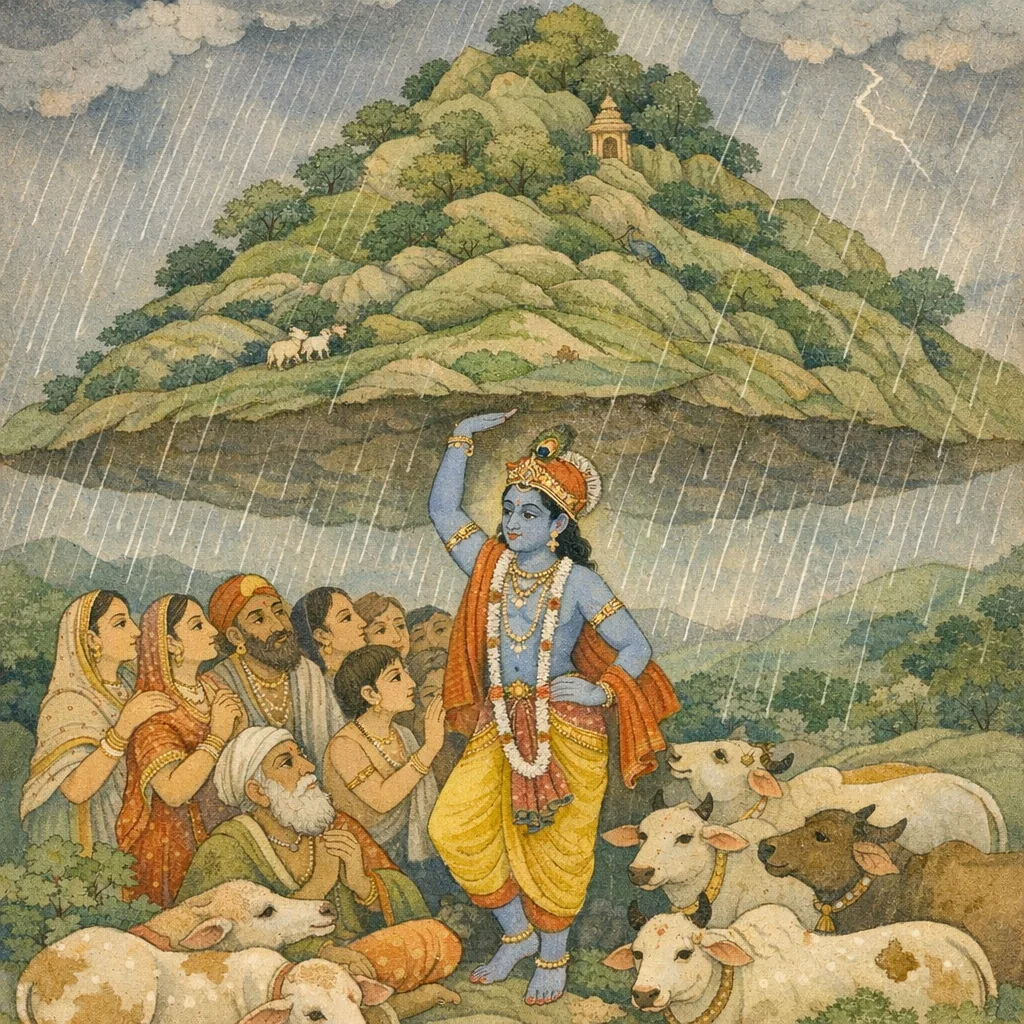
Brahmā proclaims Hari’s lineage, declaring that Kṛṣṇa was born of Vasudeva and Devakī, and recounts the hallmark avatāra deeds done to protect dharma: the destruction of Pūtanā, the safeguarding of Vraja (overturning the cart and breaking the twin Arjuna trees), the subduing of Kāliya, and the slaying of Dhenuka. The narrative then moves to Kṛṣṇa’s public revelation of sovereignty—lifting Govardhana and receiving Indra’s homage—followed by the removal of burdensome forces (Ariṣṭa and Keśī), securing the community’s joy. It shifts from pastoral līlā to royal-arena justice with the killing of Cāṇūra and Muṣṭika and the overthrow of Kaṁsa. Brahmā lists Kṛṣṇa’s chief queens and vast household, linking divine kingship with dynastic continuity: Pradyumna’s killing of Śambara, Aniruddha’s marriage to Uṣā, and the dharma-driven conflict with Śiva at Bāṇa’s city where Bāṇa’s arms are cut down. The chapter closes by recalling Naraka’s death and the Pārijāta episode, and points ahead to Kṛṣṇa’s departure and Vajra’s kingship, with Mathurā stabilized under Ugrasena and divine protection reaffirmed.
Shlokas
Verse 1
त्रिचत्वारिंशदुत्तरशततमो ऽध्यायः ब्रह्मोवाच / हरिवंशं प्रवक्ष्यामि कृष्णमाहात्म्यमुत्तमम् / वसुदेवात्तु देवक्यां वासुदेवो बलो ऽभवत्
Brahmā said: “I shall proclaim the lineage of Hari—the supreme glory of Kṛṣṇa. From Vasudeva, in Devakī, Vāsudeva (Kṛṣṇa), mighty in strength, was born.”
Verse 2
धर्मादिरक्षणार्थाय ह्यधर्मादिविनष्टये / कृष्णः पीत्वा स्तनौ गाढं पूतनामनयत्क्षयम्
To protect dharma and to destroy adharma and the like, Kṛṣṇa, having firmly sucked her breasts, brought Pūtanā to her end.
Verse 3
शकटः परिवृत्तो ऽथ भग्नौ च यमलार्जुनौ / दमितः कालियो नागो धेनुको विनिपातितः
Then the cart was overturned; the twin Arjuna trees were broken; the serpent Kāliya was subdued; and Dhenuka was struck down.
Verse 4
धृतो गोवर्धनः शैल इन्द्रेण परिपूजितः / भारावतरणं चक्रे प्रतिज्ञां कृतवान्हरिः
Hari lifted the Govardhana mountain and was duly honored by Indra; he also undertook the task of lightening the burden of the earth and fulfilled the promise he had made.
Verse 5
रक्षणायार्जुनादेश्च ह्यरिष्टादिर्निपातितः / केशी विनिहतो दैत्यो गोपाद्याः परितोषिताः
For protection, and at Arjuna’s request, Ariṣṭa and the others were struck down; the asura Keśī too was slain, and the gopas—the cowherds—and all the rest rejoiced.
Verse 6
चाणूरो मुष्टिको मल्लः कंसो मञ्चान्निपातितः / रुक्मिणीसत्यभामाद्याः ह्यष्टौ पत्न्यो हरेः पराः
Cāṇūra and Muṣṭika, the wrestlers, were slain, and Kaṁsa was cast down from the arena-platform. Rukmiṇī, Satyabhāmā, and the others are indeed the eight exalted wives of Hari (Śrī Kṛṣṇa).
Verse 7
षोढश स्त्रीसहस्राणि ह्यन्यान्यास महात्मनः / तासां पुत्राश्च पौत्राद्याः शतशो ऽथ सहस्रशः
That great-souled one had sixteen thousand other women; and from them were born sons, and grandsons and the rest—by the hundreds, and indeed by the thousands.
Verse 8
रुक्मिण्याञ्चैव प्रद्युम्नो न्यवधीच्छंबरञ्च यः / तस्य पुत्रो ऽनिरुद्धो ऽभूदुषाबाणसुतापतिः
From Rukmiṇī was born Pradyumna, who also slew Śambara; and his son was Aniruddha, who became the husband of Uṣā, the daughter of Bāṇa.
Verse 9
हरिशकरयोर्यत्र महायुद्धं बभूव ह / बाणबाहुसहस्रञ्च च्छिन्नं बाहुद्वयं ह्यभूत्
There, a great battle took place between Hari (Viṣṇu) and Śaṅkara (Śiva); and Bāṇa’s thousand arms were cut down, leaving him with only two arms.
Verse 10
नरको निहतो येन पारिजातं जहार यः / बलश्च शिसुपालश्च हतश्च द्विविदः कपिः
That Supreme Lord—by whom Naraka was slain, who bore away the Pārijāta tree; by whom Bala and Śiśupāla were killed, and also Dvivida the monkey—is praised.
Verse 11
अनिरुद्धादभूद्वज्रः स च राजा गते हरौ / सन्दीपनिं गुरुञ्चक्रे सपुत्रञ्च चकार सः / मथुरायां चोग्रसेनं पालनं च दिवौकसाम्
From Aniruddha was born Vajra. When Hari had departed, he became king. He accepted Sāndīpani as his guru, together with the guru’s son. In Mathurā he installed Ugrasena to govern, and he also undertook the protection of the gods, the heavenly beings.
Frequently Asked Questions
These acts are presented as protective interventions (rakṣaṇa) where Hari removes immediate threats to the innocent and restores moral-spiritual balance in the community, illustrating avatāra as compassionate governance rather than mere violence.
Purāṇic narration typically uses such conflicts to show dharma’s resolution through divine agency; the episode underscores functional roles within cosmic order, not sectarian rivalry—Bāṇa is restrained, and balance is restored.