Adhyaya 103
Bhikṣu-Dharma and the Paramahaṃsa Ideal
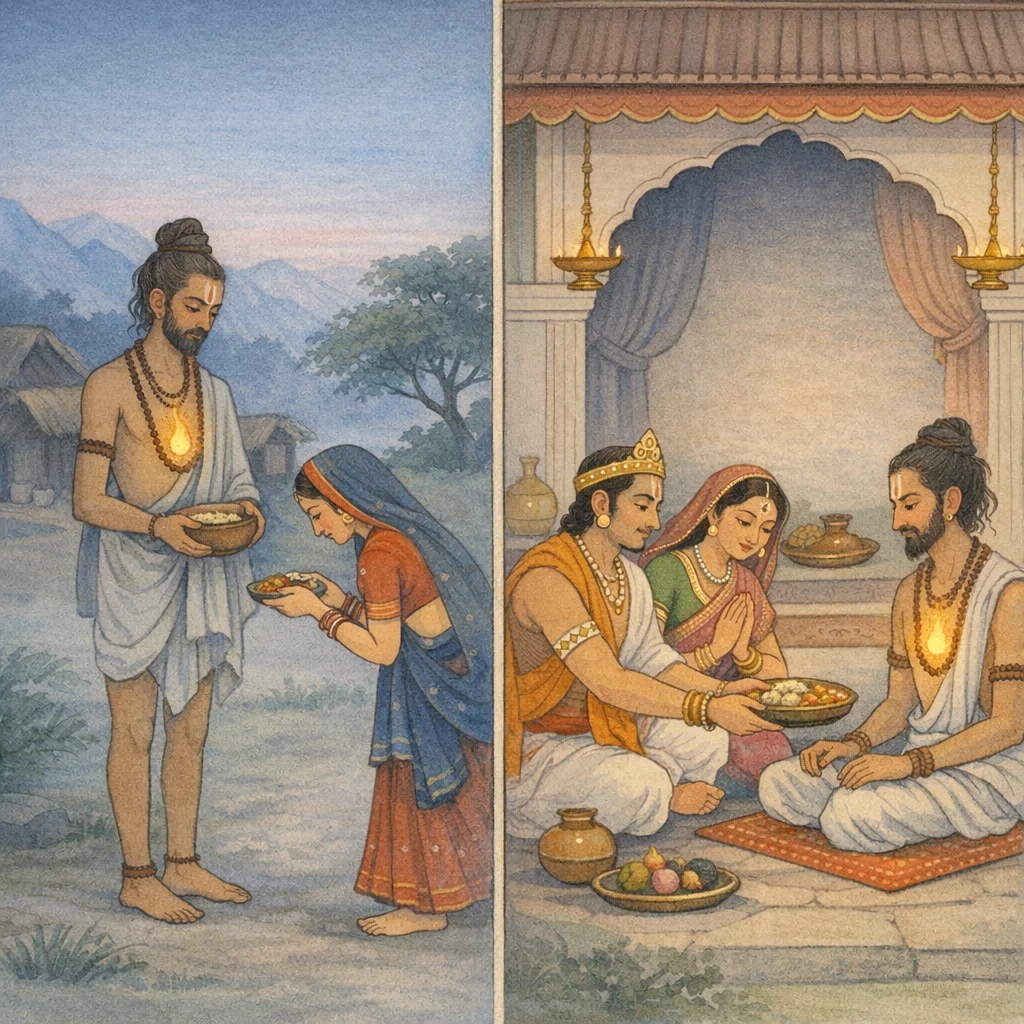
Continuing the Ācāra Khaṇḍa’s focus on right conduct, Yājñavalkya sets forth the dharma of the bhikṣu after one has properly completed Vedic duties and sacrifices, paying the due priestly fees. The renunciant is said to internalize the sacrificial fire at the close of the prājāpatya rite, becoming serene and devoted to the welfare of all beings, bearing the tridaṇḍa and kamaṇḍalu. He avoids places of pleasure, enters a village only for alms, and begs quietly late in the day without drawing notice. The chapter then distinguishes ascetic ranks: one who wanders little and is free from greed may become a Paramahaṃsa; or, taking a single staff, one lives under yama-like restraints and disciplines. It concludes by linking yogic perfection with liberation upon leaving the body, while affirming that householders devoted to charity, honoring guests, and performing śrāddha can also attain release—showing how disciplined action and inner detachment converge toward mokṣa.
Shlokas
Verse 1
नाम द्व्युत्तरशततमो ऽध्यायः याज्ञवल्क्य उवाच / भिक्षोर्धर्मं प्रवक्ष्यामितं निबोधत सत्तमाः / वनाद्गृहाद्वा कृत्वेष्टिं सर्ववेदसदक्षिणाम्
Yājñavalkya said: “Now I shall expound the dharma of the bhikṣu (mendicant); grasp it well, O best among the virtuous. Having performed the prescribed sacrifice—whether in the forest or at home—together with the dakṣiṇā, the priestly offering, in accordance with all the Vedas…”
Verse 2
प्राजापत्यन्तदन्ते ऽपि अग्निमारोप्य चात्मनि / सर्वभूतहितः शान्तस्त्रिदण्डी सकमण्डलुः
Even at the final stage of the Prajāpatya rite, having kindled and स्थापित the sacred fire within himself, he becomes peaceful and intent on the welfare of all beings—bearing the triple staff (tridaṇḍa) and carrying the water-pot (kamaṇḍalu).
Verse 3
सर्वारामं परिव्रज्य भिक्षार्थो ग्राममाश्रयेत् / अप्रमत्तश्चरेद्भैक्ष्यं सायाह्ने नाभिलक्षितः
Having wandered away from all places of pleasure, one seeking alms should resort to a village; remaining vigilant, he should go for bhikṣā in the late afternoon or evening, without drawing attention to himself.
Verse 4
रोहिते भिक्षुकैर्ग्रामे यात्रामात्र मलोलुपः / भवेत्परमहंसो वा एकदण्डी यमादितः
In a village thronged with beggars, one who travels only as needed and is not greedy for impure gains may become a Paramahaṃsa; or, adopting the single staff (ekadaṇḍa), he becomes one restrained by Yama and the other disciplines of yama.
Verse 5
सिद्धयोगस्त्यजन्देहममृतत्वमिहाप्नुयात् / दातातिथिप्रियो ज्ञानी गृही श्राद्धे ऽपिमुच्यते
A yogin perfected in yoga, abandoning the body, attains immortality here—liberation (mokṣa). Even a householder—wise, devoted to dāna (charity) and delighting in honoring guests—is freed as well through the merit of śrāddha.
Frequently Asked Questions
The text associates Paramahaṃsa status with minimal, need-based travel and freedom from greed for gain, indicating a mature non-attachment where conduct is governed by inner realization rather than acquisition.
It disciplines ego (ahaṃkāra), reduces performative religiosity, and reinforces aparigraha; by taking only what is necessary and remaining vigilant, the bhikṣu turns livelihood into sādhanā.
Śrāddha is framed as a dharmic act that refines intention, supports ancestral obligations, and expresses generosity; combined with dāna and honoring guests, it purifies karma and aligns the householder with liberating merit and detachment.