Adhyaya 102
Vānaprastha-Dharma: Forest Discipline, Vows, Seasonal Tapas, and Equanimity
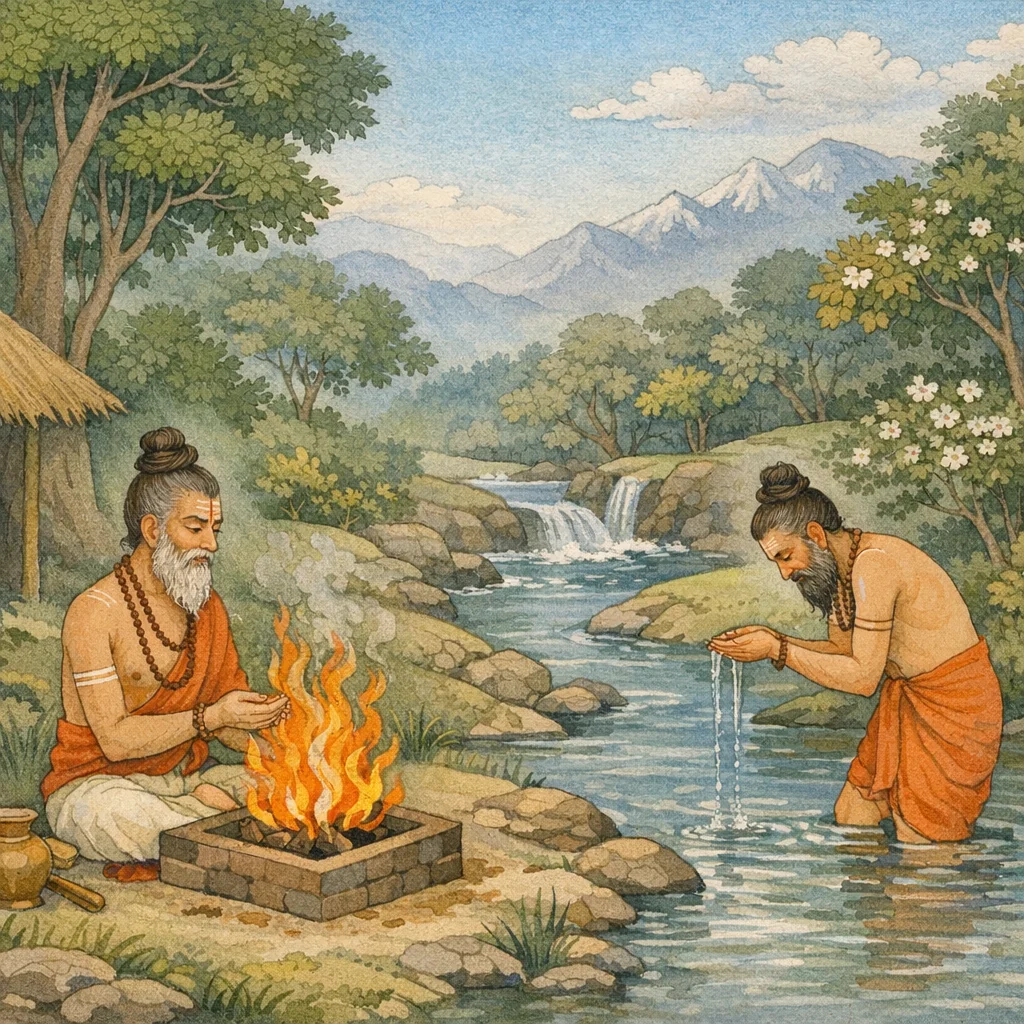
Continuing the Ācāra-khaṇḍa’s guidance on the āśramas, Yājñavalkya explains the Vānaprastha stage: formally leaving household life after entrusting one’s wife to one’s sons (or departing with her). The chapter sets a Veda-centered forest regimen—keeping the sacred fires, worship, forbearance, and living on food obtained without ploughing—while honoring Devas, Pitṛs, and guests. It describes ascetic marks such as matted hair and beard, bathing at the three sandhyās, refusing gifts, and collecting necessities in measured ways. It then prescribes austerities and vows: giving up processed foods in Āśvayuja, eating very sparingly (the dantolūkhalika ideal), observing Cāndrāyaṇa, sleeping on the ground, and seasonal tapas (pañcāgni in summer, resting on a sthāṇḍila in the rains, damp garments in winter with yoga). The teaching culminates in equanimity—remaining content and angerless whether harmed or honored—preparing the mind for deeper renunciation to follow.
Shlokas
Verse 1
नामैकोत्तरशततमो ऽध्यायः याज्ञवल्क्य उवाच / वानप्रस्थाश्रमं वक्ष्ये तच्छृण्वन्तु महर्षयः / पुत्रेषु भार्यां निः क्षिप्य वनं गच्छेत्सहैव वा
Yājñavalkya said: “I shall explain the discipline of the Vānaprastha (forest-dweller) stage—let the great sages listen. Having entrusted one’s wife to one’s sons, one should depart to the forest—either alone or together with her.”
Verse 2
वानप्रस्थो ब्रह्मचारी साग्निः सोपासनः क्षमी / अफालकृष्टेनाग्नींश्च पितृदेवातिथींस्तथा
A forest-dweller and a brahmacārin should maintain the sacred fires, remain devoted to worship (upāsana), and be forbearing; and with food obtained without ploughing or tilling, he should duly sustain the sacred fires and also honor the Pitṛs, the Devas, and guests.
Verse 3
भृत्यांस्तु तर्पयेच्छ्मश्रुजटालोमभृदात्मवान् / दान्तस्त्रिषवणस्नायी निवृत्तश्च प्रतिग्रहात्
Let the self-controlled man, bearing beard, matted locks (jaṭā), and body-hair as marks of austerity, duly satisfy his dependents and servants. Let him be disciplined, bathe at the three daily sandhyā junctions, and refrain from accepting gifts.
Verse 4
स्वाध्यायवान्ध्यानशीलः सर्वभूतहित रतः (तिः) / अह्नो मासस्य मध्ये वा कुर्याद्वार्थपरिग्रहम्
Endowed with svādhyāya (sacred self-study) and devoted to meditation, delighting in the welfare of all beings, one should, in accordance with dharma, accept or gather the necessary means—wealth or provisions—either at midday or at midmonth.
Verse 5
कृतं त्यजेदाश्वयुजे युञ्जेत्कालं व्रतादिना / पक्षे मासे थवाश्नीयाद्दन्तोलूखलिको भवेत्
In the month of Āśvayuja, one should abandon ‘kṛta’—prepared or processed foods—and devote one’s time to discipline through vows and observances. For a fortnight, or even for a month, one should eat very sparingly; thus one becomes like a dantolūkhalika, living on the simplest fare as if ground by the teeth alone.
Verse 6
चान्द्रायणी स्वपेद्भूमौ कर्म कुर्यात्फलादिना / ग्रीष्मे पञ्चाग्निमध्यस्थो वर्षासु स्थण्डिलेशयः
Observing the Cāndrāyaṇa (lunar) vow, one should sleep upon the ground and perform the prescribed rites while subsisting on fruits and the like. In summer one should practice the austerity of standing amid the five fires, and in the rainy season one should lie upon the bare earthen altar (sthāṇḍila).
Verse 7
आर्द्रवासास्तु हेमन्ते योगाभ्यासाद्दिनं नयेत् / यः कण्टकैर्वितुदति चन्दनैर्यश्च लिम्पति / अक्रुद्धः परितुष्टश्च समस्तस्य च तस्य च
In the winter season (hemanta), one should wear damp garments and pass the day in the practice of yoga. Toward one who pricks with thorns and one who anoints with sandal paste—toward both, and toward all alike—he remains free from anger and abides in contentment.
Frequently Asked Questions
It indicates a reduced-violence, low-attachment livelihood: living on naturally available forest produce (fruits, roots, gleanings) rather than agriculture-driven accumulation, aligning sustenance with tapas and non-possessiveness while still maintaining sacrificial duties.
Cāndrāyaṇa is a regulated lunar-discipline of intake and restraint used to purify body and mind, strengthen self-control, and support ritual steadiness; here it functions as a structured bridge from household abundance to ascetic simplicity.