Adhyaya 101
Graha-yajña-vidhi (Procedure for the Planetary Sacrifice)
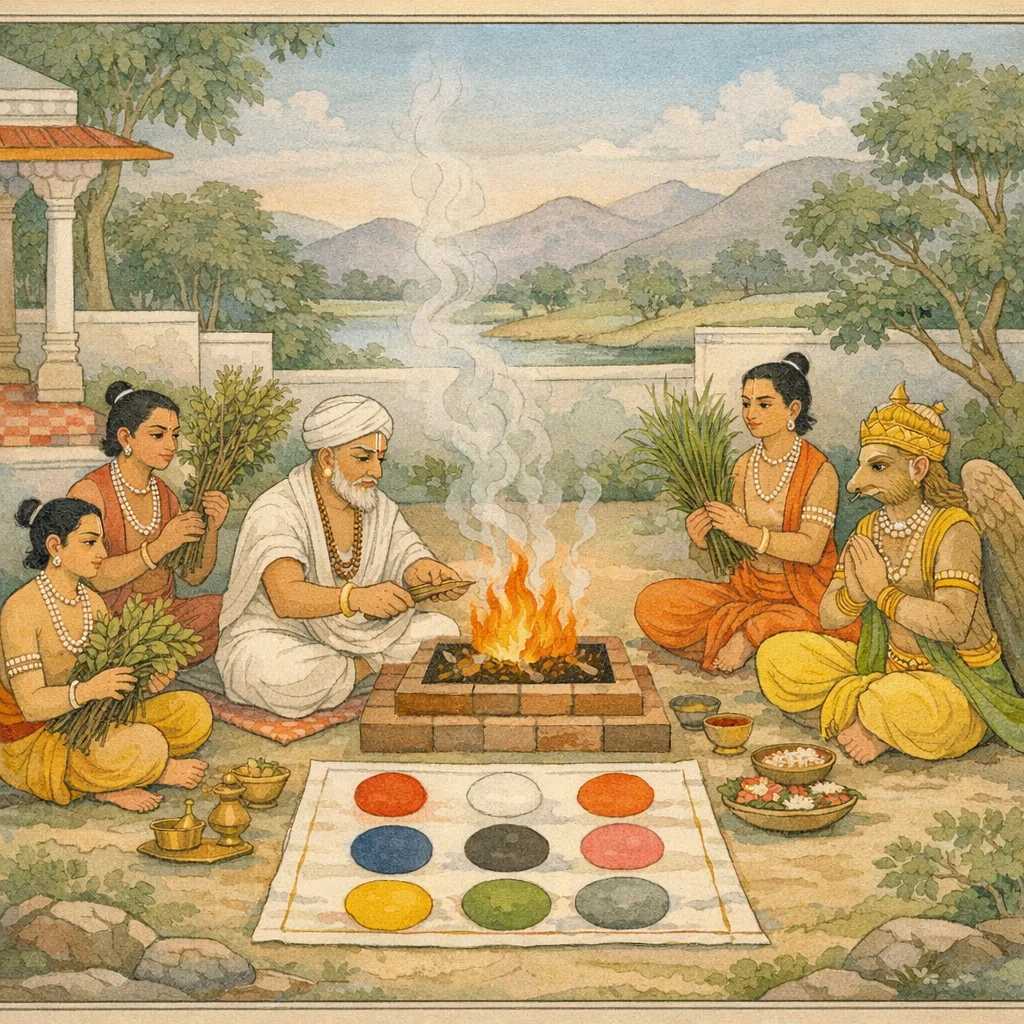
Continuing the ācāra-centered practical instruction, Yājñavalkya teaches a remedial, prosperity-seeking Graha-yajña for those desiring śānti, aiśvarya, or relief from graha-doṣa and abhicāra. He first lists the Navagrahas (Sūrya through Ketu), then gives ritual correspondences—especially color groupings tied to metals and substances—for preparing planetary figures drawn on cloth. The rite includes bathing the figures, performing homa with planet-suited materials, and offering bali, fragrances, and incense (notably guggulu), all in a strict mantric sequence. He then enumerates samidh (arka, palāśa, khadira, apāmārga, pippala, audumbara, śamī, dūrvā, kuśa) and cooked offerings (honey-ghee, curd, jaggery-rice, milk-rice, ṣāṣṭika havis, cakes, meat, and assorted foods). The chapter ends with dakṣiṇā items and affirms that steady Graha worship grants sovereignty and other prosperities, preparing for later chapters that refine prayoga, timings, and related observances.
Shlokas
Verse 1
नाम शततमो ऽध्यायः याज्ञवल्क्य उवाच / श्रीकामः शान्तिकामो वा ग्रहदृष्ट्यभिचारवान् / ग्रहयञ्ज्ञं समं कुर्याद्गहाश्चैते बुधैः स्मृताः
Chapter one hundred and one. Yājñavalkya said: Whether one desires prosperity, or seeks peace, or is afflicted by harmful planetary influences and sorcery (abhicāra), one should duly perform the planetary sacrifice, the graha-yajña. These are the grahas as remembered by the wise.
Verse 2
सूर्यः सोमो मङ्गलश्च बुधश्चैव बृहस्पतिः / शुक्रः शनैश्चरो राहुः केतुर्ग्रहगणाः स्मृताः
Sūrya (the Sun), Soma (the Moon), Maṅgala (Mars), Budha (Mercury), Bṛhaspati (Jupiter), Śukra (Venus), Śanaiścara (Saturn), Rāhu, and Ketu—these are remembered as the host of planetary grahas.
Verse 3
ताम्रकात्स्फाटिकाद्रक्तचन्दनात्स्वर्णकादुभौ / रजतादयसः सीसात्कांस्याद्वर्णान्निबोधत
Know the various color-types (or complexions) derived from copper, crystal (sphāṭika), red sandalwood, and gold; likewise from silver, iron, lead, and bronze—understand these classifications.
Verse 4
रक्तः शुक्लस्तथा रक्तः पीतः पीतः सितोसितः / कृष्णः कृष्णः क्रमाद्वर्णा द्रव्याणि मुनयस्ततः
Red, white, again red; yellow, again yellow; pale-white; and black, again black—thus, in due sequence, the sages declare the colors of the ritual substances.
Verse 5
स्थापयेद्गहवर्णानि होमार्थं प्रलिखेत्पटे / स्नापयेद्धोमयेच्चैव ग्रहद्रव्यैर्विधानतः / सुवर्णानि प्रदेयानि वासांसि सुसुमानि च
For the fire-offering (homa), one should set up the emblems of the planets’ colors and draw them upon a cloth. Then one should bathe and purify them, and duly perform the homa with the substances prescribed for each graha. Gold should be given in charity, along with garments and fine flowers.
Verse 6
गन्धाश्च बलयश्चैव धूपो देयश्चगुग्गुलुः / कर्तव्यास्तत्र मन्त्रैश्च चरवः प्रतिदैवतम्
There one should present fragrances and bali (food-offerings), and offer incense—especially guggulu. With the proper mantras, one should also prepare caru (cooked oblations) and offer them to each deity in turn, in due order.
Verse 7
आकृष्णेन इमन्देवा अग्निर्मूर्धादिवः ककुत् / उब्दुध्यस्वेति जुहुयादेभिरेव यथाक्रमम्
Using the mantra beginning with “Ākṛṣṇa…”, one should offer oblations in proper order, invoking in sequence: “O Devas…”, “Agni is the head (mūrdhan)”, “the summit of heaven (divaḥ kakut)”, and “Awaken (ubdudhyasva)!”—each as prescribed.
Verse 8
बृहस्पतेपरिदीयेति सर्वे अन्नात्परिसुतम् / शन्नोदेवी कयानश्च केतुङ्क्रण्वन्निति क्रमात्
In due sequence, all these mantras are to be recited: “O Bṛhaspati, bestow all around…”; then “that which is pressed from food…”; then “May the Goddess be auspicious to us…”; then “By what means will you lead us…”; and then “Making the banner of light for us…”—in that order.
Verse 9
अर्कः पलाशः खदिरस्त्वपामार्गो ऽथ पिप्पलः / औदुम्बरः शमी दूर्वा कुशाश्च समिधः क्रमात्
In due order, the ritual fuel-sticks (samidh) are: arka, palāśa, khadira, apāmārga; then pippala, audumbara, śamī, dūrvā, and kuśa.
Verse 10
होतव्या मधुसर्पिर्भ्यां दध्ना चैव समन्वितः / गुडौदनं पायसं च हविष्यं क्षीरषाष्टिकम्
One should offer havis prepared with honey and ghee, together with curd; also jaggery-rice and sweet milk-rice (pāyasa), and the sacred havis—especially the milk-based ṣāṣṭika preparation.
Verse 11
दध्योदनं हविः पूपान्मांसं चित्रान्नमेव च / दद्याद्गहक्रमादेतान् ग्रहेभ्यो भाजनं ततः
One should offer rice mixed with curd (dadhi-odana), havis, cakes (pūpa), meat, and assorted prepared foods—presenting them in the proper sequence to the Grahas (planetary deities); thereafter one should donate vessels and utensils to them.
Verse 12
धेनुः शङ्खस्तथानड्वान्हेम वासो हयस्तथा / कृष्णा गौरायसं छाग एता वै दक्षिणाः क्रमात् / ग्रहाः पूज्याः सदा यस्माद्रज्यादि प्राप्यते फलम्
A cow, a conch, a bull, gold, garments, and a horse; likewise a black cow, a white cow, an iron object, and a goat—these are the dakṣiṇā (ritual gifts), in due order. The Grahas (planetary deities) should always be worshipped, for from that worship one obtains results such as sovereignty and other prosperities.
Frequently Asked Questions
The chapter lists nine Grahas: Sūrya (Sun), Candra (Moon), Maṅgala (Mars), Budha (Mercury), Bṛhaspati (Jupiter), Śukra (Venus), Śani (Saturn), Rāhu, and Ketu.
In sequence the samidh are: arka, palāśa, khadira, apāmārga, pippala, audumbara, śamī, dūrvā, and kuśa.
The text mentions honey and ghee oblations, curd, jaggery-rice, sweet milk-rice, milk-based havis (including ṣāṣṭika preparation), rice mixed with curd, cakes, meat, and assorted prepared foods, offered in proper sequence to the planetary deities.
Dakṣiṇā is presented as an integral completion of the rite—an act of dāna that seals the worship and aligns it with dharma. The chapter lists graded gifts (including cows, metals, garments, and other items) and states that worship of the Grahas yields results like sovereignty and prosperity.