Adhyaya 19
ललितापरमेश्वरी-सेनाजय-यात्रा (Lalitā Parameśvarī’s Army-March for Victory)
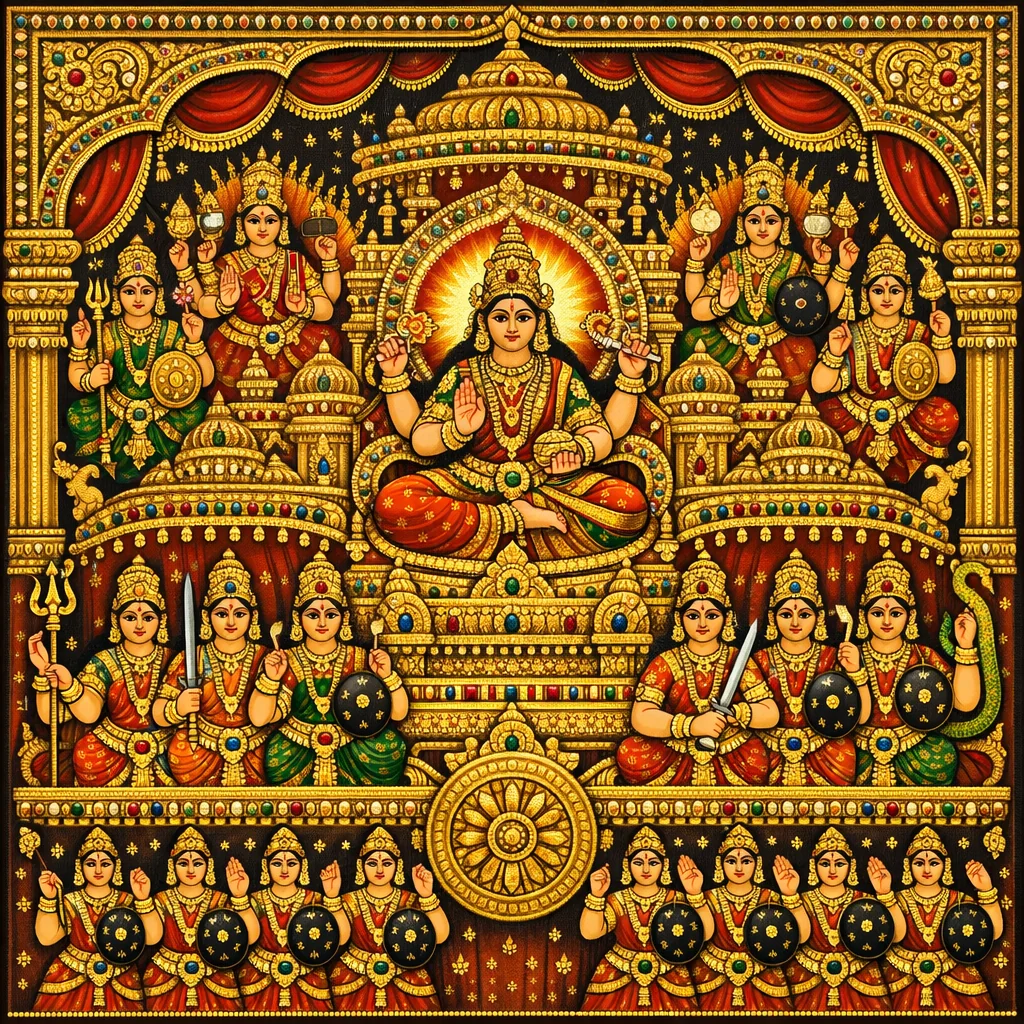
Within the Lalitopākhyāna setting, this chapter unfolds as a dialogue: Agastya asks Hayagrīva which manifest deities are stationed on the various “parvans” (segments/phases) of Cakrarāja’s radiant imperial chariot (rathendra). Hayagrīva begins a structured catalogue. (1) He first enumerates the Siddhi-devīs—yogic attainments personified (Aṇimā, Mahimā, Laghimā, Garimā, Īśitā, Vaśitā, Prāpti, Siddhi, along with allied powers such as Prākāmya, Mukti-siddhi, Sarvakāma)—noting their iconographic marks (many-armed forms, hibiscus/japā-like redness) and sacred weapons/implements such as kapāla, triśūla, and cintāmaṇi motifs. (2) Next he places the Aṣṭa-śakti/Brahmādyā group (Brāhmī, Māheśvarī, Kaumārī, Vaiṣṇavī, Vārāhī, Māhendrī, Cāmuṇḍā, Mahālakṣmī) in the chariot’s fore-section, acknowledging variant meditation-forms and armaments resembling their corresponding deities. (3) The account then turns to the Mudrā-devīs—gesture-personifications—describing their positions, hand-signs, colors, and weapons (e.g., shield and sword), and listing functional names such as Sarvasaṃkṣobhiṇī, Sarvavidrāviṇī, Sarvākarṣaṇī, Sarvavaśaṅkarī, Sarvonmādanī, Sarvamahāṅkuśā, Sarvakhecarī, Sarvabījā, Sarvayoni, Sarvatriśaṇḍikā as prakaṭa-śaktis (manifest powers). The chapter’s logic is taxonomic: Lalitā’s march to victory is mapped not merely as battle, but as a cosmology of powers—siddhis, mother-forces, and ritual mudrās—distributed across the yantric geometry implied by Cakrarāja’s chariot.
Shlokas
Verse 1
इति श्रीब्रह्माण्डमहापुराणे उत्तरभागे हयग्रीवागस्त्यसंवादे ललितोपाख्याने ललितापरमेश्वरीसेनाजय यात्रा नामाष्टादशो ऽध्यायः अगस्त्य उवाच चक्रराजरथेन्द्रस्य याःपर्वणि समाश्रिताः / देवता प्रकटाभिख्यास्तासामाख्यां निवेदय
Thus, in the Śrī Brahmāṇḍa Mahāpurāṇa, in the Uttara section, within the dialogue of Hayagrīva and Agastya in the Lalitopākhyāna, is the eighteenth chapter called “The Victory-March of the Army of Lalitā Parameśvarī.” Agastya said: “Declare to me the names of the renowned deities who have manifested and taken their stations upon each part of the Cakrarāja Rathendra.”
Verse 2
संख्याश्च तासामखिला वर्णभेदांश्च शोभनान् / आयुधानि च दिव्यानि कथयस्व हयानन
O Hayānana, tell the full count of them, their lovely distinctions of hue, and their divine weapons as well.
Verse 3
हयग्रीव उवाच नवमं पर्व दीप्तस्य रथस्य समुपस्थिताः / तश प्रोक्ता सिद्धिदेव्यस्तासां नामानि मच्छृणु
Hayagrīva said: “Upon the ninth section of the radiant chariot stand the goddesses known as Siddhi; hear their names from me.”
Verse 4
अणिमा महिमाचैव लघिमा गरिमा तथा / ईशिता वशिता चैव प्राप्तिः सिद्धिश्च सप्तमी
Aṇimā, Mahimā, Laghimā, and Garimā; likewise Īśitā, Vaśitā, Prāpti, and the seventh, Siddhi.
Verse 5
प्राकाम्यमुक्तिसिद्धिश्च सर्वकामाभिधापरा / एतादेव्यश्चतुर्बाह्व्यो जपाकुसुमसंनिभाः
Prākāmya, Mukti, and Siddhi—Goddesses who bestow every desire—are four-armed and radiant like the crimson japa flower.
Verse 6
चिन्तामणिकपालं च त्रिशूलं सिद्धिकज्जलम् / दधाना दयया पूर्णा योगिभिश्च निषेविताः
They bear a skull adorned with Cintāmaṇi, a trident, and the kajjal that grants siddhis; filled with compassion, they are attended by yogins.
Verse 7
तत्र पूर्वार्द्धभागे च ब्रह्माद्या अष्ट शक्तयः / ब्राह्मी माहेश्वरी चैव कौमारी वैष्मवी तथा / वाराही चैव मांहेन्द्री चामुण्डा चैव सप्तमी
There, in the eastern half, are the eight Śaktis beginning with Brahmā: Brāhmī, Māheśvarī, Kaumārī, Vaiṣṇavī, Vārāhī, Māhendrī, Cāmuṇḍā, and Saptamī.
Verse 8
महालक्ष्मीरष्टमी च द्विभुजाः शोणविग्रहाः / कपालमुत्पलं चैव बिभ्राणा रक्तवाससः
Mahālakṣmī and Aṣṭamī are two-armed, red in form; they bear a skull and an utpala lotus, clad in crimson garments.
Verse 9
अथ वान्य प्रकारेण केचिद्ध्यानं पचक्षते / ब्रह्मादिसदृशाकारा ब्रह्मादिसदृशायुधाः
Others describe the meditation in another manner: their forms resemble Brahmā and the primal gods, and their weapons too are like those of Brahmā and the rest.
Verse 10
ब्रह्मादीनां परं चिह्नं धारयन्त्यः प्रकीर्तिताः / तासामूर्ध्वस्थानगतां मुद्रा देव्यो महत्तराः
Those Goddesses are proclaimed as bearers of the supreme emblem of Brahmā and the foremost deities. The mudrā of those most exalted Devīs abides in the higher station.
Verse 11
मुद्राविरचनायुक्तैर्हस्तैः कमलकान्तिभिः / दाडिमीपुष्पसङ्काशाः पीतांबरमनोहराः
With lotus-lustrous hands skilled in forming mudrās, they shine like pomegranate blossoms, enchanting in their sacred yellow garments.
Verse 12
चतुर्भुजा भुजद्वन्द्वधृतचर्मकृपाणकाः / मदरक्तविलोलाक्ष्यस्तासां नामानि मच्छृणु
They are four-armed, bearing hide and sword (kṛpāṇa) in a pair of hands. With eyes unsteady and reddened by sacred rapture—hear their names from me.
Verse 13
सर्वसंक्षोभिणी चैव सर्वविद्राविणी तथा / सर्वाकर्षणकृन्मुद्रा तथा सर्ववशङ्करी
One is called Sarva-saṃkṣobhiṇī, and another Sarva-vidrāviṇī; likewise there is the mudrā Sarvākarṣaṇakṛt and also Sarva-vaśaṅkarī.
Verse 14
सर्वोन्मादनमुद्रा च यष्टिः सर्वमहाङ्कुशा / सर्वखेचरिका मुद्रा सर्वबीजा तथापरा
There is the mudrā called Sarvonmādana, the Yāṣṭi (staff), and Sarva-mahāṅkuśā; also the mudrā Sarva-khecarikā, and the supreme one named Sarva-bījā.
Verse 15
सर्वयोनिश्च नवमी तथा सर्वत्रिशण्डिका / सिद्धिब्राहयादिमुद्रास्ता एताः प्रकटशक्तयः
Sarvayoni, Navamī, and Sarvatriśaṇḍikā; and the mudrās such as Siddhi-Brahmī—these are the manifest powers (Śaktis).
Verse 16
भण्डासुरस्य संहारं कर्तुं रक्तरथे स्थिताः / या गुप्ताख्याः पूर्वमुक्तास्तासां नामानि मच्छृणु
To slay Bhaṇḍāsura, they took their station upon the crimson chariot; hear from me the names of those earlier spoken of as “Gupta,” the hidden ones.
Verse 17
कामाकर्षणिका चैव बुद्ध्याकर्षणिका कला / अहङ्काराकर्षिणी च शब्दाकर्षणिका कला
The kalā that draws in kāma (desire), and the kalā that draws in buddhi (intellect); the power that draws in ahaṅkāra (ego), and the kalā that draws in śabda (sound).
Verse 18
स्पर्शाकर्षणिका नित्या रूपाकर्षणिका कला / रसाकर्षणिका नित्या गन्धाकर्षणिका कला
Nityā who draws in sparśa (touch), and the kalā that draws in rūpa (form); nityā who draws in rasa (taste), and the kalā that draws in gandha (fragrance).
Verse 19
चित्ताकर्षणिका नित्या धैर्याकर्षणिका कला / स्मृत्या कर्षणिका नित्या नामाकर्णणिका कला
Nityā who draws in citta (mind-heart), and the kalā that draws in dhairya (steadfastness); nityā who draws in smṛti (remembrance), and the kalā that brings nāma (the sacred Name) to the ear.
Verse 20
बीजाकर्षणिका नित्या चात्मकर्षणिका कला / अमृताकर्षणी नित्या शरीराकर्षिणी कला
This is the eternal kalā that draws forth the seed, and the kalā that draws the ātman; the eternal power that draws amṛta, and the kalā that draws the body.
Verse 21
एताः षोडश शीतांशुकलारूपाश्च शक्तयः / अष्टमं पर्व सम्प्राप्ता गुप्ता नाम्ना प्रकीर्तिताः
These sixteen śaktis are forms of the moon’s kalās; upon reaching the eighth parva, they were renowned by the name “Guptā”.
Verse 22
विद्रुमद्रुमसङ्काशा मन्दस्मित मनोहराः / चतुर्भुजास्त्रिनेत्राश्च चन्द्रार्कमुकुजोज्ज्वलाः
They shone like coral trees, lovely with gentle smiles; four-armed and three-eyed, radiant with crowns of moon and sun.
Verse 23
चापबाणौ चर्मखड्गौ दधाना दिव्यकान्तयः / भण्डासुरवधार्थाय प्रवृत्ताः कुम्भसम्भव
Bearing divine radiance, they held bow and arrows, shield and sword; O Kumbhasambhava, they set forth to slay Bhaṇḍāsura.
Verse 24
सायन्तनज्वलद्दीपप्रख्यचक्ररथस्य तु / सप्तमे पर्वणि कृतावासा गुप्ततराभिधाः
Belonging to the wheel-chariot that gleams like a lamp aflame at dusk, in the seventh parva they made their abode and were called “Guptatarā”.
Verse 25
अनङ्गमदनानङ्गमदनातुरया सह / अनङ्गलेखा चानङ्गवेगानङ्गाङ्कुशापि च
Anaṅgamadanā came with Anaṅgamadanāturā; and Anaṅgalekhā, Anaṅgavegā, and Anaṅgāṅkuśā as well.
Verse 26
अनङ्गमालिग्यपरा एता देव्यो जपात्विषः / इक्षुचापं पुष्पशरान्पुष्पकन्दुकमुत्पलम्
These goddesses, radiant like the japa blossom, were intent on embracing Anaṅga; they bore the sugarcane bow, flower-arrows, a ball of flowers, and the utpala lotus.
Verse 27
बिभ्रत्यो ऽदभ्रविक्रान्तिशालिन्यो ललिताज्ञया / भण्डासुरमभिक्रुद्धाः प्रज्वलन्त्य इव स्थिताः
Mighty in boundless valor, at Lalitā’s command they bore their weapons; enraged at Bhaṇḍāsura, they stood as though aflame.
Verse 28
अथ चक्ररथेन्द्रस्य षष्ठं पर्व समाश्रिताः / सर्वसंक्षोभिणीमुख्याः सम्प्रदायाख्यया युताः
Then they entered the sixth division of Cakrarathendra; the foremost powers, led by Sarvasaṃkṣobhiṇī, were joined in the order called Sampradāya.
Verse 29
वेणीकृतकचस्तोमाः सिंदूरतिलकोज्ज्वलाः / अतितीव्रस्वभावाश्च कालानलसमत्विषः
Their tresses were braided, radiant with sindūra tilaka; their nature was exceedingly fierce, and their splendor matched the fire of Kālānala.
Verse 30
वह्निबाणं वह्निचापं वह्निरूपमसिं तथा / वह्निचक्राख्याफलकं दधाना दीप्तविग्रहाः
They bore a fire-arrow, a fire-bow, a sword formed of fire, and a shield called the “Fire-Chakra,” their bodies blazing with radiant splendor.
Verse 31
असुरेन्द्रं प्रति क्रुद्धाः कामभस्मसमुद्भवाः / आज्ञाशक्तय एवैता ललिताया महौजसः
Wrathful toward the lord of the asuras, born from the ashes of Kāma, these are indeed the command-powers (ājñā-śaktis) of mighty, radiant Lalitā.
Verse 32
सर्वसंक्षोभिणी चैव सर्वविद्राविणी तथा / सर्वाकर्षणिका शक्तिः सर्वाह्लादिनिका तथा
One is the Śakti called “All-Stirring” (Sarva-saṃkṣobhiṇī), another “All-Scattering” (Sarva-vidrāviṇī); one is “All-Attracting” (Sarvākarṣaṇikā), and one “All-Delighting” (Sarvāhlādinikā).
Verse 33
सर्वसंमोहिनीशक्तिः सर्वस्तम्भनशक्तिका / सर्वजृंभणशक्तिश्च सर्वोन्मादनशक्तिका
There is the Śakti “All-Enchanting” (Sarva-saṃmohinī), the Śakti “All-Paralyzing” (Sarva-stambhana); and also “All-Expanding” (Sarva-jṛmbhaṇa) and “All-Maddening” (Sarvonmādana).
Verse 34
सर्वार्थसाधिका शक्तिः सर्वसम्पत्तिपूरणी / सर्वमन्त्रमयी शक्तिः सर्वद्वन्द्वक्षयङ्करी
There is the Śakti “All-Goal-Fulfilling” (Sarvārtha-sādhikā), who completes every prosperity; and the Śakti “All-Mantra-Embodied” (Sarva-mantramayī), who brings all dualities (dvandvas) to dissolution.
Verse 35
एवं तु सम्प्रदायानां नामानि कथितानि वै / अथ पञ्चमपर्वस्थाः कुलोत्तीर्णा इति स्मृताः
Thus indeed the names of the sampradāyas have been declared. Then those abiding in the fifth parva are remembered as “kulottīrṇa” (those who have transcended the lineage).
Verse 36
ताश्च सप्तटिकसङ्काशाः परशुं पाशमेव च / गदां घण्टां मणिं चैव दधाना दीप्तविग्रहाः
And they, radiant like seven tilakas, bore the axe (paraśu) and the noose (pāśa), the mace, the bell, and the jewel—forms blazing with splendor.
Verse 37
देवद्विषमति क्रुद्धा भ्रुकुटीकुटिलाननाः / एतासामपि नामानि समाकर्मय कुम्भज
Wrathful toward the haters of the Devas, their faces bent with furrowed brows—O Kumbhaja, set forth in order the names of these as well.
Verse 38
सर्वसिद्धिप्रदा देवी सर्वसम्पत्प्रदा तथा / सर्वप्रियङ्करी देवी सर्वमङ्गलकारिणी
The Goddess bestows all siddhis and likewise grants all prosperity; the Goddess makes all beings beloved and brings about every auspicious good.
Verse 39
सर्वकामप्रदा देवी सर्वदुःखविमोचिनी
The Goddess grants every desire and releases from every sorrow.
Verse 40
सर्वमृत्युप्रशमिनी सर्वविघ्ननिवारिणी / सर्वाङ्गसुन्दरी देवी सर्वसौभाग्यदायिनी
The Goddess who pacifies all fear of death and removes every obstacle; the Devi of perfect beauty in every limb, bestowing all auspicious fortune.
Verse 41
दशैन्ताः कथिता देव्यो दयया पूरिताशयाः / चक्रे तुरीयपर्वस्था मुक्ताहारसमत्विषः
These ten Goddesses are declared to be filled with compassion in their hearts; abiding in the circle at the fourth station, they shine like a garland of pearls.
Verse 42
निगर्भयोगिनीनाम्ना प्रथिता दश कीर्तिताः / सर्वज्ञा सर्वशक्तिश्च सर्वैश्वर्यप्रदा तथा
These ten, renowned by the name “Nigarbhayoginīs,” are praised—omniscient, all-powerful, and bestowers of every lordly splendor.
Verse 43
सर्वज्ञानमयी देवी सर्वव्याधिविनाशिनी / सर्वाधारस्वरूपा च सर्वपापहरा तथा
The Goddess is made of all knowledge and destroys every disease; she is the very form of the support of all, and likewise the remover of every sin.
Verse 44
सर्वानन्दमयी देवी सर्वरक्षास्वरूपिणी / दशमी देवताज्ञेया सर्वेष्सितफलप्रदा
The Goddess is filled with all bliss and is the very form of all protection; know her as the tenth Deity, granting every desired fruit.
Verse 45
एताश्चतुर्भुजा ज्ञेया वज्रं शक्तिं च तोमरम् / चक्रं चैवाभिबिभ्राणा भण्डासुरवधोद्यताः
These Goddesses are known to be four-armed, bearing the vajra, the śakti, the tomara, and the discus, intent on the slaying of Bhaṇḍāsura.
Verse 46
अथ चक्ररथेन्द्रस्य तृतीयं पर्वसंश्रिताः / रहस्ययोगिनीनाम्ना प्रख्याता वागधीश्वराः
Next, in the third enclosure of Cakrarathendra dwell the Sovereign Ladies of Speech, renowned by the name “Rahasya-yoginīs”.
Verse 47
रक्ताशोकप्रसूनाभाबाणकार्मुकपाणयः / कवचच्छन्नसर्वाङ्गयो वीणापुस्तकशोभिताः
They shine like crimson aśoka blossoms, holding arrow and bow; their limbs are wholly covered in armor, and they are adorned with vīṇā and sacred book.
Verse 48
वशिनी चैव कामेशी भोगिनी विमला तथा / अरुणाच जविन्याख्या सर्वेशी कौलिनी तथा
They are Vaśinī and Kāmeśī, Bhoginī and Vimalā; also Aruṇā, famed as Javinī, and likewise Sarveśī and Kaulinī.
Verse 49
अष्टावेताः स्मृता देव्यो दैत्यसंहारहेतवः / अथ चक्ररथेन्द्रस्य द्वितीयं पर्वसंश्रिताः
These eight Goddesses are remembered as the cause of the destruction of the daityas; thereafter they abide in the second enclosure of Cakrarathendra.
Verse 50
चापबाणौ पानपात्रं मातुरुङ्गं कृपाणिकाम् / तिस्रस्त्रिपीठनिलया अष्टबाहुसमन्विताः
They bear bow and arrows, a vessel of sacred drink, the mātuliṅga fruit (lemon), and a sword; those three Goddesses, abiding in the Tripīṭha, are endowed with eight arms.
Verse 51
पलकं नागपाशं च घण्टां चैव महाध्वनिम् / विभ्राणा मदिरामत्ता अतिगुप्तरहस्यकाः
They bear the palaka, the serpent-noose (nāgapāśa), and a bell of mighty resonance; intoxicated with madirā, they hold mysteries most deeply concealed.
Verse 52
कामेशी चैव वज्रेशी भगमालिन्यथापरा / तिस्र एताः स्मृता देव्यो भण्डे कोपसमन्विताः
Kāmeśī, Vajreśī, and the other Bhagamālinī—these three Goddesses are remembered as filled with wrath against Bhaṇḍāsura.
Verse 53
ललितासममाहात्म्या ललितासमतेजसः / एतास्तु नित्यं श्रीदेव्या अन्तरङ्गाः प्रकीर्तिताः
Equal to Lalitā in majesty and equal to Lalitā in radiance, they are ever proclaimed as the intimate (antaraṅga) powers of Śrīdevī.
Verse 54
अथानन्दमहापीठे रथमध्यमपर्वणि / परितो रचितावासाः प्रोक्ताः पञ्चदशाक्षराः
Then, in the Ānanda Mahāpīṭha, upon the middle joint of the chariot, the Pañcadaśākṣarī—the fifteen-syllabled mantra-power—is spoken of, with dwellings arranged all around.
Verse 55
तिथिनित्याः कालरूपा विश्वं व्याप्यैव संस्थिताः / भण्डासुरादिदैत्येषु प्रक्षुब्धभ्रुकुटीतटाः
The Tithi-Nityās are Time’s own forms, pervading the whole universe and abiding therein. Against daityas such as Bhaṇḍāsura, their brow-ridges quiver, stirred by fierce wrath.
Verse 56
देवीसमनिजाकारा देवीसमनिजायुधाः / जगतामुपकाराय वर्तमाना युगेयुगे
In form they are like the Goddess, and in weapons too they are like the Goddess; for the welfare of the worlds they act, age after age.
Verse 57
तासां नामानि मत्तस्त्वमवधारयकुम्भज / कामेशी भगमाला च नित्यक्लिन्ना तथैव च
O Kumbhaja, learn from me their names: Kāmeśī, Bhagamālā, and likewise Nityaklinnā.
Verse 58
भेरुण्डा वह्निवासिन्यो महावज्रेश्वरी तथा / दती च त्वरिता देवी नवमी कुलसुन्दरी
Bheruṇḍā, Vahnivāsinī, and Mahāvajreśvarī; also Datī, the Goddess Tvaritā, Navamī, and Kulasundarī.
Verse 59
नित्या नीलपताका च विजया सर्वमङ्गला / ज्वालामालिनिकाचित्रे दश पञ्च च कीर्तिताः
Nityā, Nīlapatākā, Vijayā, Sarvamaṅgalā, and Jvālāmālinikā—thus in Citrā are proclaimed ten and five, fifteen in all.
Verse 60
एताभिः सहिता देवी सदा सेवैकबुद्धिभिः / दुष्टं भण्डासुरं जेतुं निर्ययौ परमेश्वरी
United with them and ever attended by those single-minded in service, the Supreme Goddess Parameśvarī set forth to conquer the wicked Bhaṇḍāsura.
Verse 61
मन्त्रिनाथा महाचक्रे गीतिं चक्रे रथोत्तमे / सप्तपर्वाणि चोक्तानि तत्र देव्याश्च ताः शृणु
Mantrināthā fashioned a sacred song upon the Great Wheel of the finest chariot; there the Goddess’s seven sections are declared—hear them.
Verse 62
गेयचक्ररथे पर्वमध्यपीढनिकेतना / संगीतयोगिनी प्रोक्ता श्रीदेव्या अतिवल्लभा
She who dwells upon the central seat among the sections of the Geyacakra chariot is called Saṃgītayoginī, exceedingly beloved of Śrīdevī.
Verse 63
तदेव प्रथमं पर्व मन्त्रिण्यास्तु निवासभूः / अथ द्वितीयपर्वस्था गेयचक्रे रथोत्तमे
That indeed is the first section, the dwelling-ground of the Mantriṇī; then the second section is set upon the finest Geyacakra chariot.
Verse 64
रतिः प्रीतिर्मनोजा च वीणाकार्मुकपाणयः / तमालश्यामलाकारा दानवोन्मूलनक्षमाः
Rati, Prīti, and Manojā, bearing vīṇā and bow in their hands—dark-hued like the tamāla tree—are able to uproot the dānava hosts.
Verse 65
तृतीयपर्वसंरूढा मनोभूबाणदेवता / द्राविणी शोषिणी चैव बन्धिनी मोहिनी तथा
Seated upon the third parva are the deities of Manobhava’s arrows: Drāviṇī, Śoṣiṇī, Bandhinī, and likewise Mohinī.
Verse 66
उन्मादिनीति पञ्चैता दीप्तकार्मुकपाणयः / तत्र पर्वण्यधस्तात्तु वर्तमाना महौजसः
These five are called Unmādinī, bearing radiant bows in their hands; beneath that parva they abide, possessed of mighty splendor.
Verse 67
कामराजश्च कन्दर्पौं मन्मथो मकरध्वजः / मनोभवः पञ्चमः स्यादेते त्रैलोक्यमोहनाः
Kāmarāja, Kandarpa, Manmatha, Makaradhvaja, and as the fifth, Manobhava—these are the enchanters of the three worlds.
Verse 68
कस्तूरीतिलकोल्लासिभालामुक्ताविराजिताः / कवचच्छन्नसर्वाङ्गाः पलाशप्रसवत्विषः
Their foreheads shine with musk-tilaka and are adorned with pearls; their limbs are wholly sheathed in armor, radiant as the blossoms of the palāśa.
Verse 69
पञ्चकामा इमे प्रोक्ता भण्डासुरवधार्थिनः / जेयचक्ररथेन्द्रस्य चतुर्थं पर्व संश्रिताः
These are proclaimed as the Pañcakāma, yearning for the slaying of Bhaṇḍāsura; they have taken refuge in the fourth parva of Jeyacakra, lord of the chariot.
Verse 70
ब्रह्मीमुख्यास्तु पूर्वोक्ताश्चण्डिका त्वष्टमी परा / तत्र पर्वण्यधस्ताच्च लक्ष्मीश्चैव सरस्वती
Among the Goddesses spoken of before, Brahmī and the rest are foremost; and on the eighth (Aṣṭamī) stands the supreme Caṇḍikā. Beneath that parva are also Lakṣmī and Sarasvatī.
Verse 71
रतिः प्रीतिः कीर्तिशान्ती पुष्टिस्तुष्टिश्च शक्तयः / एताश्चक्रोधरक्ताक्ष्यो दैत्यं हन्तुं महाबलम्
Rati, Prīti, Kīrti, Śānti, Puṣṭi, and Tuṣṭi—these are the Śaktis. With eyes reddened by wrath, they went forth to slay the mighty Daitya.
Verse 72
कुन्तचक्रधराः प्रोक्ताः कुमार्यः कुंभसंभव / पञ्चमं पर्व संप्राप्ता वामाद्याः षोडशापराः
O Kumbhasambhava! Those maiden powers are said to bear spear and discus. When the fifth parva was reached, Vāmā and sixteen others besides appeared.
Verse 73
गीतिं चक्रू रथेन्द्रस्य तासां नामानि मच्छृणु / वामा ज्येष्टा च रौद्री च शान्तिः श्रद्धा सरस्वती
They raised a sacred song for Rathendra, the Lord of the Chariot; now hear their names from me—Vāmā, Jyeṣṭhā, Raudrī, Śānti, Śraddhā, and Sarasvatī.
Verse 74
श्रीभूशाक्तिश्च लक्ष्मीश्च सृष्टिश्चैव तु मोहिनी / तथा प्रमाथिनी चाश्वसिनी वीचिस्तथैव च
Śrī-Bhū-Śakti, Lakṣmī, Sṛṣṭi, and Mohinī; and likewise Pramāthinī, Āśvasinī, and Vīci as well (are among them).
Verse 75
विद्युन्मालिन्यथ सुरानन्दाथो नागबुद्धिका / एतास्तु कुरविन्दाभा जगत्क्षोभणलंपटाः
Vidyunmālinī, Surānandā, and Nāgabuddhikā—these, radiant like kuravinda gems, delight in stirring the whole world into turmoil.
Verse 76
महासरसमन्नाहमादधानाः पदेपदे / वज्रकङ्कटसंछन्ना अट्टहासोज्ज्वलाः परे / वज्रदण्डौ शतघ्नीं च संबिभ्राणा भुशुण्डिकाः
At every step they don vast armament like a mighty ocean, clad in vajra mail and blazing with thunderous laughter; they bear vajra staves, śataghnī weapons, and bhuśuṇḍikā.
Verse 77
अथ गीतिरथेन्द्रस्य षष्ठं पर्व समाश्रिताः / असिताङ्गप्रभृतयो भैरवाः शस्त्रभीषणाः
Then, in the sixth section of Gītirathendra, the Bhairavas—Asitāṅga and the rest—appeared, dreadful with their weapons.
Verse 78
त्रिशिखं पानपात्रं च बिभ्राणा नीलवर्चसः / असिताङ्गो रुरुश्चण्डः क्रोध उन्मत्तभैरवः
Blue in radiance, they bear the triśikha and the drinking bowl: Asitāṅga, Ruru, Caṇḍa, Krodha, and Unmatta-bhairava.
Verse 79
कपाली भीषणश्चैव संहारश्चाष्ट भैरवाः / अथ गीतिरथेन्द्रस्य सप्तमं पर्व संश्रिताः
Kapālī, Bhīṣaṇa, and Saṃhāra—thus are the eight Bhairavas; then they entered the seventh section of Gītirathendra.
Verse 80
मातङ्गी सिद्धलक्ष्मीश्च महामातङ्गिकापि च / महती सिद्धलक्ष्मीश्च शोणा बाणधनुर्धराः
Mātaṅgī, Siddhalakṣmī, and Mahāmātaṅgikā; Mahatī Siddhalakṣmī as well, and Śoṇā, bearing bow and arrows.
Verse 81
तस्यैव पर्वणो ऽधस्ताद्गणपः क्षेत्रपस्तथा / दुर्गांबा बटुकश्चेंव सर्वे ते शस्त्रपाणयः
Beneath that very section stand Gaṇapa and Kṣetrapāla, the guardian of the sacred ground; Durgāmbā and Baṭuka too—each of them bears weapons in hand.
Verse 82
तत्रैव पर्वणो ऽधस्ताल्लक्ष्मीश्चैव सरस्वती / शङ्खः पद्मो निधिश्चैव ते सर्वे शस्त्रपाणयः
There too, beneath that section, are Lakṣmī and Sarasvatī; and Śaṅkha, Padma, and Nidhi as well—each of them bears weapons in hand.
Verse 83
लोकद्विषं प्रति क्रुद्धा भण्डं चण्डपराक्रमम् / शक्रादयश्च विष्म्वन्ता दश दिक्चक्रनायकाः
Wrathful toward the world-hating foe, they confronted Bhaṇḍa of fierce prowess; and Śakra and the lords who rule the wheel of the ten directions stood in astonishment.
Verse 84
शक्तिरूपास्तत्र पर्वण्यधस्तात्कृतसंश्रयाः / वज्रे शक्तिं कालदण्डमकिं पाशं ध्वजं तथा
There, beneath that section, the embodiments of Śakti took their station—bearing the vajra, the śakti-spear, Kāla’s staff, the goad, the noose, and the banner.
Verse 85
गदां त्रिशूलं दर्भास्त्रं वज्रं च दधतस्त्वमी / सेवन्ते मन्त्रिनाथां तां नित्यं भक्तिसमन्विताः
Bearing the mace, the trident, the darbha-weapon, and the vajra, they ever serve that Lady Mantrinīnāthā, steadfast in devotion.
Verse 86
भण्डासुरान्दुर्दुरूढान्निहन्तुं विश्वकण्टकान् / मन्त्रिनाथाश्रयद्वारा ललिताज्ञापनोत्सुकाः
Eager to carry out Lalitā’s command, they take refuge in Mantrinīnāthā, to slay the stubborn Bhaṇḍāsuras—thorns upon the world.
Verse 87
गीतिचक्ररथोपान्ते दिक्पालाः संश्रयं ददुः / सर्वेषां चैव देवानां मन्त्रिणी द्वारतः कृता
Beside the chariot of the Gīticakra, the guardians of the quarters found refuge; and for all the gods, Mantrinī was appointed at the gate.
Verse 88
विज्ञापना महादेव्याः कार्यसिद्धिं प्रयच्छति / राक्षी विज्ञापना चेति प्रधानद्वारतः कृता
A petition made to the Mahādevī bestows the fulfillment of the task; therefore ‘Rākṣī’ and ‘Vijñāpanā’ were stationed at the chief gate.
Verse 89
यथा खलु फलप्राप्तिः सेवकानां हि जायते / अन्यथा कथमेतेषां सामर्थ्यं ज्वलितौजसः
Just as servants indeed attain their due reward, so it is; otherwise, how could the prowess of these, blazing with splendor, be possible?
Verse 90
अपधृष्यप्रभावायाः श्रीदेव्या उपसर्पणे / सा हि संगीतविद्येति श्रीदेव्या अतिवल्लभा
When one draws near to Śrī Devī of unassailable power, she is renowned as “Saṅgīta-vidyā,” the sacred lore of music, exceedingly dear to Śrī Devī.
Verse 91
नातिलङ्घति च क्वापि तदुक्तं कार्यसिद्धिषु / श्रीदेव्याःशक्तिसाम्राज्ये सर्वकर्माणि मन्त्रिणी
In the fulfillment of all undertakings, she never oversteps what has been spoken; in the sovereignty of Śrī Devī’s Śakti, she is the minister of every rite and act.
Verse 92
अकर्त्तुमन्यथा कर्तुं कर्तुं चैव प्रगल्भते / तस्मात्सर्वे ऽपि दिक्पालाः श्रीदेव्या जयकाङ्क्षिणः / तस्याः प्रधानभूतायाः सेवामेव वितन्वते
She is bold enough to do what cannot be done, and to turn what is done into another course; therefore all the Dikpālas, longing for Śrī Devī’s victory, extend only their service to her foremost Śakti.
Verse 93
इति श्रीललितादेव्याश्चक्रराजरथोत्तमे / पर्वस्थितानां देवीनां नामानि कथितान्यलम्
Thus, upon the most excellent Cakrarāja chariot of Śrī Lalitā Devī, the names of the Devīs stationed on its several tiers have been duly proclaimed.
Verse 94
भण्डासुरस्य संहारे तस्या दिव्यायुधान्यपि / प्रोक्तानि गेयचक्रस्य पर्वदेव्याश्च कीर्तिताः
In the slaying of Bhaṇḍāsura, her divine weapons too have been set forth; and the Devīs presiding over the tiers of the Geyacakra have likewise been glorified.
Verse 95
इमानि सर्वदेवीनां नामान्याकर्णयन्ति ये / सर्वपापविनिर्मुक्तास्ते स्युर्विजयिनो नराः
Those who devoutly listen to these names of all the Goddesses are freed from every sin and become victorious men.
Frequently Asked Questions
The Siddhi-devīs are enumerated first (Aṇimā through Prāpti/Siddhi and related attainments). Doctrinally, they convert yogic capacities into personified, deployable Śakti-functions within Lalitā’s campaign cosmology.
By assigning named śaktis to specific parvans/sections of the ratha, the text maps a hierarchical power-distribution (siddhis, mātṛkā-like śaktis, mudrās) onto a mobile yantra—turning procession/march into a structured cosmogram.
They represent operative ritual gestures as deities: each mudrā-name encodes a function (agitation, dispersal, attraction, subjugation, etc.), implying that Lalitā’s victory is achieved through regulated Śākta praxis—mantra–mudrā–yantra—rather than brute force alone.