Adhyaya 18
कैलास-मन्दाकिनी-स्वच्छोदा-लौहित्य-सरयू-उद्गमवर्णनम् (Kailāsa and the Origins of Mandākinī, Svacchodā, Lauhitya, and Sarayū)
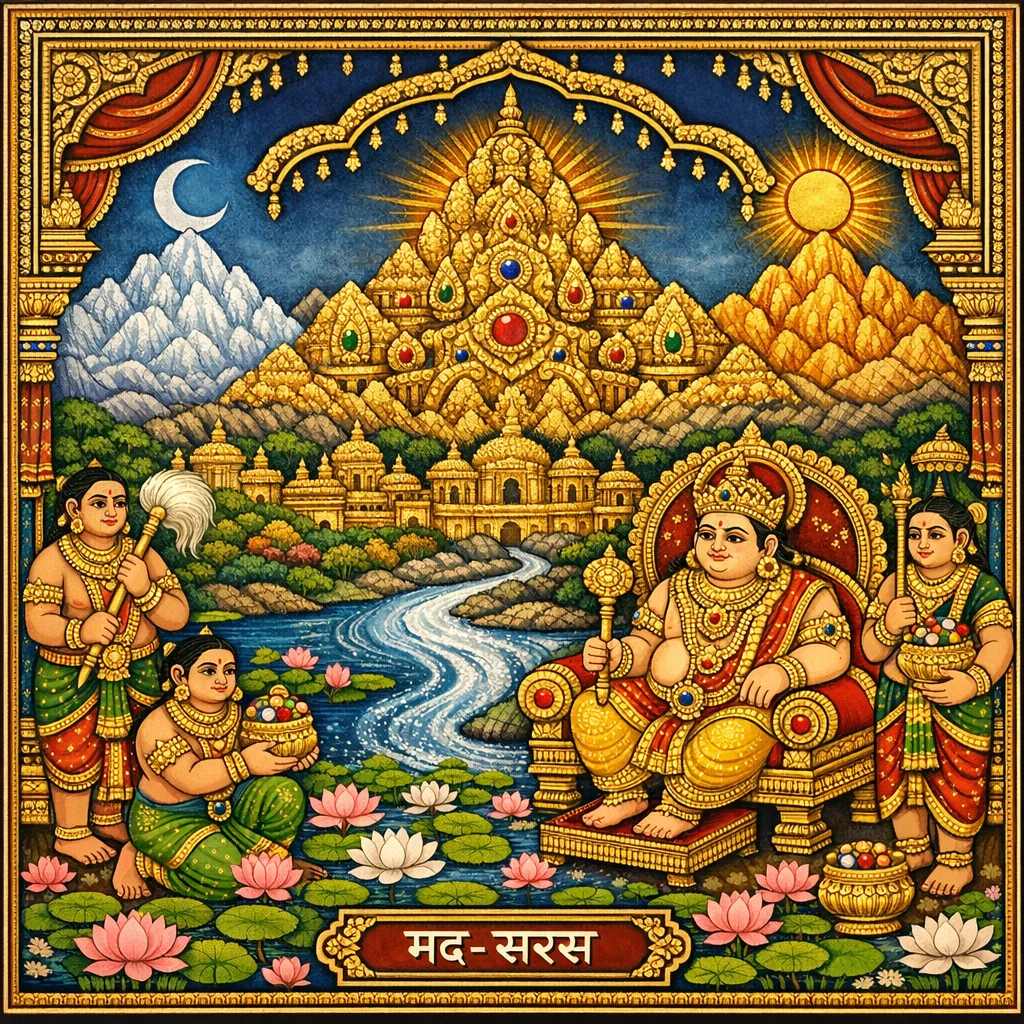
This chapter offers a sacral topographic catalogue within Purāṇic cosmography. Sūta describes the Himalayan back-range where Mount Kailāsa stands, the abode of Kubera (lord of Alakā) with yakṣas and attendant beings, and the auspicious cold waters that spring from the mountain’s foot. A linked sequence of named lakes (saras) and their outflowing rivers is traced as a chain of origins: the lake “Mada” gives rise to the Mandākinī. Divine landscapes such as Nandana-vana and mountains famed for medicinal or gem-like qualities are listed to place these waters within a sanctified ecological network. Other mountains—Candraprabha and Sūryaprabha—are portrayed with luminous mineral splendor; at their bases lie lakes from which the rivers Svacchodā and Lauhitya issue. The narrative also notes guardian and resident figures (yakṣas and leaders) and forests along the banks, serving as a “place-index” for tīrtha imagination and for the wider Bhuvana-kośa map. The rivers traverse the earth-disk and finally enter the ocean, joining Himalayan holiness to the global circulation of the cosmos.
Shlokas
Verse 1
इति श्रीब्रह्माण्डे महापुराणे वायुप्रोक्ते पूर्वभागे द्वितीये ऽनुषङ्गपादे किंपुरुषादिवर्षवर्णनं नाम सप्तदशो ऽध्यायः सूत उवाच मध्ये हिमवतः पृष्ठे कैलासो नाम पर्वतः / तस्मिन्निवसति श्रीमान्कुबेरः सह राक्षसैः
Thus, in the Śrī Brahmāṇḍa Mahāpurāṇa, in the former section spoken by Vāyu, in the second anuṣaṅga-pāda, is the seventeenth chapter called “The Description of Kimpuruṣa and the other Varṣas.” Sūta said: Upon the central back of Himavat stands the mountain named Kailāsa; there the illustrious Kubera dwells together with the Rākṣasas.
Verse 2
अप्सरोनुचरो राजा मोदते ह्यलकाधिपः / कैलासपादात्संभूतं पुण्यं शीतजलं शुभम्
That king, lord of Alakā, attended by the Apsarās, abides in delight; and from the foot of Kailāsa arises water that is holy, cool, and auspicious.
Verse 3
मदं नाम्ना कुमुद्वत्त्त्सरस्तूदधिसन्निभम् / तस्माद्दिव्यात्प्रभवति नदी मन्दाकिनी शुभा
A lake named Mada, filled with kumuda-lotuses, appears like the ocean; from that divine lake arises the auspicious river Mandākinī.
Verse 4
दिव्यं च नन्दनवनं तस्यास्तीरे महद्वनम् / प्रागुत्तरेम कैलासाद्दिव्यं सर्वौंषधि गिरिम्
On its bank lies the divine Nandana grove and a vast forest. To the northeast of Kailasa stands a heavenly mountain abounding in every healing herb.
Verse 5
रत्नधातुमयं चित्रं सबलं पर्वतं प्रति / चन्द्रप्रभो नाम गिरिः सुशुभ्रो रत्नसन्निभः
That mountain, wrought of jewel-bearing ores, is wondrous and mighty. It is called Candraprabha, dazzlingly white and radiant like a precious gem.
Verse 6
तस्य पादे महाद्दिव्यं स्वच्छोदं नाम तत्सरः / तस्माद्दिव्यात्प्रभवति स्वच्छोदा नाम निम्नगा
At the mountain’s foot lies a great celestial lake called Svacchoda. From that divine lake arises the river known as Svacchodā.
Verse 7
तस्यास्तीरे महद्दिव्यं वनं चैत्ररथं शुभम् / तस्मिन् गिरौ निवसति मणिभद्रः सहानुगः
On its bank stands the great, divine, auspicious forest called Caitraratha. Upon that mountain dwells Maṇibhadra together with his attendants.
Verse 8
यक्षसेनापतिः क्रूरो गुह्यकैः परिवारितः / पुण्या मन्दाकिनी चैव नदी स्वच्छोदका च या
The fierce commander of the Yakṣa hosts is surrounded by the Guhyakas. There flow the holy Mandākinī river and the Svacchodakā, whose waters are crystal-clear.
Verse 9
महीमण्डलमध्येन प्रविष्टे ते महोदधिम् / कैलासाद्दक्षिणे प्राच्यां शिवसत्त्वौषधिं गिरिम्
Passing through the midst of the earth’s circle, they entered the great ocean; and to the southeast of Kailāsa they beheld a mountain rich in healing herbs, imbued with the essence of Śiva.
Verse 10
मनः शिलामयं दिव्यं चित्राङ्गं पर्वतं प्रति / लोहितो हेमशृङ्गश्च गिरिः सूर्यप्रभो महान्
That mountain was divine, as though made of manahśilā stone, with wondrous, variegated limbs; and the great peak called Lohita and Hemaśṛṅga shone with the radiance of the sun.
Verse 11
तस्य पादे महद्दिव्यं लोहितं नाम तत्सरः / तस्मात्पुण्यः प्रभवति लौहित्यः स नदो महान्
At its foot lay a great divine lake named Lohita; from it arises the holy mighty river called Lauhitya.
Verse 12
देवारण्यं विशोकं च तस्य तीरे महद्वनम् / तस्मिन्गिरौ निवसति यक्षो मणिधरो वशी
On its bank lies a vast forest called Devāraṇya and Viśoka; upon that mountain dwells the self-mastered Yakṣa named Maṇidhara.
Verse 13
सौम्यैः मुधार्मिकैश्चैव गुह्यके परिवारितः / कैलासाद्दक्षिणे पार्श्वे क्रूरसत्त्वौषधिर्गिरिः
He is surrounded by gentle Guhyakas of measured dharma; and on the southern flank of Kailāsa stands the mountain called Krūrasattvauṣadhi.
Verse 14
वृत्रकायात्किलोत्पन्नमञ्जनं त्रिककुं प्रति / सर्वधातुमयस्तत्र सुमहान्वैद्युतो गिरिः
From Vṛtra’s body indeed arose the añjana, moving toward Trikaku; there stands a vast mountain, lightning-bright, formed of every metal.
Verse 15
तस्य पादे कलः पुण्यं मानसं सिद्धसेवितम् / तस्मात्प्रभवेते पुण्या सरयूर्लोकविश्रुता
At its foot lies the holy Mānasa lake called Kala, attended by the siddhas; from it arises the sacred Sarayū, renowned throughout the world.
Verse 16
तस्यास्तीरे वन दिव्यं वैभ्राजं नाम विश्रुतम् / कुबेरा नुचरस्तत्र प्रहेतितनयो वशी
On the bank (of the Sarayū) is a famed divine forest called Vaibhrāja; there dwells Vaśī, son of Praheti, an attendant of Kubera.
Verse 17
ब्रह्मपितो निवसति राक्षसो ऽनन्तविक्रमः / अतरिक्षचरैर्घोरैर्यातुधानशतैर्वृतः
There dwells the rākṣasa of endless prowess, son of Brahmapitā, surrounded by hundreds of dreadful yātudhānas who roam the skies.
Verse 18
अपरेण तु कैलासात्पुण्यसत्त्वौषधिर्गिरिः / अरुणः पर्वतश्रेष्ठो रुक्मधातुमयः शुभः
Beyond Kailāsa lies the sacred mountain Aruṇa, best of peaks, rich in holy potency and healing herbs; auspicious, it is formed of rukma-metal, like gold.
Verse 19
भवस्य दयितः श्रीमान्पर्वतो मेघसन्निभः / शातकैंभमयैः शुभ्रैः शिलाजालैः समावृतः
The glorious mountain, beloved of Bhava, shines like a cloud; it is covered with auspicious white lattices of rock, as though wrought of Śātakumbha gold.
Verse 20
शातसंख्यैस्तापनीयैः शृङ्गैर्दिवमिवोल्लिखन् / मुञ्जवास्तु महादिव्यो दुर्गः शैलो हिमाचितः
With hundreds of peaks of pure gold it seems to score the very sky; that supremely divine, fortress-like mountain called Muñjavāstu is mantled in snow.
Verse 21
तस्मिन्गिरौ निवसति गिरीशो धूम्रलोचनः / तस्या पादात्प्रभवति शैलोदं नाम तत्सरः
Upon that mountain dwells Girīśa, the Lord of peaks, with smoke-hued eyes; from his very foot arises the lake called Śailoda.
Verse 22
तस्मात्प्रभवते पुण्या शिलोदा नाम निम्रगा / सा चक्षुः सीतयोर्मध्ये प्रविष्टा लवणोदधिम्
From there issues the holy river named Śilodā; flowing between Cakṣu and Sītā, she enters the salt ocean.
Verse 23
तस्यास्तीरे वनं दिव्यं विश्रुतं सुरभीति वै / सव्योत्तरेण कैलासाच्छिवः सत्त्वौषधिर्गिरिः
On her bank lies a divine forest famed as Surabhī; to the left-north of Kailāsa stands the mountain called Śiva, abundant in sattvic healing herbs.
Verse 24
गौरं नाम गिरिश्रेष्ठं हरितालमयं प्रति / हिरण्यशृङ्गः सुमहान् दिव्यो मणिमयो गिरिः
The foremost mountain, named Gaura, was tinged with the hue of haritāla; a vast, divine peak with golden summits, a mountain as though made of gems.
Verse 25
तस्या पादे महाद्दिव्यं शुभं काञ्चनवालुकम् / रम्यं बिन्दुसरो नाम यत्र राजा भगीरथः
At its foot lies a vast and auspicious holy place with golden sands: the lovely lake called Bindusara, where King Bhagīratha dwelt.
Verse 26
गङ्गनिमित्तं राजर्षिरुवास बहुलाः समाः / दिवं यास्यन्ति ते बुर्वे गङ्गतोयपरिप्लुताः
For the sake of the Gaṅgā, the royal seer dwelt there for many years. I declare: those bathed and drenched in Gaṅgā’s waters go to heaven.
Verse 27
मदीय इति निश्चित्य समाहितमनाः शिवे / तत्र त्रिपयगा देवी प्रथमं तु प्रतिष्ठिता / सोमपादात्प्रसूता सा सप्तधा प्रतिपद्यते
Resolving, “This is mine,” and with a mind absorbed in Śiva, there the Goddess Tripathagā (Gaṅgā) first became established. Born from Soma’s foot, she unfolds into seven streams.
Verse 28
यूपा मणिमयास्तत्र वितताश्च हिरण्मयाः / तत्रेष्ट्वा तु गतः सिद्धिं शक्रः सर्वैः सुरैः सह
There stood yūpas (sacrificial posts) fashioned of gems, spread far and gleaming with gold. Having performed the rite there, Śakra (Indra), with all the gods, attained fulfillment.
Verse 29
दिवि च्छायापथो यस्तु अनुनक्षत्रमण्डलः / दृश्यते भास्वरो रात्रौ देवी त्रिपथगा तु सा
In the heavens, that path of shadow which follows the circle of the stars is seen shining at night; she indeed is the Goddess Tripathagā.
Verse 30
अन्तरिक्षं दिवञ्चैव भावयन्ती सुरापगा / भवोत्तमाङ्गे पतिता संरूद्धा यौगमायया
Sanctifying the mid-air and the heavens, Surāpagā fell upon the crown of Bhava (Śiva) and was held back by Yogamāyā.
Verse 31
तस्या ये बिन्दवः केचित् क्रुद्धायाः पतिता भुवि / कृतं तु तैर्बिदुसरस्ततो बिन्दुसरः स्मृतम्
Some drops of the enraged Goddess fell upon the earth; from them the lake Bidusara was formed, and thus it is remembered as Bindusara.
Verse 32
ततो निरूद्धा सा देवी भवेन स्मयता किल / चिन्तयामास मनसा शङ्करक्षेपमं प्रति
Then the Goddess was restrained by Bhava (Śiva), smiling; and in her mind she pondered how to shake off Śaṅkara.
Verse 33
भित्त्वा विशामि पातालं स्रोतसागृह्य शङ्करम् / ज्ञात्वा तम्या अभिप्रायं क्रूरं देव्याश्चिकीर्षितम्
“I shall cleave my way into Pātāla and enter it, seizing Śaṅkara in my current and bearing him away”—thus was the Goddess’s fierce intent understood.
Verse 34
तिरोभावयितुं बुद्धिरासीदङ्गेषु तां नदीम् / तस्यावलेपं ज्ञात्वा तु नद्याःक्रुद्धस्तुशङ्करः
He conceived the resolve to make that river vanish within his own limbs; knowing the river’s arrogance, Śaṅkara grew wrathful.
Verse 35
न्यरुपाच्च शिरस्येनां वेगेन पततीं भुवि / एतस्मिन्नेव काले तु दृष्ट्वा राजानमग्रतः
He checked that river as it plunged toward the earth with great force, holding it upon his head; at that very moment, seeing the king before him…
Verse 36
धमनीसंततं क्षीणं क्षुधया व्याकुलेन्द्रियम् / अनेन तोषितश्चाहं नद्यर्थं पूर्वमेव तु
With senses distressed by hunger and a body wasted down to the very veins—by this I am satisfied; and for the river’s sake, I had already been gracious before.
Verse 37
बुद्धास्य वरदानं च कोपं नियतवांस्तु सः / ब्रह्मणो वचनं श्रुत्वा धारय स्वर्णदीमिति
Remembering the boon he had granted to Buddha, he restrained his anger; and hearing Brahmā’s word—“Hold Svarṇadī”—he complied.
Verse 38
ततो विसर्जयामास संरुद्धां स्वेन तेजसा / नदीं भगीरथस्यार्थे तपसोग्रेण तोषितः
Then he released the river that he had restrained by his own radiance; for Bhagīratha’s purpose, being pleased by his fierce austerities.
Verse 39
ततो विसृज्यमानायाः स्रोत स्तत्सप्तधा गतम् / तिस्रः प्ताचीमिमुखं प्रतीचीं तिस्र एव तु
Then, as she was released, the river’s current flowed forth in seven streams: three turned eastward, and three indeed went westward.
Verse 40
नद्याः स्रोतस्तु गङ्गायाः प्रत्यपद्यत सप्तधा / नलिनी ह्लादिनी चैव पावनी चैव प्राच्यगाः
The current of the river Gaṅgā became sevenfold: Nalinī, Hlādinī, and Pāvanī—these three flowed eastward.
Verse 41
सीता चक्षुश्च सिन्धुश्च प्रतीचीन्दिशमास्थिताः / सप्तमी त्वन्वगात्तासां दक्षिणेन भगीरथम्
Sītā, Cakṣu, and Sindhu took their place toward the western quarter; but the seventh stream followed Bhagīratha, passing to the south of them.
Verse 42
तस्माद्भागीरथी या सा प्रविष्टा लवणोदधिम् / सप्तैता भावयन्तीदं हिमाह्वं वर्षमेव तु
Therefore that stream called Bhāgīrathī entered the salt ocean; and these seven currents sanctify and sustain this land of varṣa known as Hima.
Verse 43
प्रसूताः सप्त नद्यस्ताः शुभा बिन्दु सरोद्भवाः / नानादेशान्प्लावयन्त्यो मलेच्छप्रायास्तु सर्वशः
Those seven auspicious rivers were born from Lake Bindu; flooding many lands, they spread everywhere, even into regions largely inhabited by the mlecchas.
Verse 44
उपगच्छन्ति ताः सर्वा यतो वर्षति वासवः / शिलीन्ध्रान्कुन्त लांश्चीनान्बर्बरान्यवनाध्रकान्
Where Vasava (Indra) pours down rain, thither they all proceed—watering the lands of the Śilīndhras, the Kuntalas, the Chīnas, the Barbaras, and the Yavana-Ādhrakas.
Verse 45
पुष्कराश्च कुलिन्दांश्च अचोंलद्विचराश्च ये / कृत्वा त्रिधा सिंहवन्तं सीतागात्पश्चिमोद धिम्
Passing the lands of the Puṣkaras, the Kulindas, and those called Acola-dvicara, Sītā split Mount Siṃhavanta into three streams and went on to the western ocean.
Verse 46
अथ चीनमरूंश्चैव तालांश्च मसमूलिकान् / भद्रास्तुषारांल्लाम्याकान्बाह्लवान्पारटान्खशान्
Then onward to the lands of the Chīnas and the Marus, and also the Tālas and the Masamūlikas; to the Bhadrās, the Tuṣāras, the Lāmyakas, the Bāhlavas, the Pāraṭas, and the Khaśas.
Verse 47
एताञ्जनपदां श्चक्षुः प्रावयन्ती गतोदधिम् / दरदांश्च सकाश्मीरान् गान्धरान् रौरसान् कुहान्
Watering these realms as though with her very gaze, she reached the ocean; and she passed through the lands of the Daradas, with Kashmir, the Gāndhāras, the Raurasas, and the Kuhas.
Verse 48
शिवशैलानिन्द्रपदान्वसतीश्च विसर्जमान् / सैन्धवान्रन्ध्रकरकाञ्छमठाभीररोहकान्
Leaving behind Śivaśaila, Indrapada, and the settled regions, she reached as well the lands of the Saindhavas, the Randhrakarakas, the Chamaṭhas, the Ābhīras, and the Rohakas.
Verse 49
शुनासुखांश्चोर्द्धमरून्सिन्धुरेतान्निषेवते / गन्धर्वकिन्नरान्यक्षान्रक्षोविद्याधरोरगान्
The holy Gaṅgā flows on, visiting and sanctifying the lands of Śunāsukha, Ūrdhva-maru, Sindhu and the rest, and even the realms of Gandharvas, Kinnaras, Yakṣas, Rākṣasas, Vidyādharas, and Nāgas.
Verse 50
कलापग्रामकांश्चैव पारदांस्तद्गणान् खशान् / किरातांश्चपुलिन्दांश्च कुरून् सभरतानपि
She likewise sanctifies the Kalāpa-grāmaka, the Pāradas with their bands, the Khaśas, Kirātas, and Pulindas, and even the Kurus together with the Bhāratas.
Verse 51
पञ्चालान्काशिमत्स्यां श्च मगधाङ्गांस्तथैव च / सुह्मोत्तरांश्च वङ्गांश्च ताम्रलिप्तांस्तथैव च
She sanctifies Pañcāla, Kāśī, and Matsya, as well as Magadha and Aṅga; likewise Suhma-uttara, Vaṅga, and Tāmraliptā.
Verse 52
एताञ्जनपदान्मान्यान्गङ्गा भावयते शुभान् / ततः प्रतिहता विन्ध्यात्प्रविष्टा लवणोदधिम्
Thus does Gaṅgā bless and purify these honored realms; then, checked by the Vindhya range, she entered the Salt Ocean (Lavaṇodadhi).
Verse 53
ततश्च ह्लादिनी पुण्य प्राचीमभिमुखा ययौ / प्रावयन्त्युपभागांश्च नैषधांश्च त्रिगर्त कान्
Then the meritorious Hlādinī turned to the East and flowed on, cleansing and blessing Upabhāga, Naiṣadha, and Trigarta as well.
Verse 54
धीवरानृषिकांश्चैव तथा नीलमुखानपि / केकरानौष्टकर्णांश्च किरातानपि चैव हि
He beheld the Dhīvaras and the Ṛṣikas, and also the blue-faced peoples; the Kekaras, the Auṣṭakarṇas, and the Kirātas as well.
Verse 55
कालोदरान्विवर्णाश्च कुमारान्स्वर्णभूमिकान् / आमण्डलं समुद्रस्य तिरोभूतांश्च पूर्वतः
He saw the Kālodaras and the pale-hued ones, the Kumāras of the golden land, and the ocean’s circle that had vanished toward the east.
Verse 56
ततस्तु पावनी चापि प्राचीमेव दिशं ययौ / सुपथान्पावयं तीह त्विन्द्रद्युम्नसरोपि च
Then Pāvanī went indeed toward the eastern quarter; there she sanctified the noble paths, and the lake of Indradyumna as well.
Verse 57
तथा खरपथांश्चैव वेत्रशङ्कुपथानपि / मध्यतोजानकिमथो कुथप्रावरणान्ययौ
She sanctified the Kharapathas and the Vetraśaṅkupathas as well; then she went to the central regions—to Janakī and the lands of Kuthaprāvaraṇa.
Verse 58
इन्द्रद्वीप समुद्रं तु प्रविष्टां लवणोदधिम् / ततस्तु नलिनी प्रायात् प्राचीमाशां जवेन तु
Entering the sea of Indradvīpa, she came into the Lavaṇodadhi, the salt ocean; then Nalinī sped swiftly toward the eastern quarter.
Verse 59
तोमरान्भावयन्तीह हंसमार्गान्सहैहयान् / पूर्वन्देशांश्च सेवन्ती भित्त्वा सा बहुधागिरीन्
Here she roused the spear-bearers; with the Haihayas she followed the Swan-paths, sought the lands of the East, and, cleaving many mountains, pressed onward.
Verse 60
कर्णप्रावरणान्प्राप्य संगत्या श्वमुखानपि / सिकतापर्वतमरुं गत्वा विद्याधरान्ययौ
Reaching the land of Karnapravaraṇa, and taking along even the dog-faced ones as companions, she went to the desert of Mount Sikata and came to the Vidyādharas.
Verse 61
नगमण्डलमध्येन प्रविष्टा लवणोदधिम् / तासां नद्युपनद्यश्च शतशो ऽथ सहस्रशः
Passing through the midst of the mountain-ring, they entered the Salt Ocean; their rivers and tributaries were in the hundreds, and then in the thousands.
Verse 62
उपगच्छन्ति ताः सर्वा यतो वर्षति वासवः / वक्वौकसायास्तीरे तु वनं सुरभि विश्रुतम्
They all draw near to the place where Vāsava (Indra) pours down rain; and on the bank of the river Vakvaukasa lies the famed, fragrant forest called Surabhi.
Verse 63
हिरण्यशृङ्गे वसति विद्वान्कौबेरको वशी / यज्ञोपेतश्च सुमहानमितौजाः सुविक्रमः
On Hiraṇyaśṛṅga dwells the wise Kauberaka, master of himself; adorned with sacred sacrifice, he is exceedingly great—of immeasurable splendor and noble valor.
Verse 64
तत्रत्यैस्तैः परिवृतौ विद्वद्भिर्ब्रह्मराक्षसैः / कुबेरानुचरा ह्येते चत्वारस्तु समाः स्मृताः
There they were surrounded by learned Brahma-rākṣasas; these are attendants of Kubera, and all four are remembered as equal.
Verse 65
एवमेव तु विज्ञेया ऋद्धिः पर्वतवासिनाम् / परस्परेण द्विगुणा धर्मतः कामतोर्ऽथतः
Thus should the prosperity of the mountain-dwellers be understood: it becomes twofold among one another, in accord with dharma, kāma, and artha.
Verse 66
हेमकूटस्य पृष्ठे तु वर्चोवन्नामतः सरः / मनस्विनीप्रभवति तस्माज्ज्योतिष्मती च या
On the back of Hemakūṭa lies a lake called Varcovān; from it arises Manasvinī, and from there also is born Jyotiṣmatī.
Verse 67
अवगाढे ह्युभयतः समुद्रौ पूर्वपश्चिमौ / सरो विष्णुपदं नाम निषधे पर्वतोत्तमे
On both sides, east and west, the oceans lie deep; upon the supreme Niṣadha mountain is a lake named Viṣṇupada.
Verse 68
तस्माद्द्वयं प्रभवति गान्धर्वी नाकुली च तैः / मेरोः पार्श्वात्प्रभवति ह्रदश्चन्द्रप्रभो महान्
From it arise two streams, Gāndharvī and Nākulī; and from the flank of Meru springs the great lake called Candraprabha.
Verse 69
तत्र जंबूनदी पुण्या यस्या जांबूनदं स्मृतम् / पयोदं तु सरो नीले सुशुभ्रं पुण्डरीकवत्
There flows the holy river Jambūnadī, whose gold is remembered as jāmbūnada. In the land of Nīla lies the lake called Payoda, radiant white like the puṇḍarīka lotus.
Verse 70
पुण्डरीका पयोदा य तस्मान्नद्यौ विनिर्गते / श्वेतात्प्रवर्त्तते पुण्यं सरयूर्मानसाद्ध्रुवम्
From that lake issue two rivers, Puṇḍarīkā and Payodā. From the white lake flows forth the holy Sarayū, surely arising from Mānasa.
Verse 71
ज्योत्स्ना च मृगाकामा च तस्माद्द्वे संबभूवतुः / सरः कुरुषु विख्यातं पद्ममीनद्विजाकुलम्
From there arose two rivers, Jyotsnā and Mṛgākāmā. In the land of the Kurus is a famed lake, thronged with lotuses, fish, and flocks of birds.
Verse 72
रुद्रकान्तमिति ख्यातं निर्मितं तद्भवेन तु / अन्ये चाप्यत्र विख्याताः पद्मामीनद्विजाकुलाः
That lake is famed as Rudrakānta, brought into being by its own originating power. Here too are other renowned lakes, filled with lotuses, fish, and birds.
Verse 73
नाम्ना ह्रदा जया नाम द्वादशोदधिसन्निभाः / तेभ्यः शान्ता य माध्वी च द्वे नद्यौ संबभूवतुः
There are twelve lakes called Jayā, vast like the ocean. From them were born two rivers, Śāntā and Mādhvī.
Verse 74
यानि किंपुरुषाद्यानि तेषु देवो न वर्षति / उद्भिदान्युदकान्यत्र प्रवहन्ति सरिद्वराः
In the realms such as Kimpuruṣa and the rest, the deva (the cloud) does not send rain; there, waters born of plants flow forth, and the noblest rivers run on.
Verse 75
ऋषभो दुन्दुभिश्चैव धूम्नश्च सुमहागिरिः / पूर्वायता महापर्वा निमग्ना लवणाभसि
Ṛṣabha, Dundubhi, and Dhūmna—mountains of vast greatness—stretched toward the East and sank into the salt ocean.
Verse 76
चन्द्रः काकस्तथा द्रोणः सुमहान्तः शिलोच्चयाः / उदग्याता उदीच्यान्ता अवगाढा महोदधिम्
Candra, Kāka, and Droṇa—vast rocky mountain-masses—stretched northward and plunged into the great ocean.
Verse 77
सोमकश्च वराहश्च नारदश्च महीधरः / प्रतीच्यामायतास्ते वै प्रविष्टा लवणोदधिम
Somaka, Varāha, and Nārada—those mountains—stretched toward the West and entered the salt ocean.
Verse 78
चक्रो बलाहकश्चैव मैनाको यश्च पर्वतः / आयतास्ते महाशैलाः समुद्रं दक्षिणं प्रति
Cakra, Balāhaka, and Maināka—those mighty mountains—stretched forth toward the southern sea.
Verse 79
चक्रमैनाकयोर्मध्य विदिशं दक्षिणां प्रति / तत्र संवर्त्तको नाम सो ऽग्निः पिबति तज्जलम्
Between Cakra and Maināka, toward the southern quarter, there the fire named Saṃvarttaka drinks that water.
Verse 80
नाम्ना समुद्रवासस्तु और्वःस वडवामुखः / द्वादशैते प्रविष्टा हि पर्वता लवणोदधिम्
Known by the name Samudravāsa is Aurvasa Vaḍavāmukha; these twelve mountains have indeed entered the salt ocean.
Verse 81
महेन्द्रभयवित्रस्ताः पक्षच्छे दभयात्पुरा / यदेतद्दृश्यते चन्द्रे श्वेते कृष्णशशाकृति
In ancient times, terrified of Mahendra and fearing the cutting of their wings, there appears in the white moon the form of a black hare.
Verse 82
भारतस्य तु वर्षस्य भेदास्ते नव कीर्त्तिताः / इहोदितस्य दृश्यन्ते यथान्ये ऽन्यत्र चोदिते
The nine divisions of Bhāratavarṣa have been declared; what is spoken of here is seen, just as the others are spoken of elsewhere.
Verse 83
उत्तरोत्तरमेतेषां वर्षमुद्दिश्यते गुणैः / आरोग्यायुः प्रमाणानां धर्मतः कामतोर्ऽथतः
These varṣas are described in ascending order by their virtues—health, the measure of lifespan, and the fulfillment of dharma, kāma, and artha.
Verse 84
समन्वितानि भूतानि पुण्यैरेतैस्तु भागशः / वसंति नानाजातीनि तेषु वर्षेषु तानि वै / इत्येषा धारयन्तीदं पृथ्वी विश्वं जगत्स्थितम्
All beings, joined with these portions of sacred merit, dwell according to their share in those varṣa; there abide many kinds of peoples. Thus does the Earth uphold this world and the established universe.
Frequently Asked Questions
A structured cosmographic description of the Kailāsa-Himālaya region: divine mountains, forests, yakṣa domains, and especially the origin-chains of lakes (saras) that generate major sacred rivers (Mandākinī, Svacchodā, Lauhitya, Sarayū).
Mandākinī arises from the lake named Mada; Svacchodā arises from the lake named Svacchoda at the foot of Candraprabha; Lauhitya arises from the lake named Lohita at the foot of Sūryaprabha; Sarayū is said to arise from a sacred lake (Mānasa) associated with another divine mountain setting in the sequence.
They function as locational identifiers and sacral qualifiers: the chapter maps a living sacred ecology where rivers are not only hydrological features but also part of divine jurisdictions (Kubera/yakṣas) and tīrtha landscapes (forests, medicinal mountains), reinforcing Bhuvana-kośa as both cosmology and pilgrimage cartography.