Adhyaya 12
Agnibheda–Vaṃśa: Forms of Agni, Their Functions, and Progeny (अग्निभेद-वंशः)
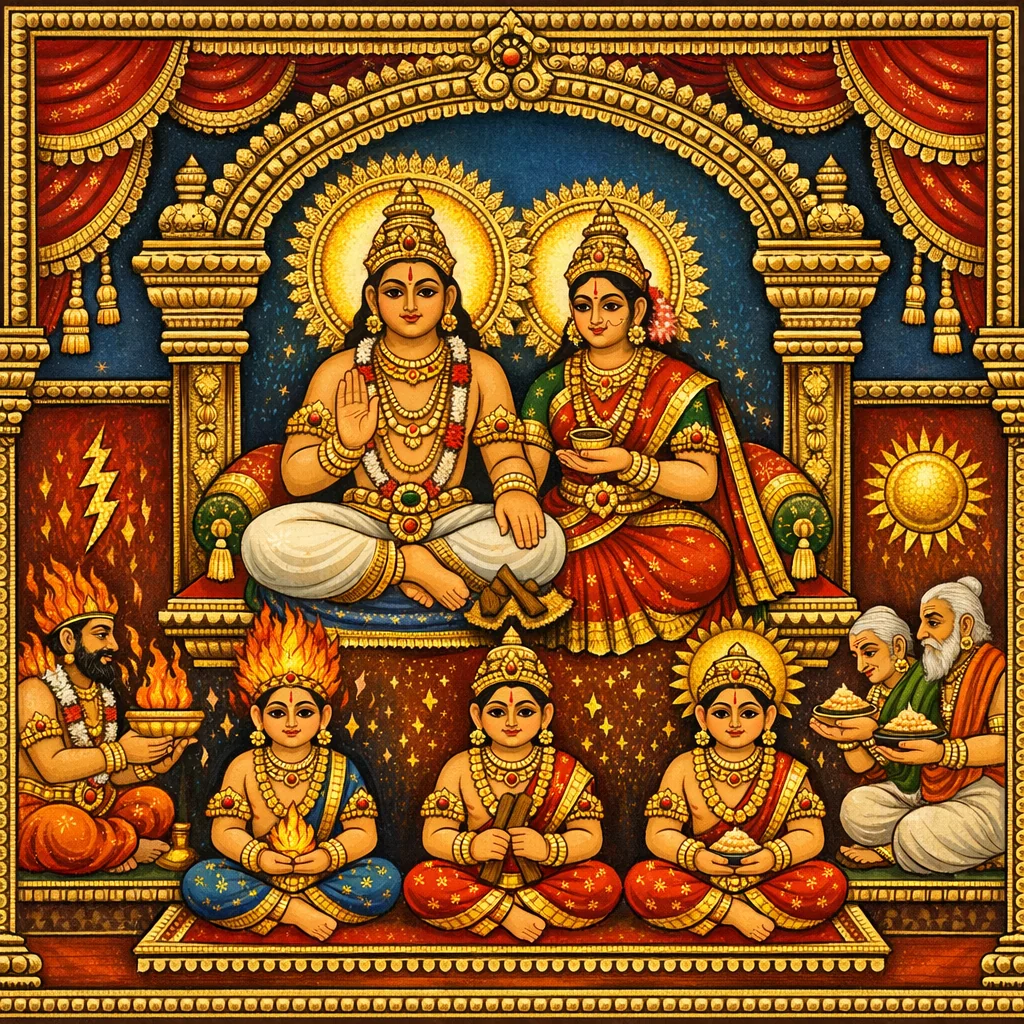
This adhyāya sets out a technical, genealogical catalog of Agni. Sūta describes Abhimānī as a mind-born son of Brahmā in the Svāyaṃbhuva Manvantara, joined with Svāhā, from whom arise the three chief fires—Pāvaka, Pavamāna, and Śuci—each linked to a mode of manifestation such as lightning (vaidyuta), churning/friction (nirmathya), and the solar fire (saura). The account then moves from primary triads to functional divisions: Havya-vāhana as the fire of the Devas and Kavya-vāhana as the fire connected with the Pitṛs, followed by further descendants and named subtypes, including gārhapatya/āhavanīya-related identifications. A key feature is the Purāṇic “cosmology by enumeration,” mapping names, roles, and relations (father–son, domain–function), and briefly linking Agni’s line with rivers to place ritual fire within the sacred landscape of the earth.
Shlokas
Verse 1
विस्तरेणानुपूर्व्याच्च अग्नेर्वक्ष्याम्यतः परम् / इति श्रीब्रह्माण्डे महापुराणे वायुप्रोक्ते पूर्वभागे द्वितीये ऽनुषङ्गपादे ऋषिसर्गवर्णनं नामैकादशो ऽध्यायः सूत उवाच यो ऽसावग्ने रभिमानी स्मृतः स्वायंभुवे ऽन्तरे / ब्रह्मणो मानसः पुत्रस्तस्मात्स्वाहा व्यजायत
Now I shall speak of Agni in detail and in due sequence. Sūta said: the Agni remembered as Abhimānī in the Svāyambhuva Manvantara was a mind-born son of Brahmā; from him Svāhā was born.
Verse 2
पावकं पवमानं च शुचिरग्निश्च यः स्मृतः / निर्मथ्यः पवमानस्तु वैद्युतः पावकः स्मृतः
Agni is remembered by three names: Pāvaka, Pavamāna, and Śuci. The fire produced by churning (nirmathya) is called Pavamāna, while the fire born of lightning is known as Pāvaka.
Verse 3
शुचिः सौरस्तु विज्ञेयः स्वाहापुत्रास्तु ते त्रयः / निर्मथ्यः पवमानस्तु शुचिः सौरस्तु यः स्मृतः
Know that Śuci is Saurya, of solar nature; those three are the sons of Svāhā. The fire born of churning is Pavamāna, and the one remembered as Śuci is the solar flame.
Verse 4
अब्योनिर्वैद्युतश्चैव तेषां स्थानानि तानि वै / पवमानात्मजश्चैव कव्यवाहन उच्यते
Abyoni and Vaidyuta—these indeed are their appointed abodes; and the son of Pavamana is called Kavyavahana, the bearer of offerings to the Pitṛs.
Verse 5
पावकिः सहरक्षस्तु हव्यवाहः शुचेः सुतः / देवानां हव्यवाहो ऽग्निः पितॄणां कव्यवाहनः
Pāvaki, Saha-rakṣas, and Havyavāha are sons of Śuci. For the gods, Agni is Havyavāha, bearer of oblations; for the Pitṛs, he is Kavyavāhana.
Verse 6
सह रक्षो ऽसुराणां तु त्रयाणां तु त्रयो ऽग्नयः / एतेषां पुत्रपौत्रास्तु चत्वारिंशन्न वैव तु
Including the rākṣasas and the asuras, for those three there are three Agnis; and their sons and grandsons together are indeed forty.
Verse 7
वक्ष्यामि नामभिस्तेषां प्रविभागं पृथक्पृथक् / विश्रुप्तो लौकिको ऽग्निस्तु प्रथमो ब्रह्मणः सुतः
Now I shall declare their divisions, each separately by name. The worldly Agni called Viśrupta is the first son of Brahmā.
Verse 8
ब्रह्मो दत्ताग्निस त्पुत्रो भरतो नाम विश्रुतः / वैश्वानरः सुतस्तस्य वहन् हव्यं समाः शतम्
Dattāgni, a son of Brahmā, is renowned by the name Bharata. His son Vaiśvānara bore the sacred oblations (havya) for a hundred years.
Verse 9
संभृतो ऽथर्वणा पूर्वमेधितिः पुष्करोदधौ / सोथर्वा लौकिको ऽग्निस्तु दर्पहाथर्वणः स्मृतः
The seer Atharvan, known as Pūrvamedhiti, once gathered the sacred Fire at Puṣkarodadhi. That very Atharva is the worldly fire, remembered as Atharvan “Darpahā,” the slayer of pride.
Verse 10
अथर्वा तु भृगुर्जज्ञे ह्यग्निराथर्वणः स्मृतः / तस्मात्स लौकिको ऽग्निस्तु दध्यङ्ङाथर्वणो मतः
From Atharva was born Bhṛgu, who is remembered as Agni Ātharvaṇa. Therefore that worldly fire is regarded as Dadhyaṅ Ātharvaṇa.
Verse 11
आथर्वः पवमानस्तु निर्मथ्यः कविभिः स्मृतः / स ज्ञेयो गार्हपत्यो ऽग्निस्तस्य पुत्रद्वयं स्मृतम्
Ātharvaṇa Pavamāna is remembered by the seer-poets as ‘nirmathya’, the fire born of churning. He is to be known as the Gārhapatya fire; and two sons of his are spoken of.
Verse 12
शंस्यस्त्वाह वनीयो ऽग्नेः स्मृतो यो हव्यवाहनः / द्वितीयस्तु सुतः प्रोक्तः शुको ऽग्निर्यः प्रणीयते
Śaṃsya is remembered as Agni’s ‘vaniya’ form, the Havyavāhana who bears the offerings. The second son is called Śuka-Agni, the fire that is led forth in the yajña.
Verse 13
तथा सव्यापसव्यौ च शंस्यस्याग्नेः सुतावुभौ / शंस्यस्तु षोडश नदीश्चकमे हव्यवाहनः
So too, Agni Śaṃsya has two sons, Savya and Apasavya. And Śaṃsya, the Havyavāhana, chose sixteen rivers as his consorts.
Verse 14
यो सावाहवनीयो ऽग्निरभिमानी द्विजैः स्मृतः / कावेरीं कृष्णवेणां च नर्मदां यमुनां तथा
He whom the twice-born remember as the presiding deity (abhimānī) of the Āhavanīya fire abides also in the rivers Kāverī, Kṛṣṇaveṇā, Narmadā, and Yamunā.
Verse 15
गोदावरीं वितस्तां च चन्द्रभागामिरावतीम् / विपाशां कौशिकीञ्चैव शतद्रूं सरयूं तथा
So too he abides in the rivers Godāvarī, Vitastā, Candrabhāgā, Irāvatī, Vipāśā, Kauśikī, Śatadrū, and Sarayū.
Verse 16
सीतां सरस्वतीं चैव ह्रादिनीं पावनीन्तथा / तासु षोडशधामानं प्रविभज्य पृथक्पृथक्
And in the rivers Sītā, Sarasvatī, Hrādinī, and Pāvanī as well, he apportioned sixteen sacred abodes (dhāmas), each set apart in its own place.
Verse 17
आत्मानं व्यदधात्तासु धिष्णीष्वथ बभूव सः / कृत्तिकाचारिणी धिष्णी जज्ञिरे ताश्च धिष्णयः
Then he placed his very Self within those dhishnīs and became manifest there; and from the Dhishnī that moves with the Kṛttikās, those dhishnīs were born.
Verse 18
धिष्णीषु जज्ञिरे यस्माद् धिष्णयस्तेन कीर्त्तिताः / इत्येते वै नदीपुत्रा धिष्णीष्वेवं विजज्ञिरे
Because they were born within the dhishnīs, they are therefore celebrated as ‘dhishnayas’; thus were these sons of the rivers brought forth in the dhishnīs in this manner.
Verse 19
तेषां विहरणीया ये उपस्थेयाश्च ये ऽग्नयः / ताञ्शृणुध्वं समासेन कीर्त्यमानान्यथातथम्
Among them are the fires to be circumambulated and the fires to be worshipped; hear, in brief, their praise as it is rightly recounted.
Verse 20
विभुः प्रवाहणो ग्नीध्रस्तत्रस्था धिष्णयो ऽपरे / विधीयन्ते यथास्थानं सूत्याहे सवने क्रमात्
Vibhu, Pravāhaṇa, Gnīdhra, and the other dhishṇya stationed there are assigned, in due order, to their proper places in the savana rites on the Sūtyāha day.
Verse 21
अनुद्देश्य निवास्यानामग्नीनां शृणुत क्रमम् / सम्राडग्नि कृशानुर्यो द्वितीयोंऽतरवेदिकः
Now hear the order of the fires termed anuddeśya-nivāsya: Samrāḍagni is Kṛśānu, and the second is the Antaravedika fire.
Verse 22
सम्राडग्नमुखानष्टौ उपतिष्ठन्ति तान् द्विजान् / परिषत्पवमानस्तु द्वितीय सो ऽनुदिश्यते
Before Samrāḍagni, eight fires stand in attendance upon those twice-born; and Pariṣatpavamāna is designated as the second anudiśya.
Verse 23
प्रतल्कान्यो नभोनाम चत्वरेसौ विभाव्यते / हव्यस्ततो ह्यसंमृष्टः शामित्रे ऽग्नौ विभाव्यते
The Pratalkānya, called Nabho, is regarded as established in this catvara; thereafter the fire named Havya, untouched and untainted, is regarded as established in the Śāmitra fire.
Verse 24
ऋतुधामा च सुज्योतिरौदुंबर्यः प्रकीर्त्यते / विश्वव्यचाः समुद्रो ऽग्निर्ब्रह्मस्थाने स कीर्त्यते
He is proclaimed as ‘Ṛtudhāmā’ and as ‘Sujyoti-Audumbarya’. The ocean-formed Agni, called ‘Viśvavyacā’, is praised in the Brahmasthāna.
Verse 25
ब्रह्मज्योतिर्वसुर्धामा ब्रह्मस्थाने स उच्यते / अचौकपादुपस्थो यः स वै शालासुखीयकः
In the Brahmasthāna he is spoken of as ‘Brahmajyoti’ and ‘Vasurdhāmā’. He who is stationed near the feet of the square (mandala) is indeed called ‘Śālāsukhīyaka’.
Verse 26
अनुहेश्यो ह्यहिर्बुध्न्यो सो ऽग्रिर्गृहपतिः स्मृतः / शंस्यस्यैते सुताः सर्वे उपस्थेया द्विजैः स्मृताः
‘Anuheśya’ and ‘Ahirbudhnya’—this Agni is remembered as ‘Gṛhapati’, the Lord of the Household Fire. All these sons of Śaṃsya are declared worthy of reverence by the dvijas.
Verse 27
ततो विहरणीयांश्च वक्ष्याम्यष्टौ च तत्सुतान् / विभुः प्रवाहणो ऽग्नीध्रस्तेषां धिष्ण्यस्तथा परे
Next I shall speak of ‘Viharaṇīya’ and of his eight sons. Among them are Vibhu, Pravāhaṇa, and Agnīdhra; the others too are their dhiṣṇyas (seats and stations).
Verse 28
विधीयन्ते यथास्थानं सौत्ये ऽह्नि सवने क्रमात् / होत्रीयस्तु स्मृते ह्यग्निर्वह्निर्यो हव्यवाहनः
On the Sautya day, in the sequence of the savanas, they are assigned to their proper places. The Hotrīya Agni is remembered as Vahni—the Havyavāhana, bearer of the sacred offerings.
Verse 29
प्रशान्तो ऽग्निः प्रचेतास्तु द्वितीयश्चात्र नामकः / ततो ऽग्निर्वैश्वदेवस्तु ब्राह्मणाच्छंसिरुच्यते
Here the second Agni is named Pracetā, and is also called Praśānta. Thereafter the Agni known as Vaiśvadeva is spoken of as Brāhmaṇācchaṃsi.
Verse 30
उशिगग्निः कविर्यस्तु पोतो ऽग्निः स विभाव्यते / आवारिरग्निर्वाभारिर्वैष्ठीयः स विभाव्यते
Agni called Uśig is renowned as Kavi, and Agni named Pota is also remembered. Agni known as Āvāri and Ābhāri is likewise regarded as Vaiṣṭhīya.
Verse 31
अवस्फूर्जो विवस्वांस्तु आस्थांश्चैव स उच्यते / अष्टमः सुध्युरग्निर्योमार्जालीयः स उच्यन्ते
Agni called Avasphūrja is also spoken of as Vivasvān and Āsthāṃśca. The eighth Agni is named Sudhyu, and is likewise called Yomārjālīya.
Verse 32
धिष्ण्यावाहरणा ह्येते सौत्येह्नीज्यन्त वै द्विजैः / अपां योनिः स्मृतो ऽसौ स ह्यप्सुनामा विभाव्यते
These Agnis, called Dhiṣṇyāvāharaṇa, are worshipped by the twice-born on the Sautya day. He is remembered as Apāṃ Yoni, and is also regarded as Apsunāmā.
Verse 33
ततो यः पावको नाम्ना अब्जो यो गर्भ उच्यते / अग्निः सो ऽवभृथे ज्ञेयो वरुणेन सहेज्यते
Thereafter the Agni named Pāvaka is also called Abja-garbha. He is to be known in the Avabhṛtha rite, and is worshipped together with Varuṇa.
Verse 34
त्दृच्छयस्तत्सुतो ह्यग्निर्जठरे यो नृणां पचन् / मृत्युमाञ् जाठरस्याग्नेर्विद्वानाग्निः सुतः स्मृतः
By chance, his son is that Agni who dwells in the bellies of men, cooking their food. That gastric fire is called Mṛtyumān; and Vidvān-Agni is remembered as his son.
Verse 35
परस्परोत्थितः सो ऽग्निर्भूतानीह विनिर्दहेत् / पुत्रस्त्वग्नेर्मन्युमतो घोरः संवर्तकः स्मृतः
That fire, arising one from another, burns up all beings here. The son of wrathful Agni is remembered as the dreadful Saṃvartaka.
Verse 36
पिबन्नवः स वसति समुद्रे वडवामुखः / समुद्रवासिनः पुत्रः साहरक्षो विभाव्यते
Vaḍavāmukha dwells in the ocean, ever drinking its waters. The son of the ocean-dweller is regarded as Sāharakṣa.
Verse 37
सहरक्षसुतः क्षामो गृहाणां दहते नृणाम् / क्रव्यादग्निः सुतस्तस्य पुरुषानत्ति यो मृतान्
Sāharakṣa’s son, Kṣāma, burns the houses of men. His son is Kravyād-Agni, who devours the flesh of dead men.
Verse 38
इत्येते पावकस्याग्नेः पुत्रा एव प्रकीर्त्तिताः / ततः शुचिस्तु वै सौरो गन्धर्वैरायुराहुतः
Thus these are proclaimed as the sons of Agni Pāvaka. Thereafter comes Śuci, of solar nature, whom the Gandharvas invoke by the name Āyu.
Verse 39
मथितो यस्त्वरण्यां च सो ऽग्निरग्निं समिन्धति / आयुर्नाम्ना तु भगवानसौ यस्तु प्रणीयते
The fire kindled by churning wood in the forest is the very fire that enflames the fire. That Blessed Lord is known by the name Āyu, and is led forth according to rite.
Verse 40
आयुषो महिषः पुत्रः सहसो नाम तत्सुतः / पाकयज्ञेष्वभीमानी सोग्निस्तु सहसः स्मृतः
Āyu’s son is Mahiṣa, and his son is named Sahasa. In the pākayajñas, the presiding Agni is remembered as Sahasa.
Verse 41
पुत्रश्च सहसस्याग्नेरद्भुतः स महायशाः / विविधिश्चाद्भुतस्यापि पुत्रो ऽग्नेस्तुमाहान्स्मृतः
The son of Agni called Sahasa is Adbhuta, of great renown. And Adbhuta’s son is Vividhi, remembered as a mighty son of Agni.
Verse 42
प्रायश्चित्तेष्वभीमानी हुतं भुङ्क्ते हविः सदा / विविधेस्तु सुतो ह्यर्क्क स्तस्य चाग्नेः सुता इमे
In rites of expiation, as the presiding power, he ever partakes of the offered havis. Vividhi’s son is Arka; and these are the sons of that Agni.
Verse 43
अनीकवान् वाजसृक् च रक्षोहा चष्टिकृत्तथा / सुरभिर्वसुरन्नादो प्रविष्टो यः स रुकमराट्
Anīkavān, Vājasṛk, Rakṣohā, and Caṣṭikṛt; also Surabhi, Vasur, and Annāda—he who has entered into these is called Rukamarāṭ.
Verse 44
शुचेरग्नेः प्रजा ह्येषा वह्नयश्च चतुर्द्दश / इत्येते चाग्नयः प्रोक्ताः प्रणीयन्तेध्वरेषु वै
This is the progeny of Agni Śuci, and the Vahnis are fourteen; thus are these Fires declared, and in sacrifices they are duly brought forth and established.
Verse 45
आदिसर्गे व्यतीता वै यामैः सह सुरोत्तमैः / स्वायंभुवे ऽन्तरे पूर्वमग्नयस्तेभिमानिनः
In the primal creation they passed the ages together with the Yāmas and the foremost gods; before the Svāyambhuva Manvantara, those Agnis bore the pride of their appointed stations.
Verse 46
एते विहरणीयेषु चेतनाचेतनेषु वै / स्थानाभिमानिनो लोके प्रागासन्हव्यवाहनाः
They moved through all realms fit for wandering, among the sentient and the insentient; in former times these Havyavāhanas, bearers of oblations, in the world held the pride of their own stations.
Verse 47
काम्यनै मित्तिका यज्ञेष्वेते कर्मस्ववस्थिताः / पूर्वमन्वतंरे ऽतीताः शुकैर्यागैश्च तैः सह
In the kāmya and naimittika sacrifices they stood established in their ritual offices; in the former Manvantara they passed away together with those pure acts of offering.
Verse 48
देवैर्महात्मभिः पुण्यैः प्रथमस्यान्तरे मनोः / इत्येतानि मजोक्तानि स्थानानि स्थानिनश्च ह
In the first Manvantara of Manu, through the holy and great-souled gods, thus have I spoken of these abodes and of those who preside within them.
Verse 49
तैरेव तु प्रसंख्यातमतीतानागतेष्विह / सन्वन्तरेषु सर्वेषु लक्षणं जातवेदसाम्
By these very ones, here, the marks of the Jātavedas (the Agnis) have been duly enumerated in all Manvantaras, past and yet to come.
Verse 50
सर्वे तपस्विनो ह्येते सर्वे ब्रह्मभृतस्तथा / प्रजानां पतयः सर्वे ज्योतिष्मन्तश्च ते स्मृताः
All these are ascetics; all are bearers of Brahman. All are lords of the creatures, and they are remembered as radiant.
Verse 51
स्वारोचिषादिषु ज्ञेयाः सावर्ण्यं तेषु सप्तसु / मन्वन्तरेषु सर्वेषु नामरूपप्रयोजनैः
In the seven Manvantaras beginning with Svārociṣa, they are to be known as the Sāvarṇyas, according to their names, forms, and functions.
Verse 52
वर्त्तन्ते वर्त्तमानैश्च यामैदेवैः सहाग्नयः / अनागतैः सुरैः सार्द्धं वर्त्स्यन्ते ऽनागताग्नयः
The Agnis abide and act together with the present Yāma-deities; and the Agnis yet to come shall act in company with the future Suras.
Verse 53
इत्येष निचयो ऽग्नीनामनुक्रान्तो यथाक्रमम् / विस्तरेणानुपुर्व्या च पितॄणां वक्ष्यते पुनः
Thus the host of the Agnis has been recounted in due order; next, the Pitṛs too shall be spoken of again—fully and in proper succession.
Frequently Asked Questions
A genealogical chain centered on Agni: Abhimānī (as Brahmā’s mind-born son in the Svāyaṃbhuva Manvantara) linked with Svāhā, producing the triad Pāvaka–Pavamāna–Śuci, followed by further named descendants and specialized fires aligned to ritual functions.
Havyavāha is identified as the fire that conveys offerings (havya) to the Devas, while Kavyavāhana is associated with offerings (kavya) for the Pitṛs, expressing a cosmological division of sacrificial transmission by recipient domain.
No. The sampled content is a ritual-cosmological and genealogical taxonomy of Agni and related fires; Lalitopākhyāna themes (vidyā/yantra, Śrīvidyā theology, Bhaṇḍāsura narrative) belong to later sections of the Brahmāṇḍa Purāṇa’s overall structure.