Adhyaya 60
Vaivasvata-vamsha-pravṛttiḥ (Origin and Issue of Vaivasvata Manu; Ilā–Sudyumna Episode)
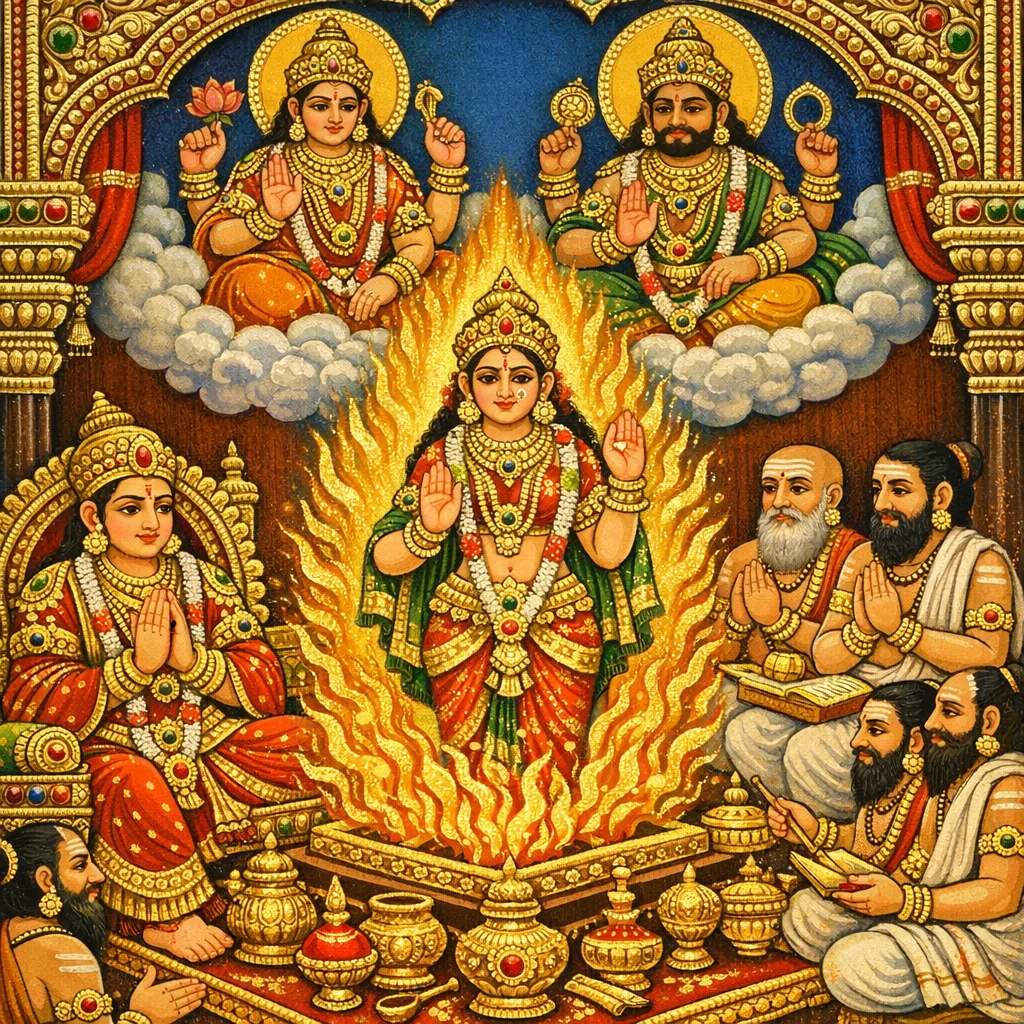
This chapter (colophon: “Vaivasvatotpatti”) shifts into the Vaivasvata Manvantara. Sūta relates that when the Cākṣuṣa Manvantara ended, divine authorities bestowed earthly sovereignty upon the great Vaivasvata Manu. It then lists Manu’s ten sons as a genealogical register: Ikṣvāku, Nṛga, Dhṛṣṭa, Śaryāti, Nariṣyanta, Prāṃśu, Nābhāga, Diṣṭa, Karūṣa, and Pṛṣadhra. The narrative turns to ritual causality: urged by Brahmā, Manu performs a desire-motivated sacrifice, framed with aśvamedha intent and a putrakāmeṣṭi theme. From the share of Mitra and Varuṇa arises Ilā, adorned with divine garments and ornaments. Ilā’s dialogue with Manu and then with Mitra–Varuṇa establishes dharma-grounded obedience and truthfulness; pleased, the deities grant renown and a boon culminating in the famed Sudyumna—praised as beloved of the world and an enhancer of the lineage—along with the transformative episode in which Sudyumna attains a female state, after which the account returns to the paternal line to preserve genealogical continuity.
Shlokas
Verse 1
इति श्रीब्रह्माण्डे महापुराणे वायुप्रोक्ते तृतीय उपोद्धातपादे वैवस्वतोत्पत्तिर्नामैकोनषष्टितमोध्यायः // ५९// सूत उवाच ततो मन्वन्तरे ऽतीते चाक्षुषे दैवतैः सह / वैवस्वताय महते पृथिवीराज्यमादिशत्
Thus, in the Śrī Brahmāṇḍa Mahāpurāṇa, in the third introductory section spoken by Vāyu, the fifty-ninth chapter is called “The Manifestation of Vaivasvata.” Sūta said: when the Cākṣuṣa Manvantara had passed, together with the gods, the sovereignty of the earth was ordained for the great Vaivasvata.
Verse 2
तस्माद्वैवस्वतात्पुत्रा जज्ञिरे दश तत्समाः / इक्ष्वाकुश्च नृगश्चैव धृष्टः शर्यातिरेवच
From that Vaivasvata were born ten sons, equal in worth—Ikṣvāku, Nṛga, Dhṛṣṭa, and Śaryāti as well.
Verse 3
नरिष्यन्तस्तथा प्रांशुर्नाभागो दिष्ट एव च / करूषश्च पृषध्रश्च नवैते मानवाः स्मृताः
Nariṣyanta, Prāṃśu, Nābhāga, Diṣṭa, Karūṣa, and Pṛṣadhra—these nine are remembered as the Mānava sons.
Verse 4
ब्रह्मणा तु मनुः पूर्वं चोदितस्तु प्रबोधितम् / यष्टुं प्रजक्रमे कामं हयमेधेन भूपतिः
Manu, earlier urged and awakened by Brahmā, that lord of the earth, set out—according to his wish—to perform the Aśvamedha sacrifice.
Verse 5
अथाकरोत्पुत्रकामः परामिष्टिं प्रजापतिः / मित्रावरुणयोरंशे अनलाहुतिमेव यत्
Then Prajāpati, longing for a son, performed the supreme iṣṭi—an offering of āhuti into the sacred fire for the portion of Mitra and Varuṇa.
Verse 6
तत्र दिव्यांबरधरा दिव्याभरणभूषिता / दिव्यासंहनना चैव इला जज्ञ इति श्रुतम्
There, it is heard in sacred tradition, Ilā was born—clad in divine raiment, adorned with heavenly ornaments, and possessed of a wondrous form.
Verse 7
तामिलेत्यथ होवाच मनुर्दण्डधरस्ततः / अनुगच्छस्व भद्रं ते तमिला प्रत्युवाच ह
Then Manu, bearer of the staff, called to her, “O Ilā,” and said, “Follow after me; may auspiciousness be yours.” Thereupon Tamilā replied.
Verse 8
धर्मयुक्तमिदं वाक्यं पुत्रकामं प्रजापतिम् / मित्रावरुणयोरंशे जातास्मि वदतां वर
This utterance is in accord with dharma. O best of speakers, to Prajāpati who longs for a son I declare: I was born from the portion of Mitra and Varuṇa.
Verse 9
तयोः सकाशं यास्यामि मातो धर्मो हतो वधीत् / एवमुक्त्वा पुनर्देवी तयोरन्तिकमागमत्
“Mother, I shall go to those two, lest dharma be violated.” Having spoken thus, the Goddess again drew near to them.
Verse 10
गत्वान्तिकं वरारोहा प्राञ्जलिर्वाक्यमब्रवीत् / अंशे ऽस्मिन्युवयोर्जाता देवौ किं करवाणि वाम्
Drawing near, the fair maiden spoke with folded hands: “O two Devas, I am born from the portion of you both; what shall I do for you?”
Verse 11
मनुनैवाहमुक्तास्मि अनुगच्छस्व मामिति / तथा तु ब्रुवतीं साध्वीमिडामाश्रित्य तावुभौ
Manu had said to me, “Follow after me.” As the virtuous Iḍā spoke thus, the two of them took refuge in her and remained together.
Verse 12
देवौ च मित्रावरुणाविदं वचनमूचतुः / अनेन तव धर्मज्ञे प्रश्रयोण दमेन च
Then the two gods, Mitra and Varuṇa, spoke these words: “O knower of dharma, by this reverence of yours and by your self-restraint.”
Verse 13
सत्येन चैव सुश्रोणि प्रीतौ स्वौ वरवर्णिनि / आवयोस्त्वं महाभागे ख्यातिं कन्ये प्रयास्यसि
O fair-hipped one, O maiden of radiant beauty! By your truthfulness we both are pleased. O greatly fortunate girl, through us you shall attain renown.
Verse 14
सुद्युम्न इति विख्यातस्त्रिषु लोकेषु पूजितः / जगत्प्रियो धर्मशीलो मनोर्वंशविवर्द्धनः
He shall be renowned as “Sudyumna”, honored in the three worlds—beloved of the world, steadfast in dharma, and an increaser of Manu’s lineage.
Verse 15
मानवः स तु सुद्युम्नः स्त्रीभावमगमत्प्रभुः / सा तु देवी वरं लब्ध्वा निवृत्ता पितरं प्रति
That Sudyumna, lord among men, entered into a woman’s state. And the goddess, having obtained the boon, turned back toward her father.
Verse 16
बुधेनोत्तरमासाद्य मैथुनायोपमन्त्रिता / सोमपुत्राद्बुधाच्चास्यामैलो जज्ञे पुरूखाः
Reaching Budha in the northern quarter, she was invited to union; and from Budha, the son of Soma, she bore Purūrava, famed as Aila.
Verse 17
बुधात्सा जनयित्वा तु सुद्युम्नत्वं पुनर्गताः / सुद्युम्नस्य तु दायादास्त्रयः परमधार्मिकाः
Having borne a child by Budha, she returned once more to the state of Sudyumna; and Sudyumna had three heirs, supremely devoted to Dharma.
Verse 18
उत्कलश्च गयश्चैव विनतश्च तथैव च / उत्कलस्योत्कलं राष्ट्रं विनतस्यापि पश्चिमम्
There were three—Utkala, Gaya, and Vinata. Utkala’s realm was called Utkala, and Vinata’s domain lay in the western lands.
Verse 19
दिक्पूर्वा तस्य राजर्षेर्गयस्य तु गया पुरी / प्रविष्टेतु मनौ तस्मिन्प्रजाः सृष्ट्वा दिवाकरम्
To the east of that royal sage Gaya stood the city of Gayā. And when he entered into Manu, he created the peoples and established Divākara—the Sun.
Verse 20
दशधा तदधात्क्षत्त्रमकरोत्पृथिवीमिमाम् / इक्ष्वाकुरेव दायादो भागं दशममाप्तवान्
He divided the kṣatriya sovereignty over this earth into ten portions; and the heir of Ikṣvāku obtained the tenth share.
Verse 21
कन्याभावत्तु सुद्युम्नो नैव भागमवाप्तवान् / वसिष्ठवचनाच्चासीत्प्रतिष्ठाने महाद्युतिः
Because he had entered the state of a maiden, Sudyumna obtained no share; yet by Vasiṣṭha’s word he dwelt in Pratiṣṭhāna, radiant with great splendor.
Verse 22
प्रतिष्ठां धर्मराजस्य सुद्युम्नस्य महात्मनः / एतच्छ्रुत्वा तु ऋषयः पप्रच्छुः सूतजं प्रति / मानवः स तु सुद्यम्नः स्त्रीभावमगमत्कथम्
Hearing of Pratiṣṭhāna belonging to Dharmarāja, the great-souled Sudyumna, the sages asked Sūta’s son: how did that man Sudyumna come to attain a woman’s state?
Verse 23
सूत उवाच पुरा महेश्वरं द्रष्टुं कुमारास्सनकादयः / इलावृतं समाजग्मुर्ददृशुर्वृषभध्वजम्
Sūta said: Long ago the Kumāras—Sanaka and the others—went to Ilāvṛta to behold Maheśvara, and they saw Śiva, whose banner bears the bull.
Verse 24
उमया रममाणं तं विलोक्य पिहितेस्थले / प्रतिजग्मुस्ततः सर्वे व्रीडिताभूच्छिवाप्यथ
Seeing Śiva sporting with Umā in that concealed place, they all turned back; then even Śiva felt shame.
Verse 25
प्रोवाच वचनं देवी प्रियहेतोः प्रियं प्रिया / इमं ममाश्रमं देव यः पुमान्सं प्रवेक्ष्यति
The Goddess, the beloved, spoke pleasing words out of love: “O Deva, whatever man shall enter this āśrama of mine…”
Verse 26
भविष्यति ध्रुवं नारी स तुल्याप्सरसां शुभा / तत्र सर्वाणि भूतानि पिशाचाः पशवश्च ये
That woman shall surely become auspicious, beautiful like the Apsarases. There all beings—bhūtas, piśācas, and the beasts as well—will gather.
Verse 27
स्त्रीभूताः सहरुद्रेण क्रोडन्त्यप्सरसो यथा / उमावनं प्रविष्टस्तु स राजा मृगयां गतः
Transformed into women, they sported with Rudra like Apsarases at play. The king, having gone out for the hunt, entered the forest of Umā.
Verse 28
पिशाचैः सह भूतैस्तु रुद्रे स्त्रीभावमास्थिते / तस्मात्सराजा सुद्युम्नः स्त्रीभावं लब्धवान्पुनः / महादेवप्रसादाच्च मानवत्वमवाप्तवान्
When Rudra abided in the feminine state together with the bhūtas and piśācas, therefore King Sudyumna again obtained the condition of womanhood; and by the grace of Mahādeva he also regained the state of humanity.
Frequently Asked Questions
It catalogs the Vaivasvata Manu lineage by listing his sons—prominently including Ikṣvāku (key to the Solar dynasty traditions) alongside Nṛga, Dhṛṣṭa, Śaryāti, Nariṣyanta, Prāṃśu, Nābhāga, Diṣṭa, Karūṣa, and Pṛṣadhra.
Manu’s desire for progeny is framed through a sacrifice (with putrakāma intent and aśvamedha aspiration), from which Ilā arises; the narrative treats yajña, divine shares (Mitra–Varuṇa), and boons as causal instruments for dynastic continuation.
Ilā functions as a divinely produced lineage-node whose dharmic compliance earns a boon; Sudyumna becomes the renowned figure through whom the narrative explores sex-transformation while still safeguarding the continuity and expansion of Manu’s line.