Adhyaya 56
Sāgaropākhyāna—Bhārata-varṣa-māna and Gokarṇa-kṣetra-māhātmya (Sagara Episode: Measure of Bhārata and the Glory of Gokarṇa)
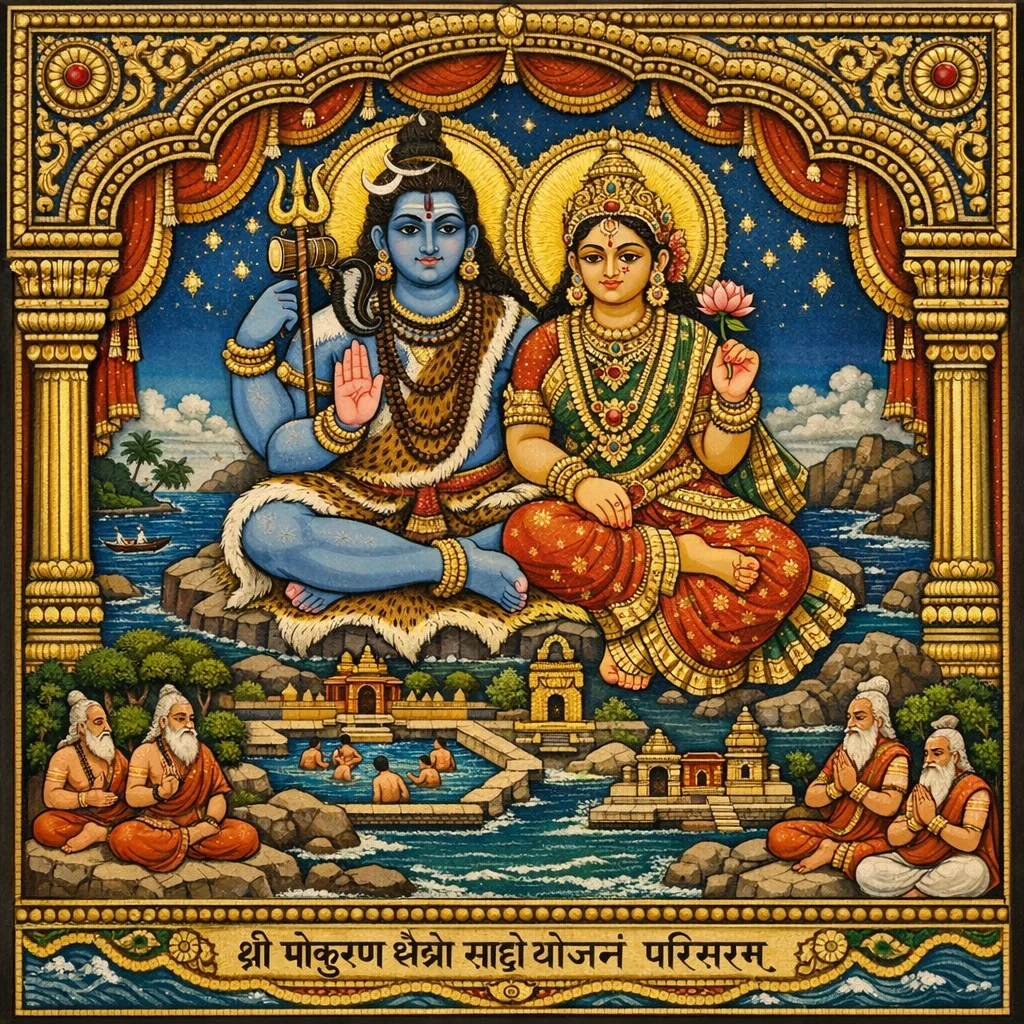
This chapter continues the Sāgara cycle while turning to Bhuvana-kośa geography and tīrtha-mahātmya teaching. Jaimini says Sāgara’s deeds are told in brief and in detail as a sin-destroying account. Bhārata-khaṇḍa is measured as south–north in orientation, extending nine thousand yojanas. The sons of Sāgara dig in pursuit of the sacrificial horse, explaining the ocean’s name “Sāgara” as the makarālaya (abode of makaras) enlarged by their digging. The narrative then moves to sacred geography: the ocean encircles and floods the earth up to the image of “Brahmā’s feet,” distressing beings, and introduces the famed western coastal tīrtha, Gokarṇa. Gokarṇa, about one-and-a-half yojanas in extent, is said to contain innumerable tīrthas and siddha communities, to remove sins universally, and to grant ascetics irreversible liberation. Śaṅkara dwells there with Devī and the gods; pilgrimage swiftly destroys sins, and attraction to the kṣetra arises only from great merit. Death within the kṣetra, by firm resolve, is promised to yield enduring heaven, blending measurement, etiology, and salvific place-theology.
Shlokas
Verse 1
इति श्रीब्रह्माण्डे महापुराणे वायुप्रोक्ते मध्यमाभागे तृतीय उपोद्धातपादे सागरोपाख्यानेशुमतो राज्यप्राप्तिर्नाम पञ्चपञ्चशत्तमो ऽध्यायः // ५५// जैमिनिरुवाच एतत्ते चरितं सर्वं सगरस्य महात्मनः / संक्षेपविस्तराभ्यां तु कथितं पापनाशनम्
Thus, in the holy Brahmāṇḍa Mahāpurāṇa, as spoken by Vāyu, in the middle section, in the third Upoddhāta-pāda, within the Sāgara narrative, ends the fifty-fifth chapter called “Aṁśumān’s Attainment of the Kingdom.” Jaimini said: This entire sacred history of the great-souled Sāgara has been told both briefly and in detail, and it destroys sin.
Verse 2
खण्डों ऽयं भारतो नाम दक्षिणोत्तरमायतः / नवयोजनसाहस्रं विस्तारपरिमण्डलम्
This region is called Bhārata; it stretches from south to north, and its expanse measures nine thousand yojanas.
Verse 3
पुत्रैस्तस्य नरेद्रस्य मृगयद्भिस्तुरङ्गमम् / योजनानां सहस्रं तु खात्वाष्टौ विनिपातिताः
The sons of that king, hunting for the horse, dug into the earth for a thousand yojanas; eight of them fell and perished.
Verse 4
सागरस्य सुतैर्यस्माद्वर्द्धितो मकरालयः / ततः प्रभृति लोकेषु सागराख्यामवाप्तवान्
Because Sāgara’s sons caused the ocean—the abode of makaras—to expand, from that time onward it became known in the worlds by the name “Sāgara”.
Verse 5
ब्रह्मपादावधि महीं सतीर्थक्षेत्रकाननाम् / अब्धिः संक्रमयामास परिक्षिप्य निजांभसा
The ocean, with its own waters, encircled and flooded that earth—abounding in tīrthas, sacred regions, and forests—up to Brahma-pāda (Brahmā’s foot).
Verse 6
ततस्तन्निलयाः सर्वे सदेवासुरमानवाः / इतस्ततश्च संजाता दुःखेन महतान्विताः
Then all who dwelt in those abodes—devas, asuras, and humans—came forth here and there, burdened with great sorrow.
Verse 7
गोकर्णं नाम विख्यातं क्षेत्रं सर्वसुरार्चितम् / सार्द्धयोजनविस्तारं तीरे पश्चिम वारिधेः
There is a renowned sacred kṣetra called Gokarṇa, worshiped by all the gods; it spans a yojana and a half on the shore of the western sea.
Verse 8
तत्रासंख्यानि तीर्थानि मुनिदेवालयाश्च वै / वसंति सिद्धसंघाश्च क्षेत्रे तस्मिन्पुरा नृप
O king, there are countless tīrthas there, and shrines of the sages; in that kṣetra, from ancient times, hosts of siddhas have dwelt.
Verse 9
क्षेत्रं तल्लोकविख्यातं सर्वपापहरं शुभम् / तत्तीर्थमब्धेरपतद्भागे दक्षिणपश्चिमे
That kṣetra is famed in the world, auspicious and the remover of all sins; its tīrtha lies in the ocean’s south‑western quarter.
Verse 10
यत्र सर्वे तपस्तप्त्वा मुनयः संशितव्रताः / निर्वाणं परमं प्राप्ताः पुनरावृत्तिवर्जितम्
There, the sages of steadfast vows, having performed austerities, attained the supreme nirvāṇa—free from all return and rebirth.
Verse 11
तत्त्रेत्रस्य प्रभावेण प्रीत्या भूतगणैः सह / देव्या च सकलैर्देवैर्नित्यं वसति शङ्करः
By the power of that sacred region, Śaṅkara ever dwells there in loving joy with the hosts of bhūtas, together with the Goddess and all the gods.
Verse 12
एनांसि यत्समुद्दिश्य तीर्थयात्रां प्रकुर्वताम् / नृणामाशु प्रणश्यन्ति प्रवाते शुष्कपर्णवत्
The sins of those who undertake pilgrimage to the tīrtha with it in mind swiftly perish, like a dry leaf before the wind.
Verse 13
तत्क्षेत्रसेवनरतिर् नैव जात्वभिजायते / समीपे वसमानोनामपि पुंसां दुरात्मनाम्
Delight in serving that sacred kṣetra never arises in men of wicked heart, even if they dwell close by.
Verse 14
महाता सुकृतेनैव तत्क्षेत्रगमने रतिः / नृणां संजायते राजन्नान्यथा तु कथञ्चन
O King, only through great merit does the desire arise in men to go to that sacred kṣetra; otherwise, it never does.
Verse 15
निर्बन्धेन तु ये तस्मिन्प्राणिनः स्थिरजङ्गमाः / म्रियन्ते नृप सद्यस्ते स्वर्गं प्राप्स्यन्ति शाश्वतम्
O King, whatever beings—moving or unmoving—die there by unavoidable compulsion, they at once attain the everlasting heaven.
Verse 16
स्मृत्यापि सकलैः पापैर्यस्य मुच्येत मानवः / क्षेत्राणामुत्तमं क्षेत्रं सर्वतीर्थनिकेतनम्
That sacred kṣetra whose mere remembrance frees a person from all sins—this is the सर्वोत्तम kṣetra, the abode of all tīrthas.
Verse 17
स्नात्वा चैतेषु तीर्थेषु यजन्तश्च सदाशिवम् / सिद्धिकामा वसंति स्म मुनयस्तत्र केचन
Bathing in these tīrthas and worshipping Sadāśiva, certain sages who seek siddhi dwell there.
Verse 18
कामक्रोधविनिर्मुक्ता ये तस्मिन्वीतमत्सराः / निवसंत्यचिरेणैव तत्सिद्धिंप्राप्नुवन्ति हि
Those who dwell there, freed from desire and anger and devoid of envy, indeed attain that siddhi before long.
Verse 19
जपहोमरताः शान्ता निपता ब्रह्मचारिणः / वसंति तस्मिन्ये ते हि सिद्धिं प्राप्स्यन्त्यभीप्सिताम्
Peaceful, humble brahmacārins devoted to japa and homa—those who dwell there will surely gain the siddhi they seek.
Verse 20
दानहोमजपाद्यं वै पितृदेवद्विजार्चनम् / अन्यस्मात्कोटिगुणितं भवेत्तस्मिन्फलं नृप
O king, there the fruit of charity, homa, japa, and the worship of ancestors, devas, and dvijas becomes a koṭi times greater than elsewhere.
Verse 21
अंभोधिसलिले मग्न तस्मिन् क्षेत्रे ऽतिपावने / महता तपसा युक्ता मुनयस्तन्निवासिनः
In that supremely holy region, sunk beneath the ocean’s waters, the sages dwelling there were endowed with great austerity.
Verse 22
सह्यं शिखरिणं श्रेष्ठं निलयार्थं समारुहन् / वसंतस्तत्र ते सर्वे संप्रधार्य परस्परम्
Seeking a dwelling, they ascended the excellent, peak-crowned Sahya mountain; and there they all lived, having conferred with one another.
Verse 23
सहेन्द्राद्रौ तपस्यन्तं रामं गन्तुं प्रचक्रमुः / राजोवाच / अगस्त्यपीततोये ऽब्धौ परितो राजनन्दनैः
They then set out to go to Rama, who was performing austerities on Mount Sahyendra. The king said: “O princes, all around the ocean whose waters were drunk by Agastya…”
Verse 24
खात्वाधः पातिते क्षेत्रे सतीर्थाश्रमकानने / भूभागेषु तथान्येषु पुरग्रमाकरादिषु
In that region dug out and cast down—within its sacred fords, hermitages, and forests—and likewise in other tracts of land: cities, villages, mines, and the like.
Verse 25
विनाशितेषु देशेषु समुद्रोपान्तवर्त्तिषु / किमकार्षुर्मुनिश्रेष्ठ जनास्तन्निलयास्ततः
When the lands near the ocean’s shore were destroyed, O best of sages, what did the people who dwelt there do thereafter?
Verse 26
तत्रैव चावसन्कृच्छ्रात्प्रस्थितान्यत्र वा ततः / कियता चैव कालेन संपूर्णो ऽभूदपांनिधिः / केन वापि प्रकारेण ब्रह्मन्नेतद्वदस्व मे
Did they remain there in hardship, or did they depart from there to another place? And in how much time did the treasure of waters—the ocean—become full again? O Brahman, tell me by what manner this came to pass.
Verse 27
जैमिनिरुवाच अनूपेषु प्रदेशेषु नाशितेषु दुरात्मभिः
Jaimini said: when the wicked-hearted destroyed the water-rich regions, the marshlands.
Verse 28
जनास्तन्निलयाः सर्वे संप्रयाता इतस्ततः / तत्रैव चावसन्कृच्छ्रात्केचित्क्षेत्रनिवासिनः
All the people of those dwellings departed, scattering here and there; yet some residents of the sacred kṣetra remained there, enduring hardship.
Verse 29
एतस्मिन्नेव काले तु राजन्नंशुमतः सुतः / बभूव भुविधर्मात्मा दिलीप इति विश्रुतः
At that very time, O King, Aṃśumān’s son appeared upon the earth—righteous-souled, renowned by the name Dilīpa.
Verse 30
राज्ये ऽभिषिच्य तं सम्यग्भुक्तभोगोंऽशुमान्नृपः / वनं जगाम मेधावी तपसे धृतमानसः
Having duly anointed him to the kingship, King Aṃśumān—who had already tasted worldly enjoyments—went to the forest, wise and steadfast of mind, to undertake tapas, sacred austerity.
Verse 31
दिलीपस्तु ततःश्रीमानशेषां पृथिवीमिमाम् / पालयामास धर्मेण विजित्य सकलानरीन्
Thereafter the illustrious Dilīpa, having conquered all foes, protected and ruled this entire earth in accordance with dharma.
Verse 32
भगीरथो नाम सुतस्तस्यासील्लोकविश्रुतः / सर्वधर्मार्थकुशलः श्रीमानमितविक्रमः
His son was named Bhagīratha, renowned in the world—skilled in dharma and artha, illustrious, and of immeasurable valor.
Verse 33
राज्ये ऽभिषिच्य तं राजा दिलीपो ऽपि वनं ययौ / स चापि पालयन्नुर्वीं सम्यग्विहतकण्टकाम्
Having anointed him to the throne, King Dilīpa too departed for the forest; and he, in turn, rightly governed the earth, with all thorns of disorder removed.
Verse 34
मुमुदे विविधैर्भोगैर्दिवि देवपतिर्यथा / स शुश्रावात्मनः पूर्वं पूर्वजानां महीपतिः
He delighted in manifold enjoyments like the lord of the gods in heaven; and that king also heard of the ancient deeds of his forefathers.
Verse 35
निरये पतनं घोरं विप्रकोपसमुद्भवम् / ब्रह्मदण्डहतान्सर्वान्पितञ्छ्रुत्वातिदुःखितः
Hearing of the dreadful fall into hell born of a brahmin’s wrath, and of all his ancestors struck by the Brahma-daṇḍa, he was overwhelmed with sorrow.
Verse 36
राज्ये बन्धुषु भोगे वा निर्वेदं परमं ययौ / स मन्त्रिप्रवरे राज्यं विन्यस्य तपसे वनम्
He attained supreme dispassion toward kingdom, kinsmen, and pleasures. Entrusting the realm to his foremost minister, he went to the forest for austerities.
Verse 37
प्रययौ स्वपितॄन्नाकं निनीषुर्नृपसत्तमः / तपसा महाता पूर्वमायुषे कमलोद्भवम्
The noblest of kings set forth, wishing to lead his forefathers to heaven. By mighty austerities he first worshiped Brahmā, the Lotus-born, to obtain the span of life.
Verse 38
आराध्य तस्माल्लेभे च यावदायुर्निजेप्सितम् / ततो गङ्गां महाराज समाराध्य प्रसाद्य च
By worshiping him, he obtained the full lifespan he desired. Then, O great king, he devoutly propitiated the sacred Gaṅgā and won her grace.
Verse 39
वरमागमनं वव्रे दिवस्तस्या महींप्रति / ततस्तां शिरसा धर्त्तु तपसाऽराधयच्छिवम्
She sought the boon of descending from heaven to the earth. Then, to bear her upon his head, he worshiped Śiva through austerities.
Verse 40
स चापि तद्वरं तस्मै प्रददौ भक्तवत्सलः / मेरोर्मूर्ध्नस्ततो गङ्गां पतं ती शिरसात्मनः
Śiva, ever tender to his devotees, granted him that boon. Then from Meru’s summit Gaṅgā descended, falling and flowing while being borne upon his head.
Verse 41
सग्राहनक्रमकरां जग्राह जगतां पतिः / सा तच्छिरः समासाद्य महावेगप्रवाहिनी
The Lord of the worlds seized that torrent, with its grahas, nakras, and makaras; rushing with mighty force, it reached his head.
Verse 42
तज्जटामण्डले शुभ्रे विलिल्ये सातिगह्वरे / चुलकोदकवच्छंभोर्विलीनां शिरसि प्रभोः
She dissolved into the radiant, deep circle of his matted locks; like a palmful of water, she merged upon the head of Lord Śambhu.
Verse 43
विलोक्य तत्प्रमोक्षाय पुनराराधयद्धरम् / स तां शर्वप्रसादेन लब्ध्वा तु भुवमागताम्
Seeing the means for her release, he again worshiped Dharma/Hara; and by Śarva’s grace he obtained her, and she came down to the earth.
Verse 44
आनिन्ये सागरा दग्धा यत्र तां वै दिशं प्रति / सऽनुव्रजन्ती राजानं राजर्षेर्यजतः पथि
He led her toward the quarter where Sagara’s sons lay burned; and she followed the king along the path of the royal seer as he performed the yajña.
Verse 45
तद्यज्ञवाटमखिलं प्लावयामास सर्वतः / स तु राजऋषिः क्रुद्धो यज्ञवाटे ऽखिले तया
She flooded the entire sacrificial enclosure on every side; and the royal seer grew wrathful when the whole yajña-ground was inundated by her.
Verse 46
मग्ने गण्डूषजलवत्स पपौ तामशेषतः / अतन्द्रितो वर्षशतं शुश्रूषितवा स तं पुनः
Submerged, he drank that water completely, as one drinks water for rinsing the mouth. Then, untiring, he again rendered service for a hundred years.
Verse 47
तस्मात्प्रसन्नान्नृपतिर्लेमे गङ्गां महात्मनः / उषित्वा सुचिरं तस्यनिसृता जठराद्यतः
Therefore the king, well pleased, received the Gaṅgā of that great-souled one. After dwelling there a long time, she issued forth from his belly.
Verse 48
प्रथितं जाह्नवीत्यस्यास्ततो नामाभवद्भुवि / भगीरथानुगा भूत्वा तत्पितॄणामशेषतः
From then on, her renowned name upon the earth became “Jāhnavī”. Following Bhagiratha, she brought benefit to all his ancestors without exception.
Verse 49
निजांभसास्थिभस्मानि सिषेच सुरनिम्नगा / ततस्तदंभसा सिक्तेष्वस्थिभस्मसु तत्क्षणात्
The divine river sprinkled those ashes of bones with her own waters. And when those ashes were wetted by that water, in that very instant (the result appeared).
Verse 50
निरयात्सागराः सर्वे नष्टपापा दिवं ययुः / एवं सा सागरान्सर्वान्दिवं नीत्वा महान्दी
All the sons of Sagara were freed from hell; their sins were destroyed, and they went to heaven. Thus did that great river lead all the Sagaras to the celestial realm.
Verse 51
तेनैव मार्गेण जवात्प्रयाता पूर्वसागरम् / सेनोर्मूर्ध्नश्चतुर्भेदा भूत्वा याता चतुर्द्दिशम्
By that very route they hastened toward the Eastern Ocean; the army’s vanguard split into four divisions and went forth to the four directions.
Verse 52
चतुर्भेदतया चाभूत्तस्या नाम्नां चतुष्टयम् / सीता चालकनन्दा च सुचक्षुर्भद्रवत्यपि
Because it became fourfold, it bore a set of four names: Sītā, Alakanandā, Sucakṣu, and Bhadravatī.
Verse 53
अगस्त्यपीतसलिलाच्चिरं शुष्कोदका अपि / गङ्गांभसा पुनः पूर्णाश्चत्वारो ऽम्बुधयो ऽभवन्
Though long left dry because Agastya had drunk their waters, the four oceans were filled again by the waters of the Gaṅgā.
Verse 54
पूर्वमाणे समुद्रे तु सागरैः परिवर्द्धिते / अन्तर्हिताभवन्देशा बहवस्तत्समीपगाः
As the sea advanced eastward and swelled with the oceans, many lands near it were submerged and vanished from sight.
Verse 55
समुद्रोपान्तवर्त्तीनि क्षेत्राणि च समन्ततः / इतस्ततः प्रयाताश्च जनास्तन्निलया नृप
O king, the fields near the ocean’s shore were afflicted on every side, and the people dwelling there departed this way and that, leaving their homes.
Verse 56
गोकर्णमिति च क्षेत्रं पूर्वं प्रोक्तं तु यत्तव / अर्मवोपात्तवर्त्तित्वात्समुद्रे ऽतर्द्धिमागमत्
O you! That sacred kṣetra earlier spoken of as “Gokarṇa”, through the influence of Armava, sank into the ocean and vanished from sight.
Verse 57
ततस्तन्निलयाः सर्वे तदुद्धाराभिकाङ्क्षिणः / सह्याद्रेर्भृगुशार्दूलं द्रष्टुकामा ययुर्नृप
Then all who dwelt there, longing for its deliverance, O king, set out wishing to behold Bhṛgu-Śārdūla of the Sahya mountain.
Frequently Asked Questions
Bhārata-khaṇḍa is described as south–north oriented with an extent of nine thousand yojanas; Gokarṇa-kṣetra is described as having roughly one-and-a-half yojanas of extent (sārddha-yojana-vistāra) on the western seacoast.
It presents an etiology in which Sagara’s sons, while digging in pursuit of the horse, ‘enlarge’ the makarālaya (ocean), after which it becomes known in the worlds by the name ‘Sāgara’.
Gokarṇa is framed as universally sin-removing; pilgrimage destroys sins swiftly, sages attain irreversible liberation there, Śaṅkara is said to dwell there with Devī and the gods, and death within the kṣetra (with firm resolve) is promised to yield enduring heaven.