Adhyaya 54
सगरचरिते सागराविनाशः (The Quelling of the Ocean-Destruction Episode in the Sagara Narrative)
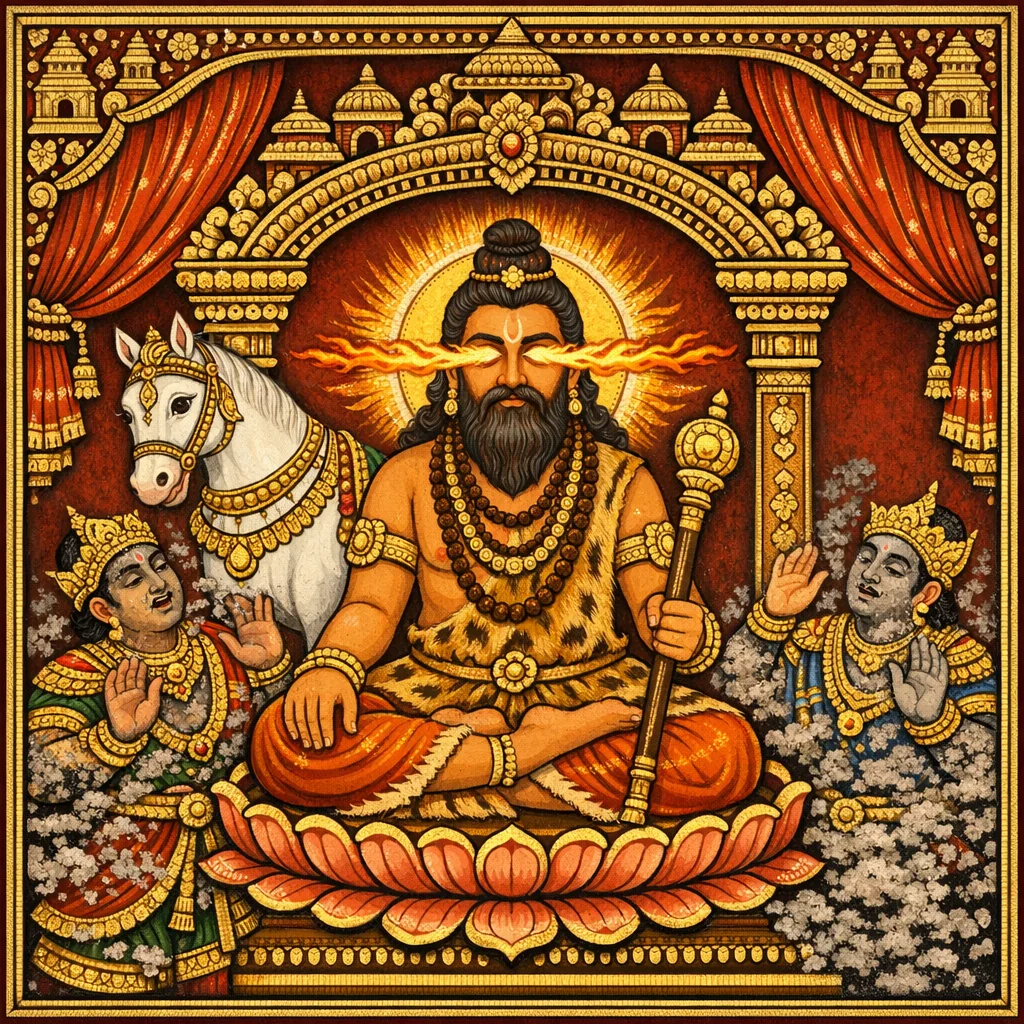
This chapter continues the Sagara cycle through a tight chain of cause and effect. Jaimini warns of the cosmic danger of unchecked ascetic wrath: Kapila’s “fire of anger” (krodhāgni) could burn the world out of season. When Kapila is praised and propitiated, he withdraws the terrifying fire and restores balance for gods and tapasvins. Narada then arrives in Ayodhya, is received with formal hospitality, and delivers the crucial update: Sagara’s sons, sent to pursue the sacrificial horse, have been destroyed by the Brahma-daṇḍa—the inviolable punitive force tied to brahminical authority. The horse, by fate, has been removed to another place. The princes’ subterranean search becomes a cosmo-geographic act of digging downward, ending with the sight of Kapila near the horse in Pātāla. Misreading the scene, they accuse Kapila of theft; fire born from Kapila’s eyes consumes them. Narada interprets their destruction as morally and cosmically justified—cruel, sinful, and obstructive to the worlds—reasserting dharma as the key to understanding dynastic catastrophe.
Shlokas
Verse 1
इति श्रीब्रह्माण्डे महापुराणे वायुप्रोक्ते मध्यमाभागे तृतीय उपोद्धातपादे सगरचरितेसागराविनाशो नाम त्रिपञ्चशत्तमो ऽध्यायः // ५३// जैमिनिरुवाच क्रोधाग्निमेनं विप्रेन्द्र सद्यः संहर्त्तुमर्हसि / नो चेदकाले लोको ऽयं सकलस्तेन दह्यते
Thus, in the Śrī Brahmāṇḍa Mahāpurāṇa, in the middle section spoken by Vāyu, in the third introductory division, within the tale of Sagara, is the fifty-third chapter called “The Destruction of the Ocean.” Jaimini said: “O best of Brahmins, you must at once restrain this fire of wrath; otherwise, before its time, this entire world will be burned by it.”
Verse 2
दृष्टस्ते महिमानेन व्याप्तमासीच्चराचरम् / क्षमस्व संहर क्रोधं नमस्ते विप्रपुङ्गव
We have beheld your majesty, by which all that moves and all that is still was pervaded. Forgive us; withdraw your wrath. Salutations to you, O foremost of Brahmins.
Verse 3
एवं संस्तूयमानस्तु भगवान्कपिलो मुनिः / तूर्णमेव क्षयं निन्ये क्रोधाग्निमतिभैरवम्
Thus praised, the blessed sage Kapila swiftly brought that exceedingly dreadful fire of wrath to its end, causing it to subside.
Verse 4
ततः प्रशान्तमभवज्जगत्सर्वं चराचरम् / देवास्तपस्विनश्चैव बभूवुर्विगतज्वराः
Then the entire world, both moving and unmoving, became tranquil; the gods and the ascetics too were freed from feverish distress.
Verse 5
एतस्मिन्नेव काले तु भगवान्नारदो मुनिः / अयोध्या मगमद्राजन्देवलोकाद्यदृच्छया
At that very time, O King, the revered sage Narada, by chance, came to Ayodhya from the world of the gods.
Verse 6
तमागतमभिप्रेक्ष्य नारदं सगरस्तदा / अर्घ्यपाद्यादिभिः सम्यक्पूजयामास शास्त्रतः
Seeing Narada arrive, Sagara duly worshiped him according to the śāstric rite, offering arghya, water for the feet, and other honors.
Verse 7
परिगृह्य च तत्पूजामासीनः परमासने / नारदो राजशार्दूलमिदं वचनमब्रवीत्
Accepting that worship and seated upon the highest seat, Narada spoke these words to the king, tiger among rulers.
Verse 8
नारद उवाच हयसंचारणार्थाय संप्रयातास्तवात्मजाः / ब्रह्मदण्डहताः सर्वे विनष्टा नृपसत्तम
Narada said: O best of kings, your sons who set out to seek the horse have all been struck down by the Brahma-daṇḍa and have perished.
Verse 9
संरक्ष्यमाणस्तैः सर्वैर्हयस्ते यज्ञियो नृप / केनाप्य लक्षितः क्वापि नीतो विधिवशाद्दिवि
O king, though guarded by all, that sacrificial, sacred horse was noticed by someone and, by the compulsion of fate, was taken away somewhere into the heavens.
Verse 10
ततो विनष्टं तुरगं विचिन्वन्तो महीतले / प्रालभन्त न ते क्वापि तत्प्रवृत्तिं चिरान्नृप
Then they searched the earth for the vanished steed; O king, even after a long time they found nowhere any trace of its course.
Verse 11
ततो ऽवनेरधस्ते ऽश्वं विचेतुं कृतनिश्चयाः / सागरास्ते समारभ्य प्रचख्नुर्वसुधातलम्
Then, resolved to seek the horse beneath the earth, the sons of Sagara began and dug into the very surface of the world.
Verse 12
खनन्तो वसुधा मश्वं पाताले ददृशुर्नृप / समीपे तस्य योगीन्द्रं कपिलं चमहामुनिम्
As they dug, O king, they beheld the horse in Pātāla, and near it Kapila, the great sage, lord among yogins.
Verse 13
तं दृष्ट्वा पापकर्माणस्ते सर्वे कालचोदिताः / कपिलं कोपयामासुरश्वहर्त्तायमित्यलम्
Seeing him, those men of sinful deeds, driven by the force of time, cried, “This is the horse-stealer!” and sought to rouse the wrath of sage Kapila.
Verse 14
ततस्तत्क्रोधसंभूतनेत्राग्नेर्दहतो दिशः / इन्धनीभूतदेहास्ते पुत्राः संक्षयमागताः
Then the fire from his eyes, born of wrath, burned the quarters; those sons, their bodies turned to fuel, were consumed and perished.
Verse 15
क्रूराः पापसमाचाराः सर्वलोकोपरोधकाः / यतस्ते तेन राजेन्द्र न शोकं कर्तुमर्हसि
They were cruel, given to sinful conduct, and a hindrance to all the worlds; therefore, O king of kings, you should not grieve for them.
Verse 16
स त्वं धैर्यधनो भूत्वा भवित व्यतयात्मनः / नष्टं मृतमतीतं च नानुशोचन्ति पण्डिताः
Make steadfastness your wealth and accept what was destined to be; the wise do not lament what is lost, what is dead, or what has passed away.
Verse 17
तस्मात्पौत्रमिमं बालमंशुमन्तं महामतिम् / तुरगानयनार्थाय नियुङ्क्ष्व नृपसत्तम
Therefore, O best of kings, appoint this young grandson Aṁśumān, of great wisdom, to the task of bringing back the horse.
Verse 18
इत्यक्त्वा राजशार्दूलं सदस्यर्त्विक्समन्वितम् / क्षणेन पश्यतां तेषां नारदो ऽन्तर्दधे मुनिः
Having spoken thus to the tiger among kings, surrounded by the assembly and the officiating priests, the sage Nārada vanished in an instant before their very eyes.
Verse 19
तच्छ्रत्वा वचन तस्य नारदस्य नृपोत्तमः / दुःखशोकपरातात्मा दध्यौ चिरमुदारधीः
Hearing Nārada’s words, the noblest king—his heart overwhelmed by sorrow and grief—pondered for a long time with lofty understanding.
Verse 20
तं ध्यानयुक्तं सदसि समासीनमवाङ्मुखम् / वसिष्ठः प्राह राजानं सांत्वयन्देशकालवित्
Seeing the king seated in the hall, absorbed in meditation with his face cast down, Vasiṣṭha—knower of place and time—spoke to console him.
Verse 21
किमिदं धैर्यसाराणामवकाशं भवदृशाम् / लभते हृदि चेच्छोकः प्राप्तं धीर तया फलम्
O steadfast one, how has grief found room in the heart of one like you, the very essence of fortitude? Tell me—what fruit has this brought you?
Verse 22
दौर्मनस्यं शिथिलयन्सर्वं दिष्टवशानुगम् / मन्वानो ऽनन्तरं कृत्यं कर्तुमर्हस्यसंशयम्
Loosen this despondency; deem all to have occurred under the sway of destiny, and then perform the duty that follows—without doubt, it is fitting for you.
Verse 23
वसिष्ठेनैवमुक्तस्तु राजा कार्यार्थतत्त्ववित् / धृतिं सत्त्वं समालंब्य तथेति प्रत्यभाषत
Thus addressed by Vasiṣṭha, the king—knower of the true meaning of duty and purpose—took refuge in resolve and courage and replied, “So be it.”
Verse 24
अंशुमन्तं समाहूय पौत्रं विनयशालिनम् / ब्रह्मक्षत्त्रसभामध्ये शनैरिदमभाषत
Summoning Aṃśumant, his grandson rich in humility, in the midst of the assembly of Brahmins and Kṣatriyas he spoke these words softly.
Verse 25
ब्रह्मदण्डहताः सर्वे पितरस्तव पुत्रक / पतिताः पापकर्माणो निरये शाश्वतीः समाः
My son, all your forefathers have been struck by Brahmā’s rod of punishment; through sinful deeds they have fallen and lie in hell for everlasting years.
Verse 26
त्वमेव संततिर्मह्यं राज्यस्यास्य च रक्षिता / त्वदायत्तमशेषं मे श्रेयो ऽमुत्र परत्र च
You alone are the continuance of my line and the guardian of this kingdom; upon you depends all my welfare, in this world and in the world beyond.
Verse 27
स त्वं गच्छ ममादेशात्पाताले कपिलान्तिकम् / तुरगानयनार्थाय यत्नेन महातान्वितः
Therefore, by my command, go down to Pātāla, to the presence of sage Kapila; to bring back the horse, strive with great effort and steadfast resolve.
Verse 28
तं प्रार्थयित्वा विधिवत्प्रसाद्य च विशेषतः / आदाय तुरगं वत्स शीघ्रमागन्तुमर्हसि
Having entreated him according to due rite and especially won his favor, my child, take the horse and return swiftly.
Verse 29
जैमिनिरुवाच एवमुक्तोंऽशुमांस्तेन प्रणम्य पितरं पितुः / तथेत्युक्त्वा महाबुद्धिः प्रययौ कपिलान्तिकम्
Jaimini said: Thus addressed, Aṃśumān bowed to his father’s father. Saying, “So be it,” the great-minded one set out for Kapila’s presence.
Verse 30
तमुपागम्य विधिवन्नमस्कृत्य यथामति / प्रश्रयावनतो भूत्वा शनैरिदमुवाच ह
Approaching him, he offered due obeisance according to proper rite, as best he could. Bowing in humility, he slowly spoke these words.
Verse 31
प्रसीद विप्रशार्दूल त्वामहं शरणं गतः / कोपं च संहर क्षिप्रं लोकप्रक्षयकारकम्
Be gracious, O tiger among brahmins; I have come seeking refuge in you. Swiftly withdraw this wrath that brings destruction upon the worlds.
Verse 32
त्वयि क्रुद्धे जगत्सर्वं प्रणाशमुपयास्यति / प्रशान्तिमुपयाह्याशुलोकाः संतु गतव्यथाः
If you are angered, the whole universe will hasten toward ruin. Therefore quickly return to peace, that the worlds may be freed from anguish.
Verse 33
प्रसन्नो ऽस्मान्महाभाग पश्य सौम्येन चक्षुषा / ये त्वत्क्रोधाग्निनिर्दग्धास्तत्संततिमवेहि माम्
O greatly blessed one, be pleased with us and look on us with gentle eyes. Know me as the descendant of those who were burned by the fire of your wrath.
Verse 34
नाम्नांशुमन्तं नप्तारं सगरस्य महीपतेः / सो ऽहं तस्य नियोगेन त्वत्प्रसादाभिकाङ्क्षया
I am Aṃśumanta by name, grandson of King Sagara; by his command I have come, longing for your gracious favor.
Verse 35
प्राप्तो दास्यसि चेद्ब्रह्मंस्तुरगानयनाय च / जैमिनिरुवाच इति तद्वचनं श्रुत्वा योगीन्द्रप्रवरो मुनिः
“O Brahman, I have come; if you will grant (aid) for bringing back the horse.” Thus spoke Jaimini; hearing those words, the sage foremost among yogic lords…
Verse 36
अंशुमन्तं समालोक्य प्रसन्न इदमब्रवीत् / स्वागतं भवतो वत्स दिष्ट्या च त्वमिहागतः
Seeing Aṃśumanta, he became gracious and said: “Welcome, dear child; by good fortune you have come here.”
Verse 37
गच्छ शीघ्रं हयश्चायं नीयतां सगरान्तिकम् / अधिक्षिप्तो ऽस्य यज्ञो ऽपि प्रागतः संप्रवर्त्तताम्
Go swiftly; take this horse to Sagara. His sacrifice was obstructed—now let it be resumed and carried forward.
Verse 38
व्रियतां च वरो मत्तस्त्वया यस्ते मनोगतः / दास्ये सुदुर्लभमपि त्वद्भक्तिपरितोषितः
Choose from me the boon that rests in your heart; pleased by your devotion, I shall grant even what is exceedingly hard to obtain.
Verse 39
एषां तु संप्रमाशं हि गत्वा वद पितामहम् / पापानां मरणं त्वेषां न च शोचितुमर्हसि
Go and tell Pitāmaha of their end; they are sinners, and you should not grieve for their death.
Verse 40
ततः प्रणाम्य चोगीन्द्रमंशुमानिदमब्रवीत् / वरं ददासि चेन्मह्यं वरये त्वां महामुने
Then Aṃśumān bowed to the lord of yogins and said: “O great sage, if you would grant me a boon, I choose to ask it of you.”
Verse 41
वरमर्हामि चेत्त्वत्तः प्रसन्नो दातुमर्हसि / त्वद्रोषपावकप्लुष्टाः पितरो ये ममाखिलाः
If I am worthy to receive a boon from you, and you, being pleased, are fit to grant it—then all my ancestors who were scorched by the fire of your wrath—
Verse 42
संप्रयास्यन्ति ते ब्रह्मन्निरयं शास्वतीः समाः / ब्रह्मदण्डहतानां तु न हि पिण्डोदकक्रियाः
O Brahman, they will depart to hell for everlasting years; for those struck down by the Brahmadaṇḍa, there are no piṇḍa offerings or water rites.
Verse 43
पिण्डोदकविहीनानामिह लोके महामुने / विद्यते पितृसालोक्यं न खलु श्रुतिचोदितम्
O great sage, in this world those deprived of piṇḍa offerings and water rites do not attain communion with the realm of the Pitṛs; nor is it enjoined by Śruti.
Verse 44
अक्षयः स्वर्गवासो ऽस्तु तेषां तु त्वत्प्रसादतः / वरेणानेन भगवन्कृतकृत्यो भावाम्यहम्
By your grace, may their dwelling in heaven be imperishable. O Bhagavan, by this boon I have become one whose duty is fulfilled.
Verse 45
तत्प्रसीद त्वमेवैषां स्वर्गतेर्वद कारणम् / येनोद्धारणमेतेषां वह्नेः कोपस्य वै भवेत्
Therefore be gracious; you alone declare the cause by which they may attain the path to heaven, so that they may be delivered from the wrath of fire.
Verse 46
ततस्तमाह योगीन्द्रःसुप्रसन्नेन चेतसा / निरयोद्धारणं तेषां त्वया वत्स न शक्यते
Then the lord of yogins spoke with a heart full of serenity: “My child, you are not able to deliver them from hell.”
Verse 47
तैश्चापि नरके तावद्वस्तव्यं पापकर्मभिः / कालः प्रतीक्ष्यतां तावद्यावत्त्वत्पौत्रसंभवः
Because of their sinful deeds, they must dwell in hell for that time. Wait until then, until the birth of your grandson comes to pass.
Verse 48
कालान्ते भविता वत्स पौत्रस्तव महामतिः / राजा भगीरथो नाम सर्वधर्मार्थतत्त्ववित्
At the end of time, my child, your grandson of great wisdom will be born—King Bhagiratha by name, knower of the true principles of all dharma and artha.
Verse 49
स तु यत्नेन महता पितृगौरवयन्त्रितः / आनेष्यति दिवो गङ्गां तपस्तप्त्वा महाद्ध्रुवम्
He, with mighty effort and bound by reverence for the ancestors, will perform supreme austerity and bring down the heavenly Gaṅgā.
Verse 50
तदंभसा पावितेषु तेषां गात्रास्थिभस्मसु / प्राप्नुवन्ति गतिं स्वर्गे भवतः पितरो ऽखिलाः
When their bodies, bones, and ashes are purified by that water, all your ancestors attain their course in heaven.
Verse 51
तथेति तस्या माहात्म्यं गङ्गाया नृपनन्दन / भागीरथीति लोके ऽस्मिन्सा विख्यातिमुपैष्यति
So be it; O prince, such is the greatness of Gaṅgā: in this world she will become renowned as Bhāgīrathī.
Verse 52
यत्तोयप्लावितेष्वस्थिभस्मलोमनखेष्वपि / निरयादपि संयाति देही स्वर्लोकमक्षयम्
Even if bones, ashes, hair, and nails are bathed in that water, the embodied being departs even from hell and reaches the imperishable heavenly world.
Verse 53
तस्मात्त्वं गच्छ भद्रं ते नशोकं कर्त्तुमर्हसि / पितामहाय चैवैनमश्वं संप्रतिपादय
Therefore go forth—may good be upon you; you should not give way to grief. And present this horse as well to your grandfather.
Verse 54
जैमिनिरुवाच ततः प्रणम्य तं भक्त्या तथेत्युक्त्वा महामतिः / ययौ तेनाभ्यनुज्ञातः साकेतनगरं प्रति
Jaimini said: Then the great-minded one bowed to him in devotion, saying, “So be it,” and, granted leave by him, departed toward the city of Saketa.
Verse 55
सगरं स समासाद्य तं प्रणम्य यथाक्रमम् / न्यवेदयच्च वृत्तान्तं मुनेस्तेषां तथान्मनः
Reaching Sagara, he bowed to him in due order and reported the full account of the sage and of them all, as well as the disposition of their minds.
Verse 56
प्रददौतुरगं चापि समानीतं प्रयत्नतः / अतः परमनुष्ठेयमब्रवीत्किं मयेति च
He also presented the horse, brought back with great effort. Then he asked, “What rite is to be performed next, and what should I do?”
Frequently Asked Questions
It advances the Solar-line Sagara narrative by documenting the loss of Sagara’s sons and setting the stage for subsequent lineage actions required to resolve the consequences (a dynastic rupture interpreted through dharma).
Ascetic power is world-effective: uncontrolled rishi-wrath can trigger premature cosmic dissolution (‘burning the world out of time’), so praise/propitiation and restraint function as mechanisms of cosmic stabilization.
No. The sampled material is from the Sagara–Kapila dynastic cycle, not the Lalitopakhyana; its primary value is genealogical historiography and the dharmic logic of royal catastrophe.