Adhyaya 42
गणेश-एकदन्त-उत्पत्तिः (Origin of Gaṇeśa’s Single Tusk) / Bhārgava–Gaṇeśa Encounter
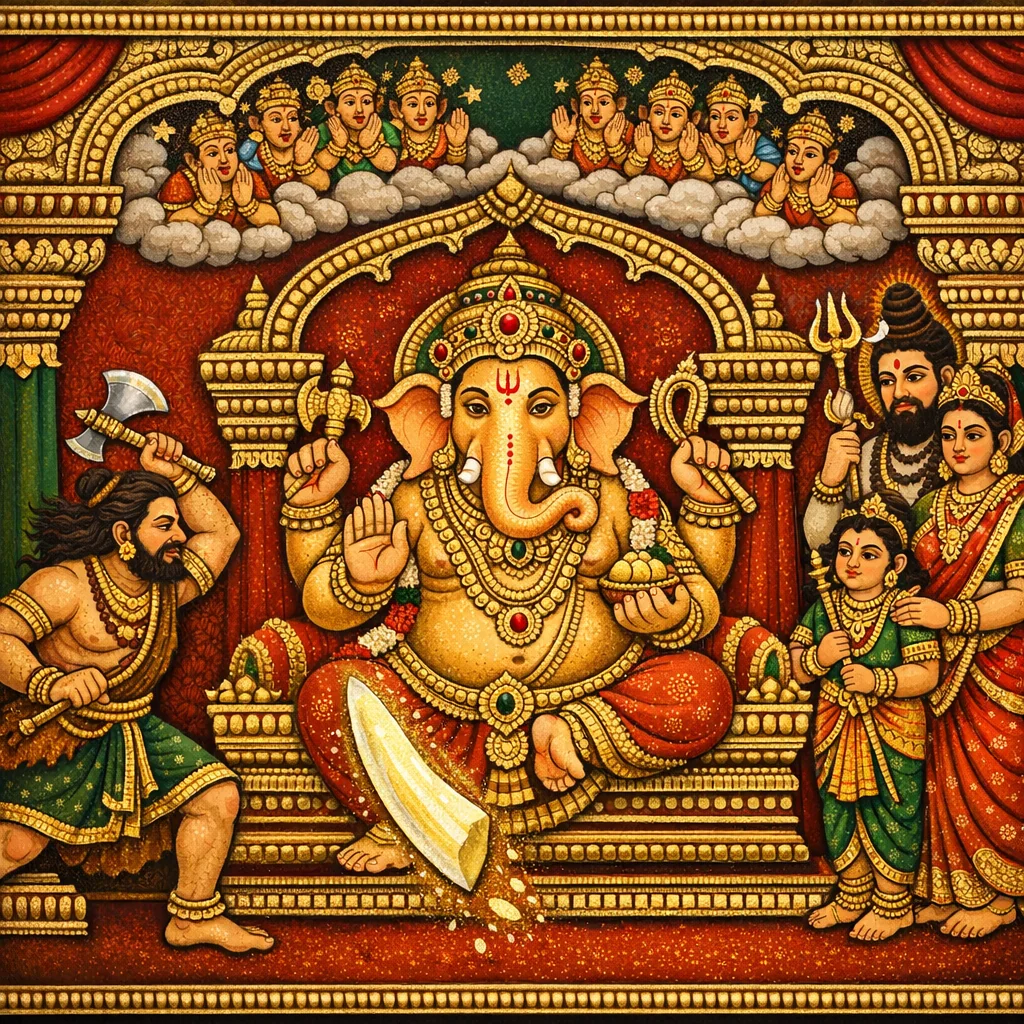
Vasiṣṭha narrates this chapter to a king in a didactic, genealogical Purāṇic frame. Bhārgava/Paraśurāma, angered after being checked by Gaṇādhiśa (Gaṇeśa), sees Gaṇeśa standing unmoved and hurls his axe (paraśu), a weapon once granted by Śiva. Gaṇeśa, wishing to make his father’s gift “infallible” (amogha), receives the blow upon his tusk; one tusk is severed and falls, the earth trembles, and the gods cry out. Hearing the uproar, Pārvatī and Śaṅkara arrive; Pārvatī beholds Heramba as Vakratuṇḍa–Ekadantin and questions Skanda, who recounts the event. Enraged, Pārvatī addresses Śiva through the dharma of relationships (teacher-disciple, father-son), praises Bhārgava’s past victories and gifts, and urges Śiva to protect the ascetic/house-disciple (antevāsī). The passage ends with Pārvatī threatening to depart with her sons to her father’s house, a Purāṇic motif meant to compel divine resolution and restore household and cosmic balance.
Shlokas
Verse 1
इति श्रीब्रह्माण्डे महापुराणे वायुप्रोक्ते मध्यमभागे तृतीय उपोद्धातपादे भार्गवचरिते एकचत्वारिंशत्तमो ऽध्यायः // ४१// वसिष्ठ उवाच एवं संभ्रामितो रामो गणाधीशेन भूपते / हर्षशोकसमाविष्टो विचिन्त्यात्मपराभवम्
Thus, in the Śrī Brahmāṇḍa Mahāpurāṇa, in the middle section spoken by Vāyu, in the third Upoddhāta-pāda, within the Bhārgava narrative, ends the forty-first chapter. Vasiṣṭha said: “O king, Rāma, thus shaken by the Lord of the Gaṇas, was filled with joy and sorrow, and pondered his own defeat.”
Verse 2
गणेशं चाभितो वीक्ष्य निर्विकारमवस्थितम् / क्रोधाविष्टो भृशं भूत्वा प्राक्षिपत्स्वपरश्वधम्
Seeing Gaṇeśa on every side, yet finding Him standing unperturbed, he was seized by fierce wrath and hurled his own paraśvadha—the axe.
Verse 3
गणेशस्त्वभिवीक्ष्याथ पित्रा दत्तं परश्वधम् / अमोघं कर्त्तुकामस्तु वामे तं दशने ऽग्रहीत्
Then Gaṇeśa, seeing it, took up the paraśvadha given by his father; wishing to make it unfailing, he caught it on his left with his tusk.
Verse 4
स तु दन्तः कुठारेण विच्छिन्नो भूतले ऽपतत् / भुवि शोणितसंदिग्धो वज्राहत इवाचलः
That tusk, severed by the axe, fell to the ground. Smeared with blood on the earth, it looked like a mountain struck by a thunderbolt.
Verse 5
दन्तपातेन विद्वस्ता साब्धिद्वीपधरा धरा / चकंपे पृथिवीपाल लोकास्त्रासमुपागताः
By the fall of the tusk, the earth holding oceans and islands was devastated. O Ruler of the Earth, the earth trembled, and the worlds were struck with terror.
Verse 6
हाहाकारो महानासी द्देवानां दिवि पश्यताम् / कार्त्तिकेयादयस्तत्र चुक्रुशुर्भृशमातुराः
There was a great cry of lamentation among the gods watching from the sky. Karttikeya and others there cried out, extremely distressed.
Verse 7
अथ कोलाहलं श्रुत्वा दन्तपातध्वनिं तथा / पार्वतीशङ्करौ तत्र समाजग्मतुरीश्वरौ
Then, hearing the uproar and the sound of the falling tusk, Parvati and Shankara, the Lords, arrived there.
Verse 8
हेरम्बं पुरतो दृष्ट्वा वक्रतुण्डैकदन्तिनम् / पप्रच्छ स्कन्दं पार्वती किमेतदिति कारणम्
Seeing Heramba (Ganesha) in front of them with a curved trunk and a single tusk, Parvati asked Skanda, 'What is the cause of this?'
Verse 9
स तु पृष्टस्तदा मात्रा सेनानीः सर्वमादितः / वृत्तान्तं कथयामास मात्रे रामस्य शृण्वतः
Then, questioned by his mother, the Commander of the Army narrated the entire incident from the beginning to his mother, while Rama listened.
Verse 10
सा श्रुत्वोदन्तमखिलं जगतां जननी नृप / उवाच शङ्करं रुष्टा पार्वती प्राणनायकम्
Having heard the entire news, O King, the Mother of the Worlds, Parvati, became angry and spoke to Shankara, the Lord of her life.
Verse 11
पार्वत्युवाच अयं ते भार्गवः शंभो शिष्यः पुत्रः समो ऽभवत् / त्वत्तोलब्ध्वा परं तेजो वर्म त्रैलोक्यजिद्विभो
Parvati said: O Shambhu, this Bhargava disciple of yours has become equal to a son. Having obtained supreme brilliance and armor from you, O All-pervading One, he has become the conqueror of the three worlds.
Verse 12
कार्त्तवीर्यार्जुनं संख्ये जितवानूर्जितं नृपम् / स्वकार्यं साधयित्वा तु प्रादात्तुभ्यं च दक्षिणाम्
He defeated the mighty King Kartavirya Arjuna in battle. Having accomplished his own task, he has now given you the Dakshina (fee).
Verse 13
यत्ते सुतस्य दशन कुठारेण न्यपातयत् / अनेनैव कृतार्थस्त्वं भविष्यसि न संशयः
Since he knocked out your son's tooth with an axe, by this very act you will undoubtedly feel satisfied, there is no doubt.
Verse 14
त्वमिमं भार्गवं शम्भो रक्षान्तेवासिसत्तमम् / तव कार्याणि सर्वाणि साधयिष्यति सद्गुरोः
O Śambho, protect this Bhārgava, the finest of disciples. For the sake of the true Guru, he will accomplish all your works.
Verse 15
अह नैवात्र तिष्ठामि यत्त्वया विमता विभो / पुत्राभ्यां सहिता यास्ये पितुः स्वस्य निकेतनम्
O Vibhu, since you have rejected me, I will not remain here. Together with my two sons, I shall go to my father’s abode.
Verse 16
संतो भुजिष्यातनयं सत्कुर्वन्त्यात्मपुत्रवत् / भवता तु कृतोनैव सत्कारो वचसापि हि
The righteous honor even a servant’s son as their own child; but you have shown me no respect—indeed, not even in words.
Verse 17
आत्मनस्तनयस्यास्य ततो यास्यामि दुःखिता / वसिष्ठ उवाच एतच्छ्रुत्वा तु वचनं पार्वत्या भगवान्भवः
Because of this son of mine, I shall depart in sorrow. Vasiṣṭha said: hearing these words of Pārvatī, the Blessed Bhava (Śiva)…
Verse 18
नोवाच किञ्चिद्वचनं साधु वासाधु भूपते / सस्मार मनसा कृष्णं प्रणतक्लेशनाशनम्
O king, he spoke not a single word—neither good nor ill; within his mind he remembered Śrī Kṛṣṇa, the remover of the sorrows of those who bow.
Verse 19
गोलोकनाथं गोपीशं नानानुनयकोविदम् / स्मृतमात्रो ऽथ भगवान् केशवः प्रणतार्त्तिहा / आजगाम दयासिंधुर्भक्तवश्यो ऽखिलेश्वरः
Golokanātha, Lord of the gopīs, skilled in many gentle entreaties—no sooner was He remembered than Bhagavān Keśava, remover of the distress of the bowed, ocean of compassion, won by His devotees and Lord of all, arrived.
Verse 20
मेघश्यामो विशदवदनो रत्नकेयूरहारो विद्युद्वासा मकरसदृशे कुण्डले संदधानः / बर्हापीडं मणिगणयुतं बिभ्रदीषत्स्मितास्यो गोपीनाथो गदितसुयशाः कौस्तुभोद्भासिवक्षाः
Dark as a raincloud, with a radiant face, adorned with jeweled armlets and garlands, clad like lightning, wearing makara-shaped earrings; bearing a peacock-feather crown set with gems, with a gentle smile—Gopīnātha, whose fair fame is sung, His chest shining with the Kaustubha jewel.
Verse 21
राधया सहितः श्रीमान् श्रीदाम्ना चापराजितः
The Auspicious Lord was accompanied by Rādhā, and with Śrīdāmā beside Him He appeared unconquered.
Verse 22
मुष्णंस्तेजांसि सर्वेषां स्वरुचा ज्ञानवारिधिः / अथैनमागतं दृष्ट्वा शिवः संहृष्टमानसः
With His own radiance He outshone the splendor of all; seeing that ocean of wisdom arrive, Śiva’s heart overflowed with joy.
Verse 23
प्रणिपत्य यथान्यायं पूजयामास चागतम् / प्रवेश्याभ्यन्तरे वेश्मराधया सहितं विभुम्
Śiva bowed down in due rite, worshiped the Lord who had come, and then led that all-pervading One—together with Rādhā—into the inner chambers of his dwelling.
Verse 24
रत्नसिंहासने नम्ये सदारं स न्यवेशयत् / थ तत्र गता देवी पार्वती तनयान्विता
Bowing to the jeweled throne, he seated him there together with his wife. Then the Goddess Pārvatī also arrived there, accompanied by her sons.
Verse 25
ननाम चरणान्प्रभ्वोः पुत्राभ्यां सहिता मुदा / थ रामो ऽपि तत्रैव गत्वा नमितकन्धरः
With her two sons, she joyfully bowed at the Lord’s feet. Then Rāma too went there and, with head and neck bent, offered his reverence.
Verse 26
पार्वत्याश्चरणोपान्ते पपाताकुलमानसः / सा यदा नाभ्यनन्दत्तं भार्गवं प्रणतं पुरः
With a troubled heart he fell down near Pārvatī’s feet. But when the Goddess did not welcome the Bhārgava who lay prostrate before her,
Verse 27
तदोवाच जगन्नाथः पार्वतीं प्रीणयन्गिरा
Then Jagannātha spoke, pleasing Pārvatī with gentle words.
Verse 28
श्रीकृष्म उवाच अयि नगनं दिनि निन्दितचन्द्रमुखि त्वमिमं जमदग्निसुतम् / नय निजहस्तसरोजसमर्पितम्स्तकमङ्कमनन्तगुणे
Śrī Kṛṣṇa said: “O daughter of the Mountain King, whose face outshines the moon, receive this son of Jamadagni. O you of endless virtues—he has laid his head upon your lotus hands; take him into your embrace.”
Verse 29
भवभयहारिणि शंभुविहारिणि कल्मषनाशिनि कुंभिगते / तव चरणे पतितं सततं कृतकिल्बिषमप्यव देहि वरम्
O Goddess who removes the fear of worldly becoming, who sports with Śambhu, who destroys all taint—O Kumbhigate! Ever fallen at Your feet am I; though stained by sin, protect me and grant me a boon.
Verse 30
श्रुणु देवि महाभागे वेदोक्तं वचनं मम / यच्छ्रुत्वा हर्षिता नूनं भविष्यसि न संशयः / विनायकस्ते तनयो महात्मा महतां महान्
O greatly blessed Goddess, hear my words spoken in accord with the Veda; on hearing them you will surely rejoice—of this there is no doubt. Vināyaka is your son: a great-souled one, greatest among the great.
Verse 31
यं कामः क्रोध उद्वेगो भयं नाविशते कदा / वेदस्मृतिपुराणेषु संहितासु च भामिनि
O Bhāminī, he whom desire, anger, agitation, and fear never enter is spoken of in the Vedas, the Smṛtis, the Purāṇas, and the Saṃhitās.
Verse 32
नामान्यस्योपदिष्टानि सुपुण्यानि महात्मभिः / यानि तानि प्रवक्ष्यामि निखिलाघहराणि च
His supremely meritorious names have been taught by great souls; those very names I shall declare—names that remove every sin.
Verse 33
प्रमथानां गणा ये च नानारूपा महाबलाः / तेषामीशस्त्वयं यस्माद्गणेशस्तेन कीर्त्तितः
The hosts of the Pramathas are many—of diverse forms and mighty strength; and since this one is their Lord, he is therefore renowned as ‘Gaṇeśa’.
Verse 34
भूतानि च भविष्याणि वर्त्तमानानि यानि च / ब्रह्माण्डान्यखिलान्येव यस्मिंल्लंबोदरः स तु
All that is past, all that is yet to be, and all that is present—and all the universes entire—abide in Him; He indeed is Lambodara.
Verse 35
यः स्थिरो देवयोगेन च्छिन्नं संयोजितं पुनः / गजस्य शिरसा देवितेन प्रोक्तो गजाननः
Steadfast through divine yoga, He joined again what had been severed; proclaimed by the Deity as bearing an elephant’s head, He is Gajānana.
Verse 36
चतुर्थ्यामुदितश्चन्द्रो दर्भिणा शप्त आतुरः / अनेन विधृतो भाले भालचन्द्रस्ततः स्मृतः
On Caturthī the risen moon, distressed by Darbhiṇī’s curse, found refuge; He bore it upon His brow, and thus is remembered as Bhālacandra.
Verse 37
शप्तः पुरा सप्तभिस्तु मुनिभिः संक्षयं गतः / जातवेदा दीपितो ऽभूद्येनासौशूर्पकर्मकः
Once, cursed by seven sages, he fell into decline; yet by him Jātavedā (Agni, the sacred Fire) was kindled, and thus he is remembered as Śūrpakarmaka.
Verse 38
पुरा देवासुरे युद्धे पूजितो दिविषद्गणैः / विघ्नं निवारयामास विघ्ननाशस्ततः स्मृतः
In the ancient war of Devas and Asuras, worshipped by the hosts of heaven, He warded off all obstacles; therefore He is remembered as Vighnanāśa, the Destroyer of hindrances.
Verse 39
अद्यायं देवि रामेण कुठारेण निपात्य च / दशनं दैवतो भद्रे ह्येकदन्तः कृतो ऽमुना
O Goddess, today Rama struck down one of his teeth with an axe; thus, O Bhadrā, that divine one became known as Ekadanta, the One-Tusked.
Verse 40
भविष्यत्यथ पर्याये ब्रह्मणो हरवल्लभे / वक्रीभविष्यत्तुण्डत्वाद्वक्रतुण्डः स्मृतो बुधैः
O beloved of Hara, in a future cycle of Brahmā, because his trunk will become curved, the wise remember him as Vakratunda, the Curved-Trunked.
Verse 41
एवं तवास्य पुत्रस्य संति नामानि पार्वति / स्मरणात्पापहारीणि त्रिकालानुगतान्यपि
O Pārvatī, thus your son bears many names; their remembrance removes sins, even those spanning the three times.
Verse 42
अस्मात्त्रयोदशीकल्पात्पूर्वस्मिन्दशमीभवे / मयास्मै तु वरो दत्तः सर्गदेवाग्रपूजने
Before this Trayodaśī Kalpa, in the earlier Daśamī existence, I granted him a boon: that among the gods of creation he should receive foremost worship.
Verse 43
जातकर्मादिसंस्कारे गर्भाधानादिके ऽपि च / यात्रायां च वणिज्यादौ युद्धे देवार्चने शुभे
In rites of saṁskāra such as jātakarma, and in garbhādhāna and the rest; in journeys and in trade; in battle; and in auspicious worship of the gods—his adoration bestows благословение and good fortune.
Verse 44
संकष्टे काम्यसिद्ध्यर्थं पूजयेद्यो गजाननम् / तस्य सर्वाणि कार्याणि सिद्ध्यन्त्येव न संशयः
In times of distress, whoever worships Gajānana for the attainment of desired success—of him all undertakings are surely fulfilled; there is no doubt.
Verse 45
वसिष्ठ उवाच इत्युक्तं तु समाकर्ण्य कृष्णेन सुमहात्मना / पार्वती जगतां नाथा विस्मितासीच्छुभानना
Vasiṣṭha said: Hearing these words spoken by the great-souled Kṛṣṇa, Pārvatī—the Lady of the worlds, of auspicious countenance—was filled with wonder.
Verse 46
यदा नैवोत्तरं प्रादात्पार्वती शिवसन्निधौ / तदा राधाब्रवीद्देवीं शिवरूपा सनातनी
When, in Śiva’s presence, Pārvatī gave no reply at all, then Rādhā—the Eternal One, in the form of Śiva—spoke to the Goddess.
Verse 47
श्रीराधोवाच / प्रकृतिः पुरुषश्चोभावन्योन्याश्रयविग्रहौ / द्विधा भिन्नौ प्रकाशेते प्रपञ्चे ऽस्मिन् यथा तथा
Śrī Rādhā said: Prakṛti and Puruṣa—both forms resting upon one another—appear in this manifested world as two, seemingly distinct, just so.
Verse 48
त्वं चाहमावयोर्देवि भेदो नैवास्ति कश्चन / विष्णुस्त्वमहमेवास्मि शिवो द्विगुणतां गतः
O Goddess, between you and me there is no difference whatsoever. You are Viṣṇu, and I am He indeed; Śiva has manifested as possessing a twofold nature.
Verse 49
शिवस्य हृदये विष्णुर्भवत्या रूपमास्थितः / मम रूपं समास्थाय विष्णोश्च हृदये शिवः
In Śiva’s heart, Viṣṇu abides having assumed the form of the Goddess; and assuming my form, Śiva abides in Viṣṇu’s heart.
Verse 50
एष रामो महाभागे वैष्णवः शैवतां गतः / गणेशो ऽयं शिवः साक्षाद्वैष्णवत्वं समास्थितः
O greatly blessed one, this Rāma—though a Vaiṣṇava—has attained the Śaiva state; and this Gaṇeśa, Śiva himself, has established himself in Vaiṣṇavahood.
Verse 51
एतयोरोवयोः प्रभवोश्चापि भेदो न दृश्यते / एवामुक्त्वा तु सा राधा क्रोडे कृत्वा गजाननम्
Between these two Lords of divine nature, no difference at all is seen. Saying so, Rādhā took Gajānana and placed him upon her lap.
Verse 52
मूर्ध्न्युपाघ्राय पस्पर्श स्वहस्तेन कपोलके / स्पृष्टमात्रे कपोले तु क्षतं पूर्त्तिमुदागतम्
She inhaled the fragrance of his crown and touched his cheek with her own hand; at the mere touch upon the cheek, the wound was filled and wholly healed.
Verse 53
पार्वती मुप्रसन्नाभूदनुनीताथ राधया / पादयोः पतितं राममुत्थाप्य निजपाणिना
Soothed by Rādhā, Pārvatī became greatly pleased; and with her own hand she raised up Rāma, who had fallen at her feet.
Verse 54
क्रोडीचकार सुप्रीता मूर्ध्न्यु पाघ्राय पार्वती / एवं तयोस्तु सत्कारं दृष्ट्वा रामगणेशयोः
Parvatī, greatly delighted, took him into her lap and, in affection, inhaled the fragrance of his head; thus was seen the reverent honoring of Rāma and Gaṇeśa.
Verse 55
कृष्णः स्कन्दमुपाकृष्य स्वाङ्के प्रेम्णा न्यवेशयत् / अथ शंभुरपि प्रीतः श्रीदामानम् पस्थितम्
Kṛṣṇa drew Skanda close and, with love, seated him upon his own lap; then Śambhu too, well pleased, honored Śrīdāma who stood there.
Verse 56
स्वोत्संगे स्थापयामास प्रेम्णा मत्कृत्य मानदः
He, the bestower of honor, placed him upon his own lap with love, as though deeming it his very duty.
Frequently Asked Questions
Rather than listing a full dynasty, the chapter reinforces Bhārgava (Paraśurāma) tradition as vaṃśānucarita-support: it situates a major lineage-hero within divine household politics, clarifying his status and consequences of his actions.
The severed tusk’s fall is narrated as producing universal disturbance—earth tremors and divine alarm—signaling that deity-body events can function as cosmological triggers and not merely local incidents.
Gaṇeśa accepts the axe-blow (originally Śiva’s gift) so it remains ‘amogha’ (infallible), sacrificing a tusk; the etiological outcome is Gaṇeśa’s enduring iconographic identity as Ekadantin.