Adhyaya 36
Agastya’s Instruction on Bhakti and Mantra-Siddhi; Descent to Pātāla and the Hearing of Vaiṣṇavī Kathā
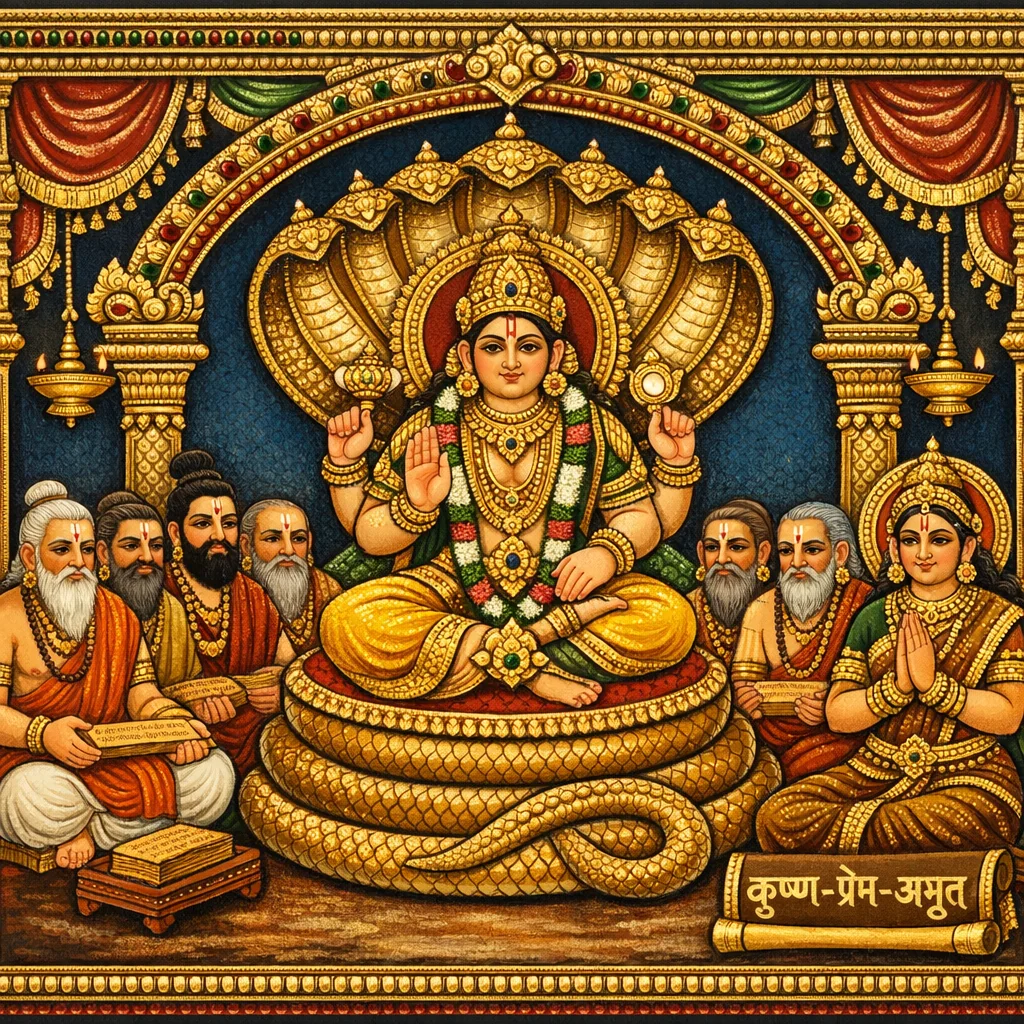
This chapter unfolds as a guru–disciple transmission within the Bhārgava Rāma (Paraśurāma) cycle. Vasiṣṭha sets the scene: Agastya (Kumbhasambhava), pleased after grasping the full cause and context, instructs Bhārgava Rāma and promises a practical means to mantra-siddhi, declaring that swift attainment depends on understanding bhakti’s threefold nature and on disciplined striving. He then recounts an exemplary journey: longing for Ananta-darśana, he once descended to Pātāla, splendid with Nāga royalty, where he beheld an assembly of siddhas and sages—Sanaka and others, including Nārada, Gautama, Jājali, Kratu, and further mahāsiddhas—worshipping the serpent-lord (Phaṇināyaka/Śeṣa) for the sake of knowledge. Agastya sits and joyfully hears Vaiṣṇavī discourse; Bhūmi, the bearer of beings (bhūta-dhātrī), sits before Śeṣa and continually inquires. By Śeṣa’s grace the gathered ṛṣis hear teachings praised as “kṛṣṇa-prema-amṛta,” the auspicious nectar of love for Kṛṣṇa. Agastya offers to transmit a stotra and an avatāra-carita (beginning with Varāha) that destroys sin, grants happiness and liberation, and yields knowledge and higher discernment. The chapter culminates in Bhūmi’s reverent questions about Kṛṣṇa’s līlā and names, foregrounding divine epithets and playful embodiment as a vehicle of realization.
Shlokas
Verse 1
इति श्रीब्रह्माण्डे महापुराणे वायुप्रोक्ते मध्यमभागे तृतीय उपोद्धातपादे भार्गवच रिते पञ्चत्रिंशत्तमो ऽध्यायः // ३५// वसिष्ठ उवाच अवगत्य स वै सर्वं कारणं प्रीतमानसः / उवाच भार्गवं राममगस्त्यः कुंभसंभवः
Thus, in the Śrī Brahmāṇḍa Mahāpurāṇa, in the middle section spoken by Vāyu, in the third introductory pāda, within the Bhārgava-carita, ends the thirty-fifth chapter. Vasiṣṭha said: Having understood the entire cause, his mind pleased, Agastya—born of the pot—spoke to Bhārgava Rāma.
Verse 2
अगस्त्य उवाच शृणु राम महाभाग कथयामि हितं तव / मन्त्रस्य सिद्धिं येन त्वं शीघ्रमेव समाप्नुयाः
Agastya said: Listen, O fortunate Rāma; I shall tell you what is for your good, by which you will swiftly attain the siddhi of the mantra.
Verse 3
भक्तेस्तु लक्षणं ज्ञात्वा त्रिविधाया महामते / यो यतेत नरस्तस्य सिद्धिर्भवति सत्वरम्
O great-minded one, having known the marks of the threefold bhakti, the man who strives in it swiftly attains siddhi.
Verse 4
एकदाहमनुप्राप्तो ऽनन्तदर्शनकाङ्क्षया / पातालं नागराचैन्द्रैः शोभितं परया मुदा
Once, longing for the vision of Ananta, I came to Pātāla; it was splendid with nāga-kings and Indra-like lords, filled with supreme joy.
Verse 5
तत्र दृष्टा महाभाग मया सिद्धाः समन्ततः / सनकाद्या नारदश्च गौतमो जाजलिःक्रतुः
O fortunate one, there I saw siddhas on every side—Sanaka and the rest, and Nārada, Gautama, Jājali, and Kratu.
Verse 6
ऋभुर्हंसो ऽरुणिश्चैव वाल्मीकिः शक्तिरासुरिः / एते ऽन्ये च महासिद्धा वात्स्यायनमुखा द्विज
Ṛbhu, Haṃsa, Aruṇi, Vālmīki, Śakti, and Āsuri were there; and other great siddhas too, led by Vātsyāyana, O dvija.
Verse 7
उपासत ह्युपा सीना ज्ञानार्थं फणिनायकम् / तं नमस्कृत्य नागैन्द्रैः सह सिद्धैर्महात्मभिः
Seated in worship, seeking sacred knowledge, they adored Phaṇināyaka, lord of the serpents; and, with nāga-kings and great-souled siddhas, they bowed to him in reverence.
Verse 8
उपविष्टः कथात्तत्र शृण्वानो वैष्णवीर्मुदा / येयं भूमिर्महाभाग भूतधात्री स्वरूपिणी
Seated there, he listened with joy to the sacred Vaiṣṇava tale; O fortunate one, this Earth is herself the very form of Bhūtadhātrī, the sustainer of beings.
Verse 9
निविष्टा पुरतस्तस्य शृण्वन्ती ताः कथाः सदा / यद्यत्पृच्छति सा भूमिः शेषं साक्षान्महीधरम्
Earth sat before him, ever listening to those accounts; whatever she asked, she asked Śeṣa himself, the manifest Bearer of the Earth.
Verse 10
शृण्वन्ति ऋषयः सर्वे तत्रस्था तदनुग्रहात् / मया तत्र श्रुतं वत्स कृष्णप्रेमामृतं शुभम्
By his grace, all the ṛṣis present there listened; my child, I too heard there the auspicious nectar of love for Kṛṣṇa.
Verse 11
स्तोत्रं तत्ते प्रवक्ष्यामि यस्यार्थं त्वमिहागतः / वाराहाद्यवताराणां चरितं पापनाशनम्
I shall proclaim to you the hymn for which you have come here—the deeds of the avatāras, beginning with Varāha, which destroy sin.
Verse 12
सुखदं मोक्षदं चैव ज्ञानविज्ञान कारणम् / श्रुत्वा सर्वं धरा वत्स प्रत्दृष्टा तं धराधरम्
It bestows joy and liberation, and is the source of knowledge and realization; my child, having heard it all, Dhara beheld that Bearer of the Earth before her very eyes.
Verse 13
उवाच प्रणता भूयो ज्ञातुं कृष्णविचेष्टितम् / धरण्युवाच अलङ्कृतं जन्म पुंसामपि नन्दव्रजौकसाम्
Bowing low, she spoke again: “I long to know the wondrous deeds of Śrī Kṛṣṇa.” Earth replied: “Even the human birth of those who dwell in Nanda’s Vraja became adorned and blessed.”
Verse 14
तस्य देवस्य कृष्णस्य लीलाविग्रहधारिणः / जयोपाधिनियुक्तानि संति नामान्यनेकशः
For that divine Kṛṣṇa, who bears a form of sacred play (līlā), there are many names, each joined with titles of victory.
Verse 15
तेषु नामानि मुख्यानि श्रोतुकामा चिरादहम् / तत्तानि ब्रूहि नामानि वासुदेवस्य वासुके
Among those names, I have long wished to hear the foremost. O Vāsuki, speak to me those names of Vāsudeva.
Verse 16
नातः परतरं पुण्यं त्रिषु लोकेषु विद्यते / शेष उवाच वसुंधरे वरारोहे जनानामस्ति मुक्तिदम्
No merit higher than this is found in the three worlds. Śeṣa said: “O Vasundharā, O fair one, this bestows liberation upon beings.”
Verse 17
सर्वमङ्गलमूर्द्धन्यमणिमाद्यष्टसिद्धिदम् / महापातककोटिघ्न सर्वतीर्थफलप्रदम्
This is the crest of all auspiciousness, granting the eight siddhis beginning with aṇimā; it destroys myriads of great sins and bestows the fruit of every tīrtha (holy ford).
Verse 18
समस्तजपयज्ञानां फलदं पापनाशनम् / शृणु देवि प्रवक्ष्यामि नाम्नामष्टोतरं शतम्
This bestows the fruit of all japa and sacrifices and destroys sin. O Goddess, listen—I shall proclaim the sacred hundred and eight Names.
Verse 19
महस्रनाम्नां पुण्यानां त्रिरावृत्त्या तु यत्फलम् / एकावृत्त्या तु कृष्णस्य नामैकं तत्प्रयच्छति
The fruit gained by thrice repeating the holy Thousand Names is granted by a single utterance of one Name of Krishna.
Verse 20
तस्मात्पुण्यतरं चैतत्स्तोत्रं पातकनाशनम् / नाम्नामष्टोत्तरशतस्याहमेव ऋषिः प्रिये
Therefore this hymn is even more meritorious and destroys transgressions. Beloved, for this Aṣṭottara-Śata-Nāma, I myself am the ṛṣi.
Verse 21
छन्दो ऽनुष्टुब्देवता तु योगः कृष्णप्रियावहः / श्रीकृष्णः कमलानाथो वासुदेवः सनातनः
The metre is Anuṣṭubh; the presiding deity-yoga brings Krishna’s favor. He is Śrī Krishna, Lord of the Lotus, Vāsudeva, the Eternal.
Verse 22
वसुदेवात्मजः पुण्यो लीलामानुषविग्रहः / श्रीवत्सकौस्तभधरो यशोदावत्सलो हरिः
He is Vasudeva’s son, holy and auspicious, who assumes a human form for divine līlā. Bearing the Śrīvatsa mark and the Kaustubha gem, he is Hari, tenderly devoted to Yaśodā.
Verse 23
चतुर्भुजात्तचक्रासिगदाशङ्खाद्युदायुधः / देवकीनन्दनः श्रीशो नन्दगोपप्रियात्मजः
He is four-armed, bearing the discus, sword, mace, conch, and other radiant divine weapons; Devakī’s son, the Lord of Śrī, and the beloved child of Nanda-gopa.
Verse 24
यमुनावेगसंहारी बलभद्रप्रियानुजः / पूतनाजीवितहरः शकटासुरभञ्जनः
He quelled the fierce rush of the Yamunā, the beloved younger brother of Balabhadra; the taker of Pūtanā’s life and the crusher of Śakaṭāsura.
Verse 25
नन्दप्रजजनानन्दी सच्चिदानन्दविग्रहः / नवनीतविलिप्ताङ्गो नवनीतनटो ऽनघः
He gladdens Nanda’s people of Vraja, the very embodiment of Sat–Cit–Ānanda; his limbs are smeared with fresh butter—he, the stainless butter-dancer.
Verse 26
नवनीतलवाहारी मुचुकुन्दप्रसादकृत् / षोडशस्त्रीसहस्रेशस्त्रिभङ्गी मधुराकृतिः
He steals a morsel of fresh butter and bestows grace upon Mucukunda; Lord of sixteen thousand queens, poised in tribhaṅgī, of exquisitely sweet form.
Verse 27
शुकवागमृताब्धीन्दुर्गोविन्दो गोविदांपतिः / वत्सपालनसंचारी धेनुकासुरमर्द्दनः
He is the moon upon the nectar-ocean of Śukadeva’s speech—Govinda, Lord of the cowherds; roaming as he tends the calves, the slayer of Dhenukāsura.
Verse 28
तृणीकृततृणावर्त्तो यमलार्जुनभञ्जनः / उत्तालतालभेत्ता च तमालश्यामला कृतिः
He who made Trinavarta as insignificant as a blade of grass, the breaker of the twin Arjuna trees, the splitter of the lofty tala palms, whose form is dark-hued like the tamala tree.
Verse 29
गोपगोपीश्वरो योगी सूर्यकोटिसमप्रभः / इलापतिः परञ्ज्योतिर्यादवेन्द्रो यदूद्वहः
Lord of the gopas and gopīs, the Yogi, radiant as ten million suns; Ila-pati, the Supreme Light, king of the Yādavas, the exalted one of Yadu’s line.
Verse 30
वनमाली पीतवासाः पारिजातापहरकः / गोवर्द्धनाचलोद्धर्त्ता गोपालः सर्वपालकः
Wearing the forest garland, clad in yellow robes, the bringer of the Pārijāta; lifter of Mount Govardhana—Gopāla, the protector of all.
Verse 31
अजो निरञ्जनः कामजनकः कञ्जलोचनः / मधुहा मथुरानाथो द्वारकानाथको बली
Unborn and stainless, the awakener of love, lotus-eyed; slayer of Madhu, Lord of Mathurā, Lord of Dvārakā, the mighty one.
Verse 32
वृन्दावनान्तसंचारी तुलसीदामभूषणः / स्यमन्तकमणेर्हर्त्ता नरनारायणात्मकः
Wandering within Vṛndāvana, adorned with a garland of tulasī; the taker of the Syamantaka jewel, whose very essence is Nara-Nārāyaṇa.
Verse 33
कुब्जाकृष्टांबरधरो मायी परमपूरुषः / मुष्टिकासुरचाणूरमल्लयुद्धविशारदः
Wearing the garment drawn by Kubjā, the wondrous Paramapuruṣa; supremely skilled in the wrestlers’ combat with Muṣṭikāsura and Cāṇūra.
Verse 34
संसारवैरी कंसारिर्मुरारिर्नरकान्तकः / अनादि ब्रह्मचारी च कृष्णाव्यसनकर्षकः
Foe of worldly bondage, slayer of Kaṃsa, Mūrāri, destroyer of Naraka; the beginningless brahmacārin who draws Kṛṣṇa’s devotees away from ruinous addictions.
Verse 35
शिशुपालशिरस्छेत्ता दुर्योधनकुलान्तकृत / विदुराक्रूरवरदो विश्वरूपप्रदर्शकः
He who severed Śiśupāla’s head and brought Duryodhana’s line to its end; bestower of boons upon Vidura and Akrūra, revealer of the Viśvarūpa, the Universal Form.
Verse 36
सत्यवाक्सत्यसंकल्पः सत्यभामारतो जयी / सुभद्रापूर्वजो विष्णुर्भीष्ममुक्तिप्रदायकः
True in speech and true in resolve; delighting in Satyabhāmā, ever victorious; Viṣṇu, elder brother of Subhadrā, who granted liberation to Bhīṣma.
Verse 37
जगद्गुरुर्जगन्नाथो वेणुवाद्य विशारदः / वृषभासुरविध्वंसी बकारिर्बाणबाहुकृत्
Guru of the world, Jagannātha, master of the flute’s divine music; destroyer of Vṛṣabhāsura, foe of Bakāsura, who severed the arms of Bāṇāsura.
Verse 38
युधिष्टिरप्रतिष्ठाता बर्हिबर्हावतंसकः / पार्थसारथिरव्यक्तो गीतामृतमहोदधिः
He who established Yudhiṣṭhira, adorned with a diadem of peacock plumes; the charioteer of Pārtha, the Unmanifest—an immense ocean of the Gītā’s nectar.
Verse 39
कालीयफणिमाणिक्यरञ्जितः श्रीपदांबुजः / दामोदरो यज्ञभोक्ता दानवैद्रविनाशनः
The lotus of His holy feet, tinted by the jewels upon Kāliya’s hood; Dāmodara, enjoyer of the yajñas, destroyer of the hosts of dānavas.
Verse 40
नारायणः परं ब्रह्म पन्नगाशनवाहनः / जलक्रीडासमासक्तगोपीवस्त्रापहारकः
Nārāyaṇa, the Supreme Brahman; borne by Garuḍa, devourer of serpents; delighting in water-sport, the taker of the gopīs’ garments.
Verse 41
पुण्यश्लोकस्तीर्थपादो वेदवेद्यो दयानिधिः / सर्वतीर्थान्मकः सर्वग्रहरूपी परात्परः
Praised by holy fame, whose feet are a tīrtha; knowable through the Vedas, a treasury of compassion; the very essence of all tīrthas, taking the form of all grahas, the Transcendent beyond the transcendent.
Verse 42
इत्येवं कृष्णदेवस्य नाम्नामष्टोत्तरं शतम् / कृष्णोन कृष्णभक्तेन श्रुत्वा गीतामृतं पुरा
Thus is completed the aṣṭottara-śata—the one hundred and eight names of Śrī Kṛṣṇadeva; in ancient times, a devotee of Kṛṣṇa, having heard the Gītā’s nectar from Kṛṣṇa, (so recited them).
Verse 43
स्तोत्रं कृष्णप्रियकरं कृतं तस्मान्मया श्रुतम् / कृष्णप्रेमामृतं नाम परमानन्ददायकम्
This hymn is most dear to Śrī Kṛṣṇa; I heard it there and composed it. It is called “Kṛṣṇa-prema-amṛta,” the nectar of love for Kṛṣṇa, bestowing supreme bliss.
Verse 44
अत्युपद्रवदुः खघ्नं परमायुष्य वर्द्धनम् / दानं व्रतं तपस्तीर्थं यत्कृतं त्विह जन्मनि
It destroys grievous calamities and sorrows and increases the highest span of life; within it lies the merit of charity, vows, austerity, and pilgrimage to sacred tīrthas performed in this very birth.
Verse 45
पठतां शृण्वतां चैव कोटिकोटिगुणं भवेत् / पुत्रप्रदमपुत्राणामगती नां गतिप्रदम्
For those who recite it and those who hear it, the merit becomes millions upon millions of times greater; it grants sons to the childless and gives refuge and true course to the helpless.
Verse 46
धनवाहं दरिद्राणां जयेच्छूनां जयावहम् / शिशूनां गोकुलानां च पुष्टिदं पुण्यवर्द्धनम्
It brings wealth to the poor and victory to those who seek triumph; it grants nourishment to infants and to the people of Gokula, and it increases sacred merit.
Verse 47
बालरोगग्रहादीनां शमनं शान्तिकारकम् / अन्ते कृष्णस्मरणदं भवतापत्रयापहम्
It pacifies childhood diseases and afflictions from grahas and the like, bringing peace; at life’s end it grants remembrance of Kṛṣṇa and removes the threefold sufferings of worldly existence.
Verse 48
असिद्धसाधकं भद्रे जपादिकरमात्मनाम् / कृष्णाय यादवेन्द्राय ज्ञानमुद्राय योगिने
O Bhadrā, this japa and sacred practice brings success even to the unaccomplished souls—offered to Śrī Kṛṣṇa, lord of the Yādavas, the yogin bearing the seal of wisdom.
Verse 49
नाथाय रुक्मिणीशाय नमो वेदान्तवेदिने / इमं मन्त्रं महादेवि जपन्नेव दिवा निशम्
Salutations to the Lord, Rukmiṇī’s master, knower of Vedānta. O Mahādevī, keep chanting this mantra by day and by night.
Verse 50
सर्वग्रहानुग्रहभाक्सर्वप्रियतमो भवेत् / पुत्रपौत्रैः परिवृतः सर्वसिद्धिसमृद्धिमान्
He gains the grace of all the grahas and becomes dearest to all; surrounded by sons and grandsons, he is enriched with every siddhi and prosperity.
Verse 51
निषेव्य भोगानन्ते ऽपिकृष्णासायुज्यमाप्नुयात् / अगस्त्य उवाच एतावदुक्तो भागवाननन्तो मूर्त्तिस्तु संकर्षणसंज्ञिता विभो
Even after tasting worldly enjoyments, in the end he attains sāyujya—union with Kṛṣṇa. Agastya said: having spoken thus much, Bhagavān Ananta, whose form is known as Saṅkarṣaṇa, O Vibhu, fell silent.
Verse 52
धराधरो ऽलं जगतां धरायै निर्दिश्य भूयो विरराम मानदः / ततस्तु सर्वे सनकादयो ये समास्थितास्तत्परितः कथादृताः / आनन्द पूर्ण्णंबुनिधौ निमग्नाः सभाजयामासुरहीश्वरं तम्
Having indicated to Earth, the bearer of the worlds, “This is enough,” the honor-giving Dharādhara again fell silent. Then Sanaka and all the others seated around, devoted to the sacred tale, as if immersed in an ocean full of bliss, paid reverent homage to that Ahi-īśvara.
Verse 53
ऋषय ऊचुः नमो नमस्ते ऽखिलविश्वाभावन प्रपन्नभक्तार्त्तिहराव्ययात्मन् / धराधरायापि कृपार्णवाय शेषाय विश्वप्रभवे नमस्ते
The sages said: Salutations, salutations to You, nourisher of the entire universe—imperishable Self who removes the anguish of devotees seeking refuge. O Śeṣa, bearer of the earth, ocean of compassion, Lord of the worlds—salutations to You.
Verse 54
कृष्णामृतं नः परिपायितं विभो विधूतपापा भवता कृता वयम् / भवादृशा दीनदयालवो विभो समुद्धरन्त्येव निजान्हि संनतान्
O Vibhu, You have made us drink the nectar of Kṛṣṇa, and by You our sins have been washed away. O Vibhu, a Lord compassionate to the lowly such as You surely lifts up and delivers His own who bow in surrender.
Verse 55
एवं नमस्कृत्य फणीश पादयोर्मनो विधायाखिलकामपूरयोः / प्रदक्षिणीकृत्य धराधराधरं सर्वे वयं स्वावसथानुपागताः
Thus, having bowed at the feet of the Lord of serpents, fixing our minds upon those feet that fulfill every desire, and having circumambulated Śeṣa, the bearer of mountains and earth, we all returned to our own abodes.
Verse 56
इति ते ऽभिहितं राम स्तोत्रं प्रेमामृताभिधम् / कृष्णस्य राधाकान्तस्य सिद्धिदम्
O Rāma, thus has the hymn called “Premāmṛta” been spoken to you—praise of Kṛṣṇa, Rādhā’s beloved, bestowing siddhi (spiritual attainment).
Verse 57
इदं राम महाभाग स्तोत्रं परमदुर्लभम् / श्रुतं साक्षाद्भगवतः शेषात्कथयतः कथाः
O greatly blessed Rāma, this hymn is exceedingly rare; I heard it directly from Bhagavān Śeṣa himself as he recounted the sacred narratives.
Verse 58
यावन्ति मन्त्रजालानि स्तोत्राणि कवचानि च
All the manifold nets of mantras, the stotras, and the sacred kavachas—every one of them.
Verse 59
त्रैलोक्ये तानि सर्वाणि सिद्ध्यन्त्येवास्य शीलनात् / वसिष्ठ उवाच एवमुक्त्वा महाराज कृष्णप्रेमामृतं स्तवम् / यावद्व्यरसींत्स मुनिस्तावत्स्वर्यानमागतम्
In the three worlds, all of these are surely perfected by the steady practice of this. Vasiṣṭha said—O great king, having spoken thus, he recited the hymn “Nectar of Love for Kṛṣṇa”; and just then a heavenly vimāna arrived.
Verse 60
चतुर्भिरद्भुतैः सिद्धैः कामरूपैर्मनोजवैः / अनुयातमथोत्प्लुत्य स्त्रीपुंसौ हरिणौ तदा / अगस्त्यचरणौ नत्वा समारुरुहतुर्मुदा
Four wondrous siddhas—able to assume forms at will and swift as thought—accompanied them. Then the doe and the stag leapt up, bowed at Agastya’s feet, and joyfully mounted (the vimāna).
Verse 61
दिव्यदेहधरौ भूत्वा संखचक्रादिचिह्नितौ / गतौ च वैष्णवं लोकं सर्व देवन मस्कृतम् / पश्यतां सर्वभूतानां भार्गवागस्त्ययोस्तथा
Assuming divine bodies, marked with the conch, the discus, and other emblems, they went to the realm of Viṣṇu; there all the gods bowed to them—before the eyes of all beings, and of Bhārgava and Agastya as well.
Frequently Asked Questions
Agastya states that swift mantra-siddhi depends on recognizing the threefold character of bhakti and applying disciplined effort; spiritual qualification (bhakti-lakṣaṇa) is treated as the enabling condition for rapid attainment.
Pātāla is presented as a locus of esoteric learning where siddhas and nāga-kings venerate Śeṣa for jñāna; Bhūmi herself is depicted as repeatedly questioning Śeṣa, making Śeṣa a cosmological ‘knowledge-bearer’ (mahīdharā) and a hub for Vaiṣṇavī teaching.
The text pivots to Kṛṣṇa-centered devotion: teachings are called ‘kṛṣṇa-prema-amṛta,’ and Bhūmi requests Kṛṣṇa’s chief names and līlā—implying nāma (divine epithets) and avatāra-carita (e.g., Varāha onward) as purifying, liberating vehicles of knowledge.