Adhyaya 12
Bhāgavata-Māhātmya and the Complete Summary of the Śrīmad-Bhāgavatam
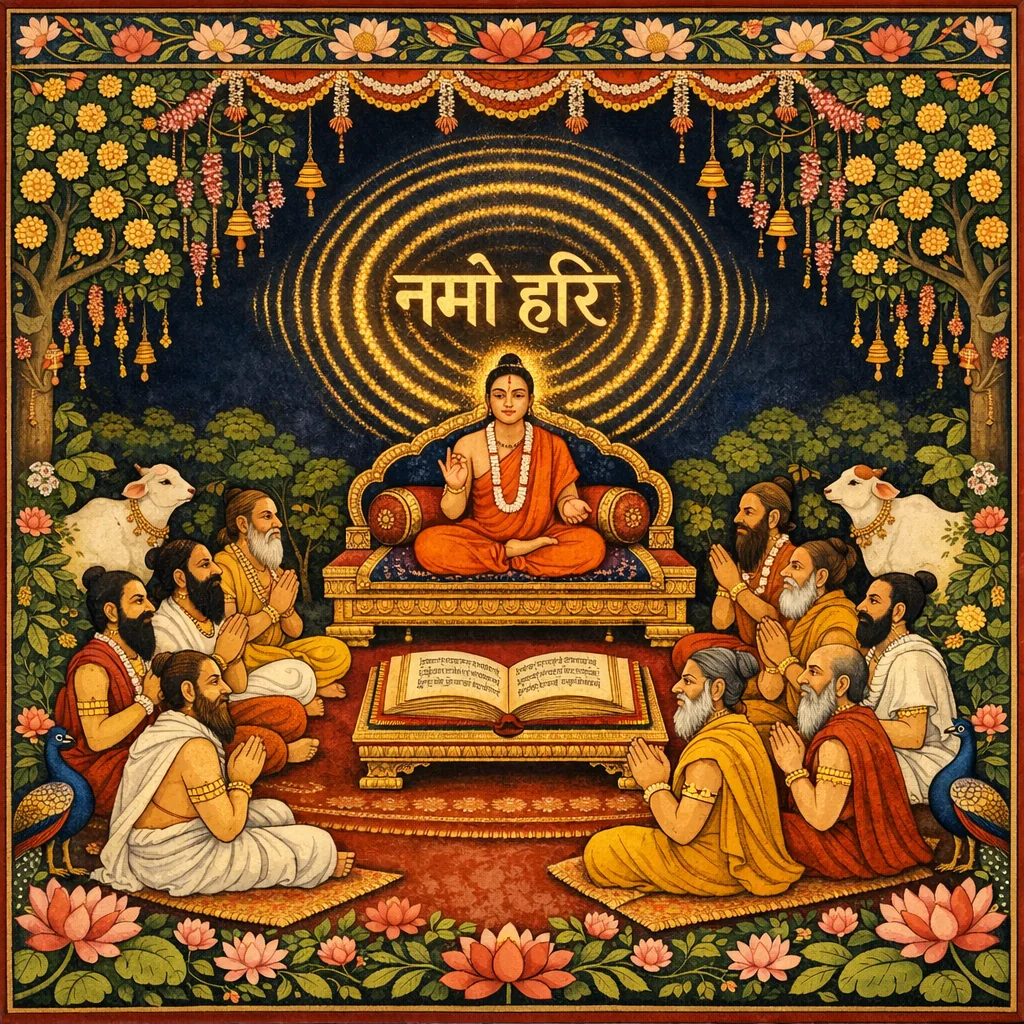
Continuing Skandha 12’s conclusion—highlighting Kali-yuga’s darkness and the urgency of spiritual practice—Sūta Gosvāmī bows to bhakti-dharma and to Śrī Kṛṣṇa, then gives a sweeping, canto-by-canto synopsis of the Bhāgavatam: creation and dissolution (sarga, visarga, nirodha), manvantaras and avatāras, genealogies (vaṁśa) and saintly histories (vaṁśānucarita), with Kṛṣṇa-līlā at the center. The chapter then turns from catalog to final teaching: it praises speech that glorifies Hari as the only truly auspicious literature, contrasts it with mundane talk, and proclaims the purifying power even of accidentally uttering “Namo Hari.” It further establishes the practical fruits of hearing and reciting—especially on Ekādaśī/Dvādaśī and at tīrthas—and culminates in Sūta’s homage to Śukadeva Gosvāmī, the ideal speaker who illuminated the Absolute Truth through Kṛṣṇa’s melodious pastimes. The final takeaway is clear: āśraya is Hari, approached through Bhāgavata-śravaṇa and kīrtana.
Shlokas
Verse 1
सूत उवाच नमो धर्माय महते नम: कृष्णाय वेधसे । ब्रह्मणेभ्यो नमस्कृत्य धर्मान् वक्ष्ये सनातनान् ॥ १ ॥
Sūta Gosvāmī said: I offer obeisances to the supreme dharma—devotional service; to Lord Kṛṣṇa, the supreme creator; and to all the brāhmaṇas. Now I shall describe the eternal principles of religion.
Verse 2
एतद् व: कथितं विप्रा विष्णोश्चरितमद्भुतम् । भवद्भिर्यदहं पृष्टो नराणां पुरुषोचितम् ॥ २ ॥
O sages, as you inquired from me, I have narrated the wondrous pastimes of Lord Viṣṇu. Hearing such narrations is the fitting engagement for one who is truly human.
Verse 3
अत्र सङ्कीर्तित: साक्षात् सर्वपापहरो हरि: । नारायणो हृषीकेशो भगवान् सात्वतां पति: ॥ ३ ॥
This scripture directly and fully glorifies Hari, the Supreme Lord who removes all sinful reactions from His devotees. He is praised as Nārāyaṇa, Hṛṣīkeśa, and Bhagavān, the Lord of the Sātvatas.
Verse 4
अत्र ब्रह्म परं गुह्यं जगत: प्रभवाप्ययम् । ज्ञानं च तदुपाख्यानं प्रोक्तं विज्ञानसंयुतम् ॥ ४ ॥
Here is spoken the hidden mystery of the Supreme Brahman, the source of this universe’s creation and dissolution. Also taught are divine knowledge of Him, the means to cultivate it, and the transcendental realization thereby attained.
Verse 5
भक्तियोग: समाख्यातो वैराग्यं च तदाश्रयम् । पारीक्षितमुपाख्यानं नारदाख्यानमेव च ॥ ५ ॥
Here bhakti-yoga is clearly taught, along with vairāgya, the renunciation that rests upon it. Also narrated are the histories of Mahārāja Parīkṣit and the sage Nārada.
Verse 6
प्रायोपवेशो राजर्षेर्विप्रशापात् परीक्षित: । शुकस्य ब्रह्मर्षभस्य संवादश्च परीक्षित: ॥ ६ ॥
Also described is how saintly King Parīkṣit, cursed by a brāhmaṇa’s son, sat in prāyopaveśa, fasting until death. And the dialogues between Parīkṣit and Śukadeva Gosvāmī, foremost among brāhmaṇas, are recounted.
Verse 7
योगधारणयोत्क्रान्ति: संवादो नारदाजयो: । अवतारानुगीतं च सर्ग: प्राधानिकोऽग्रत: ॥ ७ ॥
The Bhāgavatam explains liberation at death through dhāraṇā—fixed meditative concentration in yoga. It also includes the dialogue of Nārada and Brahmā, an enumeration of the Lord’s avatāras, and the progressive creation of the universe beginning from the unmanifest pradhāna.
Verse 8
विदुरोद्धवसंवाद: क्षत्तृमैत्रेययोस्तत: । पुराणसंहिताप्रश्नो महापुरुषसंस्थिति: ॥ ८ ॥
This scripture also recounts Vidura’s discussions with Uddhava and then with Maitreya, inquiries into the subject matter of this Purāṇa, and how at pralaya the entire creation is gathered up and concluded within the body of the Supreme Lord, the Mahāpuruṣa.
Verse 9
तत: प्राकृतिक: सर्ग: सप्त वैकृतिकाश्च ये । ततो ब्रह्माण्डसम्भूतिर्वैराज: पुरुषो यत: ॥ ९ ॥
Then are fully described the creation set in motion by the agitation of material nature’s modes, the seven evolutionary transformations of the elements, and the formation of the universal egg, from which arises the Supreme Lord’s universal form, the Virāṭ (Vairāja) Puruṣa.
Verse 10
कालस्य स्थूलसूक्ष्मस्य गति: पद्मसमुद्भव: । भुव उद्धरणेऽम्भोधेर्हिरण्याक्षवधो यथा ॥ १० ॥
Other topics include the gross and subtle movements of time, the lotus born from the navel of Garbhodakaśāyī Viṣṇu, and the slaying of the demon Hiraṇyākṣa when the earth was lifted from the Garbhodaka Ocean.
Verse 11
ऊर्ध्वतिर्यगवाक्सर्गो रुद्रसर्गस्तथैव च । अर्धनारीश्वरस्याथ यत: स्वायम्भुवो मनु: ॥ ११ ॥
The Bhāgavatam also describes the creation of demigods, animals, and demoniac species; the birth of Lord Rudra; and the appearance of Svāyambhuva Manu from the Īśvara known as Ardhanārīśvara, half man and half woman.
Verse 12
शतरूपा च या स्त्रीणामाद्या प्रकृतिरुत्तमा । सन्तानो धर्मपत्नीनां कर्दमस्य प्रजापते: ॥ १२ ॥
Also recounted are the appearance of the first woman, Śatarūpā—Manu’s excellent consort—and the progeny born of the pious wives of Prajāpati Kardama.
Verse 13
अवतारो भगवत: कपिलस्य महात्मन: । देवहूत्याश्च संवाद: कपिलेन च धीमता ॥ १३ ॥
The Bhāgavatam describes the Supreme Lord’s incarnation as the exalted sage Kapila and records the dialogue between that supremely learned Kapila and His mother, Devahūti.
Verse 14
नवब्रह्मसमुत्पत्तिर्दक्षयज्ञविनाशनम् । ध्रुवस्य चरितं पश्चात्पृथो: प्राचीनबर्हिष: ॥ १४ ॥ नारदस्य च संवादस्तत: प्रैयव्रतं द्विजा: । नाभेस्ततोऽनु चरितमृषभस्य भरतस्य च ॥ १५ ॥
Here are described the progeny of the nine great brāhmaṇas, the destruction of Dakṣa’s sacrifice, and the history of Dhruva Mahārāja; then the histories of King Pṛthu and King Prācīnabarhi, the dialogue of Prācīnabarhi with Nārada, and the life of Mahārāja Priyavrata. Thereafter, O brāhmaṇas, the Bhāgavatam also recounts the virtues and deeds of King Nābhi, Lord Ṛṣabha, and King Bharata.
Verse 15
नवब्रह्मसमुत्पत्तिर्दक्षयज्ञविनाशनम् । ध्रुवस्य चरितं पश्चात्पृथो: प्राचीनबर्हिष: ॥ १४ ॥ नारदस्य च संवादस्तत: प्रैयव्रतं द्विजा: । नाभेस्ततोऽनु चरितमृषभस्य भरतस्य च ॥ १५ ॥
Here are described the progeny of the nine great brāhmaṇas, the destruction of Dakṣa’s sacrifice, and the history of Dhruva Mahārāja; then the histories of King Pṛthu and King Prācīnabarhi, the dialogue of Prācīnabarhi with Nārada, and the life of Mahārāja Priyavrata. Thereafter, O brāhmaṇas, the Bhāgavatam also recounts the virtues and deeds of King Nābhi, Lord Ṛṣabha, and King Bharata.
Verse 16
द्वीपवर्षसमुद्राणां गिरिनद्युपवर्णनम् । ज्योतिश्चक्रस्य संस्थानं पातालनरकस्थिति: ॥ १६ ॥
The Bhāgavatam elaborately describes the earth’s continents, regions, oceans, mountains, and rivers. It also explains the arrangement of the celestial sphere and the conditions in the subterranean realms and in hell.
Verse 17
दक्षजन्म प्रचेतोभ्यस्तत्पुत्रीणां च सन्तति: । यतो देवासुरनरास्तिर्यङ्नगखगादय: ॥ १७ ॥
Described here are Prajāpati Dakṣa’s rebirth as the son of the Pracetās and the progeny of Dakṣa’s daughters, from whom arose the races of devas, asuras, human beings, animals, serpents, birds, and so on—all this is recounted.
Verse 18
त्वाष्ट्रस्य जन्म निधनं पुत्रयोश्च दितेर्द्विजा: । दैत्येश्वरस्य चरितं प्रह्लादस्य महात्मन: ॥ १८ ॥
O brāhmaṇas, also recounted are the birth and death of Vṛtrāsura, and the births and deaths of Diti’s sons Hiraṇyākṣa and Hiraṇyakaśipu, as well as the history of the most exalted among Diti’s descendants, the great soul Prahlāda.
Verse 19
मन्वन्तरानुकथनं गजेन्द्रस्य विमोक्षणम् । मन्वन्तरावताराश्च विष्णोर्हयशिरादय: ॥ १९ ॥
Also described are the reign of each Manu, the deliverance of Gajendra, and the special incarnations of Lord Viṣṇu in every manvantara, such as Hayaśīrṣa and others.
Verse 20
कौर्मं मात्स्यं नारसिंहं वामनं च जगत्पते: । क्षीरोदमथनं तद्वदमृतार्थे दिवौकसाम् ॥ २० ॥
The Bhāgavatam also recounts the Lord of the universe appearing as Kūrma, Matsya, Narasiṁha, and Vāmana, and the devas churning the Milk Ocean to obtain amṛta, the nectar.
Verse 21
देवासुरमहायुद्धं राजवंशानुकीर्तनम् । इक्ष्वाकुजन्म तद्वंश: सुद्युम्नस्य महात्मन: ॥ २१ ॥
This literature presents the great war between the devas and the asuras, a systematic account of royal dynasties, and narrations of Ikṣvāku’s birth and lineage, as well as the lineage of the pious Sudyumna.
Verse 22
इलोपाख्यानमत्रोक्तं तारोपाख्यानमेव च । सूर्यवंशानुकथनं शशादाद्या नृगादय: ॥ २२ ॥
Also related here are the histories of Ilā and Tārā, and the narration of the Solar dynasty’s descendants, including kings such as Śaśāda and Nṛga.
Verse 23
सौकन्यं चाथ शर्याते: ककुत्स्थस्य च धीमत: । खट्वाङ्गस्य च मान्धातु: सौभरे: सगरस्य च ॥ २३ ॥
Also narrated are the histories of Sukanyā, Śaryāti, the wise Kakutstha, Khaṭvāṅga, Māndhātā, Saubhari, and Sagara.
Verse 24
रामस्य कोशलेन्द्रस्य चरितं किल्बिषापहम् । निमेरङ्गपरित्यागो जनकानां च सम्भव: ॥ २४ ॥
The Śrīmad-Bhāgavatam recounts the sin-destroying, sanctifying pastimes of Lord Śrī Rāmacandra, king of Kośala. It also tells how King Nimi gave up his body and mentions the appearance of the descendants of King Janaka.
Verse 25
रामस्य भार्गवेन्द्रस्य नि:क्षत्रीकरणं भुव: । ऐलस्य सोमवंशस्य ययातेर्नहुषस्य च ॥ २५ ॥ दौष्मन्तेर्भरतस्यापि शान्तनोस्तत्सुतस्य च । ययातेर्ज्येष्ठपुत्रस्य यदोर्वंशोऽनुकीर्तित: ॥ २६ ॥
The Śrīmad-Bhāgavatam describes how Lord Paraśurāma, the foremost descendant of Bhṛgu, eradicated the kṣatriyas from the earth. It also recounts the glorious lives of kings in the lunar dynasty—Aila, Yayāti, Nahuṣa, Bharata the son of Duṣmanta, Śāntanu and his son Bhīṣma—and it praises the great Yadu dynasty founded by Yadu, Yayāti’s eldest son.
Verse 26
रामस्य भार्गवेन्द्रस्य नि:क्षत्रीकरणं भुव: । ऐलस्य सोमवंशस्य ययातेर्नहुषस्य च ॥ २५ ॥ दौष्मन्तेर्भरतस्यापि शान्तनोस्तत्सुतस्य च । ययातेर्ज्येष्ठपुत्रस्य यदोर्वंशोऽनुकीर्तित: ॥ २६ ॥
The Śrīmad-Bhāgavatam describes how Lord Paraśurāma, the foremost descendant of Bhṛgu, eradicated the kṣatriyas from the earth. It also recounts the glorious lives of kings in the lunar dynasty—Aila, Yayāti, Nahuṣa, Bharata the son of Duṣmanta, Śāntanu and his son Bhīṣma—and it praises the great Yadu dynasty founded by Yadu, Yayāti’s eldest son.
Verse 27
यत्रावतीर्णो भगवान् कृष्णाख्यो जगदीश्वर: । वसुदेवगृहे जन्म ततो वृद्धिश्च गोकुले ॥ २७ ॥
It is described in detail how Bhagavān Śrī Kṛṣṇa, the Lord of the universe, descended within the Yadu dynasty—how He was born in the home of Vasudeva and how He then grew up in Gokula.
Verse 28
तस्य कर्माण्यपाराणि कीर्तितान्यसुरद्विष: । पूतनासुपय:पानं शकटोच्चाटनं शिशो: ॥ २८ ॥ तृणावर्तस्य निष्पेषस्तथैव बकवत्सयो: । अघासुरवधो धात्रा वत्सपालावगूहनम् ॥ २९ ॥
Also glorified are the countless līlās of Śrī Kṛṣṇa, the foe of the asuras: He drew out Pūtanā’s very life along with her breast milk, shattered the cart, crushed Tṛṇāvarta, slew Bakāsura and Vatsāsura, destroyed Aghāsura, and enacted the pastime that occurred when Dhātā Brahmā hid the calves and the cowherd boys in a cave.
Verse 29
तस्य कर्माण्यपाराणि कीर्तितान्यसुरद्विष: । पूतनासुपय:पानं शकटोच्चाटनं शिशो: ॥ २८ ॥ तृणावर्तस्य निष्पेषस्तथैव बकवत्सयो: । अघासुरवधो धात्रा वत्सपालावगूहनम् ॥ २९ ॥
Also glorified are the boundless deeds of Śrī Kṛṣṇa, foe of the asuras: as a child He drew out Pūtanā’s life-breath along with her milk, shattered the cart, crushed Tṛṇāvarta, slew Bakāsura, Vatsāsura and Aghāsura, and enacted the lila when Brahmā hid the calves and the cowherd boys in a cave.
Verse 30
धेनुकस्य सहभ्रातु: प्रलम्बस्य च सङ्क्षय: । गोपानां च परित्राणं दावाग्ने: परिसर्पत: ॥ ३० ॥
The Bhāgavatam recounts how Śrī Kṛṣṇa and Śrī Balarāma destroyed Dhenukāsura and his followers, how Balarāma slew Pralambāsura, and how Kṛṣṇa saved the cowherd boys from a raging forest fire that had closed in around them.
Verse 31
दमनं कालियस्याहेर्महाहेर्नन्दमोक्षणम् । व्रतचर्या तु कन्यानां यत्र तुष्टोऽच्युतो व्रतै: ॥ ३१ ॥ प्रसादो यज्ञपत्नीभ्यो विप्राणां चानुतापनम् । गोवर्धनोद्धारणं च शक्रस्य सुरभेरथ ॥ ३२ ॥ यज्ञाभिषेक: कृष्णस्य स्त्रीभि: क्रीडा च रात्रिषु । शङ्खचूडस्य दुर्बुद्धेर्वधोऽरिष्टस्य केशिन: ॥ ३३ ॥
Elaborately recounted are these lilas: the chastisement of the serpent Kāliya; the rescue of Nanda Mahārāja from a great snake; the young gopīs’ austere vows that pleased Acyuta; His mercy to the wives of the brāhmaṇas and the brāhmaṇas’ remorse; the lifting of Govardhana and the worship and abhiṣeka performed by Indra and Surabhi; His nocturnal pastimes with the gopīs; and the slaying of the foolish demons Śaṅkhacūḍa, Ariṣṭa and Keśī.
Verse 32
दमनं कालियस्याहेर्महाहेर्नन्दमोक्षणम् । व्रतचर्या तु कन्यानां यत्र तुष्टोऽच्युतो व्रतै: ॥ ३१ ॥ प्रसादो यज्ञपत्नीभ्यो विप्राणां चानुतापनम् । गोवर्धनोद्धारणं च शक्रस्य सुरभेरथ ॥ ३२ ॥ यज्ञाभिषेक: कृष्णस्य स्त्रीभि: क्रीडा च रात्रिषु । शङ्खचूडस्य दुर्बुद्धेर्वधोऽरिष्टस्य केशिन: ॥ ३३ ॥
Elaborately recounted are these lilas: the chastisement of the serpent Kāliya; the rescue of Nanda Mahārāja from a great snake; the young gopīs’ austere vows that pleased Acyuta; His mercy to the wives of the brāhmaṇas and the brāhmaṇas’ remorse; the lifting of Govardhana and the worship and abhiṣeka performed by Indra and Surabhi; His nocturnal pastimes with the gopīs; and the slaying of the foolish demons Śaṅkhacūḍa, Ariṣṭa and Keśī.
Verse 33
दमनं कालियस्याहेर्महाहेर्नन्दमोक्षणम् । व्रतचर्या तु कन्यानां यत्र तुष्टोऽच्युतो व्रतै: ॥ ३१ ॥ प्रसादो यज्ञपत्नीभ्यो विप्राणां चानुतापनम् । गोवर्धनोद्धारणं च शक्रस्य सुरभेरथ ॥ ३२ ॥ यज्ञाभिषेक: कृष्णस्य स्त्रीभि: क्रीडा च रात्रिषु । शङ्खचूडस्य दुर्बुद्धेर्वधोऽरिष्टस्य केशिन: ॥ ३३ ॥
Elaborately recounted are these lilas: the chastisement of the serpent Kāliya; the rescue of Nanda Mahārāja from a great snake; the young gopīs’ austere vows that pleased Acyuta; His mercy to the wives of the brāhmaṇas and the brāhmaṇas’ remorse; the lifting of Govardhana and the worship and abhiṣeka performed by Indra and Surabhi; His nocturnal pastimes with the gopīs; and the slaying of the foolish demons Śaṅkhacūḍa, Ariṣṭa and Keśī.
Verse 34
अक्रूरागमनं पश्चात् प्रस्थानं रामकृष्णयो: । व्रजस्त्रीणां विलापश्च मथुरालोकनं तत: ॥ ३४ ॥
The Bhāgavatam recounts Akrūra’s arrival, then Kṛṣṇa and Balarāma’s departure from Vraja, the gopīs’ sorrowful lament, and thereafter the viewing of Mathurā.
Verse 35
गजमुष्टिकचाणूरकंसादीनां तथा वध: । मृतस्यानयनं सूनो: पुन: सान्दीपनेर्गुरो: ॥ ३५ ॥
It also tells how Kṛṣṇa and Balarāma slew the elephant Kuvalayāpīḍa, the wrestlers Muṣṭika and Cāṇūra, and Kaṁsa and other demons, and how Kṛṣṇa brought back the departed son of His guru, Sāndīpani Muni.
Verse 36
मथुरायां निवसता यदुचक्रस्य यत्प्रियम् । कृतमुद्धवरामाभ्यां युतेन हरिणा द्विजा: ॥ ३६ ॥
O brāhmaṇas, this scripture relates how Lord Hari, residing in Mathurā with Uddhava and Balarāma, enacted pastimes to delight the Yadu dynasty.
Verse 37
जरासन्धसमानीतसैन्यस्य बहुशो वध: । घातनं यवनेन्द्रस्य कुशस्थल्या निवेशनम् ॥ ३७ ॥
It further describes the repeated destruction of the many armies brought by Jarāsandha, the slaying of the barbarian king Kālayavana, and the founding of Dvārakā City at Kuśasthalī.
Verse 38
आदानं पारिजातस्य सुधर्माया: सुरालयात् । रुक्मिण्या हरणं युद्धे प्रमथ्य द्विषतो हरे: ॥ ३८ ॥
This work also describes how Lord Kṛṣṇa brought from heaven the pārijāta tree and the Sudharmā assembly hall, and how He carried off Rukmiṇī after defeating all His rivals in battle.
Verse 39
हरस्य जृम्भणं युद्धे बाणस्य भुजकृन्तनम् । प्राग्ज्योतिषपतिं हत्वा कन्यानां हरणं च यत् ॥ ३९ ॥
It is told how, in the battle with Bāṇāsura, Lord Śrī Kṛṣṇa overcame Śiva by making him yawn, cut off Bāṇāsura’s arms, slew the lord of Prāgjyotiṣapura, and rescued the young princesses held captive there.
Verse 40
चैद्यपौण्ड्रकशाल्वानां दन्तवक्रस्य दुर्मते: । शम्बरो द्विविद: पीठो मुर: पञ्चजनादय: ॥ ४० ॥ माहात्म्यं च वधस्तेषां वाराणस्याश्च दाहनम् । भारावतरणं भूमेर्निमित्तीकृत्य पाण्डवान् ॥ ४१ ॥
It describes the prowess and deaths of the king of Cedi, Pauṇḍraka, Śālva, the foolish Dantavakra, and also Śambara, Dvivida, Pīṭha, Mura, Pañcajana and other demons, along with the burning of Vārāṇasī. It further tells how Lord Kṛṣṇa lightened the earth’s burden by making the Pāṇḍavas the instrument of the Kurukṣetra war.
Verse 41
चैद्यपौण्ड्रकशाल्वानां दन्तवक्रस्य दुर्मते: । शम्बरो द्विविद: पीठो मुर: पञ्चजनादय: ॥ ४० ॥ माहात्म्यं च वधस्तेषां वाराणस्याश्च दाहनम् । भारावतरणं भूमेर्निमित्तीकृत्य पाण्डवान् ॥ ४१ ॥
It describes the prowess and deaths of the king of Cedi, Pauṇḍraka, Śālva, the foolish Dantavakra, and also Śambara, Dvivida, Pīṭha, Mura, Pañcajana and other demons, along with the burning of Vārāṇasī. It further tells how Lord Kṛṣṇa lightened the earth’s burden by making the Pāṇḍavas the instrument of the Kurukṣetra war.
Verse 42
विप्रशापापदेशेन संहार: स्वकुलस्य च । उद्धवस्य च संवादो वसुदेवस्य चाद्भुत: ॥ ४२ ॥ यत्रात्मविद्या ह्यखिला प्रोक्ता धर्मविनिर्णय: । ततो मर्त्यपरित्याग आत्मयोगानुभावत: ॥ ४३ ॥
It tells how the Lord withdrew His own dynasty on the pretext of the brāhmaṇas’ curse; Vasudeva’s wondrous dialogue with Nārada; and the extraordinary conversation between Uddhava and Kṛṣṇa, wherein the complete science of the self is taught and the principles of dharma are decisively set forth. Then, by the power of His own mystic yoga, Śrī Kṛṣṇa departed this mortal world—thus does the Bhāgavatam narrate.
Verse 43
विप्रशापापदेशेन संहार: स्वकुलस्य च । उद्धवस्य च संवादो वसुदेवस्य चाद्भुत: ॥ ४२ ॥ यत्रात्मविद्या ह्यखिला प्रोक्ता धर्मविनिर्णय: । ततो मर्त्यपरित्याग आत्मयोगानुभावत: ॥ ४३ ॥
It tells how the Lord withdrew His own dynasty on the pretext of the brāhmaṇas’ curse; Vasudeva’s wondrous dialogue with Nārada; and the extraordinary conversation between Uddhava and Kṛṣṇa, wherein the complete science of the self is taught and the principles of dharma are decisively set forth. Then, by the power of His own mystic yoga, Śrī Kṛṣṇa departed this mortal world—thus does the Bhāgavatam narrate.
Verse 44
युगलक्षणवृत्तिश्च कलौ नृणामुपप्लव: । चतुर्विधश्च प्रलय उत्पत्तिस्त्रिविधा तथा ॥ ४४ ॥
This sacred work also describes the traits and conduct of people in the various ages, the turmoil of mankind in Kali-yuga, the four kinds of annihilation, and the three kinds of creation.
Verse 45
देहत्यागश्च राजर्षेर्विष्णुरातस्य धीमत: । शाखाप्रणयनमृषेर्मार्कण्डेयस्य सत्कथा । महापुरुषविन्यास: सूर्यस्य जगदात्मन: ॥ ४५ ॥
It also recounts the passing of the wise saintly King Viṣṇurāta (Parīkṣit), explains how Vyāsadeva propagated the branches of the Vedas, narrates the pious tale of Ṛṣi Mārkaṇḍeya, and describes in detail the Lord’s universal form, including His form as the sun, the soul of the universe.
Verse 46
इति चोक्तं द्विजश्रेष्ठा यत्पृष्टोऽहमिहास्मि व: । लीलावतारकर्माणि कीर्तितानीह सर्वश: ॥ ४६ ॥
Thus, O best of the brāhmaṇas, I have spoken here exactly what you asked of me. This scripture has fully glorified the deeds of the Lord’s pastime incarnations.
Verse 47
पतित: स्खलितश्चार्त: क्षुत्त्वा वा विवशो गृणन् । हरये नम इत्युच्चैर्मुच्यते सर्वपातकात् ॥ ४७ ॥
Even while falling, slipping, in pain, or sneezing, if one involuntarily cries out loudly, “Obeisances to Lord Hari!”, one is freed from all sinful reactions.
Verse 48
सङ्कीर्त्यमानो भगवाननन्त: श्रुतानुभावो व्यसनं हि पुंसाम् । प्रविश्य चित्तं विधुनोत्यशेषं यथा तमोऽर्कोऽभ्रमिवातिवात: ॥ ४८ ॥
When the infinite Lord is properly glorified in saṅkīrtana, or even when His power is simply heard, He personally enters the heart and shakes away every trace of misfortune—just as the sun dispels darkness or a mighty wind drives off clouds.
Verse 49
मृषा गिरस्ता ह्यसतीरसत्कथा न कथ्यते यद् भगवानधोक्षज: । तदेव सत्यं तदुहैव मङ्गलं तदेव पुण्यं भगवद्गुणोदयम् ॥ ४९ ॥
Words that do not speak of Bhagavān Adhokṣaja and instead dwell on fleeting matters are false and fruitless. Only speech that reveals the Lord’s transcendental qualities is truly truthful, auspicious, and pious.
Verse 50
तदेव रम्यं रुचिरं नवं नवं तदेव शश्वन्मनसो महोत्सवम् । तदेव शोकार्णवशोषणं नृणां यदुत्तम:श्लोकयशोऽनुगीयते ॥ ५० ॥
Words that sing the fame of Uttamaḥśloka are charming, relishable, and ever fresh. They are a perpetual festival for the mind and dry up the ocean of human sorrow.
Verse 51
न यद् वचश्चित्रपदं हरेर्यशो जगत्पवित्रं प्रगृणीत कर्हिचित् । तद् ध्वाङ्क्षतीर्थं न तु हंससेवितं यत्राच्युतस्तत्र हि साधवोऽमला: ॥ ५१ ॥
Speech, however ornate, that never praises the glory of Hari, the purifier of the universe, is like a pilgrimage place for crows, never sought by swanlike souls. The pure saints delight only where Acyuta is glorified.
Verse 52
तद्वाग्विसर्गो जनताघसम्प्लवो यस्मिन् प्रतिश्लोकमबद्धवत्यपि । नामान्यनन्तस्य यशोऽङ्कितानि य- च्छृण्वन्ति गायन्ति गृणन्ति साधव: ॥ ५२ ॥
By contrast, literature filled with the names and fame of the Unlimited Lord is a different creation: even if each verse is imperfectly composed, it becomes a flood that washes away the sins of the people. Such works are heard, sung, and accepted by purified saints.
Verse 53
नैष्कर्म्यमप्यच्युतभाववर्जितं न शोभते ज्ञानमलं निरञ्जनम् । कुत: पुन: शश्वदभद्रमीश्वरे न ह्यर्पितं कर्म यदप्यनुत्तमम् ॥ ५३ ॥
Even naiṣkarmya, if devoid of devotion to Acyuta, does not shine; and spotless, pure knowledge is not beautiful without God-consciousness. What then is the value of even the finest work, if it is not offered to Īśvara in devotional service?
Verse 54
यश:श्रियामेव परिश्रम: परो वर्णाश्रमाचारतप:श्रुतादिषु । अविस्मृति: श्रीधरपादपद्मयो- र्गुणानुवादश्रवणादरादिभि: ॥ ५४ ॥
Great exertion in the ordinary duties of varṇāśrama, in austerity, and in hearing the Vedas generally yields only worldly fame and opulence. But one who respectfully and attentively hears the recitation of the transcendental qualities of Śrīdhara, the consort of Lakṣmī, attains unfailing remembrance of His lotus feet.
Verse 55
अविस्मृति: कृष्णपदारविन्दयो: क्षिणोत्यभद्राणि च शं तनोति । सत्त्वस्य शुद्धिं परमात्मभक्तिं ज्ञानं च विज्ञानविरागयुक्तम् ॥ ५५ ॥
Unfailing remembrance of Kṛṣṇa’s lotus feet destroys all inauspiciousness and bestows the highest good. It purifies the heart and grants devotion to the Paramātmā, along with knowledge endowed with realization and renunciation.
Verse 56
यूयं द्विजाग्र्या बत भूरिभागा यच्छश्वदात्मन्यखिलात्मभूतम् । नारायणं देवमदेवमीश- मजस्रभावा भजताविवेश्य ॥ ५६ ॥
O foremost brāhmaṇas, you are truly most fortunate, for you have already enshrined within your hearts Lord Śrī Nārāyaṇa—the Supreme Personality of Godhead, the highest controller and the ultimate Soul of all existence, beyond whom there is no other god. Since your love for Him is unwavering, I ask you to worship Him.
Verse 57
अहं च संस्मारित आत्मतत्त्वं श्रुतं पुरा मे परमर्षिवक्त्रात् । प्रायोपवेशे नृपते: परीक्षित: सदस्यृषीणां महतां च शृण्वताम् ॥ ५७ ॥
I too have now been fully reminded of the science of God, which I previously heard from the mouth of the great sage Śukadeva Gosvāmī. I was present in the assembly of exalted sages who heard him speak to King Parīkṣit as the monarch sat fasting until death.
Verse 58
एतद्व: कथितं विप्रा: कथनीयोरुकर्मण: । माहात्म्यं वासुदेवस्य सर्वाशुभविनाशनम् ॥ ५८ ॥
O brāhmaṇas, I have thus spoken to you the glories of Vāsudeva, whose wondrous deeds are supremely worthy of praise. This narration destroys all that is inauspicious.
Verse 59
य एतत् श्रावयेन्नित्यं यामक्षणमनन्यधी: । श्लोकमेकं तदर्धं वा पादं पादार्धमेव वा । श्रद्धावान् योऽनुशृणुयात् पुनात्यात्मानमेव स: ॥ ५९ ॥
One who, with unwavering attention, constantly recites this Bhāgavatam at every moment, and one who faithfully hears even a single verse, half a verse, one line, or half a line—certainly purifies his very self.
Verse 60
द्वादश्यामेकादश्यां वा शृण्वन्नायुष्यवान्भवेत् । पठत्यनश्नन् प्रयतस्पूतो भवति पातकात् ॥ ६० ॥
One who hears this Bhāgavatam on Ekādaśī or Dvādaśī is assured of long life, and one who recites it with careful attention while fasting is purified of all sinful reactions.
Verse 61
पुष्करे मथुरायां च द्वारवत्यां यतात्मवान् । उपोष्य संहितामेतां पठित्वा मुच्यते भयात् ॥ ६१ ॥
One who controls the mind, fasts at the holy places Puṣkara, Mathurā, or Dvārakā, and studies this saṁhitā is freed from all fear.
Verse 62
देवता मुनय: सिद्धा: पितरो मनवो नृपा: । यच्छन्ति कामान् गृणत: शृण्वतो यस्य कीर्तनात् ॥ ६२ ॥
Upon one who glorifies this Purāṇa by chanting it or hearing it, the demigods, sages, Siddhas, Pitās, Manus, and kings of the earth bestow all desirable things.
Verse 63
ऋचो यजूंषि सामानि द्विजोऽधीत्यानुविन्दते । मधुकुल्या घृतकुल्या: पय:कुल्याश्च तत्फलम् ॥ ६३ ॥
By studying the Bhāgavatam, a brāhmaṇa attains the same fruit as from studying the hymns of the Ṛg, Yajur, and Sāma Vedas—like gaining rivers of honey, ghee, and milk.
Verse 64
पुराणसंहितामेतामधीत्य प्रयतो द्विज: । प्रोक्तं भगवता यत्तु तत्पदं परमं व्रजेत् ॥ ६४ ॥
A disciplined brāhmaṇa who diligently studies this essential compendium of the Purāṇas attains the supreme abode described herein by the Lord Himself.
Verse 65
विप्रोऽधीत्याप्नुयात् प्रज्ञां राजन्योदधिमेखलाम् । वैश्यो निधिपतित्वं च शूद्र: शुध्येत पातकात् ॥ ६५ ॥
By studying the Śrīmad-Bhāgavatam, a brāhmaṇa gains steadfast intelligence in bhakti; a king gains sovereignty over the earth; a vaiśya gains great treasure; and a śūdra is purified of sinful reactions.
Verse 66
कलिमलसंहतिकालनोऽखिलेशो हरिरितरत्र न गीयते ह्यभीक्ष्णम् । इह तु पुनर्भगवानशेषमूर्ति: परिपठितोऽनुपदं कथाप्रसङ्गै: ॥ ६६ ॥
Although Hari, the supreme Lord who destroys the amassed sins of Kali-yuga, is not constantly glorified in other writings, in this Śrīmad-Bhāgavatam the Bhagavān—manifest in countless personal expansions—is richly and unceasingly described through every narrative connection.
Verse 67
तमहमजमनन्तमात्मतत्त्वं जगदुदयस्थितिसंयमात्मशक्तिम् । द्युपतिभिरजशक्रशङ्कराद्यै- र्दुरवसितस्तवमच्युतं नतोऽस्मि ॥ ६७ ॥
I bow to that unborn, infinite Supreme Soul, whose own energies bring about the creation, maintenance, and dissolution of the universe; even Brahmā, Indra, Śaṅkara and the other celestial lords cannot fathom the glory of that infallible Acyuta.
Verse 68
उपचितनवशक्तिभि: स्व आत्म- न्युपरचितस्थिरजङ्गमालयाय । भगवत उपलब्धिमात्रधाम्ने सुरऋषभाय नम: सनातनाय ॥ ६८ ॥
I offer my obeisances to the eternal Bhagavān, leader of all the gods, who by unfolding His nine material energies has arranged within Himself the abode of all moving and nonmoving beings, and who ever abides in pure transcendental consciousness.
Verse 69
स्वसुखनिभृतचेतास्तद्वयुदस्तान्यभावो- ऽप्यजितरुचिरलीलाकृष्टसारस्तदीयम् । व्यतनुत कृपया यस्तत्त्वदीपं पुराणं तमखिलवृजिनघ्नं व्याससूनुं नतोऽस्मि ॥ ६९ ॥
I offer my respectful obeisances to my spiritual master, Śukadeva Gosvāmī, the son of Vyāsadeva, who destroys all inauspiciousness in the universe. Though at first he was absorbed in the bliss of Brahman realization, living in seclusion and abandoning all other consciousness, he was drawn by the pleasing, most melodious pastimes of the unconquerable Lord Śrī Kṛṣṇa; thus, out of mercy, he spoke the supreme Purāṇa, Śrīmad-Bhāgavatam, the lamp of Absolute Truth describing the Lord’s deeds.
Frequently Asked Questions
As a siddhānta-closure: the chapter functions like an index with a purpose—showing that all narratives (creation, manvantaras, dynasties, avatāras, Kṛṣṇa-līlā, dissolution) converge on āśraya, the Supreme Lord. The summary is not merely informational; it is meant to fix the listener’s remembrance in Hari and affirm bhakti as the Bhāgavatam’s final intent.
The verse teaches the intrinsic potency of Hari-nāma: contact with the Lord’s name invokes divine purification because the name is non-different from the Lord (nāma-tattva). The emphasis is that even unintended remembrance can break sinful momentum; deliberate, faithful hearing and chanting yields deeper purification and steady devotion.
Literature devoid of Hari-kathā is compared to a ‘crow’s pilgrimage’—attractive to those who relish worldly refuse—whereas devotees, likened to swans (haṁsas), seek the clear waters of divine glorification. The point is qualitative: speech becomes auspicious and truthful when it awakens devotion to the infallible Lord, even if stylistically imperfect.
Śukadeva is Vyāsa’s son and the principal reciter of the Bhāgavatam to Mahārāja Parīkṣit. Though originally absorbed in impersonal Brahman realization, he became attracted to Kṛṣṇa’s līlā and compassionately spoke the Bhāgavatam. He is praised because his realization, detachment, and sweetness of Hari-kathā together make him the archetypal Bhāgavata-vaktā.
SB 12.12 teaches that even partial hearing purifies, while attentive recitation brings cleansing of sins, longevity when heard on Ekādaśī/Dvādaśī, fearlessness when studied with restraint and pilgrimage discipline, and broad auspiciousness acknowledged by devas and sages. The highest benefit is remembrance of Kṛṣṇa’s lotus feet, yielding bhakti with realized knowledge and renunciation.