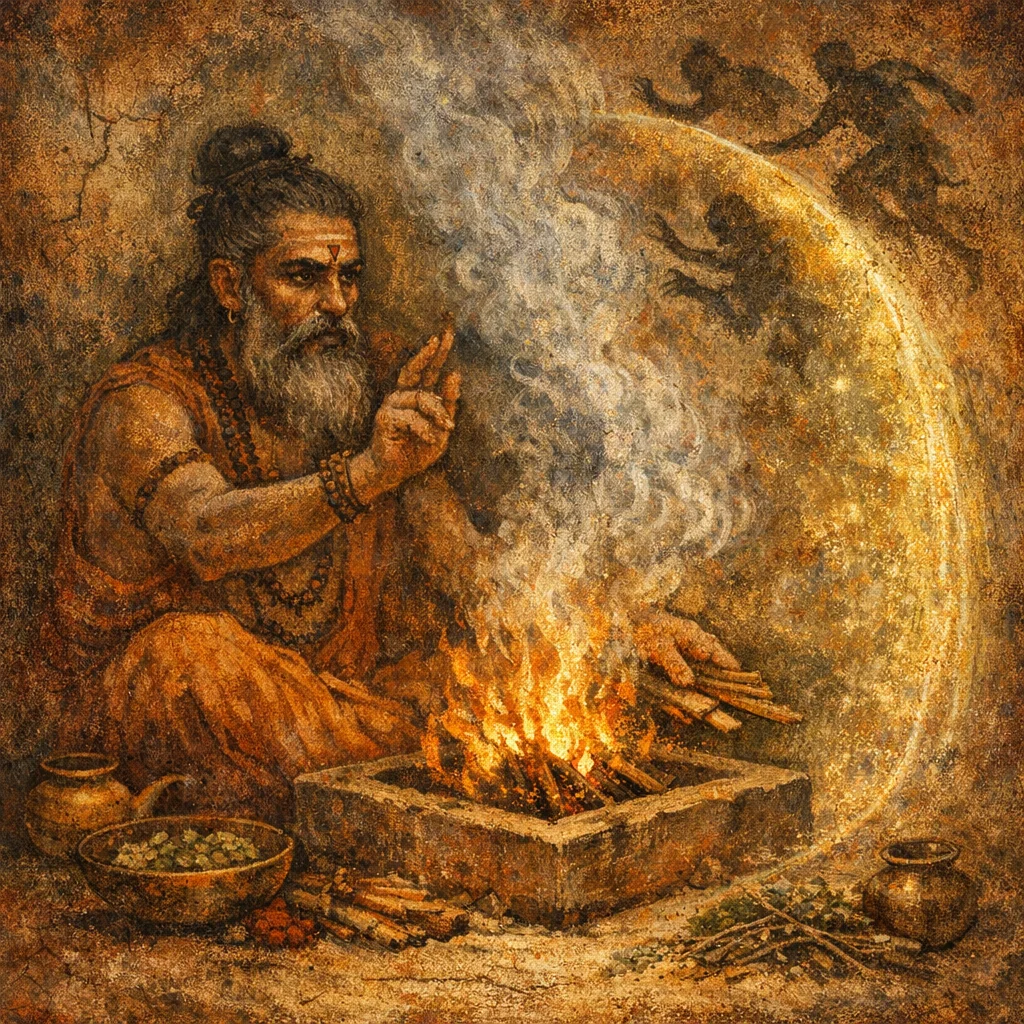
Sukta 76
Rishi: Atharvanic tradition (Anukramaṇī attribution not supplied in input; commonly Atharvan/Angiras for such charms)
Devata: Agni
Chandas: Anuṣṭubh (probable; requires full metrical verification against pada counts)
Mantras
Mantra 1
आयुष्यम्। य एनं परिषीदन्ति समादधति चक्षसे । संप्रेद्धो अग्निर्जिह्वाभिरुदेतु हृदयादधि
Life-giving is this: they who sit about him and duly set him in order for the eye—let Agni, fully kindled, with his tongues rise forth from over the heart.
Mantra 2
अग्नेः सान्तपनस्याहमायुषे पदमा रभे । अद्धातिर्यस्य पश्यति धूममुद्यन्तमास्यतः
Of Agni the scorching I, for life, lay hold upon the station: whose sure disposing one beholds the smoke uprising from his mouth.
Mantra 3
यो अस्य समिधं वेद क्षत्रियेण समाहिताम्। नाभिह्वारे पदं नि दधाति स मृत्यवे
Whoso knoweth his fuel-stick, duly laid on with the royal power, setteth not his footing in the navel-whirlpool—he is not for Death.
Mantra 4
नैनं घ्नन्ति पर्यायिणो न सन्नाँ अव गच्छति । अग्नेर्यः क्षत्रियो विद्वान् नाम गृह्णात्यायुषे
The roaming assailants smite him not, nor goeth he down to sinking: the Kṣatriya, knowing, who for life layeth hold on Agni’s name.
Frequently Asked Questions
To rekindle life-force through Agni, protect the person from inner collapse and external attack, and explicitly avert Death’s claim by correct kindling and mantra-power.
The heart is treated as the seat of vital fire and affliction; Agni is asked to rise from there. “For the eye” signals restoring clarity, perception, and life-stability—common markers of returning vitality.
It means ritually appropriating Agni’s protective identity through deliberate utterance and intent, making the deity’s power present as a safeguard for longevity and protection.