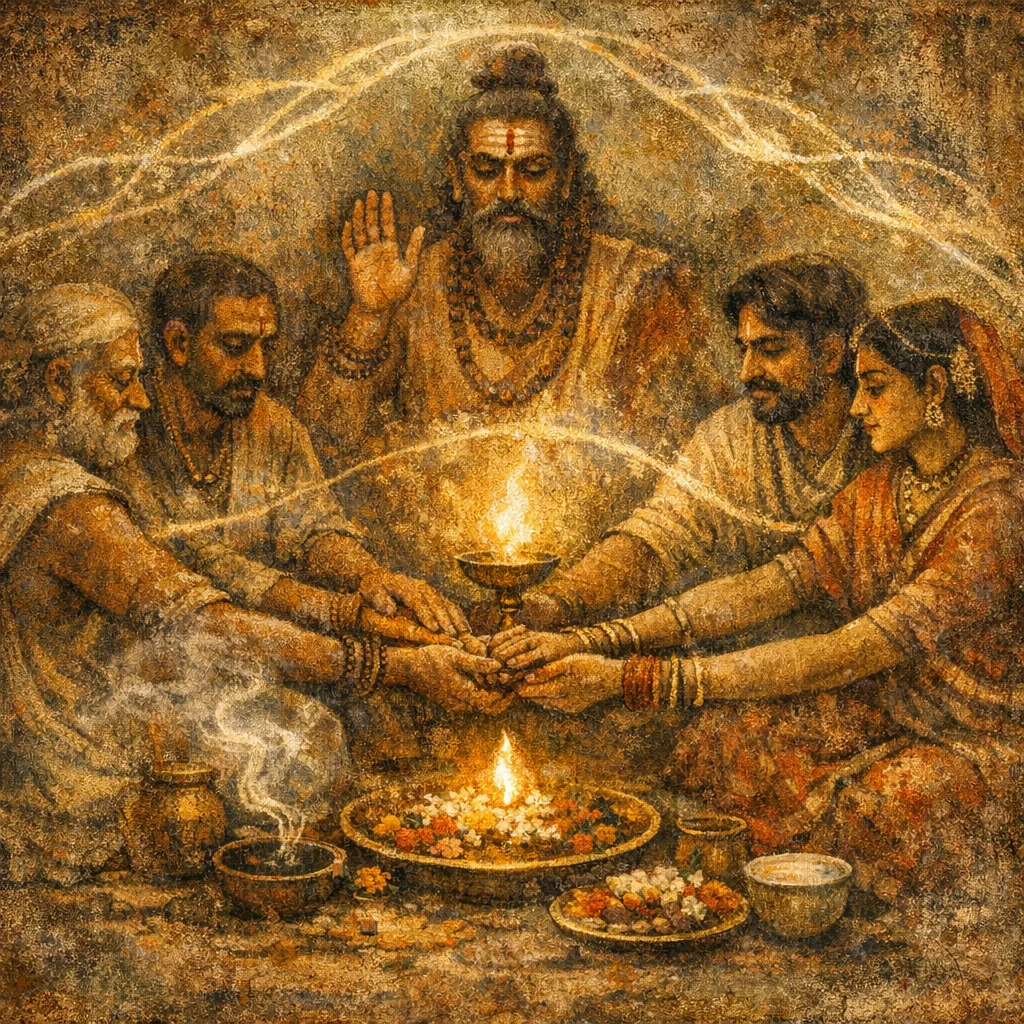
Sukta 64
Rishi: Atharvanic tradition
Devata: Saṃmanasya (Concord) / Devāḥ as exemplars
Chandas: Anuṣṭubh (probable; requires verification)
Mantras
Mantra 1
सांमनस्यम्। सं जानीध्वं सं पृच्यध्वं सं वो मनांसि जानताम्। देवा भागं यथा पूर्वे संजानाना उपासते
Know ye together; together be ye mingled; let your minds be of one knowing. As the Gods of old, in concord, attend upon their portion, so (be ye).
Mantra 2
समानो मन्त्रः समितिः समानी समानं व्रतं सह चित्तमेषाम्। समानेन वो हविषा जुहोमि समानं चेतो अभिसंविशध्वम्
Common be the spell, and common the assembly; common the observance, and together their purpose. With a common oblation do I make offering for you: into one and the same mind do ye enter, united.
Mantra 3
समानी व आकूतिः समाना हृदयानि वः । समानमस्तु वो मनो यथा वः सुसहासति
Common be your purpose, common be your hearts; common be your mind, that among you there may be fair agreement.
Frequently Asked Questions
It is recited to create concord in a group—settling quarrels, preventing factional splits, and bringing an assembly or household into one shared intention and decision.
No. It can be performed purely by recitation. One verse mentions a “common oblation,” so some traditions optionally add a simple shared offering (havis), but it is not mandatory.
Unite speech, vows, and feelings: think together, meet together, commit together—so everyone enters the same mind and agreement becomes natural.