Sukta 124
Rishi: Atharvanic tradition (not specified in the excerpt).
Devata: Agni; Waters (Āpas) as implicit agents; anti-deity target: Nirṛti.
Chandas: Triṣṭubh/Jagatī-like cadence possible; requires metrical verification from full pada counts.
Mantras
Mantra 1
निर्ऋत्यपस्तरणम्। दिवो नु मां बृहतो अन्तरिक्षादपां स्तोको अभ्यऽपप्तद् रसेन । समिन्द्रियेण पयसाहमग्ने छन्दोभिर्यज्ञैः सुकृतां कृतेन
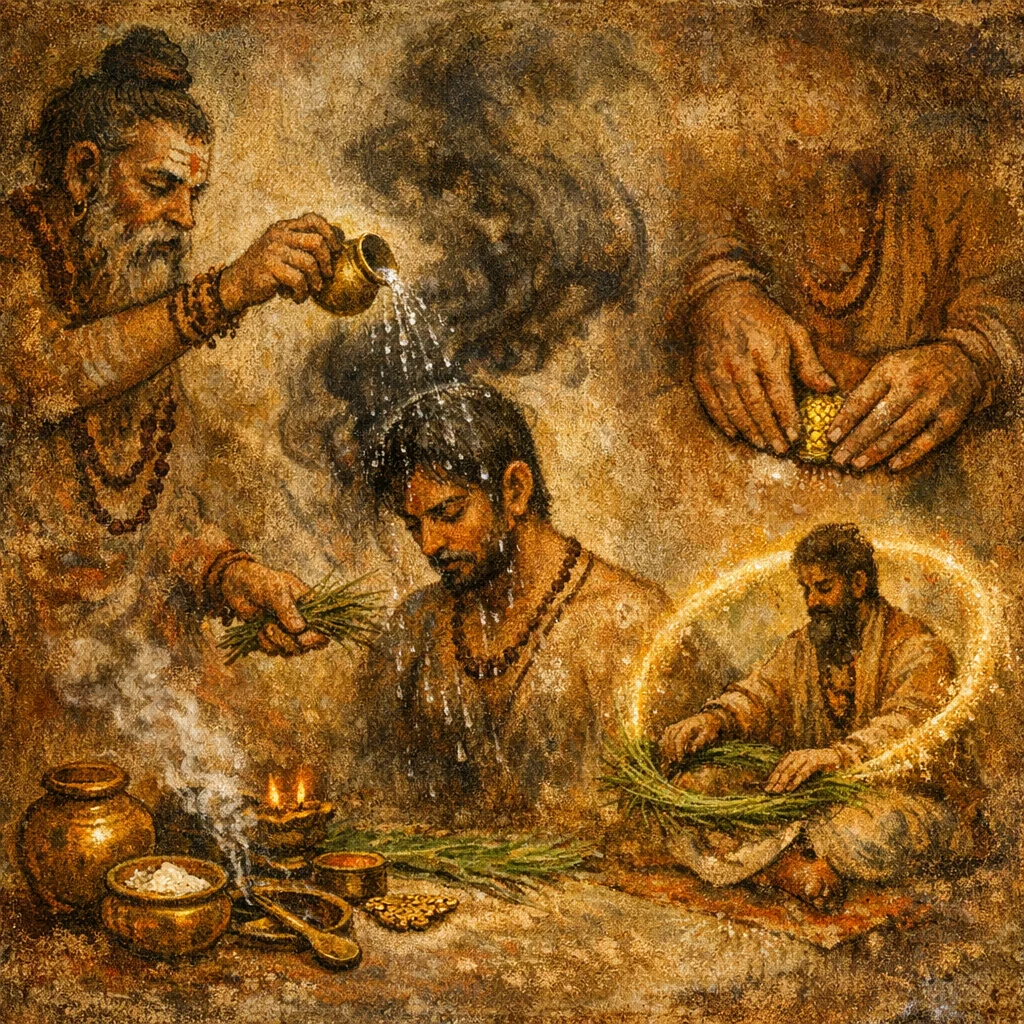
A spreading-forth against Nirṛti. From lofty heaven, even now, from the mid-air, a drop of waters hath fallen upon me with its living essence. With vigor and with milk am I made whole, O Agni—by meters, by sacrifices, by merit well achieved, by the deed accomplished.
Mantra 2
यदि वृक्षादभ्यपप्तत् फलं तद् यद्यन्तरिक्षात् स उ वायुरेव। यत्रास्पृक्षत् तन्वो३यच्च वासस आपो नुदन्तु निरृतिं पराचैः
If from a tree a fruit hath fallen upon (me)—or if from the mid-air: that, in truth, is Wind alone. Where it hath touched, of the body, and what of the garment—let the Waters thrust Nirṛti away, far off.
Mantra 3
अभ्यञ्जनं सुरभि सा समृद्धिर्हिरण्यं वर्चस्तदु पूत्रिममेव। सर्वा पवित्रा वितताध्यस्मत् तन्मा तारीन्निरृतिर्मो अरातिः
Fragrant is the unction: that is prosperity; gold is splendor—yea, that is offspring-giving. Let all purifiers be spread above us: let not Nirṛti bear us over; nor let malignity (of foes) [prevail].
Frequently Asked Questions
Nirṛti is the Atharvavedic figure of misfortune—loss, wasting, and a deathward pull. The hymn treats her as an invasive influence that can be driven away by purification and authoritative speech.
It addresses sudden ominous contact—like a fruit falling on someone or an unexplained touch from above—interpreting it as a removable taint. The Waters are commanded to push that misfortune away from both body and clothing.
The core is clean water for sprinkling/washing. If available, milk (for strengthening), a fragrant anointing, and a small gold token serve as traditional supports for wholeness, auspiciousness, and radiance.