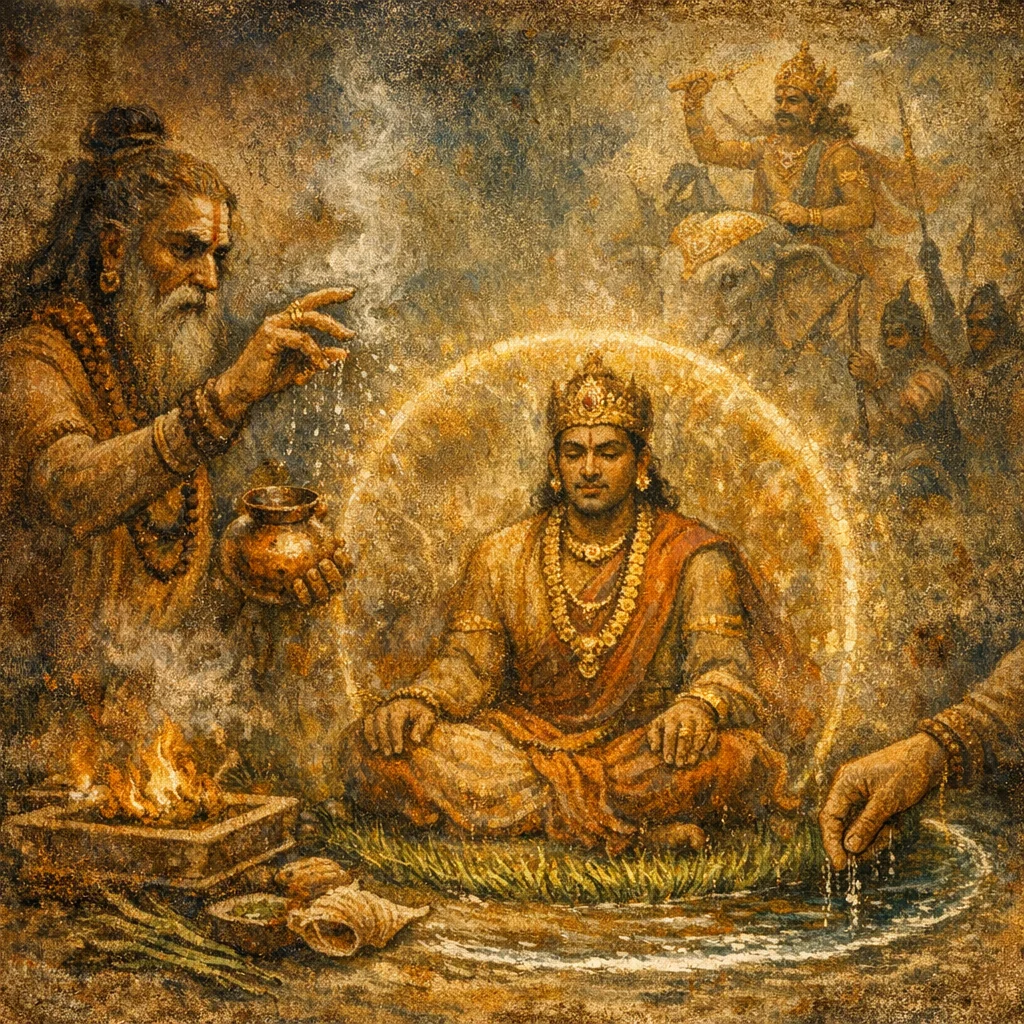
Sukta 98
Rishi: Atharvanic tradition (often transmitted under Atharvan/Āṅgiras lineages for royal rites; specific r̥ṣi attribution depends on anukramaṇī tradition)
Devata: Indra (as adhírāja and kṣatra-dātṛ)
Chandas: Triṣṭubh-like cadence (editional metrical assignment may vary)
Mantras
Mantra 1
अजरं क्षत्रम्। इन्द्रो जयाति न परा जयाता अधिराजो राजसु राजयातै । चर्कृत्य ईड्यो वन्द्यश्चोपसद्यो नमस्योऽभवेह
Unaging be the royal power. Indra conquers; he is not conquered in defeat: as overlord among kings may he exercise kingship. Illustrious, to be praised, to be reverenced, and to be approached, to be bowed to—may he become here.
Mantra 2
त्वमिन्द्राधिराजः श्रवस्युस्त्वं भूरभिभूतिर्जनानाम्। त्वं दैवीर्विश इमा वि राजायुष्मत् क्षत्रमजरं ते अस्तु
Thou, Indra, art the Over-king, the seeker and giver of fame; thou art the overpowering mastery of the peoples. Do thou rule forth these clans that are divine: for thee let there be life-endowed, unaging royal dominion.
Mantra 3
प्राच्या दिशस्त्वमिन्द्रासि राजोतोदीच्या दिशो वृत्रहन्छत्रुहोऽसि । यत्र यन्ति स्रोत्यास्तज्जितं ते दक्षिणतो वृषभ एषि हव्यः
Of the eastern quarters thou, Indra, art the king; and of the northern quarters thou art Vṛtra-slayer, foe-slayer. Where the streaming courses go—there is that won by thee; from the south, as a bull, thou advancest, thou worthy of oblation.
Frequently Asked Questions
It means “unaging royal power”—sovereignty that does not decay with time, defeat, or internal weakening, envisioned as a durable, divinely sanctioned kṣatra.
Primarily for royal empowerment and stability (rājakarma/paustika). It can be applied before campaigns for victory, at enthronement for legitimacy, or after success to consolidate rule.
The verses themselves do not require substances. In practice, a priest may add a simple Indra-offering (e.g., ghee) or use royal emblems, but the mantra’s intent is the main instrument.