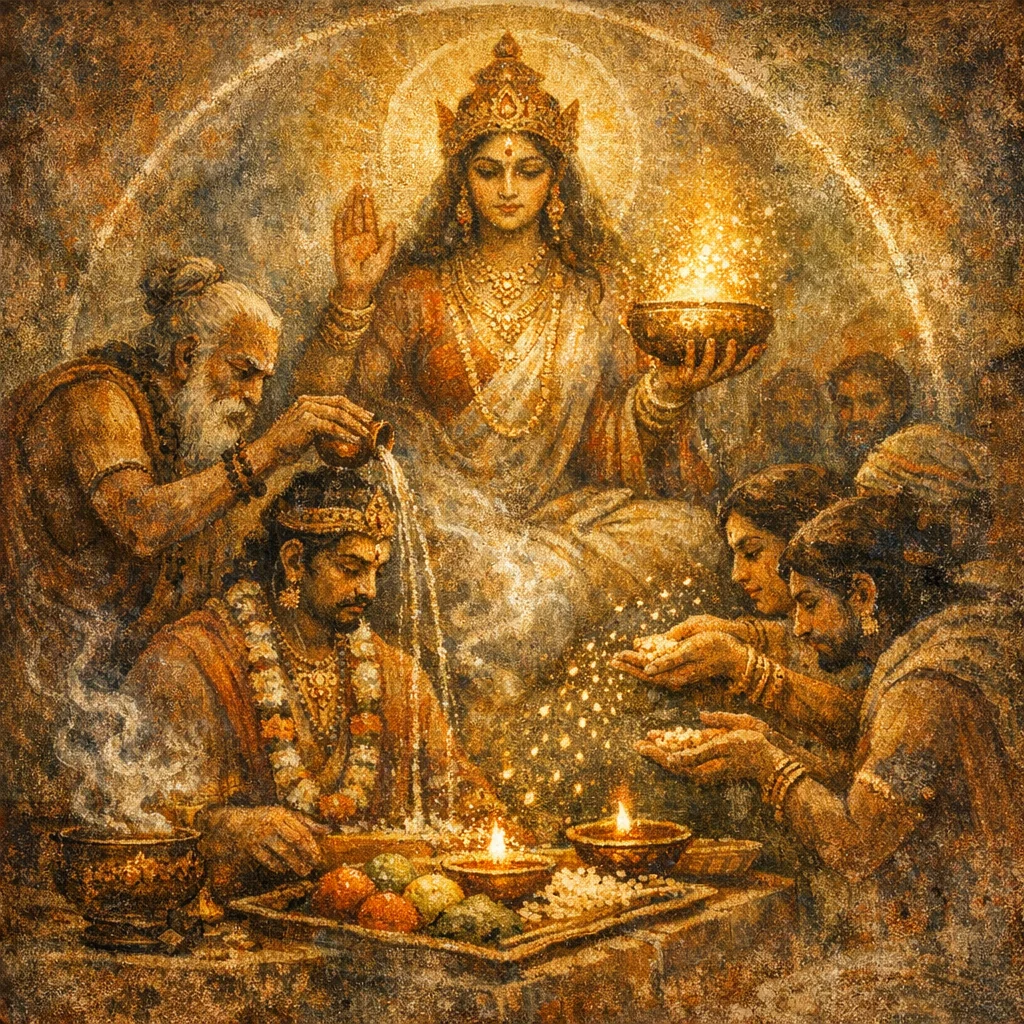
Sukta 30
Rishi: Traditionally Vāc/Rāṣṭrī-associated revelation stream (as in parallel RV ‘Devī Sūkta’ style); specific AV anukramaṇī attribution varies.
Devata: Rāṣṭrī (Rāṣṭradevī), with implicit support of all gods named.
Chandas: Triṣṭubh (RV-like self-declarative style).
Mantras
Mantra 1
राष्ट्रदेवी । अहं रुद्रेभिर्वसुभिश्चराम्यहमादित्यैरुत विश्वदेवैः । अहं मित्रावरुणोभा बिभर्म्यहमिन्द्राग्नी अहमश्विनोभा
I move with Rudras and with Vasus; I move with Ādityas and with all the Gods. I bear up Mitra and Varuṇa both; I bear up Indra-Agni; I bear the Aśvins both.
Mantra 2
अहं राष्ट्री संगमनी वसूनां चिकितुषी प्रथमा यज्ञियानाम्। तां मा देवा व्यदधुः पुरुत्रा भूरिस्थात्रां भूर्यावेशयन्तः
I am the Sovereign Queen, the gatherer-up of treasures, discerning, first among those worthy of worship. Me have the Gods established in many places, firmly abiding, infusing me with abundant entrance.
Mantra 3
अहमेव स्वयमिदं वदामि जुष्टं देवानामुत मानुषाणाम्। यं कामये तन्तमुग्रं कृणोमि तं ब्रह्माणं तमृषिं तं सुमेधाम्
I, even I, of mine own self, speak this utterance, welcome to the Gods and likewise to men. Whom I desire—him, him I make a dread one: him a Brahman, him a Rishi, him of excellent understanding.
Mantra 4
मया सोऽन्नमत्ति यो विपश्यति यः प्राणति य ईं शृणोत्युक्तम्। अमन्तवो मां त उप क्षियन्ति श्रुधि श्रुत श्रुद्धेयं ते वदामि
Through me he eats his food—who sees with insight, who breathes, who hears the word that is spoken. The witless, they dwell nigh unto me in dependence. Hear thou, O Hearer: what I speak to thee is meet to be heard and trusted.
Mantra 5
अहं रुद्राय धनुरा तनोमि ब्रह्मद्विषे शरवे हन्तवा उ । अहं जनाय समदं कृणोम्यहं द्यावापृथिवी आ विवेश
I stretch the bow for Rudra, yea, for the arrow, to slay the hater of the holy spell. I make for the people the onset of battle; I have entered into Heaven and Earth.
Mantra 6
अहं सोममाहनसं बिभर्म्यहं त्वष्टारमुत पूषणं भगम्। अहं दधामि द्रविणा हविष्मते सुप्राव्या३ यजमानाय सुन्वते
I bear the Soma, gain-bestowing; I bear Tvaṣṭar, and Pūṣan, and Bhaga. I set wealth in place for him who offers oblation—well-guarded—for the sacrificer who presses Soma.
Mantra 7
अहं सुवे पितरमस्य मूर्धन् मम योनिरप्स्व१न्तः समुद्रे। ततो वि तिष्ठे भुवनानि विश्वोतामूं द्यां वर्ष्मणोप स्पृशामि
I beget the Father on the summit of this world; my womb is in the waters, within the ocean. Thence I stand forth, wide-spread, over all the worlds; and yonder heaven too I touch with my greatness.
Mantra 8
अहमेव वात इव प्र वाम्यारभमाणा भुवनानि विश्वा । परो दिवा पर एना पृथिव्यौतावती महिम्ना सं बभूव
I verily, like the Wind, blow forth, laying hold upon all the worlds entire. Beyond the heaven, beyond this earth—yea, by her aiding majesty—he hath wholly come to be.
Frequently Asked Questions
Rāṣṭrī is the personified power of the realm—sovereignty, unity, and orderly governance. In AV 4.30 she speaks as the force that supports the gods and therefore stabilizes society.
It is strongly royal/political in tone, but it can also be used by communities and households when the aim is unity, concord, and protection of collective order—especially before assemblies or during social tension.
Because rāṣṭra-stability includes defense: the hymn frames punitive force as legitimate when directed against those hostile to brahman and social order. The aggressive imagery functions as apotropaic protection for the community.