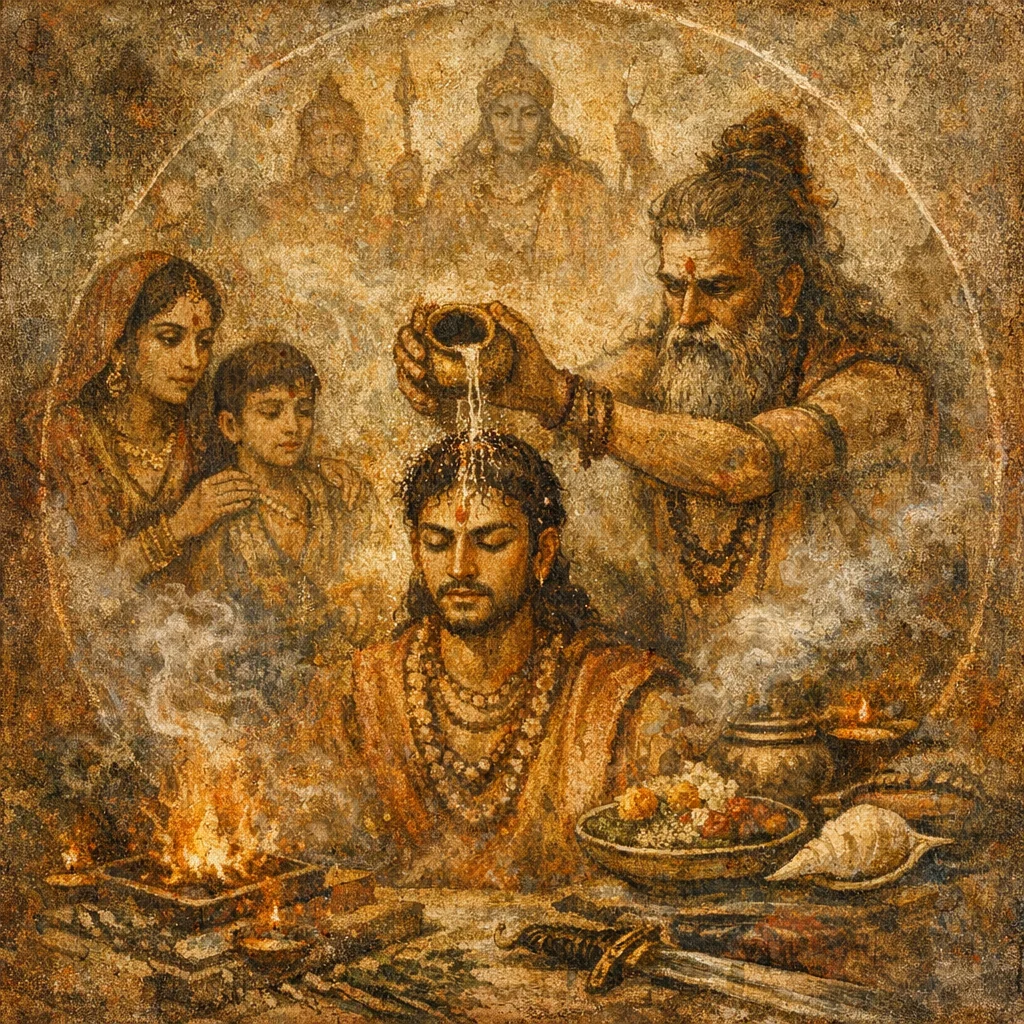
Sukta 4
Rishi: Atharvanic/Angirasa tradition (per Anukramaṇī for AV 3.4).
Devata: Rāṣṭra (realm) and royal sovereignty; implicitly the Directions (Pradiś).
Chandas: Mixed/prose + metrical cola (opening nominal phrase + anuṣṭubh-like cadence thereafter; to be verified).
Mantras
Mantra 1
प्रजाभी राज्ञः संवरणम्। आ त्वा गन् राष्ट्रं सह वर्चसोदिहि प्राङ्वि विशां पतिरेकराट् त्वं वि राज । सर्वास्त्वा राजन् प्रदिशो ह्वयन्तूपसद्यो नमस्योऽ भवेह
With subjects is the King’s encompassing guard. Unto thee may the kingdom come, with splendour: rise thou aloft; forward, sole monarch, lord of the clans, do thou rule forth. Let all the quarters, O King, call thee; here become thou one to be approached, one meet for reverence.
Mantra 2
त्वां विशो वृणतां राज्याऽय त्वामिमाः प्रदिशः पञ्च देवीः । वर्ष्मन् राष्ट्रस्य ककुदि श्रयस्व ततो न उग्रो वि भजा वसूनि
Let the peoples choose thee for kingship; thee let these five goddess-quarters choose. Upon the height, upon the realm’s crest, take thou thy station: thence, mighty one, deal out to us our treasures.
Mantra 3
अच्छ त्वा यन्तु हविनः सजाता अग्निर्दूतो अजिरः सं चरातै । जायाः पुत्राः सुमनसो भवन्तु बहुं बलिं प्रति पश्यासा उग्रः
Unto thee let offerers come, thy kinsmen bringing gifts; let Agni, swift messenger, move to and fro in concord. Let wives and sons be kindly-minded; and, mighty one, mayest thou behold much tribute coming in return.
Mantra 4
अश्विना त्वाग्रे मित्रावरुणोभा विश्वे देवा मरुतस्त्वा ह्वयन्तु । अधा मनो वसुदेयाय कृणुष्व ततो न उग्रो वि भजा वसूनि
The Aśvins lead thee on; Mitra and Varuṇa both, and all the Gods, and the Maruts, call thee hither. Then set thy purpose for the giving of wealth; thereafter, O mighty one, deal out to us the riches.
Mantra 5
आ प्र द्रव परमस्याः परावतः शिवे ते द्यावापृथिवी उभे स्ताम्। तदयं राजा वरुणस्तथाह स त्वायमह्वत् स उपेदमेहि
Hither, run forth from the farthest distance: for thee, O auspicious one, let Heaven and Earth both stand firm. Thus hath this King Varuṇa spoken: he, even he, hath called thee; come thou near unto this place.
Mantra 6
इन्द्रेन्द्र मनुष्याः३ परेहि सं ह्यज्ञास्था वरुणैः संविदानः । स त्वायमह्वत् स्वे सधस्थे स देवान् यक्षत् स उ कल्पयाद् विशः
O Indra, Indra—ye men, go forth: for thou art one that knoweth, in accord with Varuṇa’s binding powers. He, even he, hath called thee to his own seat; he hath worshipped the Gods—so may he also set the peoples in due order.
Mantra 7
पथ्याऽ रेवतीर्बहुधा विरूपाः सर्वाः संगत्य वरीयस्ते अक्रन्। तास्त्वा सर्वाः संविदाना ह्वयन्तु दशमीमुग्रः सुमना वशेह
The path-making, wealthy powers, of many sorts and diverse forms, all gathering, have made for thee a better way. Let them, all of them in concord, call thee hither: on the tenth stage, O mighty one, gracious, be thou here in our control.
Frequently Asked Questions
It is used in royal or public rites to secure the transfer and stability of the realm to a ruler, increasing his varcas (splendour/authority) and gaining universal recognition from all quarters.
The Directions (pradiś) function as cosmic-public witnesses: if every quarter ‘calls’ and acknowledges the king, his rule is portrayed as universally valid and socially uncontestable.
In the presented verses no specific substances are required; it primarily works as a declarative-acclamatory recitation within a consecration or prosperity-setting. In larger rājakarma, it can accompany enthronement actions like seating, proclamation, or anointing.