Sukta 90
Rishi: RV Bṛhaspati hymn tradition (Aṅgiras-associated).
Devata: Bṛhaspati.
Chandas: Triṣṭubh.
Mantras
Mantra 1
यो अद्रिभित् प्रथमजा ऋतावा बृहस्पतिराङ्गिरसो हविष्मान्। द्विबर्हज्मा प्राघर्मसत् पिता न आ रोदसी वृषभो रोरवीति
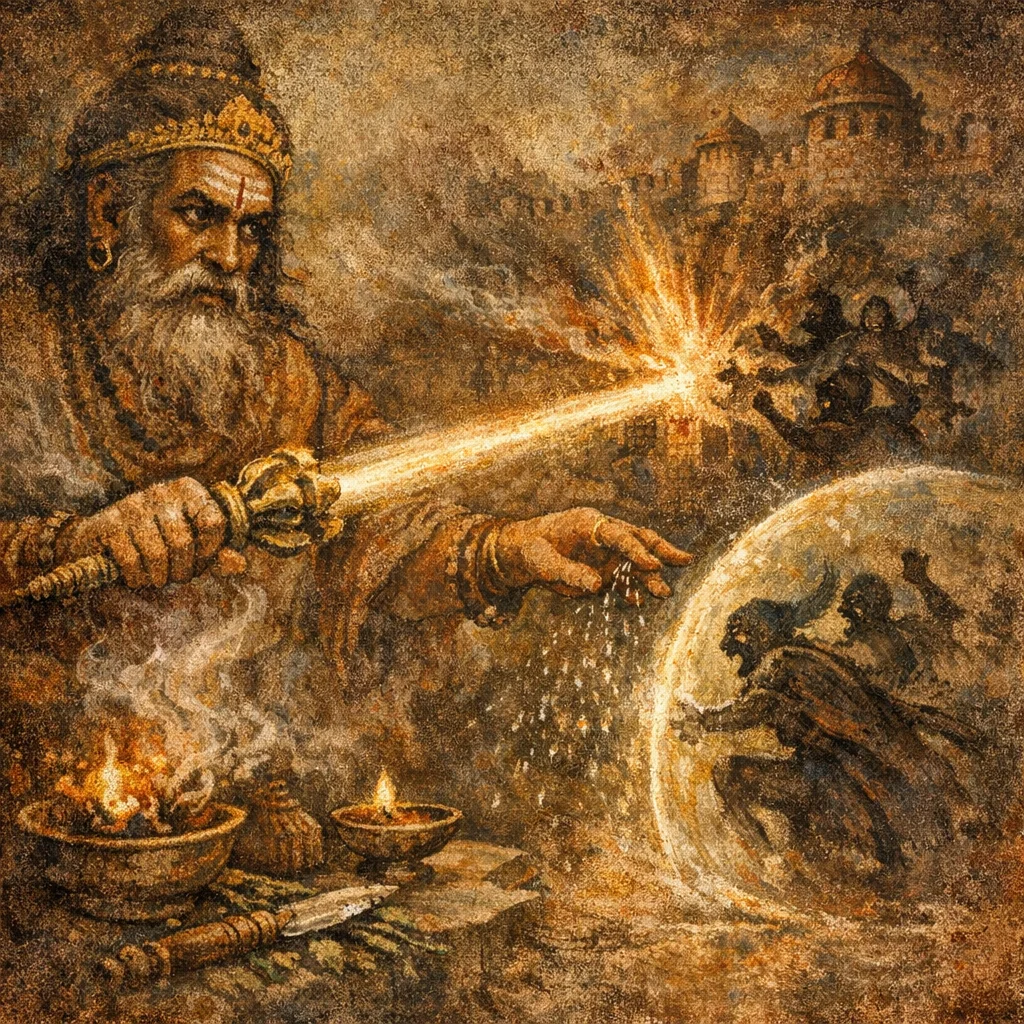
He who is rock-splitter, first-born, possessed of ṛta—Bṛhaspati, the Aṅgiras, rich in oblation; of double eminence, seated in the fore-heated rite—our Father: as a bull he roars unto the two Worlds.
Mantra 2
जनाय चिद् य ईवते उ लोकं बृहस्पतिर्देवहूतौ चकार । घ्नन् वृत्राणि वि पुरो दर्दरीति जयं छत्रूंरमित्रान् पृत्सु साहन्
Even for the man who strives toward a station, Bṛhaspati at the gods’ invocation hath made a world (a secure place); slaying the Vṛtras, he shatters the strongholds asunder, conquering enemies and non-friends, prevailing in battles.
Mantra 3
बृहस्पतिः समजयद् वसूनि महो व्रजान् गोमतो देव एषः । अपः सिषासन्त्स्व१रप्रतीतो बृहस्पतिर्हन्त्यमित्रमर्कैः
Bṛhaspati hath wholly won the riches—great cattle-pens abounding in kine—this god. Seeking to win the Waters, the light of heaven, unopposed, Bṛhaspati smites the non-friend with his verses.
Frequently Asked Questions
It is used to invoke Bṛhaspati for protection and success: removing obstacles, breaking hostile constraints, securing one’s standing, and gaining victory in conflicts or competitions.
These epithets describe his power to break what blocks life—whether inner fear, social opposition, legal/political barriers, or enemy defenses—so the patron gains an open path and secure space.
A fire offering (havis) fits the hymn’s tone, but a simple, clean recitation with a symbolic offering bowl and a concluding water-sprinkling/sip can also serve as a minimal protective practice.