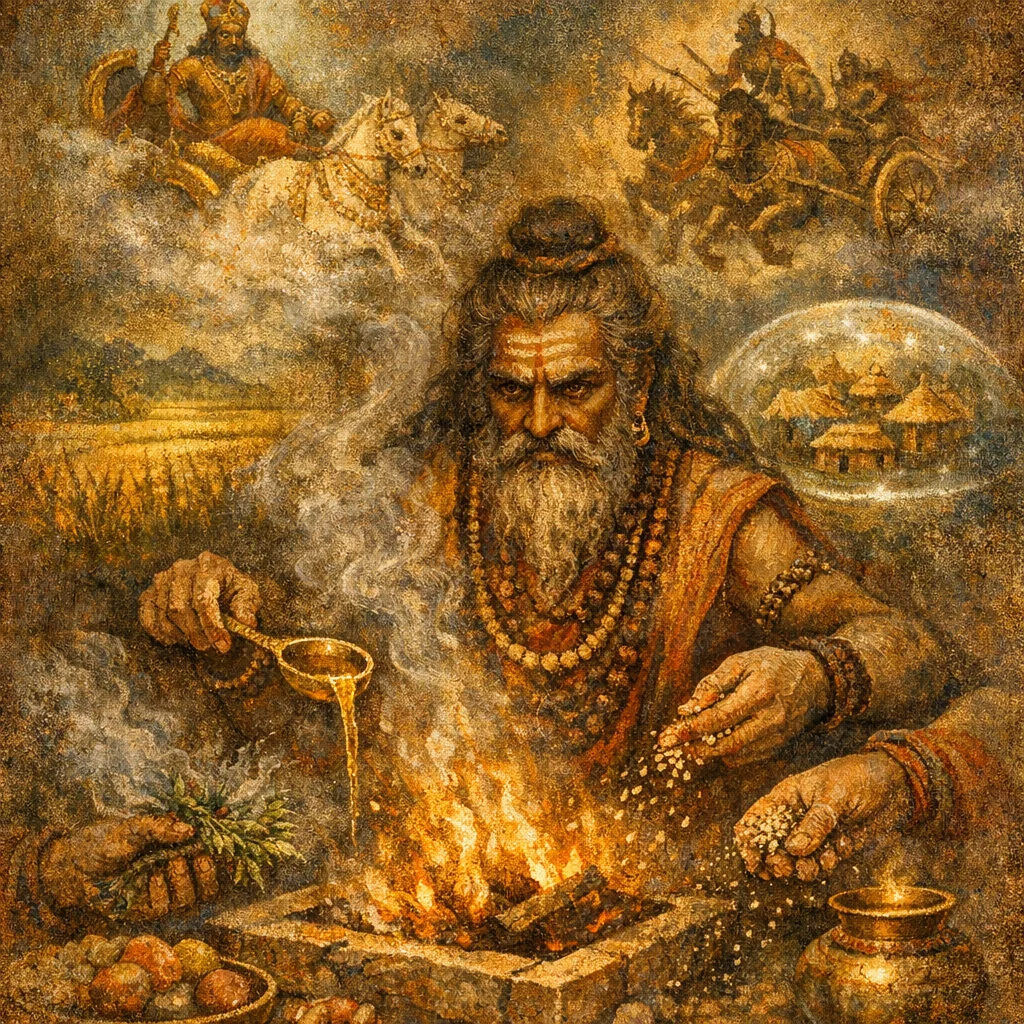
Sukta 76
Rishi: RV-derived; in AV 20 the r̥ṣi attribution follows the Rigvedic source-hymn (Indra-Soma praise); exact r̥ṣi for this verse depends on the RV locus of 20.76 (not provided in input).
Devata: Indra (with soma-offering as co-agent)
Chandas: Triṣṭubh (RV-style praise meter; typical for Indra hymns)
Mantras
Mantra 1
वने न वा यो न्यधायि चाक्रं छुचिर्वां स्तोमो भुरणावजीगः । यस्येदिन्द्रः पुरुदिनेषु होता नृणां नर्यो नृतमः क्षपावान्
Whether in the forest, or elsewhere, he who hath set the wheel in place—pure is the hymn, impetuous in its onset. He whose is Indra, on many a day, as Hotar: for men the manly, the most heroic, abiding through the nights.
Mantra 2
प्र ते अस्या उषसः प्रापरस्या नृतौ स्याम नृतमस्य नृणाम्। अनु त्रिशोकः शतमावहन्नॄन् कुत्सेन रथो यो असत् ससवान्
Forth for thee—of this Dawn and of the later Dawn—may we be in the heroic dance of the most manly among men. Following, the triple-radiant chariot, winning, brought hither a hundred men, with Kutsa.
Mantra 3
कस्ते मद इन्द्र रन्त्यो भूद् दुरो गिरो अभ्यु१ग्रो वि धाव । कद् वाहो अर्वागुप मा मनीषा आ त्वा शक्यामुपमं राधो अन्नैः
What rapture of thine, O Indra, hath been gladdening?—Fierce, rush forth: the songs are at the doors. When shall my thought draw nigh to thee, hitherward with thy team, that I may win the choicest bounty with foods?
Mantra 4
कदु द्युम्नमिन्द्र त्वावतो नॄन् कया धिया करसे कन्न आगन्। मित्रो न सत्य उरुगाय भृत्या अन्ने समस्य यदसन् मनीषाः
When wilt thou make the glory of men who have thee, O Indra—by what thought, and how, have the inspirations come? Like a true friend, O wide-going, for thy dependents: when there were wise counsels in the giver’s food.
Mantra 5
प्रेरय सूरो अर्थं न पारं ये अस्य कामं जनिधा इव ग्मन्। गिरश्च ये ते तुविजात पूर्वीर्नर इन्द्र प्रतिशिक्षन्त्यन्नैः
Impel forth, O Hero, the aim as to the farther shore—those who, as it were, generate his desire, go onward. And the many ancient songs of thine, O much-born Indra, which men recompense with foods.
Mantra 6
मात्रे नु ते सुमिते इन्द्र पूर्वी द्यौर्मज्मना पृथिवी काव्येन । वराय ते घृतवन्तः सुतासः स्वाद्नन् भवन्तु पीतये मधूनि
Now, in due measure and with good ordinance, O Indra, the ancient Heaven by greatness and Earth by inspired craft (stand) for thee. For thy chosen boon let the pressed draughts, rich in ghee, become sweet—honeyed drinks for thee to drink.
Mantra 7
आ मध्वो अस्मा असिचन्नमत्रमिन्द्राय पूर्णं स हि सत्यराधाः । स वावृधे वरिमन्ना पृथिव्या अभि क्रत्वा नर्यः पौंस्यैश्च
They have poured for him the honeyed draught, unmeasured, full, for Indra—for he is of true bounty. He has waxed in wide dominion from the earth upward, with heroic resolve and with manly powers.
Mantra 8
व्यानलिन्द्रः पृतनाः स्वोजा आस्मै यतन्ते सख्याय पूर्वीः । आ स्मा रथं न पृतनासु तिष्ठ यं भद्रया सुमत्या चोदयासे
Indra, with his own might, hath driven the battles apart; the ancient powers strive for him for friendship. Take thy stand, as a chariot in the battles—thou whom with auspiciousness and good counsel thou settest in motion.
Frequently Asked Questions
It is used to secure Indra’s favor for success—especially victory and prosperity—by combining authoritative praise with a properly prepared sweet offering.
The hymn asks that the pressed draughts be ‘ghṛtavant’ and ‘madhūni’—rich and sweet—because that auspicious potency is the ritual form of the boon Indra is invited to grant.
Dawn is especially fitting (the hymn invokes uṣas), and it can also be recited before a major contest, journey, or decisive undertaking to ‘carry the aim to the farther shore’ (completion).