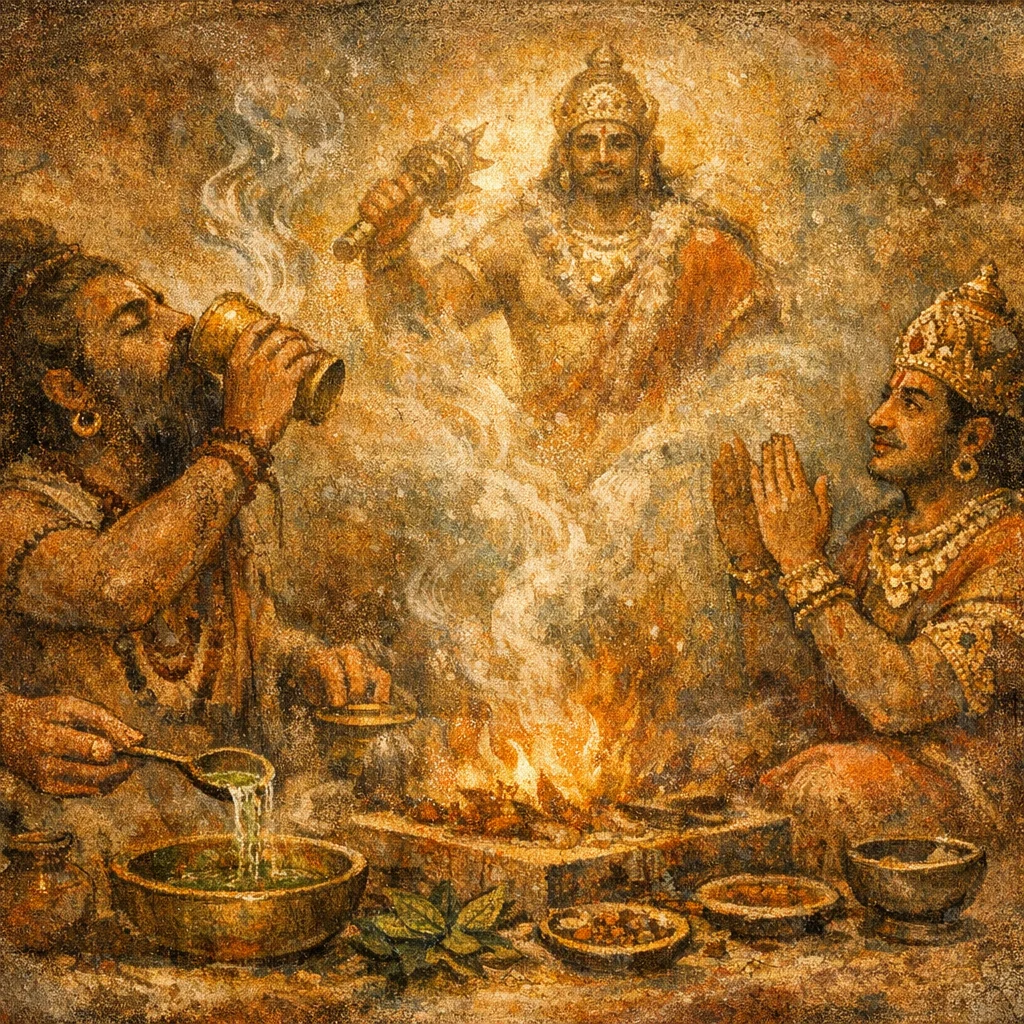
Sukta 60
Rishi: Ṛgvedic source attribution (not uniquely specified in AVŚ 20 context).
Devata: Indra
Chandas: Anuṣṭubh-like short pādas (as transmitted here).
Mantras
Mantra 1
एवा ह्यसि वीरयुरेवा शूर उत स्थिरः । एवा ते राध्यं मनः
For even so thou art, a winner of heroes; even so a champion, yea steadfast. Even so is thy purpose a thing to be achieved.
Mantra 2
एवा रातिस्तुवीमघ विश्वेभिर्धायि धातृभिः । अघा चिदिन्द्र मे सचा
Even so, O mighty-bounteous, thy gift is set in place by all the ordainers; and even mischief, O Indra, (is) with me—(yet be thou) at my side.
Mantra 3
मो षु ब्रह्मेव तन्द्रयुर्भुवो वाजानां पते । मत्स्वा सुतस्य गोमतः
Be not, I pray, like prayer itself grown sluggish, O Lord of prizes: be exhilarate with the pressed (Soma), rich in kine.
Mantra 4
एवा ह्यस्य सूनृता विरप्शी गोमती मही। पक्वा शाखा न दाशुषे
For even so is his gracious truth—far-spreading, rich in kine, and great—like a ripened branch unto the worshipper who hath given.
Mantra 5
एवा हि ते विभूतय ऊतय इन्द्र मावते । सद्यश्चित् सन्ति दाशुषे
Even so, for thine are the mighty manifestations, the succours, O Indra, for the bounteous man; yea, even straightway they are for him who hath offered.
Mantra 6
एवा ह्यस्य काम्या स्तोम उक्थं च शंस्या । इन्द्राय सोमपीतये
Even so, for him the hymn is desirable, and the solemn chant to be proclaimed—unto Indra, for the drinking of the Soma.
Frequently Asked Questions
It is a paustika (prosperity-strength) Indra hymn used to make one’s purpose ‘rādhya’—surely attainable—by affirming Indra’s steadfast victorious power and his reliable gift-giving.
The image “pakvā śākhā” suggests benefits that are mature, ready to yield, and dependable—prosperity (especially cattle-wealth) that comes at the right time to the worshipper who has given offerings.
No specific herbs or amulets are prescribed in the verses. If performed in a Soma-oriented manner, a symbolic Soma offering (a consecrated drink) may accompany the praise to Indra as Soma-drinker.