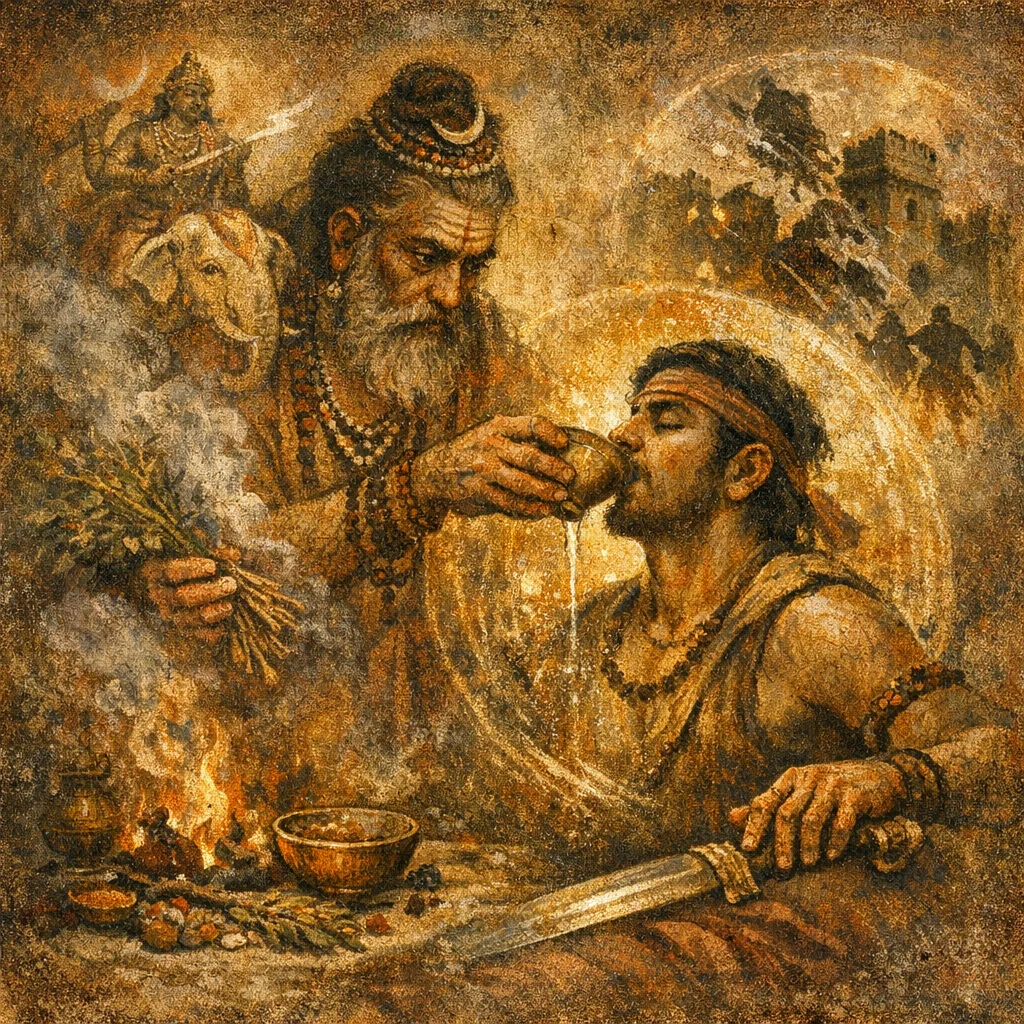
Sukta 53
Rishi: As per RV source of AV 20.53 (attribution follows the borrowed Rigvedic hymn; edition-dependent).
Devata: Indra (Soma-exhilarated).
Chandas: Triṣṭubh.
Mantras
Mantra 1
क ईं वेद सुते सचा पिबन्तं कद् वयो दधे । अयं यः पुरो विभिनत्त्योजसा मन्दानः शिप्र्यन्धसः
Who, verily, knows him—drinking in company at the Soma pressed—what vital might he hath assumed? This is he who shatters forts by force, exhilarated, O Śipri, with the Soma’s juice.
Mantra 2
दाना मृगो न वारणः पुरुत्रा चरथं दधे । नकिष्ट्वा नि यमदा सुते गमो महाश्चरस्योजसा
Bounteous, like a wild beast, like an elephant, he hath set his roaming in many a place. None may hold thee back in thy going at the Soma pressed: great one, thou movest with might.
Mantra 3
य उग्रः सन्ननिष्टृत स्थिरो रणाय संस्कृतः । यदि स्तोतुर्मघवा शृणवद्धवं नेन्द्रो योषत्या गमत्
He who, fierce, unflinching, firm, is made ready for the battle—if the bounteous one shall hear the singer’s call, then Indra will not fail to come with willing favor.
Frequently Asked Questions
It names Indra’s classic deed—breaking enemy strongholds—but in Atharvanic use it also functions as an analogy for breaking any ‘fort-like’ obstruction: delays, resistance, fear, or entrenched opposition.
Its primary tone is Paustika: it strengthens success, advantage, and effective power. It also has protective (rakṣā) force because it frames obstacles as adversarial and calls Indra’s battle-readiness.
The hymn’s imagery is Soma-centered, but later practice often uses a respectful substitute libation. The key is the logic of the verses: praise + ‘pressed Soma’ context = Indra’s heightened, unhindered arrival and obstacle-breaking power.