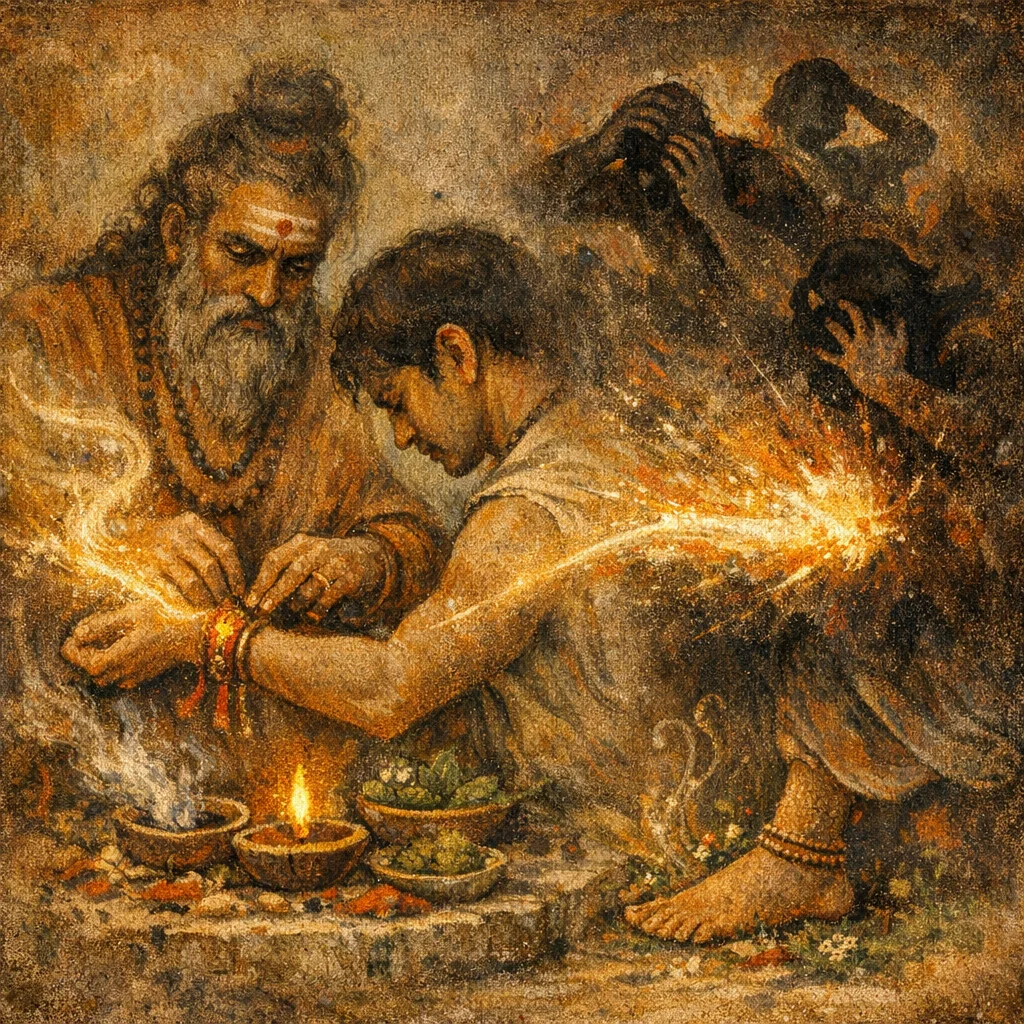
Sukta 11
Rishi: Atharvanic/Angirasa tradition (ascribed at the hymn level in many indices; verse-level r̥ṣi not separately specified).
Devata: Dveṣa (enmity) as a hostile force to be reversed; implicitly the mantra’s own brahman-power (vac) as agent.
Chandas: Anuṣṭubh (probable; AV 2.x commonly in anuṣṭubh—confirmable against a pada-count recension table).
Mantras
Mantra 1
श्रेयःप्राप्तिः। दूष्या दूषिरसि हेत्या हेतिरसि मेन्या मेनिरसि । आप्नुहि श्रेयांसमति समं क्राम
Thou art Dūṣyā, thou art the Spoiler; thou art Hetyā, thou art the Weapon; thou art Menyā, thou art Wrath. Win thou the Better; step thou beyond the level (of the equal).
Mantra 2
स्रक्त्योऽसि प्रतिसरोऽसि प्रत्यभिचरणोऽसि । आप्नुहि श्रेयांसमति समं क्राम
Thou art the pendant; thou art the counter-charm; thou art the repeller of sorcery. Win thou the better lot; step thou beyond the equal rival.
Mantra 3
प्रति तमभि चर योऽस्मान् द्वेष्टि यं वयं द्विष्मः । आप्नुहि श्रेयांसमति समं क्राम
Against that man advance—who hateth us, whom we ourselves do hate. Overtake him; win thou the better portion; step beyond the rival’s equal state.
Mantra 4
सूरिरसि वर्चोधा असि तनूपानोऽसि । आप्नुहि श्रेयांसमति समं क्राम
Thou art a noble patron; thou art a bestower of splendour; thou art a guardian of the body. Win thou the better good: stride beyond the common level.
Mantra 5
शुक्रोऽसि भ्राजोऽसि स्वऽरसि ज्योतिरसि । आप्नुहि श्रेयांसमति समं क्राम
Thou art the Bright; thou art the Splendour; thou art Heaven; thou art Light. Attain the better good; step onward, passing beyond, with even stride.
Frequently Asked Questions
It is used to counter enmity and rivalry—sending hostility back to the hostile person while helping the patron gain the ‘better lot’ (śreyas) and surpass competitors.
Not prominently. The main ‘deity’ is the force of dveṣa treated as something to be reversed, and the effective agent is mantra-power (brahman/vāc) that compels the outcome and installs brilliance (jyotis).
The text itself does not require substances. In Atharvanic practice, a simple thread or amulet may be used as a carrier, consecrated during recitation—especially with the final luminous verse.