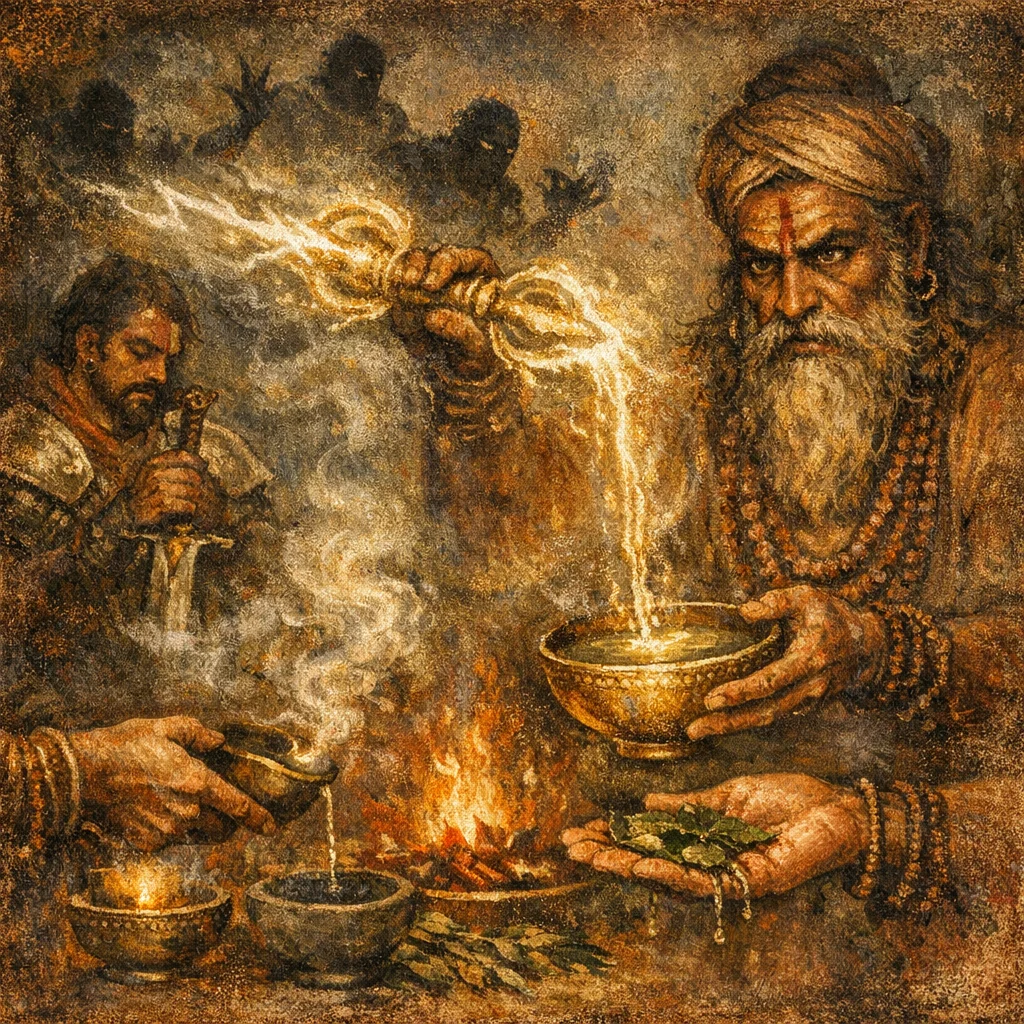
Sukta 5
Rishi: Atharvanic tradition (Indra-Soma invitation type; specific r̥ṣi attribution varies by anukramaṇī lists).
Devata: Indra (as Soma-drinker and bestower of vigor).
Chandas: Triṣṭubh-like cadence (invitation style; metrical classification may vary by recension/anukramaṇī).
Mantras
Mantra 1
इन्द्रस्य वीर्याणि। इन्द्र जुषस्व प्र वहा याहि शूर हरिभ्याम्। पिबा सुतस्य मतेरिह मधोश्चकानश्चारुर्मदाय
The heroic powers of Indra. O Indra, take thou delight: drive forth, come hither, O hero, with thy two bay steeds. Drink here of the pressed draught, of the inspired intent, of the honeyed sweetness—rejoicing, gracious—for exhilaration.
Mantra 2
इन्द्र जठरं नव्यो न पृणस्व मधोर्दिवो न। अस्य सुतस्य स्व१र्णोप त्वा मदाः सुवाचो अगुः
O Indra, fill thy belly, as with fresh draught; as with the honey of heaven. Of this pressed Soma, with fair praise, the raptures—well-spoken—have come unto thee.
Mantra 3
इन्द्रस्तुराषाण्मित्रो वृत्रं यो जघान यतीर्न। बिभेद वलं भृगुर्न ससहे शत्रून् मदे सोमस्य
Indra the Overmasterer, and Mitra—he who smote Vṛtra—(he) brake the Yatis; he clave Vala asunder; like Bhṛgu he prevailed against the foes, in the exhilaration of Soma.
Mantra 4
आ त्वा विशन्तु सुतास इन्द्र पृणस्व कुक्षी विड्ढि शक्र धियेह्या नः । श्रुधी हवं गिरो मे जुषस्वेन्द्र स्वयुग्भिर्मत्स्वेह महे रणाय
Let the pressed draughts enter thee, O Indra; fill thou thy flanks: smite through, O Mighty, with inspired thought; come hither unto us. Hear thou the call; accept my uttered songs, O Indra; with thine own yoked teams be thou exhilarate here, for the great battle.
Mantra 5
इन्द्रस्य नु प्रा वोचं वीर्याऽणि यानि चकार प्रथमानि वज्री। अहन्नहिमन्वपस्ततर्द प्र वक्षणा अभिनत् पर्वतानाम्
Now will I forth proclaim the heroic powers of Indra, which first of all the Thunder-armed hath wrought. He smote the Serpent; thereafter he clave a passage for the waters; he rent asunder the flanks of the mountains.
Mantra 6
अहन्नहिं पर्वते शिश्रियाणं त्वष्टास्मै वज्रं स्वर्यं ऽ ततक्ष । वाश्रा इव धेनवः स्यन्दमाना अञ्जः समुद्रमव जग्मुरापः
He smote the Serpent, couched upon the mountain; Tvaṣṭṛ for him wrought the thunderbolt, heaven-winning. Like lowing milch-cows, streaming forth, the Waters straightway went down unto the sea.
Mantra 7
वृषायमाणो अवृणीत सोमं त्रिकद्रुकेष्वपिबत् सुतस्य । आ सायकं मघवादत्त वज्रमहन्नेनं प्रथमजामहीनाम्
Waxing bull-like, he chose the Soma; at the three pressings he drank of the pressed. Then the Bounteous took in hand the missile, the thunderbolt; and he smote him, the first-born of the serpents.
Frequently Asked Questions
For paustika aims—building strength, fullness, and success—especially before a demanding task or contest; it also serves to ‘break obstruction’ by invoking Indra’s Vṛtra/Ahi-slaying power.
Because Indra’s Soma-exhilaration is treated as the engine of his power: once ‘filled’ by the pressed draught and praise, he becomes the active force that grants vigor and victory to the patron.
Traditional framing presumes Soma, but Atharvanic practice often allows a clean sweet substitute (madhu) and, most importantly, the ‘verbal offering’—clear, well-uttered praise (giraḥ/su-vāc) with focused intention.