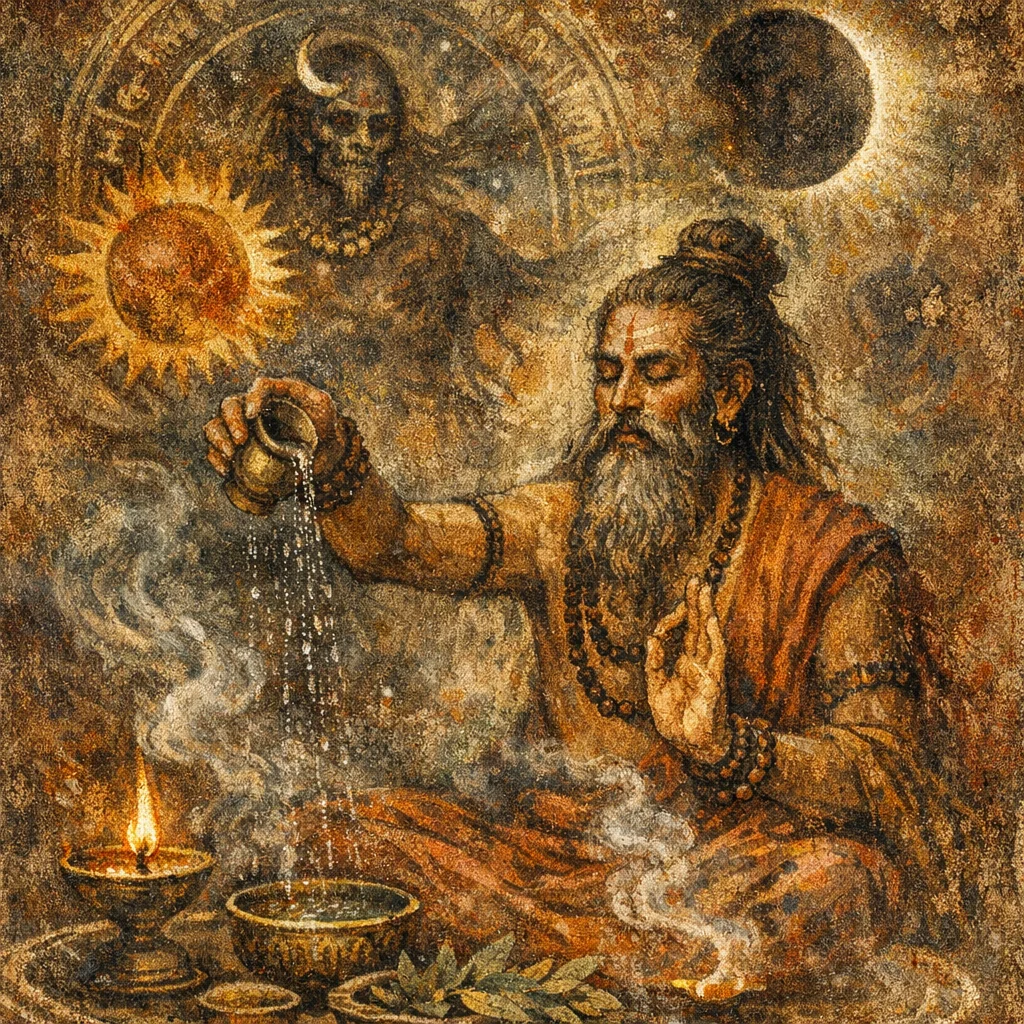
Sukta 53
Rishi: Traditionally associated with Atharvanic seers; specific r̥ṣi attribution varies by ancillary tradition for late-book hymns.
Devata: Kāla (Time) as supreme lord; cosmogonic overlordship over Prajāpati.
Chandas: Anuṣṭubh (late Atharvanic style; four pādas of ~8 syllables).
Mantras
Mantra 1
कालः। कालो अश्वो वहति सप्तरश्मिः सहस्राक्षो अजरो भूरिरेताः । तमा रोहन्ति कवयो विपश्चितस्तस्य चक्रा भुवनानि विश्वा
Time—Time is the Steed that beareth on, with seven reins, thousand-eyed, unaging, of plenteous seed. Him mount the Poets, the discerning sages: his wheels are all the worlds that be.
Mantra 2
सप्त चक्रान् वहति काल एष सप्तास्य नाभीरमृतं न्वक्षः । स इमा विश्वा भुवनान्यञ्जत् कालः स ईयते प्रथमो नु देवः
Seven wheels doth Time, even this, bear onward; seven-mouthed is he—his hubs are Immortality, his axle fixed. He ordered and arrayed these worlds, all of them: Time—he moveth on, the first indeed of powers divine.
Mantra 3
पूर्णः कुम्भोऽधि काल आहितस्तं वै पश्यामो बहुधा नु सन्तः। स इमा विश्वा भुवनानि प्रत्यङ्कालं तमाहुः परमे व्योमन्
A full jar is set above—Time is laid thereon: him verily we behold, existing now in many a fashion. He, turning all these worlds back toward himself,—him in the highest heaven they call ‘Time.’
Mantra 4
स एव सं भुवनान्याभरत् स एव सं भुवनानि पर्यैत्। पिता सन्नभवत् पुत्र एषां तस्माद् वै नान्यत् परमस्ति तेजः
He verily brought the worlds together; he verily went round about the worlds. Being their father, he became their son: therefore, indeed, no other splendour is higher than he.
Mantra 5
कालोऽमूं दिवमजनयत् काल इमाः पृथिवीरुत। काले ह भूतं भव्यं चेषितं ह वि तिष्ठते
Time generated yonder heaven; Time also these broad earths. In Time, indeed, what hath been and what shall be, and what is set in motion—therein it standeth forth, distributed and established.
Mantra 6
कालो भूतिमसृजत काले तपति सूर्यः । काले ह विश्वा भूतानि काले चक्षुर्वि पश्यति
Time sent forth prosperity; in Time the Sun giveth heat. In Time, indeed, are all beings; in Time the eye beholdeth clearly.
Mantra 7
काले मनः काले प्राणः काले नाम समाहितम्। कालेन सर्वा नन्दन्त्यागतेन प्रजा इमाः
In Time is mind; in Time is breath; in Time is name established fast. By Time, when it hath come, all these creatures—these offspring—rejoice and flourish.
Mantra 8
काले तपः काले ज्येष्ठं काले ब्रह्म समाहितम्। कालो ह सर्वस्येश्वरो यः पितासीत् प्रजापतेः
In Time is fervid austerity; in Time is the Highest set; in Time is holy Brahman firmly stablished. Time, verily, is lord of all—he who was father of Prajāpati.
Mantra 9
तेनेषितं तेन जातं तदु तस्मिन् प्रतिष्ठितम्। कालो ह ब्रह्म भूत्वा बिभर्ति परमेष्ठिनम्
By him impelled, by him brought forth—thereon, in him, it standeth firmly founded. Time, verily, becoming Brahman, beareth up the Highest (Parameṣṭhin).
Mantra 10
कालः प्रजा असृजत कालो अग्रे प्रजापतिम्। स्वयंभूः कश्यपः कालात् तपः कालादजायत
Time sent forth the creatures; Time, in the beginning, brought Prajāpati to birth. Self-existent Kaśyapa—from Time was born; from Time was born austere Heat (tapas).
Frequently Asked Questions
Here Kāla is both: Time as the universal measure and a personified sovereign power. The hymn treats Kāla as the lord who generates and orders the cosmos, not merely a clock-like sequence.
It is a theological statement of supremacy: even Prajāpati (a key creator figure) is placed under Time’s prior authority. The point is that creation and ritual order depend on Kāla’s governance.
It functions primarily as a śānti and authorization hymn: recited to steady the mind and the rite, to mark beginnings and transitions, and to align actions with auspicious timing (avoiding ‘untimely’ outcomes).