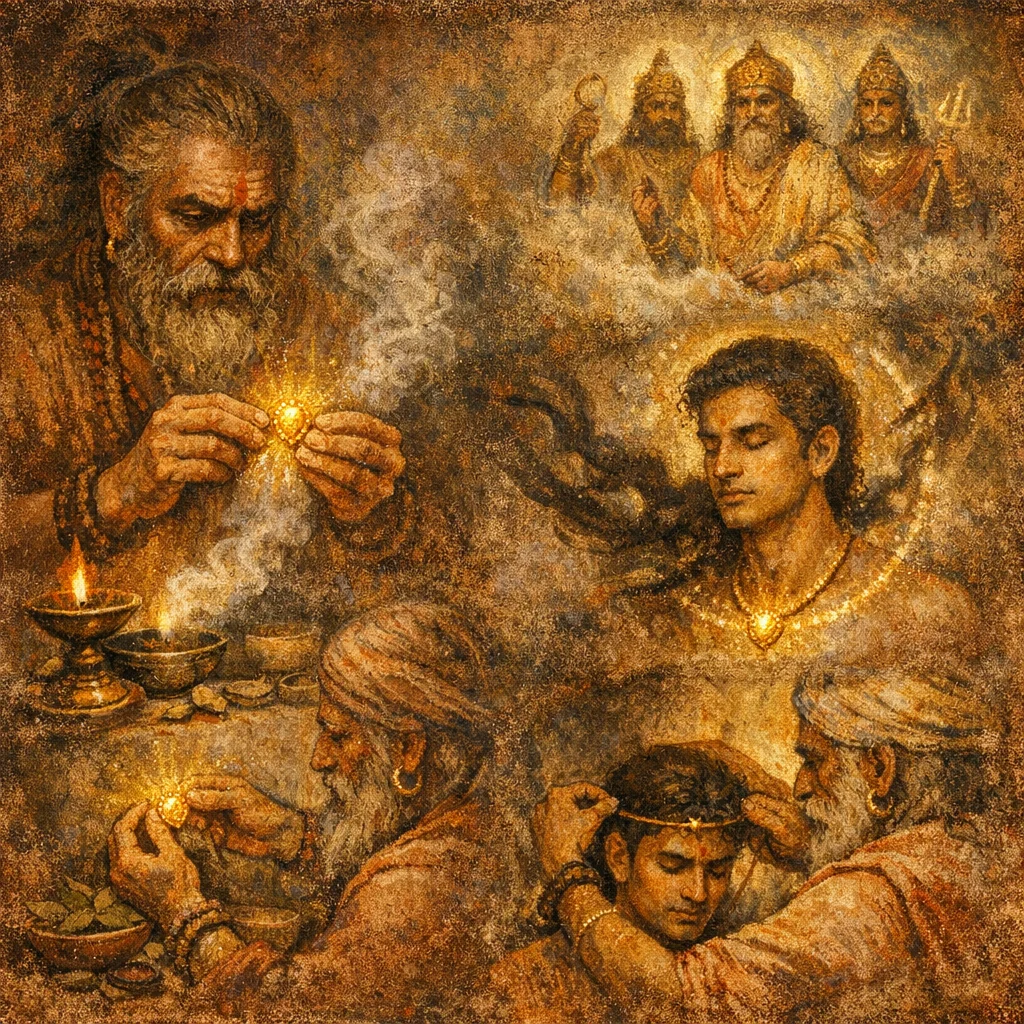
Sukta 26
Rishi: Atharvanic tradition (late book; r̥ṣi attribution variable in anukramaṇīs)
Devata: Hiraṇya (as amulet) with Agni as source of tejas
Chandas: Anuṣṭubh (approx.)
Mantras
Mantra 1
हिरण्यधारणम्। अग्नेः प्रजातं परि यद्धिरण्यममृतं दध्रे अधि मर्त्येषु । य एनद् वेद स इदेनमर्हति जरामृत्युर्भवति यो बिभर्ति
This gold, born of Agni, which, deathless, is set as a circlet upon mortals—he who knoweth it, he verily is meet for it; old age and death become (as it were) his portion to be put away, who beareth it.
Mantra 2
यद्धिरण्यं सूर्येण सुवर्णं प्रजावन्तो मनवः पूर्व ईषिरे। तत् त्वा चन्द्रं वर्चसा सं सृजत्यायुष्मान् भवति यो बिभर्ति
That gold which, made fair-hued by the Sun, the ancient Manus, rich in offspring, sought after—this doth it wholly join to thee with shining splendour; long-lived is he who beareth it.
Mantra 3
आयुषे त्वा वर्चसे त्वौजसे च बलाय च । यथा हिरण्यतेजसा विभासासि जनाँ अनु
For life I set thee on; for splendour I set thee on; for vigour and for strength—so that with golden brightness thou mayest shine forth among the people.
Mantra 4
यद् वेद राजा वरुणो वेद देवो बृहस्पतिः । इन्द्रो यद् वृत्रहा वेद तत् त आयुष्यं भुवत् तत् ते वर्चस्यं भुवत्
What King Varuṇa knoweth, what the god Bṛhaspati knoweth, what Indra, Vṛtra-slayer, knoweth—may that be for thee life-giving; may that be for thee splendour-giving.
Frequently Asked Questions
To consecrate and wear gold as a protective amulet that promotes long life (āyus), splendour (varcas), vigour (ojas), and strength (bala), while averting decline and danger.
Because the hymn treats gold’s brilliance (tejas) as Agni-born—Agni is the cosmic source of radiance that is ‘condensed’ into wearable hiraṇya.
No. The essential item is clean gold worn as an ornament/amulet; simple purification with water and focused recitation while placing it on the body is the basic procedure.