Sukta 28
Rishi: Atharvanic/Angiras-type attribution (exact r̥ṣi for 1.28 requires full anukramaṇī data).
Devata: Counter-sorcery against a yātudhānī/witch-like female agent (functional ‘devatā’ is the addressed/targeted malefic power).
Chandas: Anuṣṭubh-like (requires full metrical verification; pāda division suggests a common AV śloka cadence).
Mantras
Mantra 1
रक्षोघ्नम्। उप प्रागाद् देवो अग्नी रक्षोहामीवचातनः । दहन्नप द्वयाविनो यातुधानान् किमीदिनः
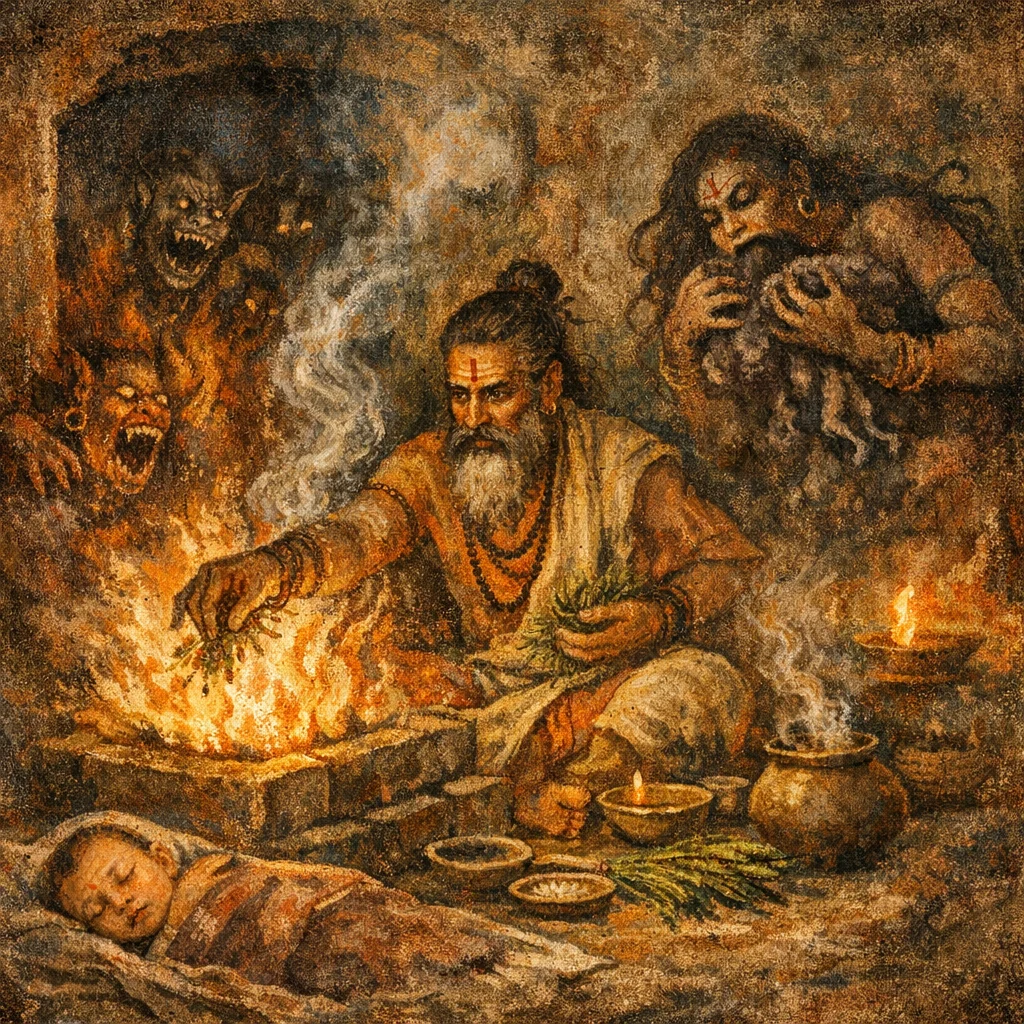
Forth hath advanced the god, even Agni, slayer of the Rákṣasas, the banisher of disease; burning away the double-dealing ones—Yātudhānas and Kīmīdins—he driveth them off.
Mantra 2
प्रति दह यातुधानान् प्रति देव किमीदिनः । प्रतीचीः कृष्णवर्तने सं दह यातुधान्यः
Burn back the Yātudhānas; burn back, O God, the Kimīdins. Turn them back, O black-tracked One: burn up utterly the Yātudhānī witches.
Mantra 3
या शशाप शपनेन याघं मूरमादधे। या रसस्य हरणाय जातमारेभे तोकमत्तु सा
She who with curse hath cursed, who hath laid on evil and benumbing spell; she who, to steal away the vital sap, hath fallen upon the new-born child—let her, that woman, devour (her own) offspring.
Mantra 4
पुत्रमत्तु यातुधानीः स्वसारमुत नप्त्यऽम्। अधा मिथो विकेश्यो३वि घ्नतां यातुधान्यो३वि तृह्यन्तामराय्यः
Let the Yātudhānī demonesses devour their own son, their sister also, and their descendant. Then, with hair unbound, let them smite each other asunder; yea, let the Yātudhānīs be torn in pieces—those hostile wretches.
Frequently Asked Questions
It addresses witchcraft-like harm: curses, stupefying spells, and attacks that drain a newborn/child’s vitality. The hymn’s strategy is to repel and ‘burn back’ the hostile force and make the harm return to its sender.
This is a pratyāvartana (reversal) image: the malefic power is compelled to recoil upon the one who launched it. The language is imprecatory and symbolic of total neutralization—harm collapses inward rather than reaching the victim.
Not according to the hymn’s wording: it works primarily through spoken command and the imagery of burning/reversal. Practically, reciters may use a household fire as a focus and simple purification (clean water, a marked safe space), but no specific substance is required by the text.