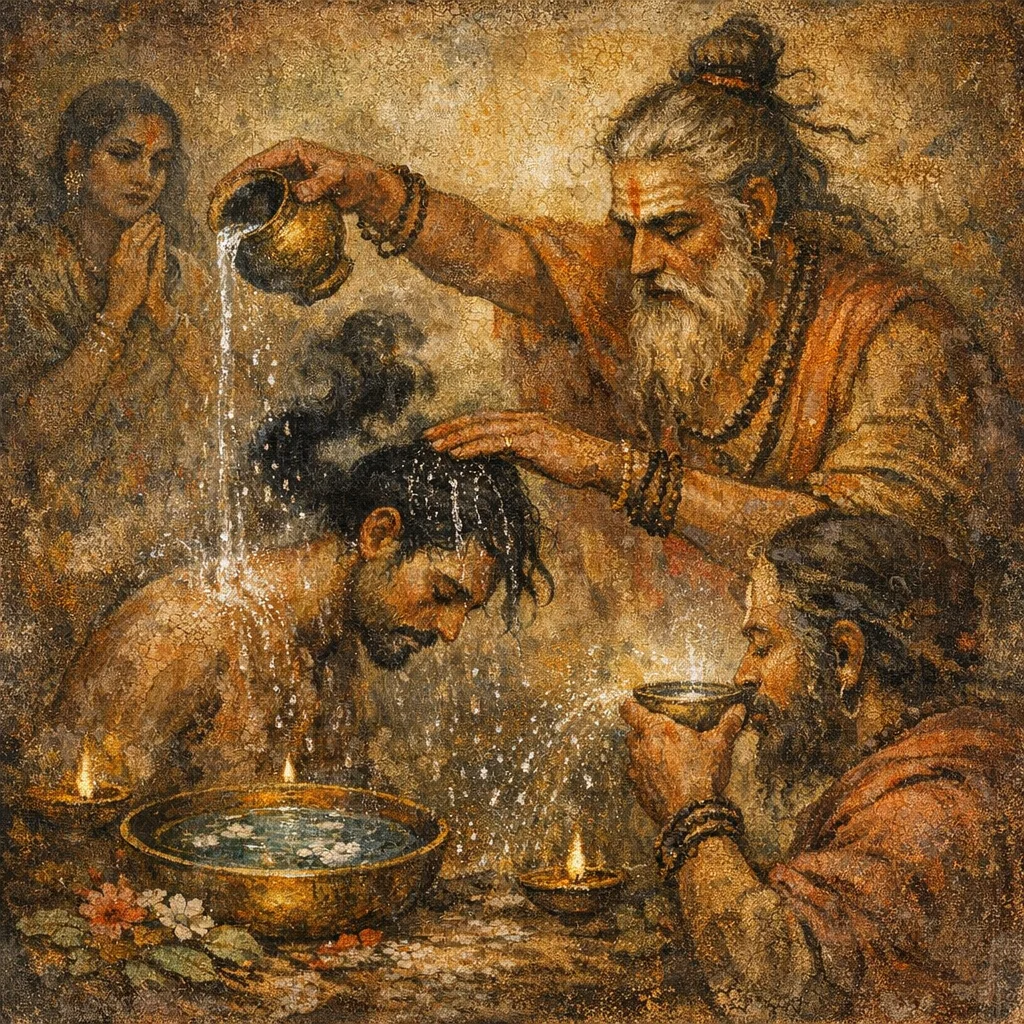
Sukta 5
Rishi: Atharvanic tradition (often transmitted under Atharvan/Angiras attribution for apas-healing formulae; specific r̥ṣi not stated in the given excerpt)
Devata: Āpaḥ (the Waters), personified as a sovereign healing power
Chandas: Anuṣṭubh (probable; short pāda structure consistent with common AV meters)
Mantras
Mantra 1
अपां भेषजम्। आपो हि ष्ठा मयोभुवस्ता न ऊर्जे दधातन । महे रणाय चक्षसे
A medicine are the Waters. For ye, O Waters, are indeed the bringers-forth of delight: those same bestow upon us vigor, for mighty battle, and for sight.
Mantra 2
यो वः शिवतमो रसस्तस्य भाजयतेह नः । उशतीरिव मातरः
Whoso of you hath sap most blest and kindly—of that, even here, vouchsafe to give us portion; like mothers gladly yearning (to nourish).
Mantra 3
तस्मा अरं गमाम वो यस्य क्षयाय जिन्वथ । आपो जनयथा च नः
Therefore, duly would we resort to you, O Waters—whose power it is to quicken for secure abode; and, O Waters, do ye also beget for us (our good).
Mantra 4
ईशाना वार्याणां क्षयन्तीश्चर्षणीनाम्। अपो याचामि भेषजम्
Sovereign of the waters, dwelling-place of the peoples, I supplicate the Waters for medicine.
Frequently Asked Questions
It asks the Waters to become ‘medicine’—to cleanse impurity and illness, restore vitality, and bring stable well-being to the person and home.
Water is fetched cleanly, the verses are recited over it, and then it is used for sprinkling (purification) and, when appropriate, a small sip as a healing intake.
Rasa is the curative essence—especially associated with plants—understood as the kindly, nourishing potency that the Waters can carry and deliver for healing.