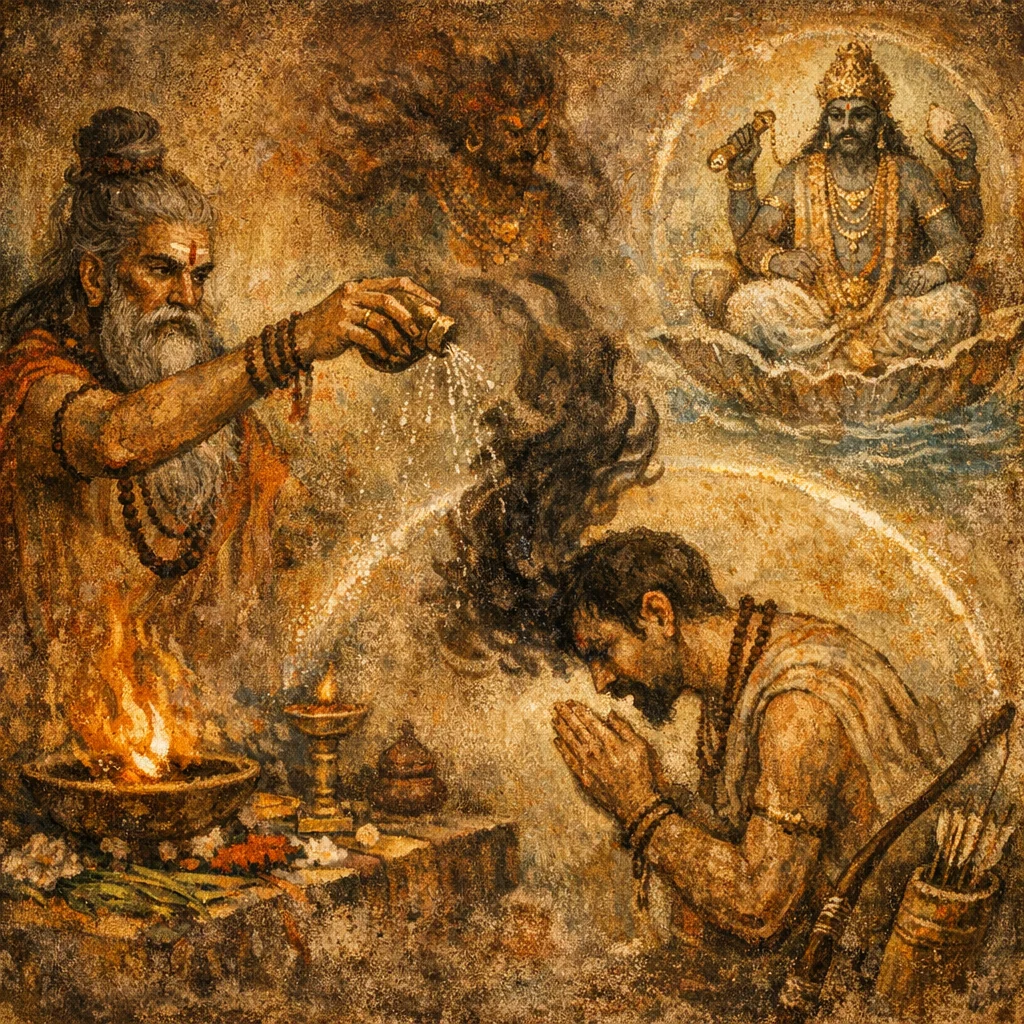
Sukta 10
Rishi: Atharvanic tradition (hymn attributed within the AV corpus to Atharvan/Angiras-type seers; precise r̥ṣi assignment depends on anukramaṇī tradition).
Devata: Varuṇa (as satyadharman, binder and releaser through rite).
Chandas: Anuṣṭubh (4 pādas; the transmitted text shows a danda break consistent with anuṣṭubh cadence).
Mantras
Mantra 1
पाप -विमोचनम्। अयं देवानामसुरो वि राजति वशा हि सत्या वरुणस्य राज्ञः । ततस्परि ब्रह्मणा शाशदान उग्रस्य मन्योरुदिमं नयामि
A sin-releaser. This Asura of the Gods shines forth in sovereign might; for true is the controlling power of Varuṇa the King. Encompassing him with holy spell, expelling it, from the fierce Wrath I lead this forth and up.
Mantra 2
नमस्ते राजन् वरुणास्तु मन्यवे विश्वं ह्युऽग्र निचिकेषि द्रुग्धम् । सहस्रमन्यान् प्र सुवामि साकं शतं जीवाति शरदस्तवायम्
Homage to thee, O King Varuṇa: be (this) for thy Wrath. For thou, O fierce one, hast indeed taken note of every treachery. A thousand others, together, I send forth (in its stead): may this man, by thy leave, live a hundred autumns.
Mantra 3
यदुवक्थानृतं जिह्वया वृजिनं बहु। राज्ञस्त्वा सत्यधर्मणो मुञ्चामि वरुणादहम्
What falsehood thou hast uttered with the tongue—much crooked sin—therefrom, from Varuṇa whose ordinance is Truth, from the King’s (claim), I loose thee; I set thee free.
Mantra 4
मुञ्चामि त्वा वैश्वानरादर्णवान्महतस्परि । सजातानुग्रेहा वद ब्रह्म चाप चिकीहि नः
I loose thee forth from Vaiśvānara, from the ocean-flood, from the mighty one that hems thee round about. O connate Power, speak forth the spell; and, O Waters, take knowledge of us.
Frequently Asked Questions
It addresses the consequences of anṛta (false speech) and related wrongdoing, imagined as Varuṇa’s binding that can manifest as fear, constraint, illness, or punishment.
Because he embodies the law of truth: he binds when truth is violated and releases when truth is restored through acknowledgment and proper ritual speech.
No specific herb is required by the hymn. A simple rite using truthful intent, recitation, and optionally clean water (and a symbolic knot to untie) fits the hymn’s bond-release logic.