Adhyaya 170
प्रायश्चित्तानि (Expiations) — Association-Impurity, Purification Rites, and Graded Penance
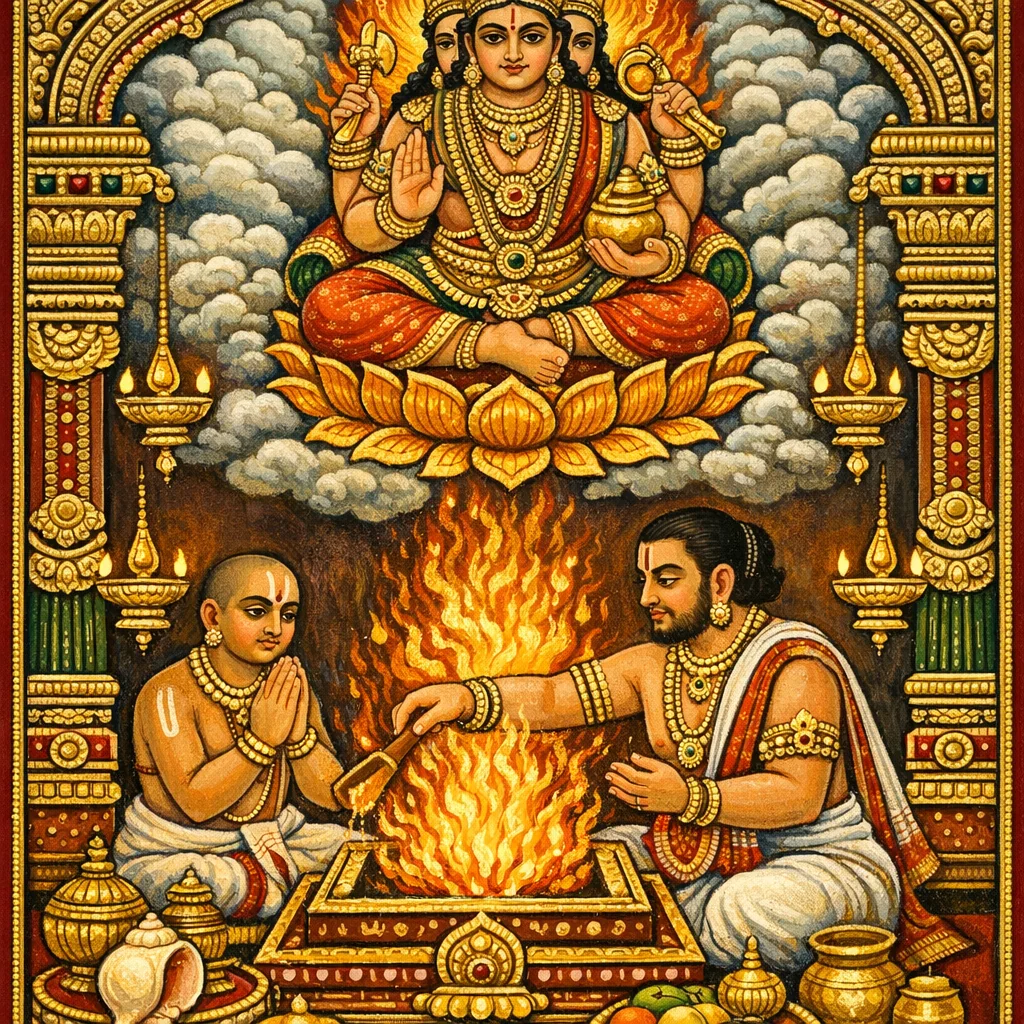
This chapter (Agni Purāṇa 170) systematizes prāyaścitta as a dharma-technology for restoring purity after transgression, especially where defilement spreads through social contact and ritual participation. Puṣkara warns that sustained association with a patita (fallen person) can cause one’s fall within a year, yet clarifies that culpable “association” arises through priestly service, instruction, or sexual relation—not merely sharing conveyance, food, or a seat. It then lays out a purification protocol: adopting the same observance as the fallen person, performing water-offering rites with sapinda kin, and making a preta-like ritual gesture (overturning a water-pot), followed by a day-and-night observance and regulated social interaction. The chapter proceeds with a graded catalogue of expiations—kṛcchra, tapta-kṛcchra, cāndrāyaṇa, parāka, śāntapana—mapped to specific impurities (contact with caṇḍālas, ucchiṣṭa, corpses, menstrual impurity, improper gifts, prohibited professions, ritual lapses). It integrates repentance (anutāpa) with homa, japa, fasting, pañcagavya, bathing, and re-initiation (upanayana/saṃskāra restoration), aligning personal purification with the maintenance of varṇāśrama order and ritual eligibility.
Shlokas
Verse 1
इत्य् आग्नेये महापुराणे प्रायश्चित्तानि नाम एकोनसप्तत्यधिकशततमो ऽध्यायः अथ सप्तत्यधिकशततमो ऽध्यायः प्रायश्चित्तानि पुष्कर उवाच महापापानुयुक्तानां प्रायश्चित्तानि वच्मिते संवत्सरेण पतति पतितेन सहाचरन्
Thus, in the Agni Mahāpurāṇa ends the chapter entitled “Prāyaścitta (Expiations),” the one-hundred-and-sixty-ninth. Now begins the one-hundred-and-seventieth chapter: “Expiations.” Puṣkara said: “I shall declare the expiations for those involved in great sins. One who keeps company with a fallen person (patita) becomes fallen within a year through that companionship.”
Verse 2
याजनाद्ध्यापनाद्यौनान्न तु यानाशनासनात् यो येन पतितेनैषां संसर्गं याति मानवः
The fault of “association with the fallen” is incurred by officiating at their sacrifices, by teaching them, or by sexual relations with them—but not merely by sharing a conveyance, food, or a seat. Whichever fallen person (patita) one engages with in these ways, through that person one is said to enter such tainted association.
Verse 3
स तस्यैव व्रतं कुर्यात्तत्संसर्गस्य शुद्धये पतितस्योदकं कार्यं सपिण्डैर् बान्धवैः सह
He should undertake that very observance (vrata) to purify the defilement caused by association with him; and the water-offering rite (udaka) for the “fallen” person should be performed together with his sapinda kinsmen and other relatives.
Verse 4
निन्दिते ऽहनि सायाह्णे ज्ञात्यृत्विग् गुरुसन्निधौ दासो घटमपां पूर्णं पर्यस्येत् प्रेतवत्पदा
On an inauspicious day, in the late afternoon, in the presence of kinsmen, the officiating priests (ṛtvij), and the preceptor (guru), a servant should overturn a water-pot filled with water using the foot, in the manner prescribed for rites connected with a preta (departed spirit).
Verse 5
अहोरात्रमुपासीतन्नशौचं बान्धवैः सह निवर्तयेरंस्तस्मात्तु ज्येष्ठांशम्भाषणादिके
He should observe the prescribed restraint for a full day and night; then that state of impurity (aśauca) would cease, along with the relatives. Therefore, during that period one should also avoid speaking with elders and similar interactions.
Verse 6
ज्येष्ठांशम्प्राप्नुयाच्चास्य यवीयान् गुणतो ऽधिकः महापापोपपन्नानामिति ङ प्रायश्चित्तं वदामि त इति झ प्रेतवत् सदेति ख , ग , घ , ङ च प्रायश्चित्ते तु चरिते पूर्णं कुम्भमपां नवं
In this case, the younger brother or kinsman should obtain the elder’s share, being superior in merit (guṇa). Concerning those tainted by great sins—so read the authorities—I shall state the expiation (prāyaścitta). (Some recensions read:) “one should be treated like a preta (departed/impure),” thus in the kha, ga, gha, and ṅa readings. When the expiation has been performed, one should present a new, full water-pot.
Verse 7
तेनैव सार्धं प्राश्येयुः स्नात्वा पुण्यजलाशये एवमेव विधिं कुर्युर्योषित्सु पपितास्वपि
Having bathed in a sacred reservoir of water, they should partake of the food together with him. In the same manner, this prescribed procedure should be carried out even in the case of women, even if they are in a fallen (sinful/outcaste) condition.
Verse 8
वस्त्रान्नपानन्देयन्तु वसेयुश् च गृहान्तिके तेषां द्विजानां सावित्री नानूद्येत यथाविधि
They should give them clothing, food, and drink, and have them stay near the house. For those dvija (twice-born men), the Sāvitrī (Gāyatrī) mantra should not be recited improperly, but only in the prescribed manner.
Verse 9
तांश्चारयित्वा त्रीन् कृछ्रान् यथाविध्युपनाययेत् विकर्मस्थाः परित्यक्तास्तेषां मप्येतदादिशेत्
Having made them undertake three Kṛcchra penances according to rule, one should, as prescribed, have them re-initiated through upanayana, thus restoring them. Those who have fallen into prohibited acts (vikarma) and have been excluded—this same injunction should be laid down for them as well.
Verse 10
जपित्वा त्रीणि सावित्र्याः सहस्त्राणि समाहितः मासङ्गोष्ठे पयः पीत्वा मुच्यते ऽसत्प्रतिग्रहात्
With a focused mind, having recited (japa) three thousand repetitions of the Sāvitrī (Gāyatrī) mantra, and having drunk milk for a month in the company of cows (in a cowshed), one is freed from the fault of accepting improper gifts (asat-pratigraha).
Verse 11
ब्रात्यानां याजनं कृत्वा परेषामन्त्यकर्म च अभिचारमहीनानान्त्रिभिः कृच्छैर् व्यपोहति
Having performed yājana (priestly officiation) for brātyas (outcast/irregular persons) and having carried out for others the antya‑karman (last rites), one removes the demerit arising from such improper acts by undertaking three Kṛcchra penances.
Verse 12
शरणागतं परित्यज्य वेदं विप्लाव्य च द्विजः संवत्सं यताहारस्तत्पापमपसेधति
A twice-born man who has abandoned one who sought refuge and has violated or desecrated the Veda removes that sin by living for a year on regulated, restricted food (yatāhāra).
Verse 13
श्वशृगालखरैर् दष्टो ग्राम्यैः क्रव्याद्भिरेव च नरोष्ट्राश्वैर् वराहैश् च प्राणायामेन शुद्ध्यति
A man bitten by dogs, jackals, or donkeys—by domestic animals and likewise by flesh-eating creatures—and also by men, camels, horses, and boars, becomes purified through the practice of prāṇāyāma (regulated breath).
Verse 14
स्नातकव्रतलोपे च कर्मत्यागे ह्य् अभोजनं हुङ्कारं ब्राह्मणस्योक्त्वा त्वङ्करञ्च गरीयसः
If a snātaka violates his prescribed observances or abandons his obligatory rites, he should undertake abhojana (fasting). Uttering the syllable “huṅ” toward a brāhmaṇa, and likewise the graver expression “tvaṅ‑kara”, is a fault requiring expiation.
Verse 15
स्नात्वानश्नन्नहःशेषमभिवाद्य प्रसादयेत् अवगूर्य चरेक्षच्छ्रमतिकृच्छ्रन्निपातने
Having bathed and abstained from food for the remainder of the day, one should offer abhivādya (respectful salutations) and seek prasāda (gracious approval) from elders or the deities. Having rinsed and cleansed oneself (avagūrya), one should proceed carefully; if one falls, there follow fatigue and hardship.
Verse 16
कृच्छ्रातिकृच्छ्रं कुर्वीत विप्रस्योत्पाद्य शोणितं न युज्येतेति ख कृच्छ्रैर् विशुद्ध्यति इति ग , घ , ङ च नरोष्टविड्वराहैश्चेति ङ क्रूङ्कारमिति ख , घ , छ च ओङ्कारमिति ग , ङ च हङ्कारञ्चेति ख चाण्डालादिरविज्ञातो यस्य तिष्ठेत वेश्मनि
If one causes a brāhmaṇa’s blood to flow, one should undertake the “kṛcchrātikṛcchra,” a more severe form of the kṛcchra penance. (Some recensions add, “otherwise it is not permissible/appropriate”; others read, “one is purified by kṛcchra-penances.”) (One recension also mentions impurities connected with humans, camels, pigs, and boars.) Certain manuscript readings prescribe expiatory utterances such as “krūṅ,” “oṃ,” and “haṃ.” If an unknown outcaste (such as a caṇḍāla) stays in someone’s house, a purificatory remedy/penance is to be undertaken.
Verse 17
सम्यग् ज्ञातस्तु कालेन तस्य कुर्वीत शोधनं चान्द्रायणं पराकं वा द्विजानान्तु विशोधनं
When the offence or impurity is correctly ascertained together with its proper time and circumstances, one should perform its purification—either the Cāndrāyaṇa penance or the Parāka penance; this is the means of purification for the twice-born (dvijas).
Verse 18
प्राजापत्यन्तु शूद्राणां शेषन्तदनुसारतः गुंडङ्कुसुम्भं लवणं तथा धान्यानि यानि च
For Śūdras, the (mode of livelihood) is of the prājāpatya type; the rest is to be followed in accordance with that. (They may deal in) guṇḍa, safflower (kusumbha), salt, and whatever grains there are.
Verse 19
कृत्वा गृहे ततो द्वारि तेषान्दद्याद्धुताशनं मृणमयानान्तु भाण्डानां त्याग एव विधीयते
After performing (the rite) within the house, then at the doorway one should offer those (remnants/used items) to the Fire, Hutāśana. In the case of earthen vessels, only their discarding is prescribed.
Verse 20
द्रव्याणां परिशेषाणां द्रव्यशुद्धिर्विधीयते कूपैकपानसक्ता ये स्पर्शात्सङ्कल्पदूषिताः
For leftover portions of substances, a specific purification of the substance is prescribed—especially for those intent on drinking only from a single well, who become tainted by touch because an (impure) intention has defiled their resolve.
Verse 21
शुद्ध्येयुरुपवासेन पञ्चगव्येन वाप्यथ यस्तु संस्पृश्य चण्डालमश्नीयाच्च स्वकामतः
They should be purified either by fasting or else by taking pañcagavya. But whoever, after touching a caṇḍāla, eats food intentionally, incurs impurity requiring expiation.
Verse 22
द्विजश्चान्द्रायणं कुर्यात्तप्तकृच्छ्रमथापि वा भाण्डसङ्कलसङ्कीर्णश्चाण्डालादिजुगुप्सितैः
If a twice-born man is defiled through contact with objects such as vessels and fetters associated with outcastes like a caṇḍāla and other reprehensible persons, he should perform the Cāndrāyaṇa penance, or alternatively the Tapta-Kṛcchra.
Verse 23
भुक्त्वापीत्वा तथा तेषां षड्रात्रेण विशुद्ध्यति अन्त्यानां भुक्तशेषन्तु भक्षयित्वा द्विजातयः
Having eaten or drunk what is associated with them, one becomes purified after six nights. But if the twice-born consume the leftovers eaten by the antyas (those of the last condition), it is a graver transgression requiring the prescribed purification.
Verse 24
व्रतं चान्द्रायणं कुर्युस्त्रिरात्रं शूद्र एव तु चण्डालकूपभाण्डेषु अज्ञानात्पिवते जलं
If a Śūdra, through ignorance, drinks water from a caṇḍāla’s well or from vessels belonging to a caṇḍāla, he should undertake the Cāndrāyaṇa vow; alternatively, a three-night observance is prescribed.
Verse 25
द्विजः शान्तपनं कुर्याच्छूद्रश्चोपवसेद्दिनं चण्डालेन तु संस्पृष्टो यस्त्वपः पिवते द्विजः
A twice-born man should perform the Śāntapana expiation, and a Śūdra should fast for one day. But a twice-born who, after being touched by a caṇḍāla, drinks water, is enjoined to undertake the prescribed expiation.
Verse 26
त्रिरात्रन्तेन कर्तव्यं शूद्रश्चोपवसेद्दिनं उच्छिष्टेन यदि स्पृष्टः शुना शूद्रेण वा द्विजः
If a twice-born (dvija) is touched by leftovers (ucchiṣṭa)—or by a dog, or by a Śūdra—he should observe a three-night expiation; and the Śūdra should fast for one day.
Verse 27
स्पर्शसङ्कल्पभूषिता इति झ संसृष्ट इति क यदेति ख , ग , घ , ङ , छ च उपोष्य रजनीमेकां पञ्चगव्येन शुद्ध्यति वैश्येन क्षत्रियेणैव स्नानं नक्तं समाचरेत्
“Adorned by intention at the time of contact” (jha); “mixed/contaminated” (ka); and “when/if it is so” (kha, ga, gha, ṅa, cha as well). Having fasted for a single night, one becomes purified by taking pañcagavya. A Vaiśya and likewise a Kṣatriya should duly perform the night-bath (i.e., bathe in the evening as the prescribed observance).
Verse 28
अध्वानं प्रस्थितो विप्रः कान्तारे यद्यनूदके पक्वान्नेन गृहीतेन मूत्रोच्चारङ्करोति वै
When a brāhmaṇa has set out on a journey, if he is in a wilderness where there is no water, he should perform urination using cooked food that he has taken with him.
Verse 29
अनिधायैव तद्द्रव्यं अङ्गे कृत्वा तु संस्थितं शौचं कृत्वान्नमभ्युक्ष्य अर्कस्याग्नेयश् च दर्शयेत्
Without setting that substance down, keeping it upon one’s body and remaining steady, one should perform purification (śauca); then, after sprinkling the food as an offering, one should present it to Sūrya (Arka) and to Agni in the agneya (fire) direction.
Verse 30
म्लेच्छैर् गतानां चौरैर् वा कान्तारे वा प्रवासिनां भक्ष्याभक्ष्यविशुद्ध्यर्थं तेषां वक्ष्यामिनिष्कृतिं
For those who have been among foreigners (mlecchas), or among thieves, or who have lived as travelers in a wilderness, I shall state the expiatory rite (niṣkṛti) for their purification regarding what is permissible and impermissible to eat.
Verse 31
पुनः प्राप्य स्वदेशञ्च वर्णानामनुपूर्वशः कृच्छ्रस्यान्ते ब्राह्मणस्तु पुनः संस्कारमर्हति
Having again reached his own country and been restored, in due order, among the varṇas, at the completion of the Kṛcchra expiation the Brāhmaṇa becomes entitled to undergo the purificatory rite (saṃskāra) once more.
Verse 32
पादोनान्ते क्षत्रियश् च अर्धान्ते वैश्य एव च पादं कृत्वा तथा शूद्रो दानं दत्वा विशुद्ध्यति
When only a quarter remains of the prescribed expiation, the Kṣatriya is purified; when half remains, the Vaiśya is purified; likewise, the Śūdra, having performed only a quarter and then giving a gift (dāna), becomes purified.
Verse 33
उदक्या तु सवर्णा या स्पृष्टा चेत् स्यादुदक्यया तस्मिन्नेवाहनि स्नाता शुद्धिमाप्नोत्यसंशयं
If a woman of the same varṇa, while being in her menses (udakyā), is touched by another menstruating woman, then—having bathed on that very day—she undoubtedly attains purification.
Verse 34
रजस्वला तु नाश्नीयात् संस्पृष्टा हीनवर्णया यावन्न शुद्धिमाप्नोति शुद्धस्नानेन शुद्ध्यति
A menstruating woman should not eat in that state. If she has been touched by a woman of lower varṇa-status, she should abstain until she attains purification; she becomes purified by a proper purificatory bath.
Verse 35
मूत्रं कृत्वा व्रजन्वर्त्म स्मृतिभ्रंशाज्जलं पिवेत् अहोरात्रोषितो भूत्वा पञ्चगव्येन शुद्ध्यति
If, after urinating while going along the road, a person—through lapse of mindfulness—drinks water (without due consideration), then, having remained (in a state requiring expiation) for one day and one night, he becomes purified by taking/using pañcagavya.
Verse 36
मूत्रोच्चारं द्विजः कृत्वा अकृत्वा शौचमात्मनः मोहाद्भुक्त्वा त्रिरात्रन्तु यवान् पीत्वा विशुद्ध्यति
If a twice-born (dvija), after urinating, out of delusion eats without performing personal purification (śauca), then by drinking barley-water (a yava preparation) for three nights he becomes purified.
Verse 37
ये प्रत्यवसिता विप्राः प्रव्रज्यादिबलात्तथा भक्ष्यभोज्यविशुद्ध्यर्थमिति झ लोभाद्भुक्त्वेति ख , ग , घ , ङ , छ च अनाशकनिवृताश् च तेषां शुद्धिः प्रचक्ष्यते
For those brāhmaṇas who have undertaken a fixed observance, and likewise for those compelled by circumstances such as renunciation (pravrajyā); and for those who ate with the thought, “this is for the purification of what is edible and drinkable,” as well as those who ate out of greed; also for those who have desisted from fasting (i.e., broken a fast)—their purification (the requisite expiation) is now declared.
Verse 38
चारयेत्त्रीणि कृच्छ्राणि चान्द्रायणमथापि वा जातकर्मादिसंस्कारैः संस्कुर्यात्तं तथा पुनः
He should perform three Kṛcchra penances, or else the Cāndrāyaṇa vow; and then he should again duly invest him with the life-cycle sacraments (saṃskāras) beginning with Jātakarman.
Verse 39
उपानहममेध्यं च यस्य संस्पृशते मुखं मृत्तिकागोमयौ तत्र पञ्चगव्यञ्च शोधनं
If a sandal (upānaha) or any impure substance touches one’s mouth, purification is to be performed there using clay and cow-dung, and also by applying or taking pañcagavya (the five products of the cow).
Verse 40
वापनं विक्रयञ्चैव नीलवस्त्रादिधारणं तपनीयं हि विप्रस्य त्रिभिः कृछ्रैर् विशुद्ध्यति
Shaving (for improper reasons), trading (as a profession), and wearing blue garments and the like—these are indeed improper for a brāhmaṇa; he becomes purified from them by performing three Kṛcchra penances.
Verse 41
अन्त्यजातिश्वपाकेन संस्पृष्टा स्त्री रजस्वला चतुर्थे ऽहनि शुद्धा सा त्रिरात्रं तत्र आचरेत्
A menstruating woman, if touched and thereby defiled by a person of the lowest caste (a caṇḍāla/outcaste), becomes purified on the fourth day; thereafter she should observe, in that place, the prescribed restraint and conduct for three nights.
Verse 42
चाण्डालश्वपचौ स्पृष्ट्वा तथा पूयञ्च सूतिकां शवं तत्स्पर्शिनं स्पृष्ट्वा सद्यः स्नानेन शुद्ध्यति
Having touched a caṇḍāla or a dog-cooker, likewise pus, a woman in post-partum impurity (sūtikā), a corpse, or one who has touched a corpse—one is purified immediately by bathing.
Verse 43
नारं स्पृष्ट्वास्थि सस्नेहं स्नात्वा विप्रो विशुद्ध्यति रथ्यार्कद्दमतोयेन अधीनाभेर्मृदोदकैः
If a brāhmaṇa touches a human corpse or a bone still bearing oily or fleshy residue, he becomes purified by bathing—whether with street-water, sun-warmed water, muddy water, or water taken from below the navel.
Verse 44
वान्तो विविक्तः स्नात्वा तु घृतं प्राश्य विशुद्ध्यति स्नानात् क्षुरकर्मकर्ता कृच्छ्रकृद्ग्रहणे ऽन्नभुक्
One who has vomited should remain apart in seclusion; after bathing, he becomes purified by sipping or taking ghṛta (ghee). After bathing, the performer of ritual shaving (tonsure) is purified; and upon undertaking the Kṛcchra penance, one should partake of food in accordance with that observance.
Verse 45
अपाङ्क्तेयाशी गव्याशी शुना दष्टस् तथा शुचिः कृमिदष्टश्चात्मघाती कृच्छ्राज्जप्याच्च होमतः
One who has eaten what renders him unfit to sit in the ritual dining line, one who has eaten beef, one bitten by a dog, and likewise one afflicted by impurity; one bitten by worms or insects; and even a self-slayer—all such persons are purified through the Kṛcchra penance, through prescribed japa (mantra-recitation), and through homa (fire-offering).
Verse 46
होमाद्यैश्चानुतापेन पूयन्ते पापिनो ऽखिलाः
By rites beginning with homa (fire-offering), and also by heartfelt repentance, all sinners are purified.
Frequently Asked Questions
Officiating at their sacrifices (yājana), teaching them (adhyāpana), or sexual relations; not merely sharing conveyance, food, or a seat.
By prescribing graded penances (kṛcchra, cāndrāyaṇa, parāka, etc.), supported by bathing, pañcagavya, japa/homa, and—where required—formal restoration via upanayana and renewed saṃskāras.
The chapter explicitly states that sinners are purified not only by rites such as homa but also by heartfelt repentance, treating inner contrition as a necessary companion to external expiation.