Dashati 1
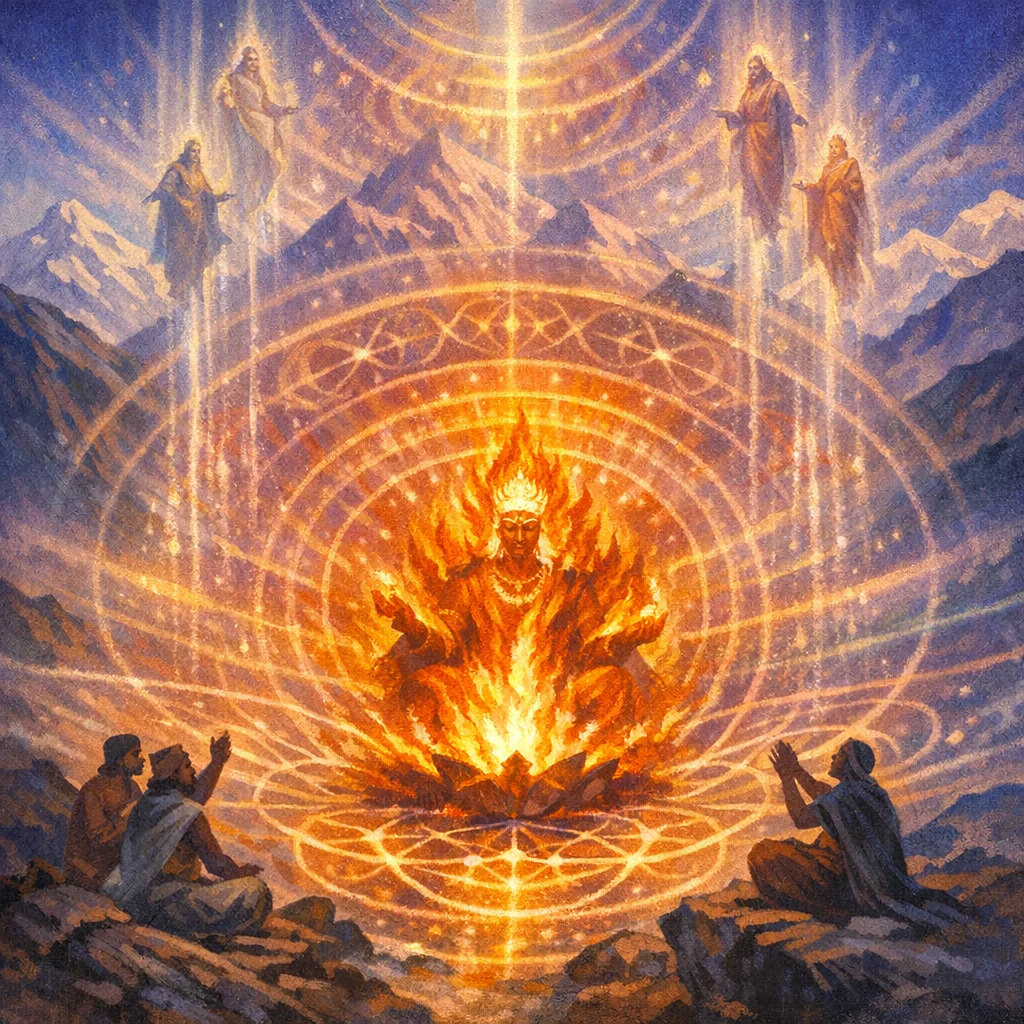
Agni as the invited sacrificial guest who manifests among men with the gods and removes obstacles to the rite
Agni
Invocatory and bright—welcoming yet forceful moving from invitation to triumphant efficacy
R̥ṣi attribution is not determinable from the provided dashati excerpt alone; identification requires mapping each sāman-verse to its underlying Ṛgvedic ṛk and its traditional r̥ṣi assignment.
অগ্নিকে যজ্ঞসমাবেশে দেবীয় অতিথি রূপে আহ্বান করে দেবগণের সঙ্গে মানুষের মধ্যে প্রতিষ্ঠিত করা হয়। স্তব ও ভক্তিপূর্ণ প্রজ্বালনে তিনি যজ্ঞের রক্ষক হয়ে বিঘ্ন/বৃত্রসদৃশ বাধা বিনাশ করেন, হবি দেবদের কাছে পৌঁছে দেন এবং সফল আহুতির ফলে ধন, মঙ্গল ও শুভ ফল দান করেন।
Mantras
Mantra 2
देवेभिर्मानुषे जने
দেবগণের সঙ্গে, মানুষের মাঝে—উপাসকদের সভায়—(তুমি) উপস্থিত থাকো।
Mantra 3
अग्निं दूतं वृणीमहे होतारं विश्ववेदसम् अस्य यज्ञस्य सुक्रतुम्
আমরা অগ্নিকে দূতরূপে বরণ করি—হোতা, বিশ্ববেদস্ (সর্বজ্ঞ), এই যজ্ঞের সুক্রতু (সু-নিয়োজিত, প্রজ্ঞাবান কর্তা)কে।
Mantra 4
अग्निर्वृत्राणि जङ्घनद्द्रविणस्युर्विपन्यया समिद्धः शुक्र आहुतः
অগ্নি, দ্রবিণস্যু (ধন-ইচ্ছুক/ধন-দাতা), বৃত্রদের পদদলিত/পরাস্ত করেছেন; স্তোত্রে সমিদ্ধ, দীপ্তিমান, এবং আহুতিতে পুষ্ট।
Mantra 5
प्रेष्ठं वो अतिथिं स्तुषे मित्रमिव प्रियम् अग्ने रथं न वेद्यम्
আমি অগ্নির স্তব করি—তোমাদের পরম প্রিয় অতিথি, মিত্রের মতো প্রিয়; যজ্ঞে রথের ন্যায় বরণীয়, বেদীতে অন্বেষণীয়।
Mantra 6
त्वं नो अग्ने महोभिः पाहि विश्वस्या अरातेः उत द्विषो मर्त्यस्य
হে অগ্নি! তোমার মহাশক্তি দ্বারা আমাদের রক্ষা করো—সমস্ত অনিষ্ট থেকে, এবং নশ্বর মানুষের বিদ্বেষ থেকেও।
Mantra 7
एह्यू षु ब्रवाणि ते ऽग्न इत्थेतरा गिरः एभिर्वर्धास इन्दुभिः
এসো, নিশ্চয়ই এসো; হে অগ্নে, আমি তোমাকে বিধিমতো এই ও অন্যান্য গিরঃ (স্তোত্র-বাণী) উচ্চারণ করি; এই স্তুতিগুলির দ্বারা এবং ইন্দু (সোম) ধারার দ্বারা তোমার বৃদ্ধি হোক।
Mantra 9
त्वामग्ने पुष्करादध्यथर्वा निरमन्थत मूर्ध्नो विश्वस्य वाघतः
হে অগ্নি! তোমাকে—পুষ্কর-জল থেকে, বিশ্বমস্তক থেকে—অথর্বণ মন্থন করে প্রকাশ করেছিলেন; আর সর্ব-আহুতি-দাতা বাঘত তোমাকে যজ্ঞের জন্য (প্রথমে) উৎপন্ন করেছিলেন।
Mantra 10
अग्ने विवस्वदा भरास्मभ्यमूतये महे देवो ह्यसि नो दृशे
হে অগ্নি! বিবস্বানের দীপ্তিতে বিভূষিত হয়ে আমাদের জন্য মহাযজ্ঞে সহায়তা (ঊতি) এনে দাও; কারণ তুমি দেব, আমাদের দর্শনের জন্য প্রকাশিত হও।
Frequently Asked Questions
It presents Agni as the invited sacrificial guest who becomes present in the human assembly together with the gods, protects the rite by crushing obstacles, and brings prosperity through successful offerings.
It highlights Agni’s mediating role: he stands at the junction of divine and human, making the sacrifice a shared space where gods are approached through the humanly organized ritual gathering.
In Sāyaṇa’s ritual reading, “Vṛtras” are obstructive forces that hinder the sacrifice and its fruit; Agni ‘crushes’ these impediments so the offering and its benefits can proceed without blockage.