Sarga 33
किष्किन्धाप्रवेशः—लक्ष्मणस्य कोपः, तारासान्त्वम्, सुग्रीवदर्शनम् (Lakshmana Enters Kishkindha: Anger, Tara’s Mediation, and Sugriva Encountered)
किष्किन्धाकाण्ड
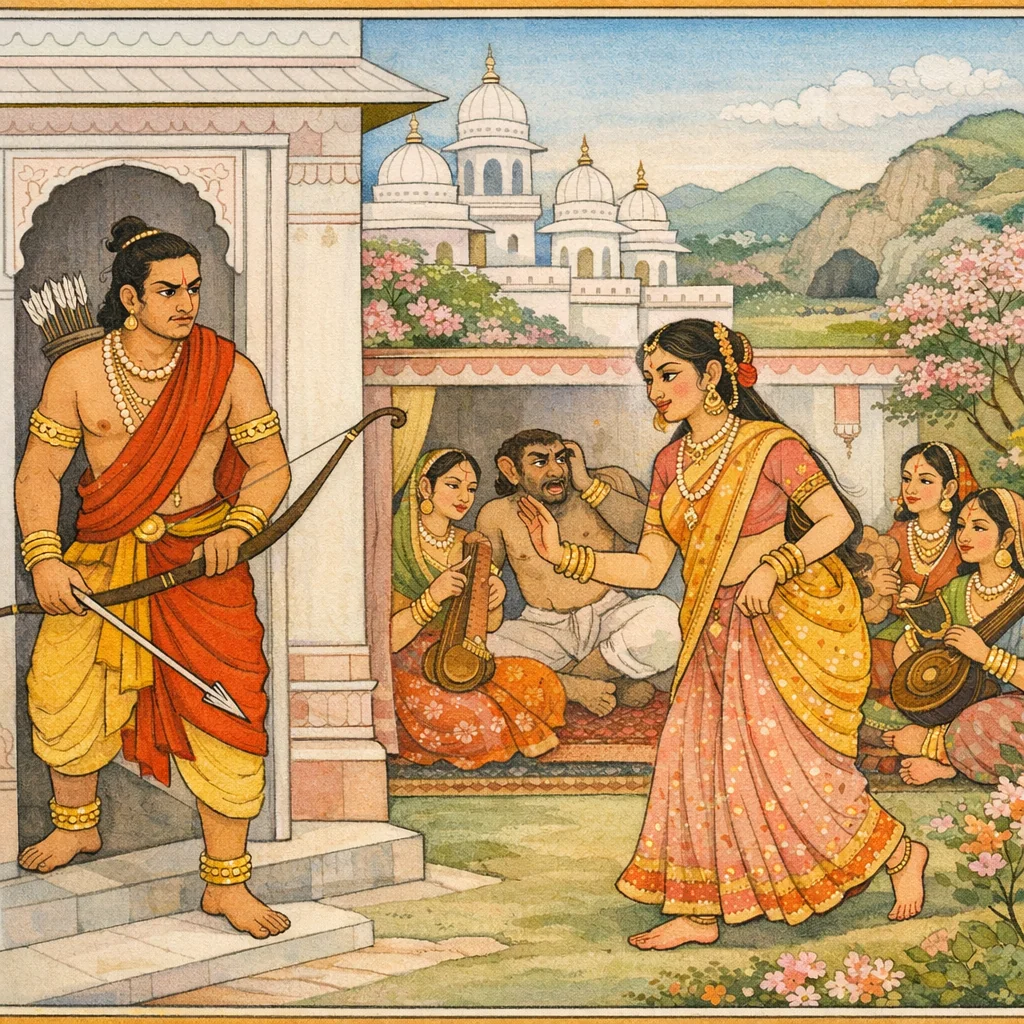
रामशासनात् लक्ष्मणः किष्किन्धां प्रविशति, घोरां रत्नमयीं गुहां तथा समृद्धं राजमार्गं च पश्यन् वानरमुख्यानां गृहाणि निरीक्षते। सुग्रीवस्य भवनं शुक्ल-प्रासादशिखरैः, सर्वकामफल-वृक्षैः, शस्त्रपाणि-हरिरक्षकैः च वर्ण्यते। अन्तःपुरे सप्तकक्ष्याः, हैम-राजत-पर्यङ्काः, गान-तन्त्रीस्वराः, युवतिजनसमाकुलता इत्यादि दृश्यते; आभरण-नूपुर-निनादं श्रुत्वा लक्ष्मणः लज्जां रोषं च अनुभवति, ज्यास्वनं कृत्वा आगमनं सूचयति। सुग्रीवः भयात् विचलति; तारां प्रति ‘कोपकारणं’ पृच्छति। तारा मदविह्वला अपि, लक्ष्मणस्य समीपे गत्वा सान्त्वपूर्वं भाषते; लक्ष्मणः सुग्रीवस्य प्रमादं (पान-रति-विहारः, चतुर्मास-प्रमाण-लङ्घनम्) धर्मार्थहानिं च प्रतिपादयति। तारा प्रत्युत्तरं दत्त्वा कामबन्धनस्य बलं, मित्रभावं, तथा वानरसेनासमागमं सूचयति; तदनुज्ञया लक्ष्मणः अभ्यन्तरं प्रविश्य सुग्रीवम् आदित्यसन्निभं स्त्रीसमावृतं च ददर्श, स्वयं च क्रोधेन अन्तकसन्निभः इवाभवत्—इति सर्गस्य नीतिशास्त्रीयः केन्द्रः ‘उत्तरदायित्वं–संयमः–समयपालनम्’ इति।
Shlokas
Verse 1
अथ प्रतिसमादिष्टो लक्ष्मणः परवीरहा।प्रविवेश गुहां घोरां किष्किन्धां रामशासनात्।।।।
Then Lakṣmaṇa—slayer of hostile warriors—having been duly instructed, entered the fearsome cavern-city of Kiṣkindhā in obedience to Rāma’s command.
Verse 2
द्वारस्था हरयस्तत्र महाकाया महाबलाः।बभूवुर्लक्ष्मणं दृष्ट्वा सर्वे प्राञ्जलय स्थिताः।।।।
There, at the gate, mighty monkeys of huge stature—on seeing Lakṣmaṇa—stood with palms joined in respectful greeting.
Verse 3
निश्वसन्तं तु तं दृष्ट्वा क्रुद्धं दशरथात्मजम्।बभूवुर्हरयस्त्रस्ता न चैनं पर्यवारयन्।।।।
Seeing the son of Daśaratha breathing hard in anger, the monkeys grew afraid and did not dare surround him.
Verse 4
स तां रत्नमयीं श्रीमान्दिव्यां पुष्पितकाननाम्।रम्यां रत्नसमाकीर्णां ददर्श महतीं गुहाम्।।।।
He—illustrious and fortune-bearing—beheld that vast cave: wondrous, gem-inlaid, strewn with jewels, and adorned with flowering groves, delightful to the eye.
Verse 5
हर्म्यप्रासादसम्बाधां नानापण्योपशोभिताम्।सर्वकामफलैर्वृक्षैः पुष्पितैरुपशोभिताम्।।।।
It was crowded with lofty mansions and palaces, adorned with many splendid valuables; and beautified by flowering trees bearing fruits that satisfy every desire.
Verse 6
देवगन्धर्वपुत्रैश्च वानरैः कामरूपिभिः।दिव्यमाल्याम्बरधरै श्शोभितां प्रियदर्शनैः।।।।
Kiṣkindhā was splendid—adorned with Vanaras, sons of gods and Gandharvas, able to assume forms at will, wearing divine garlands and garments, pleasing to behold.
Verse 7
चन्दनागरुपद्मानां गन्धैस्सुरभिगन्धिनाम्।मैरेयाणां मधूनां च सम्मोदितमहापथाम्।।।।
The great roads were lively with rejoicing people, perfumed by fragrant scents—sandalwood, agaru, and lotus—and by the aroma of maireya liquor and various kinds of honey.
Verse 8
विन्ध्यमेरुगिरिप्रख्यै: प्रासादैर्नैकभूमिभिः।ददर्श गिरिनद्यश्च विमलास्तत्र राघवः।।।।
There Rāghava (Lakṣmaṇa) saw many-storied palaces towering like the Vindhya and Meru mountains, and also clear, pure streams flowing down from the hills.
Verse 9
अङ्गदस्य गृहं रम्यं मैन्दस्य द्विविधस्य च।गवयस्य गवाक्षस्य गजस्य शरभस्य च।।।।विद्युन्मालेश्च सम्पाते स्सूर्याक्षस्य हनूमतः।वीरबाहो स्सुबाहोश्च नलस्य च महात्मनः।।।।कुमुदस्य सुषेणस्य तारजाम्बवतोस्तथा।दधिवक्त्रस्य नीलस्य सुपाटलसुनेत्रयोः।।।।एतेषां कपिमुख्यानां राजमार्गे महात्मनाम्।ददर्श गृहमुख्यानि महासाराणि लक्ष्मणः।।।।
Along the royal road, Lakṣmaṇa saw the splendid principal residences of the great monkey-leaders—of Aṅgada, Mainda, Dvivida, Gavaya, Gavākṣa, Gaja, Śarabha; of Vidyunmālī, Sampāti, Sūryākṣa, Hanūmān; of Vīrabāhu, Subāhu, and the noble Nala; of Kumuda, Suṣeṇa, as well as Tārā and Jāmbavān; of Dadhivaktra, Nīla, Supāṭala, and Sunetra—prosperous and impressive homes of those eminent chiefs.
Verse 10
अङ्गदस्य गृहं रम्यं मैन्दस्य द्विविधस्य च।गवयस्य गवाक्षस्य गजस्य शरभस्य च।।4.33.9।।विद्युन्मालेश्च सम्पाते स्सूर्याक्षस्य हनूमतः।वीरबाहो स्सुबाहोश्च नलस्य च महात्मनः।।4.33.10।।कुमुदस्य सुषेणस्य तारजाम्बवतोस्तथा।दधिवक्त्रस्य नीलस्य सुपाटलसुनेत्रयोः।।4.33.11।।एतेषां कपिमुख्यानां राजमार्गे महात्मनाम्।ददर्श गृहमुख्यानि महासाराणि लक्ष्मणः।।4.33.12।।
He beheld the fine residences of Vidyunmālin, Sampāti, Sūryākṣa, Hanūmān, Vīrabāhu, Subāhu, and also of the great-souled Nala.
Verse 11
अङ्गदस्य गृहं रम्यं मैन्दस्य द्विविधस्य च।गवयस्य गवाक्षस्य गजस्य शरभस्य च।।4.33.9।।विद्युन्मालेश्च सम्पाते स्सूर्याक्षस्य हनूमतः।वीरबाहो स्सुबाहोश्च नलस्य च महात्मनः।।4.33.10।।कुमुदस्य सुषेणस्य तारजाम्बवतोस्तथा।दधिवक्त्रस्य नीलस्य सुपाटलसुनेत्रयोः।।4.33.11।।एतेषां कपिमुख्यानां राजमार्गे महात्मनाम्।ददर्श गृहमुख्यानि महासाराणि लक्ष्मणः।।4.33.12।।
Likewise he saw the residences of Kumuda and Suṣeṇa, and also of Tāra and Jāmbavān, of Dadhivaktra and Nīla, and of Supāṭala and Sunetra.
Verse 12
अङ्गदस्य गृहं रम्यं मैन्दस्य द्विविधस्य च।गवयस्य गवाक्षस्य गजस्य शरभस्य च।।4.33.9।।विद्युन्मालेश्च सम्पाते स्सूर्याक्षस्य हनूमतः।वीरबाहो स्सुबाहोश्च नलस्य च महात्मनः।।4.33.10।।कुमुदस्य सुषेणस्य तारजाम्बवतोस्तथा।दधिवक्त्रस्य नीलस्य सुपाटलसुनेत्रयोः।।4.33.11।।एतेषां कपिमुख्यानां राजमार्गे महात्मनाम्।ददर्श गृहमुख्यानि महासाराणि लक्ष्मणः।।4.33.12।।
Thus, along the royal road, Lakṣmaṇa saw the foremost and richly-endowed residences belonging to those great-souled leaders among the vānaras.
Verse 13
पाण्डुराभ्रप्रकाशानि दिव्यमाल्ययुतानि च।प्रभूतधनधान्यानि स्त्रीरत्नै श्शोभितानि च।।।।
They gleamed like pale-white clouds, adorned with heavenly garlands, abundant in wealth and grain, and graced with noble women.
Verse 14
पाण्डुरेण तु सालेन परिक्षिप्तं दुरासदम्।वानरेन्द्रगृहं रम्यं महेन्द्रसदनोपमम्।।।।शुक्लैः प्रासादशिखरैः कैलासशिखरोपमैः।सर्वकामफलैर्वृक्षैः पुष्पितैरुपशोभितम्।।।।महेन्द्रदत्तैश्श्रीमद्भिर्नीलजीमूतसन्निभैः।दिव्यपुष्पफलैर्वृक्षैशीतच्छायैर्मनोरमैः।।।।हरिभिस्संवृतद्वारं बलिभिश्शस्त्रपाणिभिः।दिव्यमाल्यावृतं शुभ्रं तप्तकाञ्चनतोरणम्।।।।सुग्रीवस्य गृहं रम्यं प्रविवेश महाबलः।अवार्यमाणस्सौमित्रिर्महाभ्रमिव भास्करः।।।।
Sugrīva’s enchanting palace—residence of the lord of vānaras—was ringed by a pale-white rampart and was hard to approach, resembling Indra’s own abode. Its lofty white palace-peaks were like the summits of Kailāsa, and it was beautified by blossoming trees bearing every kind of desired fruit. There were splendid trees, said to be gifts of Mahendra, dark as blue rain-clouds, laden with wondrous flowers and fruits, delightfully cool with their shade. The gateway was surrounded by powerful vānaras with weapons in hand; it shone, draped in divine garlands, with a radiant archway of heated gold. Into that lovely residence of Sugrīva entered Saumitrī (Lakṣmaṇa), mighty in strength—unhindered, like the sun passing into a vast bank of clouds.
Verse 15
पाण्डुरेण तु सालेन परिक्षिप्तं दुरासदम्।वानरेन्द्रगृहं रम्यं महेन्द्रसदनोपमम्।।4.33.14।।शुक्लैः प्रासादशिखरैः कैलासशिखरोपमैः।सर्वकामफलैर्वृक्षैः पुष्पितैरुपशोभितम्।।4.33.15।।महेन्द्रदत्तैश्श्रीमद्भिर्नीलजीमूतसन्निभैः।दिव्यपुष्पफलैर्वृक्षैशीतच्छायैर्मनोरमैः।।4.33.16।।हरिभिस्संवृतद्वारं बलिभिश्शस्त्रपाणिभिः।दिव्यमाल्यावृतं शुभ्रं तप्तकाञ्चनतोरणम्।।4.33.17।।सुग्रीवस्य गृहं रम्यं प्रविवेश महाबलः।अवार्यमाणस्सौमित्रिर्महाभ्रमिव भास्करः।।4.33.18।।
It was adorned with white palace-tops resembling the peaks of Kailāsa, and beautified by flowering trees that bore every kind of fruit to fulfill one’s desires.
Verse 16
पाण्डुरेण तु सालेन परिक्षिप्तं दुरासदम्।वानरेन्द्रगृहं रम्यं महेन्द्रसदनोपमम्।।4.33.14।।शुक्लैः प्रासादशिखरैः कैलासशिखरोपमैः।सर्वकामफलैर्वृक्षैः पुष्पितैरुपशोभितम्।।4.33.15।।महेन्द्रदत्तैश्श्रीमद्भिर्नीलजीमूतसन्निभैः।दिव्यपुष्पफलैर्वृक्षैशीतच्छायैर्मनोरमैः।।4.33.16।।हरिभिस्संवृतद्वारं बलिभिश्शस्त्रपाणिभिः।दिव्यमाल्यावृतं शुभ्रं तप्तकाञ्चनतोरणम्।।4.33.17।।सुग्रीवस्य गृहं रम्यं प्रविवेश महाबलः।अवार्यमाणस्सौमित्रिर्महाभ्रमिव भास्करः।।4.33.18।।
It was adorned with splendid trees—said to be bestowed by Mahendra—resembling dark rain-clouds, bearing heavenly flowers and fruits, charming to the mind, and offering cool shade.
Verse 17
पाण्डुरेण तु सालेन परिक्षिप्तं दुरासदम्।वानरेन्द्रगृहं रम्यं महेन्द्रसदनोपमम्।।4.33.14।।शुक्लैः प्रासादशिखरैः कैलासशिखरोपमैः।सर्वकामफलैर्वृक्षैः पुष्पितैरुपशोभितम्।।4.33.15।।महेन्द्रदत्तैश्श्रीमद्भिर्नीलजीमूतसन्निभैः।दिव्यपुष्पफलैर्वृक्षैशीतच्छायैर्मनोरमैः।।4.33.16।।हरिभिस्संवृतद्वारं बलिभिश्शस्त्रपाणिभिः।दिव्यमाल्यावृतं शुभ्रं तप्तकाञ्चनतोरणम्।।4.33.17।।सुग्रीवस्य गृहं रम्यं प्रविवेश महाबलः।अवार्यमाणस्सौमित्रिर्महाभ्रमिव भास्करः।।4.33.18।।
Its gateway was thronged with monkeys—mighty warriors with weapons in hand. It shone white, adorned with celestial garlands, and had a gleaming archway of refined gold.
Verse 18
पाण्डुरेण तु सालेन परिक्षिप्तं दुरासदम्।वानरेन्द्रगृहं रम्यं महेन्द्रसदनोपमम्।।4.33.14।।शुक्लैः प्रासादशिखरैः कैलासशिखरोपमैः।सर्वकामफलैर्वृक्षैः पुष्पितैरुपशोभितम्।।4.33.15।।महेन्द्रदत्तैश्श्रीमद्भिर्नीलजीमूतसन्निभैः।दिव्यपुष्पफलैर्वृक्षैशीतच्छायैर्मनोरमैः।।4.33.16।।हरिभिस्संवृतद्वारं बलिभिश्शस्त्रपाणिभिः।दिव्यमाल्यावृतं शुभ्रं तप्तकाञ्चनतोरणम्।।4.33.17।।सुग्रीवस्य गृहं रम्यं प्रविवेश महाबलः।अवार्यमाणस्सौमित्रिर्महाभ्रमिव भास्करः।।4.33.18।।
Encircled by a pale rampart and hard to assail, the delightful palace of the lord of monkeys looked like the very dwelling of Mahendra (Indra). Its mansion-tops, white like the peaks of Kailāsa, were beautified by flowering trees bearing fruits of every desired kind. Those splendid trees—said to be gifts of Mahendra—were vast like dark rain-clouds, charming with cool shade and divine flowers and fruits. The gateway was ringed with strong Vānara guards, weapons in hand; it was bright, adorned with heavenly garlands, and crowned by a burnished golden arch. Into this lovely house of Sugrīva, the mighty Saumitri entered, unobstructed—like the sun passing into a great cloud.
Verse 19
स सप्त कक्ष्या धर्मात्मा नानाजनसमाकुलाः।प्रविश्य सुमहद्गगुप्तं ददर्शान्तःपुरं महत्।।।।हैमराजतपर्यङ्कैर्बहुभिश्च वरासनैः।महार्हास्तरणोपेतैस्तत्र तत्रोपशोभितम्।।।।
That righteous Lakṣmaṇa, passing through seven enclosures thronged with people of many kinds, entered the vast, well-guarded complex and beheld the great inner apartments.
Verse 20
स सप्त कक्ष्या धर्मात्मा नानाजनसमाकुलाः।प्रविश्य सुमहद्गगुप्तं ददर्शान्तःपुरं महत्।।4.33.19।।हैमराजतपर्यङ्कैर्बहुभिश्च वरासनैः।महार्हास्तरणोपेतैस्तत्र तत्रोपशोभितम्।।4.33.20।।
It was adorned here and there with many fine couches of gold and silver, and with excellent seats furnished with costly coverings and cushions.
Verse 21
प्रविशन्नेव सततं शुश्राव मधुरस्वरम्।तन्त्रीगीतसमाकीर्णं समगीतपदाक्षरम्।।।।
Even as he entered, he continually heard sweet sounds—filled with music of stringed instruments and with songs whose words and syllables were set to measured melody.
Verse 22
बह्वीश्च विविधाकारा रूपयौवनगर्विताः।स्त्रियस्सुग्रीवभवने ददर्श सुमहाबलः।।।।
The very powerful Lakṣmaṇa saw, in Sugrīva’s residence, many women of varied appearance—proud of their beauty and youth.
Verse 23
दृष्ट्वाऽभिजनसम्पन्नाश्चित्रमाल्यकृतस्रजः।फलमाल्यकृतव्यग्रा भूषणोत्तमभूषिताः।।।।नातृप्तान्नापि चाव्यग्रान्नानुदात्तपरिच्छदान्।सुग्रीवानुचरांश्चापि लक्षयामास लक्ष्मणः।।।।
He saw women of noble birth, wearing garlands made of colorful blossoms; busied with arranging fruits and garlands, and adorned with the finest ornaments.
Verse 24
दृष्ट्वाऽभिजनसम्पन्नाश्चित्रमाल्यकृतस्रजः।फलमाल्यकृतव्यग्रा भूषणोत्तमभूषिताः।।4.33.23।।नातृप्तान्नापि चाव्यग्रान्नानुदात्तपरिच्छदान्।सुग्रीवानुचरांश्चापि लक्षयामास लक्ष्मणः।।4.33.24।।
Lakṣmaṇa also noticed Sugrīva’s attendants—neither dissatisfied nor distracted, and not poorly clad—standing in orderly readiness.
Verse 25
कूजितं नूपुराणां च काञ्चीनां निनदं तथा।सन्निशम्य तत श्रीमान्सौमित्रिर्लज्जितोऽभवत्।।।।
Then the illustrious son of Sumitrā (Lakṣmaṇa), hearing the tinkling of anklets and the jingling of women’s girdle-bells, felt ashamed and restrained.
Verse 26
रोषवेगप्रकुपितशश्रुत्वा चाभरणस्वनम्।चकार ज्यास्वनं वीरो दिशश्शब्देन पूरयन्।।।।
Hearing the sound of ornaments, the hero—stirred by a surge of anger—made his bowstring resound, filling the directions with that sharp twang.
Verse 27
चारित्रेण महाबाहुरपकृष्ट स्सलक्ष्मणः।तस्थावेकान्तमाश्रित्य रामकोपसमन्वितः।।।।
Then Lakṣmaṇa, the long-armed one, mindful of proper custom, withdrew and stood apart in a secluded place—bearing the weight of Rāma’s anger.
Verse 28
तेन चापस्वनेनाथ सुग्रीवः प्लवगाधिपः।विज्ञायाऽगमनं त्रस्त स्सञ्चचाल वरासनात्।।।।
Then Sugrīva, lord of the monkeys, recognizing Lakṣmaṇa’s arrival from the sound of the bow, sprang up in fear from his royal seat.
Verse 29
अङ्गदेन यथा मह्यं पुरस्तात्प्रतिवेदितम्।सुव्यक्तमेष सम्प्राप्त स्सौमित्रिर्भ्रातृवत्सलः।।।।
“Just as Aṅgada reported to me earlier, it is now unmistakably true: Saumitri—devoted to his brother—has arrived.”
Verse 30
अङ्गदेन समाख्यातं ज्यास्वनेन च वानरः।बुबुधे लक्ष्मणं प्राप्तं मुखं चास्यव्यशुष्यत।।।।
Informed by Aṅgada and also by the twang of the bowstring, the monkey-king understood that Lakṣmaṇa had arrived—and his mouth went dry with fear.
Verse 31
ततस्तारां हरिश्रेष्ठस्सुग्रीवः प्रियदर्शनाम्।उवाच हितमव्यग्रस्त्रास सम्भ्रान्तमानसः।।।।
Then Sugrīva, best of the monkeys, his mind shaken with fear, addressed the fair-looking Tārā with clear and well-meant words.
Verse 32
किन्नु तत्कारणं सुभ्रु प्रकृत्या मृदुमानसः।सरोष इव सम्प्राप्तो येनायं राघवानुजः।।।।
“O fair-browed one, what could be the reason? By nature Rāma’s younger brother is gentle-hearted, yet today he has come as if in anger.”
Verse 33
किं पश्यसि कुमारस्य रोषस्थानमनिन्दिते।न खल्वकारणे कोपमाहरेन्नरसत्तमः।।।।
“O blameless lady, what do you see as the cause of the prince’s anger? A truly noble man does not give rise to wrath without reason.”
Verse 34
यदस्य कृतमस्माभिर्बुध्यसे किञ्चिदप्रियम्।तदबुद्ध्या सम्प्रधार्याशु क्षिप्रमर्हसि भाषितुम्।।।।
“If you understand that we have done him anything displeasing, then reflect quickly with your judgment and tell me at once.”
Verse 35
अथवा स्वयमेवैनं द्रष्टुमर्हसि भामिनि।वचनै स्सान्त्वयुक्तैश्च प्रसादयितुमर्हसि।।।।
“Or else, O lovely lady, you should yourself go to see him, and with words of gentle reassurance, win back his calm.”
Verse 36
त्वद्दर्शन विशुद्धात्मा न स कोपं करिष्यति।न हि स्त्रीषु महात्मानः क्वचित्कुर्वन्ति दारुणम्।।।।
“On seeing you, his heart will become clear, and he will not continue in anger; for great-souled men never act harshly toward women.”
Verse 37
त्वया सान्त्वैरुपक्रान्तं प्रसन्नेन्द्रियमानसम्।ततः कमलपत्राक्षं द्रक्ष्याम्यहमरिन्दमम्।।।।
Begin by addressing him with soothing words and gladden his mind and senses; then I shall meet that lotus-eyed subduer of enemies, Lakṣmaṇa.
Verse 38
सा प्रस्खलन्ती मदविह्वलाक्षीप्रलम्बकाञ्चीगुण हेमसूत्रा।सलक्षणा लक्ष्मणसन्निधानंजगाम तारा नमिताङ्गयष्टिः।।।।
Tārā—her steps unsteady, her eyes dulled by drink, the golden cord-strings of her girdle hanging loose—bashful of her state, went to Lakṣmaṇa’s presence with her body bent low.
Verse 39
स तां समीक्ष्यैव हरीशपन्तींतस्थावुदासीनतया महात्मा।अवाङ्मुखोऽभून्मनुजेन्द्रपुत्रःस्त्रीसन्निकर्षाद्विनिवृत्तकोपः।।।।
Seeing the monkey-king’s queen, that great prince stood unmoved and outwardly indifferent; the son of the lord of men kept his face lowered, restraining his anger in the close presence of a woman.
Verse 40
सा पानयोगाद्विनिवृत्तलज्जादृष्टिप्रसादाच्च नरेन्द्रसूनोः।उवाच तारा प्रणयप्रगल्भंवाक्यं महार्थं परिसान्त्वपूर्वम्।।।।
Freed of shyness by her intoxicated state, and encouraged by the prince’s softened gaze, Tārā spoke—affectionate yet confident—words of great import, beginning with conciliation.
Verse 41
किं कोपमूलं मनुजेन्द्रपुत्रकस्ते न सन्तिष्ठति वाङ्निदेशे।क श्शुष्कवृक्षं वनमापतन्तंदवाग्निमासीदति निर्विशङ्कः।।।।
O prince, what is the root of this anger—who has failed to stand by your spoken command? Who, without fear, would draw near a forest-fire rushing upon a wood of dried trees?
Verse 42
स तस्या वचनं श्रुत्वा सान्त्वपूर्वमशङ्कितम्।भूयः प्रणयदृष्टार्थं लक्ष्मणो वाक्यमब्रवीत्।।।।
Hearing her fearless words, spoken with conciliation, Lakṣmaṇa again replied—speaking with a friendly intent, yet with purpose.
Verse 43
किमयं कामवृत्तस्ते लुप्तधर्मार्थसङ्ग्रहः।भर्ता भर्तृहिते युक्ते न चैनमवबुद्ध्यसे।।।।
Why is your husband given over to pleasure, having let go of the rightful pursuit of dharma and artha? Though you are devoted to his welfare, why do you not recognize this?
Verse 44
न चिन्तयति राज्यार्थं नास्मान् शोकपरायणान्।सामात्यपरिषत्तारे पानमेवोपसेवते।।।।
He gives no thought to affairs of state, nor to us who are overwhelmed with grief. O Tārā, he keeps only to drinking, in the company of ministers and courtiers.
Verse 45
स मासांश्चतुरः कृत्वा प्रमाणं प्लवगेश्वरः।व्यतीतां स्तान्मदव्यग्रो विहरन्नावबुध्यते।।।।
Having set four months as the agreed measure of time, the lord of monkeys—distracted by intoxication—sports on, not realizing that those months have already elapsed.
Verse 46
न हि धर्मार्थसिद्ध्यर्थं पानमेवं प्रशस्यते।पानादर्थश्च धर्मश्च कामश्च परिहीयते।।।।
Drinking in this manner is not praised as a means to accomplish dharma and artha; for through drinking, wealth, righteousness, and even right desire are diminished.
Verse 47
धर्मलोपो महांस्तावत्कृते ह्यप्रतिकुर्वतः।अर्थलोपश्च मित्रस्य नाशे गुणवतो महान्।।।।
Dharma is gravely lost when one fails to repay help rendered; and when a virtuous friend is ruined, there follows a great loss of artha as well.
Verse 48
मित्रं ह्यर्थगुणश्रेष्ठं सत्यधर्मपरायणम्।तद्द्वयं तु परित्यक्तं न तु धर्मे व्यवस्थितम्।।4.33.48।।
A friend—excellent in worth and qualities, devoted to truth and dharma—when such a twofold treasure is abandoned, one cannot be said to stand established in dharma.
Verse 49
तदेवं प्रस्तुते कार्ये कार्यमस्माभिरुत्तरम्।यत्कार्यं कार्यतत्त्वज्ञे तदुदाहर्तुमर्हसि।।।।
Since this is the matter at hand, tell us what should be done next; you, who know the true nature of duty, ought to state the proper course of action.
Verse 50
सा तस्य धर्मार्थसमाधियुक्तंनिशम्य वाक्यं मधुरस्वभावम्।तारा गतार्थे मनुजेन्द्रकार्येविश्वासयुक्तं तमुवाच भूयः।।।।
Hearing his sweet-natured words, grounded in right understanding of dharma and artha, Tārā—confident about the Lord of men’s enterprise—spoke to him again with trust.
Verse 51
न कोपकालः क्षितिपालपुत्रन चाति कोप स्स्वजने विधेयः।त्वदर्थकामस्य जनस्य तस्यप्रमादमप्यर्हसि वीर सोढुम्।।।।
O prince, this is not the time for anger, nor should excessive anger be directed toward one’s own people. Toward a person eager to carry out your purpose, you should bear even a mistake, O hero.
Verse 52
कोपं कथं नाम गुणप्रकृष्टःकुमार कुर्यादपकृष्टसत्त्वे।कस्त्वद्विधः कोपवशं हि गच्छेत्सत्त्वावरुद्धस्तपसः प्रसूतिः।।।।
O prince, how could one excelling in virtues become angry at an inferior? Who like you—restrained by excellence, born of ascetic discipline—would fall under the sway of anger?
Verse 53
जानामि रोषं हरिवीरबन्धोर्जानामि कार्यस्य च कालसङ्गम्।जानामि कार्यं त्वयि यत्कृतं नस्तच्चापि जानामि यदत्र कार्यम्।।।।
I understand the anger of the friend of the monkey-hero, and I understand the pressing time-bound nature of the task. I know what has not been done by you (on our side), and I also know what should be done here now.
Verse 54
तच्चापि जानामि यथविषह्यंबलं नरश्रेष्ठ शरीरजस्य।जानामि यस्मिंश्च जनेऽवबद्धंकामेन सुग्रीवमसक्तमद्य।।।।
And I also know how irresistible is the force of bodily passion, O best of men. I know that Sugrīva is now bound by desire toward some person, and thus has become slack in his commitment.
Verse 55
न कामतन्त्रे तव बुद्धिरस्तित्वं वै यथा मन्युवशं प्रपन्नः।न देशकालौ हि न चार्थधर्माववेक्षते कामरतिर्मनुष्यः।।।।
You are in the grip of anger; your mind is not, in fact, governed by lust. For a man immersed in sensual pleasure does not heed place or time, nor does he weigh artha (practical good) and dharma (righteous duty).
Verse 56
तं कामवृत्तं मम सन्निकृष्टंकामाभियोगाच्च निवृत्तलज्जम्।क्षमस्व तावत्परवीरहन्तस्त्वद्भ्रातरं वानरवंशनाथम्।।।।
O slayer of enemy heroes, forgive him—Sugrīva, lord of the Vanara line, who is as a brother to you. He is near me, given over to passion and, through the press of love’s play, has cast off shame.
Verse 57
महर्षयो धर्मतपोऽभिकामाःकामानुकामाः प्रतिबद्धमोहाः।अयं प्रकृत्या चपलः कपिस्तुकथं न सज्जेत सुखेषु राजा।।।।
Even great sages—devoted to dharma and austerity—sometimes follow desire and become bound by delusion. How, then, would this king, a monkey and naturally fickle, not be drawn into pleasures?
Verse 58
इत्येवमुक्त्वा वचनं महार्थंसा वानरी लक्ष्मणमप्रमेयम्।पुन स्सखेदं मदविह्वलञ्चभर्तुर्हितं वाक्यमिदं बभाषे।।।।
Having thus spoken weighty words to Lakṣmaṇa of unfathomable might, that Vanara queen—playful yet unsteady with intoxication—again spoke this counsel for her husband’s welfare.
Verse 59
उद्योगस्तु चिराज्ञप्त स्सुग्रीवेण नरोत्तम।कामस्यापि विधेयेन तवार्थप्रतिसाधने।।।।
O best of men, Sugrīva has long since set the effort in motion for accomplishing your aim—even though he is, for the moment, under the sway of pleasure.
Verse 60
आगता हि महावीर्या हरयः कामरूपिणः।कोटीशतसहस्राणि नानानगनिवासिनः।।।।
Great and mighty Vanaras, able to take forms at will, have arrived—hundreds of thousands of crores—dwelling on many different mountains.
Verse 61
तदागच्छ महाबाहो चारित्रं रक्षितं त्वया।अच्छलं मित्रभावेन सतां दारावलोकनम्।।।।
Therefore, O long-armed one, come in—your conduct has been well-guarded. For to look upon the wife of a righteous man with a friend’s intent is no deception, no breach of propriety.
Verse 62
तारया चाभ्यनुज्ञातस्त्वरया चापि चोदितः।प्रविवेश महाबाहुरभ्यन्तरमरिन्दमः।।।।
Permitted by Tārā and urged on by the urgency of the matter, the mighty-armed Lakṣmaṇa—subduer of foes—entered the inner chambers.
Verse 63
तत स्सुग्रीवमासीनं काञ्चने परमासने।महार्हास्तरणोपेते ददर्शादित्यसन्निभम्।।।।दिव्याभणचित्राङ्गं दिव्यरूपं यशस्विनम्।दिव्यमाल्याम्बरधरं महेन्द्रमिव दुर्जयम्।।।।दिव्याभरणमालाभिः प्रमदाभि स्समावृतम्।संरब्धतररक्ताक्षो बभूवान्तकसन्निभः।।।।
Then he saw Sugrīva seated on a golden, splendid throne spread with costly coverings—radiant like the sun: famed, of celestial appearance, his limbs adorned with wondrous ornaments; wearing divine garlands and garments, unconquerable like Indra. Encircled by women decked in heavenly ornaments and garlands, Lakṣmaṇa’s eyes grew red with heightened wrath, and he seemed like Antaka (Death) himself.
Verse 64
तत स्सुग्रीवमासीनं काञ्चने परमासने।महार्हास्तरणोपेते ददर्शादित्यसन्निभम्।।4.33.63।।दिव्याभणचित्राङ्गं दिव्यरूपं यशस्विनम्।दिव्यमाल्याम्बरधरं महेन्द्रमिव दुर्जयम्।।4.33.64।।दिव्याभरणमालाभिः प्रमदाभि स्समावृतम्।संरब्धतररक्ताक्षो बभूवान्तकसन्निभः।।4.33.65।।
He beheld the renowned Sugrīva—his limbs adorned with splendid ornaments, his appearance radiant and celestial—wearing divine garlands and fine garments, difficult to overcome like Indra himself.
Verse 65
तत स्सुग्रीवमासीनं काञ्चने परमासने।महार्हास्तरणोपेते ददर्शादित्यसन्निभम्।।4.33.63।।दिव्याभणचित्राङ्गं दिव्यरूपं यशस्विनम्।दिव्यमाल्याम्बरधरं महेन्द्रमिव दुर्जयम्।।4.33.64।।दिव्याभरणमालाभिः प्रमदाभि स्समावृतम्।संरब्धतररक्ताक्षो बभूवान्तकसन्निभः।।4.33.65।।
Sugrīva was surrounded by women adorned with divine ornaments and garlands; and at that sight Lakṣmaṇa’s eyes grew red with rising anger—he looked like Antaka (Death) himself.
Verse 66
रुमां तु वीर परिरभ्य गाढंवरासनस्थो वरहेमवर्णः।ददर्श सौमित्रिमदीनसत्त्वंविशालनेत्रस्सुविशालनेत्रम्।।।।
The large-eyed hero Sugrīva, of bright golden complexion, seated upon an excellent throne and clasping Rumā tightly, saw Saumitri (Lakṣmaṇa), whose spirit was unshaken—he too, large-eyed and formidable.
Frequently Asked Questions
The dilemma is enforcement of an alliance promise without violating मर्यादा: Lakshmana must compel Sugriva to act on Rama’s mission while navigating the propriety of entering a king’s private quarters. The narrative stages this through Lakshmana’s controlled entry, his bowstring warning, and Tara’s mediation.
काम-प्रमादः (pleasure-induced negligence) erodes धर्म and अर्थ, and thus undermines friendship and governance. Conversely, righteous anger must be tempered by restraint and diplomatic speech; Tara’s sāntva and Lakshmana’s dharma-argument together model correction without collapse of alliance.
The sarga maps Kishkindha’s urban-cave setting: the भयङ्कर-गुहा, the राजमार्ग lined with chiefs’ residences, and Sugriva’s fortified palace with white ramparts, Kailasa-like towers, guarded gates, and a richly appointed antaḥpura—functioning as a cultural portrait of vanara polity.