Sarga 77
सप्तसप्ततितमः सर्गः — Ayodhya Return, Bridal Reception, and Bharata’s Departure
बालकाण्ड
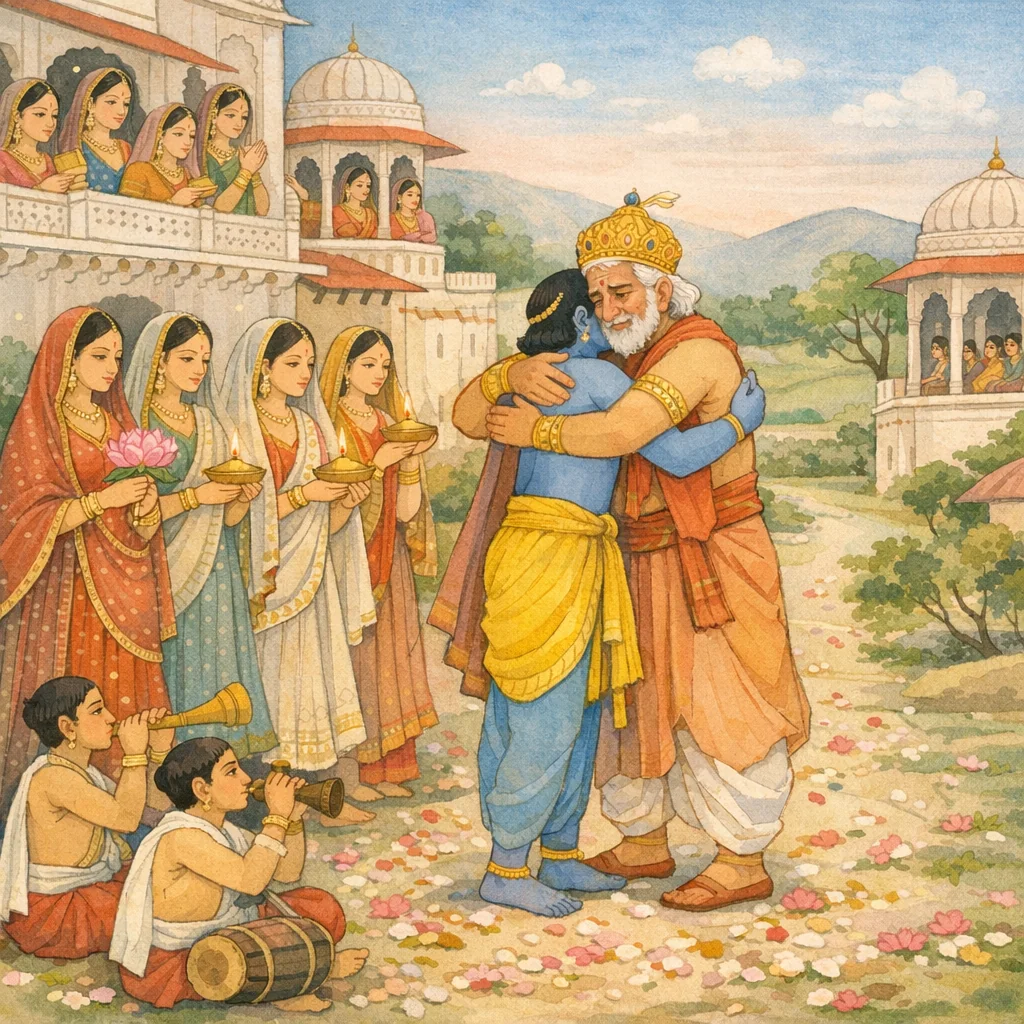
In Sarga 77, after Paraśurāma departs, Daśaratha’s fear subsides. Rāma reports what has occurred, and the king embraces him, reading the moment as a symbolic rebirth for both father and son. The fourfold army proceeds toward Ayodhyā, and the capital is portrayed in solemn procession—banners, trumpets, sprinkled roads, and flower-strewn highways—public ritual affirming royal legitimacy. Within the palace, the queens—Kauśalyā, Sumitrā, Kaikeyī, and other royal women—receive the new brides: Sītā, Ūrmilā, Māṇḍavī, and Śrutakīrti. The princesses perform auspicious observances and worship at family shrines; they offer homage, enter residences likened to Kubera’s palace, and honor brāhmaṇas with gifts—cows, wealth, and grain—highlighting merit (puṇya) and social reciprocity. The chapter then turns to dynastic arrangements: Yudhājit of Kekaya arrives to take Bharata. Daśaratha publicly asks Bharata to comply, and Bharata departs with Śatrughna after taking leave. In Bharata’s absence, Rāma and Lakṣmaṇa intensify service to their father and governance duties, while Rāma’s harmony with Sītā is depicted as an inward union—hearts speaking silently—presenting conjugal dharma as an extension of ethical order.
Shlokas
Verse 1
गते रामे प्रशान्तात्मा रामो दाशरथिर्धनु:।वरुणायाप्रमेयाय ददौ हस्ते ससायकम्।।1.77.1।।
When Rāma Bhārgava had departed, Rāma, son of Daśaratha—his mind serene—placed the bow together with its arrow into the hand of Varuṇa, of immeasurable might.
Verse 2
अभिवाद्य ततो रामो वसिष्ठप्रमुखानृषीन्। पितरं विह्वलं दृष्ट्वा प्रोवाच रघुनन्दन:।।1.77.2।।
Thereafter Rāma, delight of the Raghus, having saluted Vasiṣṭha and the other sages, and seeing his father distressed, spoke to him.
Verse 3
जामदग्न्यो गतो राम: प्रयातु चतुरङ्गिणी।अयोध्याभिमुखी सेना त्वया नाथेन पालिता।।1.77.3।।
“Jāmadagnya Rāma (Paraśurāma) has departed. Let the fourfold army, under your command, march toward Ayodhyā.”
Verse 4
सन्दिशस्व महाराज सेनां त्वच्छासने स्थिताम्।शासनं काङ्क्षते सेना चातकालिर्जलं यथा।।1.77.4।।
O Mahārāja, issue your command to the army standing ready under your authority; for the host longs for your order as rows of cātaka-birds long for water.
Verse 5
रामस्य वचनं श्रुत्वा राजा दशरथ स्सुतम्।बाहुभ्यां सम्परिष्वज्य मूर्ध्नि चाघ्राय राघवम्।।1.77.5।।गतो राम इति श्रुत्वा हृष्ट: प्रमुदितो नृप:।पुनर्जातं तदा मेने पुत्रमात्मानमेव च।।1.77.6।।
Hearing Rāma’s words, King Daśaratha embraced his son with both arms and, in affection, kissed (smelled) Rāghava upon the head.
Verse 6
रामस्य वचनं श्रुत्वा राजा दशरथ स्सुतम्।बाहुभ्यां सम्परिष्वज्य मूर्ध्नि चाघ्राय राघवम्।।1.77.5।।गतो राम इति श्रुत्वा हृष्ट: प्रमुदितो नृप:।पुनर्जातं तदा मेने पुत्रमात्मानमेव च।।1.77.6।।
Hearing, “Rāma (Paraśurāma) has gone,” the king rejoiced greatly; then he felt that both his son and he himself had been born anew.
Verse 7
चोदयामास तां सेनां जगामाशु तत: पुरीम्।पताकाध्वजिनीं रम्यां तूर्योद्घुष्टनिनादिताम्।।1.77.7।।सिक्तराज पथां रम्यां प्रकीर्णकुसुमोत्कराम् ।राजप्रवेशसुमुखै: पौरैर्मङ्गलवादिभि:।।1.77.8।।सम्पूर्णां प्राविशद्राजा जनौघैस्समलङ्कृताम्।
Then he urged that army onward and swiftly proceeded to the city, lovely with flags and banners, echoing with the resounding calls of trumpets.
Verse 8
चोदयामास तां सेनां जगामाशु तत: पुरीम्।पताकाध्वजिनीं रम्यां तूर्योद्घुष्टनिनादिताम्।।1.77.7।।सिक्तराज पथां रम्यां प्रकीर्णकुसुमोत्कराम् ।राजप्रवेशसुमुखै: पौरैर्मङ्गलवादिभि:।।1.77.8।।सम्पूर्णां प्राविशद्राजा जनौघैस्समलङ्कृताम्।
Its royal roads were sprinkled with water, fair to behold, strewn with heaps of scattered flowers; and the citizens, bright-faced at the king’s entrance, uttered auspicious acclamations.
Verse 9
पौरै: प्रत्युद्गतो दूरं द्विजैश्च पुरवासिभि:। पुत्रैरनुगत श्श्रीमान् श्रीमद्भिश्च महायशा: ।।1.77.9।। प्रविवेश गृहं राजा हिमवत्सदृशं पुनः।
Welcomed from afar by the city-dwellers—citizens and brahmins alike—the illustrious, greatly renowned king, followed by his splendid sons, re-entered his palace, which shone like Himavat.
Verse 10
ननन्द सजनो राजा गृहे कामै स्सुपूजित:।।1.77.10।।कौसल्या च सुमित्रा च कैकेयी च सुमध्यमा।वधूप्रतिग्रहे युक्ता याश्चान्या राजयोषित:।।1.77.11।।
In his residence, the king rejoiced with his people and kinsmen, for they had been duly honored and pleasantly entertained. Kauśalyā, Sumitrā, and slender-waisted Kaikeyī—along with the other royal women—were engaged in receiving the brides.
Verse 11
ननन्द सजनो राजा गृहे कामै स्सुपूजित:।।1.77.10।।कौसल्या च सुमित्रा च कैकेयी च सुमध्यमा।वधूप्रतिग्रहे युक्ता याश्चान्या राजयोषित:।।1.77.11।।
In his residence, the king rejoiced with his people and kinsmen, for they had been duly honored and pleasantly entertained. Kauśalyā, Sumitrā, and slender-waisted Kaikeyī—along with the other royal women—were engaged in receiving the brides.
Verse 12
ततस्सीतां महाभागामूर्मिलां च यशस्विनीम्।कुशध्वजसुते चोभे जगृहुर्नृपपत्नय:।।1.77.12।।
Thereafter the queens received Sītā, most fortunate, and the renowned Ūrmilā, as well as both daughters of Kuśadhvaja.
Verse 13
मङ्गलालम्भनैश्चापि शोभिता: क्षौमवासस:। देवतायतनान्याशु सर्वास्ता: प्रत्यपूजयन्।।1.77.13।।
Bearing auspicious offerings in their hands and shining in fine linen garments, they all swiftly worshipped the shrines of the deities.
Verse 14
अभिवाद्याभिवाद्यांश्च सर्वा राजसुतास्तदा।स्वं स्वं गृहमथासाद्य कुबेरभवनोपमम्।।1.77.14।।गोभिर्धनैश्च धान्यैश्च तर्पयित्वा द्विजोत्तमान्।रेमिरे मुदिता: सर्वा भर्तृभि: सहिता रह:।।1.77.15।।
Then all the princesses, having again and again bowed to those worthy of reverence, entered their own residences, splendid like Kubera’s palace. After gratifying the foremost brāhmaṇas with gifts of cows, wealth, and grain, they—joyful—spent private time in the company of their husbands.
Verse 15
अभिवाद्याभिवाद्यांश्च सर्वा राजसुतास्तदा।स्वं स्वं गृहमथासाद्य कुबेरभवनोपमम्।।1.77.14।।गोभिर्धनैश्च धान्यैश्च तर्पयित्वा द्विजोत्तमान्।रेमिरे मुदिता: सर्वा भर्तृभि: सहिता रह:।।1.77.15।।
Then all the princesses, having again and again bowed to those worthy of reverence, entered their own residences, splendid like Kubera’s palace. After gratifying the foremost brāhmaṇas with gifts of cows, wealth, and grain, they—joyful—spent private time in the company of their husbands.
Verse 16
कुमाराश्च महात्मानो वीर्येणाप्रतिमा भुवि ।कृतदारा: कृतास्त्राश्च सधना: ससुहृज्जना:।।1.77.16।।शुश्रूषमाणा: पितरं वर्तयन्ति नरर्षभा:।
Those princes—great-souled and unmatched on earth in prowess—now married, trained in weapons, and possessed of wealth, moved about with their friends while attending upon their father, the best of men.
Verse 17
कस्यचित्त्वथ कालस्य राजा दशरथ: सुतम्।1.77.17।।भरतं कैकयीपुत्र मब्रवीद्रघुनन्दन:।
After some time, King Daśaratha—delight of the Raghu line—addressed his son Bharata, the son of Kaikeyī.
Verse 18
अयं केकयराजस्य पुत्रो वसति पुत्रक।।1.77.18।।त्वां नेतुमागतो वीर युधाजिन्मातुलस्तव।
“Child, the son of the king of Kekaya—your maternal uncle Yudhājit—has arrived and is staying here, O hero, wishing to take you with him.”
Verse 19
प्रार्थितस्तेन धर्मज्ञ मिधिलायामहं तथा।।1.77.19।।ऋषिमध्ये तु तस्य त्वं प्रीतिं कर्तुमिहार्हसि।
“O knower of dharma, he made this request to me at Mithilā, in the midst of sages; therefore you ought to please him here by granting it.”
Verse 20
श्रुत्वा दशरथस्यैतद्भरत: कैकयीसुत:।।1.77.20।।अभिवाद्य गुरुं रामं परिष्वज्य च लक्ष्मणम्। गमनायाभिचक्राम शत्रुघ्नसहितस्तदा।।1.77.21।।
Hearing Daśaratha’s words, Bharata—Kaikeyī’s son—paid obeisance to his father and to Rāma, embraced Lakṣmaṇa, and then set out to depart together with Śatrughna.
Verse 21
श्रुत्वा दशरथस्यैतद्भरत: कैकयीसुत:।।1.77.20।।अभिवाद्य गुरुं रामं परिष्वज्य च लक्ष्मणम्। गमनायाभिचक्राम शत्रुघ्नसहितस्तदा।।1.77.21।।
The valiant Bharata, best among men, having taken leave of his father, of Rāma the untiring in action, and of the mothers as well, departed accompanied by Śatrughna.
Verse 22
आपृच्छ्य पितरं शूरो रामं चाक्लिष्टकारिणम्।मातृश्चापि नरश्रेष्ठ श्शत्रुघ्नसहितो ययौ।।1.77.22।।
The valiant Bharata, best among men, having taken leave of his father, of Rāma the untiring in action, and of the mothers as well, departed accompanied by Śatrughna.
Verse 23
गते तु भरते रामो लक्ष्मणश्च महाबल:।पितरं देवसंङ्काशं पूजयामासतुस्तदा।।1.77.23।।
When Bharata had departed, Rāma and the mighty Lakṣmaṇa continued then to honour and attend upon their father, godlike in splendour.
Verse 24
पितुराज्ञां पुरस्कृत्य पौरकार्याणि सर्वश:। चकार रामो धर्मात्मा प्रियाणि च हितानि च।।1.77.24।।
Honouring his father’s command as paramount, righteous Rāma carried out all civic duties, doing what was both pleasing and beneficial for the people’s welfare.
Verse 25
मातृभ्यो मातृकार्याणि कृत्वा परमयन्त्रित:।गुरूणां गुरुकार्याणि काले कालेऽन्ववैक्षत।।1.77.25।।
With strict self-discipline, he fulfilled his duties to his mothers; and at the proper times he also attended to—and kept watch over—his responsibilities toward his elders and spiritual teachers.
Verse 26
एवं दशरथ: प्रीतो ब्राह्मणा नैगमास्तथा।रामस्य शीलवृत्तेन सर्वे विषयवासिन:।।1.77.26।।
Thus Daśaratha was pleased; the brāhmaṇas and the townspeople too—indeed all who lived throughout the realm—were delighted by Rāma’s character and conduct.
Verse 27
तेषामतियशा लोके राम स्सत्यपराक्रमः।स्वयम्भूरिव भूतानां बभूव गुणवत्तर:।।1.77.27।।
In the world he became greatly renowned among them; Rāma—whose prowess was grounded in truth—proved superior in virtues, like the Self-born Brahmā to all beings.
Verse 28
रामस्तु सीतया सार्धं विजहार बहूनृतून् ।मनस्स्वी तद्गतस्तस्याः नित्यं हृदि समर्पित:।।1.77.28।।
Rāma, with Sītā at his side, delighted through many seasons; noble in mind, ever turned toward her, he kept her always enshrined within his heart.
Verse 29
प्रिया तु सीता रामस्य दारा: पितृकृता इति।गुणाद्रूपगुणाच्चापि प्रीतिर्भूयोऽभ्यवर्धत।।1.77.29।।
Though Sītā had become Rāma’s wife by his father’s arrangement, she grew ever more beloved to him; through her virtues—and through her beauty as well—his affection increased still further.
Verse 30
तस्याश्च भर्ता द्विगुणं हृदये परिवर्तते।अन्तर्जातमपि व्यक्तमाख्याति हृदयं हृदा।।1.77.30।।
And for Sītā, her husband dwelt twofold within her heart; even thoughts born within were clearly known—heart to heart—through their mutual understanding.
Verse 31
Maithilī Sītā, Janaka’s daughter, was dearer to him than all; in beauty she equaled the goddesses, and in embodied form she seemed Śrī (Lakṣmī) herself.
Verse 32
गते रामे प्रशान्तात्मा रामो दाशरथिर्धनु:।वरुणायाप्रमेयाय ददौ हस्ते ससायकम्।।1.77.1।।
United with that charming princess, the excellent daughter of a king, Rāma—son of the royal sage Daśaratha—shone exceedingly, like Viṣṇu, lord of the immortals, radiant in the company of Śrī (Lakṣmī).
Frequently Asked Questions
The pivotal action is Rāma’s disciplined closure of the Paraśurāma episode: with a serene mind he returns the extraordinary bow (with arrow) to Varuṇa, modeling restraint after victory and the principle that power is held in trust rather than for personal possession.
The chapter teaches that dharma is sustained through layered obligations—public governance, ritual reciprocity (honoring brāhmaṇas and deities), and filial service. Rāma’s conduct demonstrates that ethical order is maintained not only by heroic feats but by consistent, supervised duty performed at the right time.
Ayodhyā is highlighted through a formal royal-entry tableau (flags, trumpets, sprinkled roads, flowers), while Mithilā remains the immediate prior ritual context. Cultural landmarks include devatāyatanas (family temples), the palace compared to Kubera’s abode, and the caturaṅgiṇī sēnā as an emblem of state organization.
Read Valmiki Ramayana in the Vedapath app
Scan the QR code to open this directly in the app, with audio, word-by-word meanings, and more.