Sarga 33
त्रयस्त्रिंशः सर्गः — Civic Lament and Rama’s Dutiful Approach to Daśaratha
अयोध्याकाण्ड
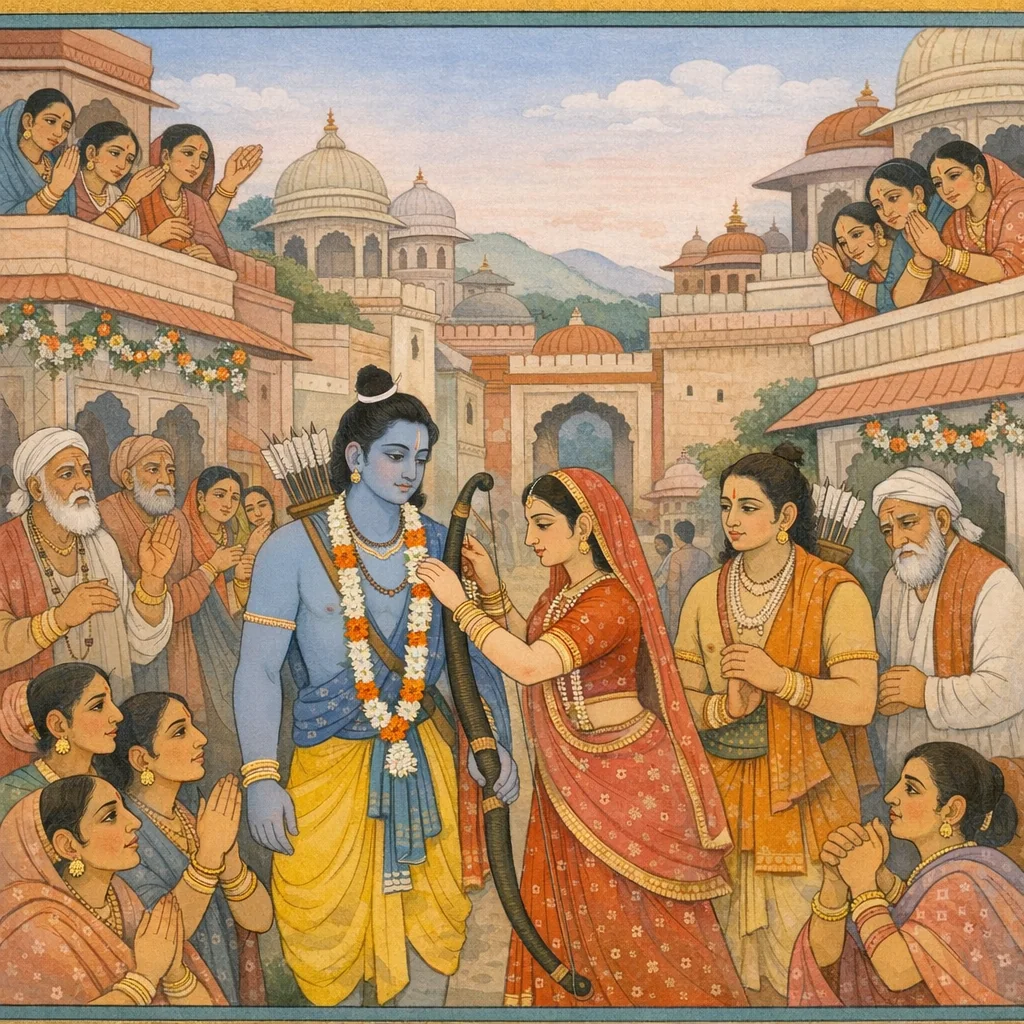
In this sarga, Rāma and Lakṣmaṇa, accompanied by Sītā, perform charitable giving to brāhmaṇas and proceed to meet Daśaratha, marking exile as an act framed by ritual propriety and social obligation (2.33.1). Sītā adorns the brothers’ weapons with garlands, a domestic-sacral gesture that re-signifies arms as instruments of duty rather than conquest (2.33.2). The streets, crowded and impassable, drive citizens to rooftops where they witness the unsettling inversion of royal protocol—Rāma on foot without the umbrella—and they voice layered critiques: Daśaratha must be ‘possessed’ to speak of banishment; a king should not exile a beloved son, especially one whose conduct has ‘conquered the world’ (2.33.10–11). The populace articulates Rāma’s ṣaḍguṇas—harmlessness, compassion, learning, good conduct, restraint, and self-control—presenting him as dharma’s essence and the ‘root’ of humanity, with society as branches and fruit (2.33.12–15). Their grief becomes ecological metaphor (aquatic creatures in drought; a tree cut at the root), and their loyalty escalates into a readiness to abandon homes and follow Rāma into the forest, even imaginatively exchanging city and wilderness as moral geographies (2.33.16–25). Rāma hears these voices yet remains unwavering, enters the palace, sees the dejected Sumantra, and instructs him to announce his arrival to the king, maintaining composure and duty-bound intent (2.33.26–31).
Shlokas
Verse 1
दत्त्वा तु सह वैदेह्या ब्राह्मणेभ्यो धनं बहु।जग्मतुः पितरं द्रष्टुं सीतया सह राघवौ।।।।
After giving abundant wealth in charity to the brāhmaṇas, the two Rāghavas—together with Sītā—set out to see their father (Daśaratha).
Verse 2
ततो गृहीते दुष्प्रेक्षे त्वशोभेतां तदायुधे।मालादामभिराबद्धे सीतया समलङ्कृते।।।।
Then the dazzling pair of weapons, now taken up, shone all the more—decorated and adorned by Sītā with garlands and floral strings.
Verse 3
ततः प्रासादहर्म्याणि विमानशिखराणि च।अधिरुह्य जनश्श्रीमानुदासीनो व्यलोकयत्।।।।
Then the prosperous citizens climbed up onto palaces, mansions, and the lofty terraces of multi-storied buildings, and watched with a sorrowful, detached heaviness of heart.
Verse 4
न हि रथ्याः स्म शक्यन्ते गन्तुं बहुजनाकुलाः।आरुह्य तस्मात्प्रासादान् दीनाः पश्यन्ति राघवम्।।।।
For the streets, crowded with multitudes, had become impassable; therefore the people, miserable with grief, climbed up onto the mansions and looked upon Rāghava (Rāma).
Verse 5
पदातिं वर्जितच्छत्रं रामं दृष्ट्वा जनास्तदा।ऊचुर्बहुविधा वाच श्शोकोपहतचेतसः।।।।
Seeing Rāma on foot, without the royal umbrella, the people—hearts struck down by grief—then spoke many kinds of words.
Verse 6
यं यान्तमनुयाति स्म चतुरङ्गबलं महत्।तमेकं सीतया सार्धमनुयाति स्म लक्ष्मणः।।।।
Him whom, when he went forth, a great fourfold army used to follow—now only Lakṣmaṇa follows, together with Sītā, as he goes alone.
Verse 7
ऐश्वर्यस्य रसज्ञः सन् कामिनां चैव कामदः।नेच्छत्येवानृतं कर्तुं पितरं धर्मगौरवात्।।।।
Though he knows well the pleasures of royal prosperity and is a fulfiller of people’s desires, Rāma—out of reverence for dharma—does not wish to make his father false to his word.
Verse 8
या न शक्या पुरा द्रष्टुं भूतैराकाशगैरपि।तामद्य सीतां पश्यन्ति राजमार्गगता जनाः।।।।
She whom even sky-roaming beings could scarcely behold in earlier days—today the people walking along the royal highway are able to see that very Sītā.
Verse 9
अङ्गरागोचितां सीतां रक्तचन्दनसेविनीम्।वर्षमुष्णं च शीतं च नेष्यन्त्याशु विवर्णताम्।।।।
Sītā—accustomed to fragrant unguents and to red sandal paste—will now face rain, heat, and cold, which will quickly drain her complexion.
Verse 10
अद्य नूनं दशरथस्सत्त्वमाविश्य भाषते।न हि राजा प्रियं पुत्रं विवासयितुमर्हति।।।।
Surely today Daśaratha speaks as though seized by some dark force; for a king ought not to banish his own beloved son.
Verse 11
निर्गुणस्यापि पुत्रस्य कथं स्याद्विप्रवासनम्।किं पुनर्यस्य लोकोऽयं जितो वृत्तेन केवलम्।।।।
How could even a son without virtues be sent away in exile? How much less one like Rāma, who has won over this whole world by conduct alone.
Verse 12
अनृशंस्यमनुक्रोशः श्रुतं शीलं दमश्शमः।राघवं शोभयन्त्येते षड्गुणाः पुरुषोत्तमम्।।।।
Harmlessness, compassion, learning, good character, restraint of the senses, and inner calm—these six virtues adorn Rāghava, the best of men.
Verse 13
तस्मात्तस्योपघातेन प्रजाः परमपीडिताः।औदकानीव सत्त्वानि ग्रीष्मे सलिलसङ्क्षयात्।।।।
Therefore, at the injury done to him (Rāma), the people are grievously distressed—like aquatic creatures in summer when the waters have dried away.
Verse 14
पीडया पीडितं सर्वं जगदस्य जगत्पतेः।मूलस्येवोपघातेन वृक्षः पुष्पफलोपगः।।।।
When he—the lord of the world—suffers, the whole world suffers with him; just as a tree bearing flowers and fruits collapses when its root is struck.
Verse 15
मूलं ह्येष मनुष्याणां धर्मसारो महाद्युतिः।पुष्पं फलं च पत्रं च शाखाश्चास्येतरे जनाः।।।।
He—radiant, the very essence of dharma—is indeed the root of humanity; the other people are like its flowers, fruits, leaves, and branches.
Verse 16
ते लक्ष्मण इव क्षिप्रं सपत्न्य स्सहबान्धवाः।गच्छन्तमनुगच्छामो येन गच्छति राघवः।।।।
Let us, like Lakṣmaṇa, quickly follow Rāghava as he goes—together with our wives and our kinsfolk—by whatever path he takes.
Verse 17
उद्यानानि परित्यज्य क्षेत्राणि च गृहाणि च।एकदुःखसुखा राममनुगच्छाम धार्मिकम्।।।।
Abandoning our gardens, our fields, and our homes, sharing one and the same sorrow and joy, let us follow righteous Rāma.
Verse 18
समुद्धृतनिधानानि परिध्वस्ताजिराणि च।उपात्त धनधान्यानि हृतसाराणि सर्वशः।।।।रजसाभ्यवकीर्णानि परित्यक्तानि दैवतैः।मूषकैःपरिधावद्भिरुद्बिलैरावृतानि च।।।।अपेतोदकधूमानि हीनसम्मार्जनानि च।प्रणष्टबलिकर्मेज्यामन्त्रहोमजपानि च।।।।दुष्कालेनेव भग्नानि भिन्नभाजनवन्ति च।अस्मात्त्यक्तानि वेश्मानि कैकेयी प्रतिपद्यताम्।।।।
Let Kaikeyī take over the houses we abandon—houses whose courtyards are ruined, whose hidden hoards have been dug up, whose wealth and grain have been carried off, and which are utterly stripped. Let them lie coated in dust, forsaken by the gods, overrun by rats and covered with their burrows; without water and without kitchen-smoke, unswept, with offerings, worship, mantras, oblations, and recitations all fallen silent—like homes broken by famine, strewn with shattered vessels.
Verse 19
समुद्धृतनिधानानि परिध्वस्ताजिराणि च।उपात्त धनधान्यानि हृतसाराणि सर्वशः।।2.33.18।।रजसाभ्यवकीर्णानि परित्यक्तानि दैवतैः।मूषकैःपरिधावद्भिरुद्बिलैरावृतानि च।।2.33.19।।अपेतोदकधूमानि हीनसम्मार्जनानि च।प्रणष्टबलिकर्मेज्यामन्त्रहोमजपानि च।।2.33.20।।दुष्कालेनेव भग्नानि भिन्नभाजनवन्ति च।अस्मात्त्यक्तानि वेश्मानि कैकेयी प्रतिपद्यताम्।।2.33.21।।
Let Kaikeyī take over the houses we abandon—houses whose courtyards are ruined, whose hidden hoards have been dug up, whose wealth and grain have been carried off, and which are utterly stripped. Let them lie coated in dust, forsaken by the gods, overrun by rats and covered with their burrows; without water and without kitchen-smoke, unswept, with offerings, worship, mantras, oblations, and recitations all fallen silent—like homes broken by famine, strewn with shattered vessels.
Verse 20
समुद्धृतनिधानानि परिध्वस्ताजिराणि च।उपात्त धनधान्यानि हृतसाराणि सर्वशः।।2.33.18।।रजसाभ्यवकीर्णानि परित्यक्तानि दैवतैः।मूषकैःपरिधावद्भिरुद्बिलैरावृतानि च।।2.33.19।।अपेतोदकधूमानि हीनसम्मार्जनानि च।प्रणष्टबलिकर्मेज्यामन्त्रहोमजपानि च।।2.33.20।।दुष्कालेनेव भग्नानि भिन्नभाजनवन्ति च।अस्मात्त्यक्तानि वेश्मानि कैकेयी प्रतिपद्यताम्।।2.33.21।।
Let all fanged beasts abandon their dens, and birds and animals their mountain-slopes; let elephants and lions, frightened by the fear of our presence, leave their forests—then let them enter what we have left behind, and vacate the places we now occupy.
Verse 21
समुद्धृतनिधानानि परिध्वस्ताजिराणि च।उपात्त धनधान्यानि हृतसाराणि सर्वशः।।2.33.18।।रजसाभ्यवकीर्णानि परित्यक्तानि दैवतैः।मूषकैःपरिधावद्भिरुद्बिलैरावृतानि च।।2.33.19।।अपेतोदकधूमानि हीनसम्मार्जनानि च।प्रणष्टबलिकर्मेज्यामन्त्रहोमजपानि च।।2.33.20।।दुष्कालेनेव भग्नानि भिन्नभाजनवन्ति च।अस्मात्त्यक्तानि वेश्मानि कैकेयी प्रतिपद्यताम्।।2.33.21।।
Let Kaikeyī, with her son and her kinsmen, take that land filled with serpents, beasts, and birds—creatures that feed on grass, flesh, and fruits. As for us, we shall all dwell content in the forest with Rāghava.
Verse 22
वनं नगरमेवास्तु येन गच्छति राघवः।अस्माभिश्च परित्यक्तं पुरं सम्पद्यतां वनम्।।।।
Wherever Rāghava goes, let that very forest be our city; and let the city, abandoned by us, turn into a forest.
Verse 23
बिलानि दंष्ट्रिण स्सर्वे सानूनि मृगपक्षिणः।त्यजन्त्वस्मद्भयाद्भीता गजास्सिंहा वनानि च।।।।अस्मत्त्यक्तं प्रपद्यन्तां सेव्यमानं त्यजन्तु च।
Let all fanged beasts abandon their dens, and birds and animals their mountain-slopes; let elephants and lions, frightened by the fear of our presence, leave their forests—then let them enter what we have left behind, and vacate the places we now occupy.
Verse 24
तृणमांस फलादानां देशं व्यालमृगद्विजम्।।।।प्रपद्यतां हि कैकेयी सपुत्रा सह बान्धवैः।राघवेण वने सर्वे वयं वत्स्याम निर्वृताः।।।।
Let Kaikeyī, with her son and her kinsmen, take that land filled with serpents, beasts, and birds—creatures that feed on grass, flesh, and fruits. As for us, we shall all dwell content in the forest with Rāghava.
Verse 25
तृणमांस फलादानां देशं व्यालमृगद्विजम्।।2.33.24।।प्रपद्यतां हि कैकेयी सपुत्रा सह बान्धवैः।राघवेण वने सर्वे वयं वत्स्याम निर्वृताः।।2.33.25।।
Let Kaikeyī, with her son and her kinsmen, take that land filled with serpents, beasts, and birds—creatures that feed on grass, flesh, and fruits. As for us, we shall all dwell content in the forest with Rāghava.
Verse 26
इत्येवं विविधा वाचो नानाजनसमीरिताः।शुश्राव रामः श्रुत्वा च न विचक्रेऽस्य मानसम्।।।।
Thus Rāma heard the many kinds of words spoken by various people; yet, even after hearing them, his mind did not swerve from its resolve.
Verse 27
स तु वेश्म पितुर्दूरात्कैलासशिखरप्रभम्।अभिचक्राम धर्मात्मा मत्तमातङ्गविक्रमः।।।।
But that righteous-souled one—mighty like an intoxicated elephant—advanced toward his father’s palace, which from afar shone like the peak of Mount Kailāsa.
Verse 28
विनीतवीरपुरुषं प्रविश्य तु नृपालयम्।ददर्शावस्थितं दीनं सुमन्त्रमविदूरतः।।।।
Entering the royal palace staffed and guarded by well-disciplined warriors, he saw Sumantra standing not far away, dejected.
Verse 29
प्रतीक्षमाणोऽपि जनं तदार्तमनार्तरूपः प्रहसन्निवाथ।जगाम रामः पितरं दिदृक्षुःपितुर्निदेशं विधिवच्चिकीर्षुः।।।।
Though he saw the people then in distress, Rāma did not display his own anguish; as if smiling, he went to see his father, intent on carrying out his father’s command in the proper manner.
Verse 30
तत्पूर्वमैक्ष्वाकसुतो महात्मारामो गमिष्यन्वनमार्तरूपम्।व्यतिष्ठत प्रेक्ष्य तदा सुमन्त्रंपितुर्महात्मा प्रतिहारणार्थम्।।।।
For the first time, the great-souled Rāma—scion of Ikṣvāku—setting out for the forest with a sorrow-marked countenance, paused then on seeing Sumantra, so that his arrival might be conveyed to his father.
Verse 31
पितुर्निदेशेन तु धर्मवत्सलःवनप्रवेशे कृतबुद्धिनिश्चयः।स राघवः प्रेक्ष्य सुमन्त्रमब्रवीन्निवेदयस्वागमनं नृपाय मे।।।।
But Rāghava—devoted to dharma, and firmly resolved to enter the forest in obedience to his father’s command—seeing Sumantra, said: “Inform the king of my arrival.”
Frequently Asked Questions
The civic community confronts the legitimacy of exiling Rāma: they argue a king should not banish a beloved son and interpret the decree as moral disorder, while Rāma models obedience to paternal command without retaliatory speech or public agitation.
Dharma is portrayed as stabilizing social reality: Rāma’s inner restraint and steadfastness become the ‘root’ sustaining the world, and public speech functions as ethical testimony that virtue—especially self-control and compassion—grounds legitimate authority.
Ayodhyā’s royal road and palace spaces frame the public spectacle; the forest is reimagined as an alternative ‘city’ for the loyal populace; Mount Kailāsa is invoked as a simile for the palace’s splendor, and domestic ritual markers (cchatra, garlands, offerings) signal cultural order under strain.