Sarga 26
अयोध्याकाण्डे षड्विंशः सर्गः — Rama’s Departure and Sita’s Questions; Disclosure of Exile and Counsel on Courtly Conduct
अयोध्याकाण्ड
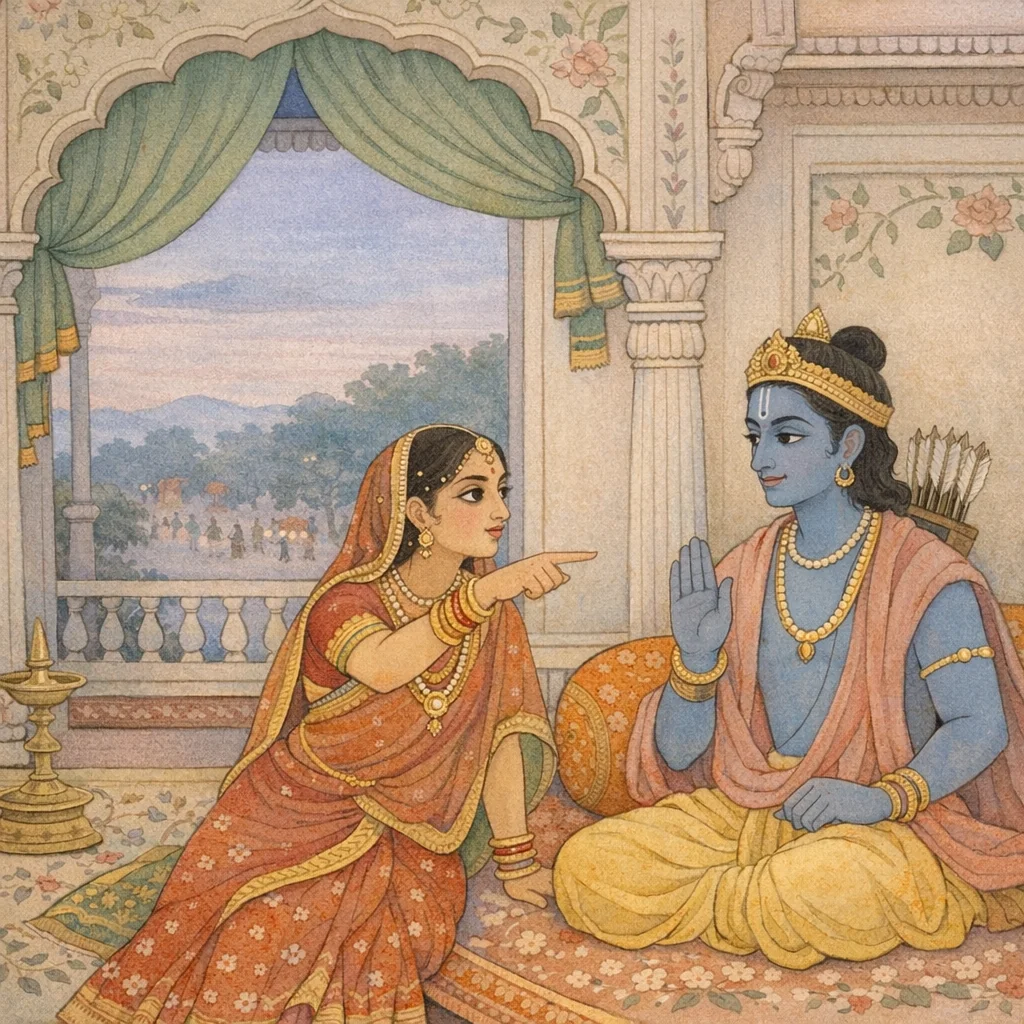
This sarga stages a transition from ritual certainty to ethical shock. After Kauśalyā performs svastyayana (benedictory rites), Rāma pays obeisance and proceeds toward forest-exile while still “fixed on the righteous path” (धर्मिष्ठे वर्त्मनि स्थितः), moving along the royal highway amid the crowd whose hearts are stirred by his guṇas. In his residence, Sītā—having completed household worship and austerities oriented toward the anticipated consecration—sees Rāma’s altered complexion and grief. She articulates a sequence of pointed questions: why the umbrella, fans, panegyrists, auspicious acclamations, ritual sprinkling of honey-curd, ministers, guild leaders, ceremonial chariot, leading elephant, and golden throne are absent—i.e., why the public semiotics of coronation have collapsed. Rāma then discloses the causality of exile: Daśaratha’s earlier boons to Kaikeyī, her enforcement of the promise during abhiṣeka preparations, the decree of fourteen years in Daṇḍaka, and Bharata’s appointment as yuvarāja. He adds a pragmatic-ethical counsel to Sītā: do not praise him before Bharata; seek no special treatment; maintain favorable conduct; honor Daśaratha and all his mothers, especially grief-worn Kauśalyā; regard Bharata and Śatrughna as kin deserving care; avoid displeasing the king, since rulers reward loyal service and may reject even their own if harmful. The chapter closes with Rāma’s request that Sītā remain in Ayodhyā, steady and non-offensive in speech and action, while he departs for the forest.
Shlokas
Verse 1
अभिवाद्य च कौसल्यां राम स्संप्रस्थितो वनम्।कृतस्वस्त्ययनो मात्रा धर्मिष्ठे वर्त्मनि स्थितः।।।।विराजयन्राजसुतो राजमार्गं नरैर्वृतम्।हृदयान्याममन्थेव जनस्य गुणवत्तया।।।।
Having saluted Kausalyā, and after his mother had performed benedictory rites, Rāma set out for the forest, firmly established on the most righteous path. The prince entered the royal highway crowded with people; shining as he went, he seemed to churn the hearts of the populace by the power of his virtues.
Verse 2
अभिवाद्य च कौसल्यां राम स्संप्रस्थितो वनम्।कृतस्वस्त्ययनो मात्रा धर्मिष्ठे वर्त्मनि स्थितः।।2.26.1।।विराजयन्राजसुतो राजमार्गं नरैर्वृतम्।हृदयान्याममन्थेव जनस्य गुणवत्तया।।2.26.2।।
After paying obeisance to Kausalyā, and after his mother had performed benedictory rites for him, Rāma set out for the forest, firmly established on the most righteous path. The prince, bright with his own splendour, entered the royal road crowded with people, and by his excellence of character he seemed to churn the hearts of the populace.
Verse 3
वैदेही चापि तत्सर्वं न शुश्राव तपस्विनी।तदेव हृदि तस्याश्च यौवराज्याभिषेचनम्।।।।
Vaidehī (Sītā), absorbed in her consecration-austerities, did not hear any of those developments; in her heart there was only the thought of the heir-apparent’s coronation.
Verse 4
देवकार्यं स्वयं कृत्वा कृतज्ञा हृष्टचेतना।अभिज्ञा राजधर्माणां राजपुत्रं प्रतीक्षते।।।।
Having herself completed the worship due to the gods, Sītā—grateful and joyful at heart, and well-versed in royal duties—waited for the prince’s arrival.
Verse 5
प्रविवेशाथ रामस्तु स्वं वेश्म सुविभूषितम्।प्रहृष्टजनसम्पूर्णं ह्रिया किञ्चिदवाङ्मुखः।।।।
Then Rāma entered his own splendidly adorned residence, filled with delighted people—yet he walked with his face slightly lowered, out of modest embarrassment.
Verse 6
अथ सीता समुत्पत्य वेपमाना च तं पतिम्।अपश्यच्छोकसन्तप्तं चिन्ताव्याकुलितेन्द्रियम्।।।।
Then Sītā sprang up, trembling, and saw her husband—burning with grief, his senses thrown into turmoil by anxious thought.
Verse 7
तां दृष्ट्वा स हि धर्मात्मा न शशाक मनोगतम्।तं शोकं राघवः सोढुं ततो विवृततां गतः।।।।
Seeing her, that righteous-souled Rāghava could not endure the sorrow lodged within his heart; therefore it broke forth and became visible.
Verse 8
विवर्णवदनं दृष्ट्वा तं प्रस्विन्नममर्षणम्।आह दुःखाभिसन्तप्ता किमिदानीमिदं प्रभो।।।।
Seeing him pale-faced, drenched in sweat, and burning with indignation, Sītā—herself scorched by sorrow—said: “My lord, what is this now?”
Verse 9
अद्य बार्हस्पत श्श्रीमान्युक्तः पुष्योऽनु राघव।प्रोच्यते ब्राह्मणैः प्राज्ञैः केन त्वमसि दुर्मनाः।।।।
“O Rāghava, today—under the auspicious Pushya, with Bṛhaspati presiding—has been declared by wise brāhmaṇas as a fitting day (for consecration). Why, then, are you downcast?”
Verse 10
न ते शतशलाकेन जलफेननिभेन च।आवृतं वदनं वल्गु छत्रेणापि विराजते।।।।
How is it that your charming face does not shine today, even when covered by a white umbrella with a hundred ribs, like foam upon water?
Verse 11
व्यजनाभ्यां च मुख्याभ्यां शतपत्रनिभेक्षणम्।चन्द्रहंसप्रकाशाभ्यां वीज्यते न तवाननम्।।।।
How is it that your face—its eyes like lotuses—is not being fanned today by excellent fans gleaming like the moon or a swan?
Verse 12
वाग्मिनो वन्दिनश्चापि प्रहृष्टास्त्वां नरर्षभ।स्तुवन्तो नात्र दृश्यन्ते मङ्गलैः स्सूतमागधाः।।।।
O best of men, the eloquent panegyrists too—delighted—are not seen here praising you with auspicious words: neither the charioteer-bards nor the Māgadha singers appear.
Verse 13
न ते क्षौद्रं च दधि च ब्राह्मणा वेदपारगाः।मूर्ध्नि मूर्धाभिषिक्तस्य ददति स्म विधानतः।।।।
Why is it that the Brahmins, learned in the Vedas, have not—according to the prescribed rite—sprinkled on your head the honey-and-curd mixture that is customary at the consecration?
Verse 14
न त्वां प्रकृतय स्सर्वा श्श्रेणीमुख्याश्च भूषिताः।अनुव्रजितुमिच्छन्ति पौरजानपदास्तथा।।।।
Why is it that the ministers, the adorned leaders of the guilds, and likewise the citizens of town and countryside do not wish to follow you in attendance?
Verse 15
चतुर्भिर्वेगसम्पन्नैर्हयैः काञ्चनभूषितैः।मुख्यः पुष्यरथो युक्तः किं न गच्छति तेऽग्रतः।।।।
Why does the chief ceremonial chariot—gold-adorned and yoked to four swift horses—not go before you?
Verse 16
हस्ती चाग्रत श्श्रीमां स्तव लक्षणपूजितः।प्रयाणे लक्ष्यते वीर कृष्णमेघगिरि प्रभः।।।।
And why, O valiant one, is the auspicious elephant—honoured for its noble marks, radiant like a dark cloud or a mountain—not seen at the front of your procession as you set out?
Verse 17
न च काञ्चनचित्रं ते पश्यामि प्रियदर्शन।भद्रासनं पुरस्कृत्य यान्तं वीर पुरस्कृतम्।।।।
Nor do I see, O pleasing to behold, O hero, your attendants going ahead bearing in front the auspicious seat—adorned with gold—as is customary.
Verse 18
अभिषेको यथा सज्जः किमिदानीमिदं तव।अपूर्वो मुखवर्णश्च न प्रहर्षश्च लक्ष्यते।।।।
When the consecration has been arranged, why is this so now with you? Your face shows an unusual pallor, and no joy is seen.
Verse 19
इतीव विलपन्तीं तां प्रोवाच रघुनन्दनः।सीते तत्र भवांस्तातः प्रव्राजयति मां वनम्।।।।
As she lamented thus, Rāma—the delight of the Raghu line—said: “Sītā, there my revered father is sending me away into the forest.”
Verse 20
कुले महति सम्भूते धर्मज्ञे धर्मचारिणि।शृणु जानकि येनेदं क्रमेणाभ्यागतं मम।।।।
O Jānakī—born in a noble family, knowing dharma and practising it—listen, and I shall tell you how, step by step, this has come upon me.
Verse 21
राज्ञा सत्यप्रतिज्ञेन पित्रा दशरथेन च।कैकेय्यै मम मात्रे तु पुरा दत्तौ महावरौ।।।।
My father, King Daśaratha, a man true to his pledged word, had earlier granted my mother Kaikeyī two great boons.
Verse 22
तयाऽद्य मम सज्जेऽस्मिन्नभिषेके नृपोद्यते।प्रचोदित स्स समयो धर्मेण प्रतिनिर्जितः।।।।
Today, just as the king was preparing for my consecration, she pressed him about that promised boon; invoking “dharma,” she has effectively forced him into submission.
Verse 23
चतुर्दश हि वर्षाणि वस्तव्यं दण्डके मया।पित्रा मे भरतश्चापि यौवराज्ये नियोजितः।।।।
I must live for fourteen years in the Daṇḍaka forest; and my father has appointed Bharata as the prince-regent.
Verse 24
सोऽहं त्वामागतो द्रष्टुं प्रस्थितो विजनं वनम्।भरतस्य समीपे तु नाहं कथ्यः कदाचन।।।।बुद्धियुक्ता हि पुरुषा न सहन्ते परस्तवम्।तस्मान्नते गुणाः कथ्या भरतस्याग्रतो मम।।।।
I have come to see you as I am about to depart for the lonely forest. In Bharata’s presence, you should never speak of me—wise men do not endure praise of another before them. Therefore, do not recount my virtues in front of Bharata.
Verse 25
सोऽहं त्वामागतो द्रष्टुं प्रस्थितो विजनं वनम्।भरतस्य समीपे तु नाहं कथ्यः कदाचन।।2.26.24।।बुद्धियुक्ता हि पुरुषा न सहन्ते परस्तवम्।तस्मान्नते गुणाः कथ्या भरतस्याग्रतो मम।।2.26.25।।
I have come to see you as I am about to depart for the lonely forest. In Bharata’s presence, you should never speak of me—wise men do not endure praise of another before them. Therefore, do not recount my virtues in front of Bharata.
Verse 26
नापि त्वं तेन भर्तव्या विशेषेण कदाचन।अनुकूलतया शक्यं समीपे त्वस्य वर्तितुम्।।।।
Nor should you ever expect special support from him; it is only by being agreeable that you can manage to remain in his vicinity.
Verse 27
तस्मै दत्तं नृपतिना यौवराज्यं सनातनम्।स प्रसाद्यस्त्वया सीते नृपतिश्च विशेषतः।।।।
The king has granted him the hereditary regency; therefore, O Sītā, you should seek to win his goodwill—and especially the goodwill of the king.
Verse 28
अहं चापि प्रतिज्ञां तां गुरोस्समनुपालयन्।वनमद्यैव यास्यामि स्थिरा भव मनस्विनी।।।।
I too, in order to uphold my father’s pledge, will go to the forest this very day; be steadfast, O strong-minded one.
Verse 29
याते च मयि कल्याणि वनं मुनिनिषेवितम्।व्रतोपवासपरया भवितव्यं त्वयाऽनघे।।।।
When I have gone to the forest frequented by sages, O auspicious and blameless one, you should devote yourself to vows and fasting.
Verse 30
काल्यमुत्थाय देवानां कृत्वा पूजां यथाविधि।वन्दितव्यो दशरथः पिता मम नरेश्वरः।।।।
Rising early, and having worshipped the household deities according to rule, you should pay homage to my father Daśaratha, the lord of men.
Verse 31
माता च मम कौशल्या वृद्धा सन्तापकर्शिता।धर्ममेवाग्रतः कृत्वा त्वत्त स्सम्मानमर्हति।।।।
My mother Kauśalyā is aged and worn down by grief; keeping dharma foremost, you ought to show her due honor and respect.
Verse 31
माता च मम कौशल्या वृद्धा सन्तापकर्शिता।धर्ममेवाग्रतः कृत्वा त्वत्त स्सम्मानमर्हति।।।।
My mother Kauśalyā is aged and worn down by grief; keeping dharma foremost, you ought to show her due honor and respect.
Verse 32
वन्दितव्याश्च ते नित्यं या श्शेषा मम मातरः।स्नेह प्रणयसम्भोगै स्समा हि मम मातरः।।।।
And the rest of my mothers too should always be honored by you; for in love, affection, and the duties of attendance, all my mothers are equally to be regarded.
Verse 33
भ्रातृपुत्रसमौ चापि द्रष्टव्यौ च विशेषतः।त्वया भरतशत्रुघ्नौ प्राणैः प्रियतरौ मम।।।।
And most especially, you must look after Bharata and Śatrughna—treating them as your brother and your son—for to me they are dearer even than life-breath.
Verse 34
विप्रियं न च कर्तव्यं भरतस्य कदाचन।स हि राजा प्रभुश्चैव देशस्य च कुलस्य च।।।।
You must never do anything displeasing to Bharata, for he is now the king and the rightful lord of both the realm and the royal lineage.
Verse 35
आराधिता हि शीलेन प्रयत्नैश्चोपसेविताः।राजान स्सम्प्रसीदन्ति कुप्यन्तिच विपर्यये।।।।
Kings become gracious when they are honored through good conduct and diligent service; but when the opposite occurs, they grow angry.
Verse 36
औरसानपि पुत्रान्हि त्यजन्त्यहितकारिणः।समर्थान्सम्प्रगृह्णन्ति जनानपि नराधिपाः।।।।
For kings may even abandon their own sons if they become harmful, and they may accept capable persons even if they are not of the family.
Verse 37
सा त्वं वसेह कल्याणि राज्ञस्समनुवर्तिनी।भरतस्य रता धर्मे सत्यव्रतपरायणा।।।।
Therefore, O auspicious one, live here in obedience to the king—devoted to Bharata’s righteous order—steadfast in truth and in sacred vows.
Verse 38
अहं गमिष्यामि महावनं प्रियेत्वया हि वस्तव्यमिहैव भामिनि।यथा व्यलीकं कुरुषे न कस्य चित्तथा त्वया कार्यमिदं वचो मम।।।।
Beloved, I shall go to the great forest; but you, O fair one, must stay here—so that you do no offense to anyone in any manner. This is my word, and it must be carried out by you.
Frequently Asked Questions
The dilemma is the collision between a planned coronation and the binding force of a royal promise: Daśaratha is compelled (in the name of dharma) to honor boons granted to Kaikeyī, resulting in Rāma’s acceptance of exile as the ethically coherent response.
The sarga teaches that dharma includes disciplined speech and social navigation: Rāma advises Sītā to avoid comparative praise before the new sovereign, to seek concord through favorable conduct, and to honor elders and co-wives—showing how virtue operates within real power structures.
Culturally, the chapter highlights coronation semiotics and rites (svastyayana, umbrella, fans, bards, honey-curd sprinkling, chariot, elephant, throne) as public markers of legitimacy; geographically, it points to Ayodhyā’s rājamārga and the destination of exile, the Daṇḍaka forest.