Sarga 22
अभिषेक-निवृत्ति-उपदेशः (Withdrawal of the Coronation: Rama’s Counsel to Lakshmana)
अयोध्याकाण्ड
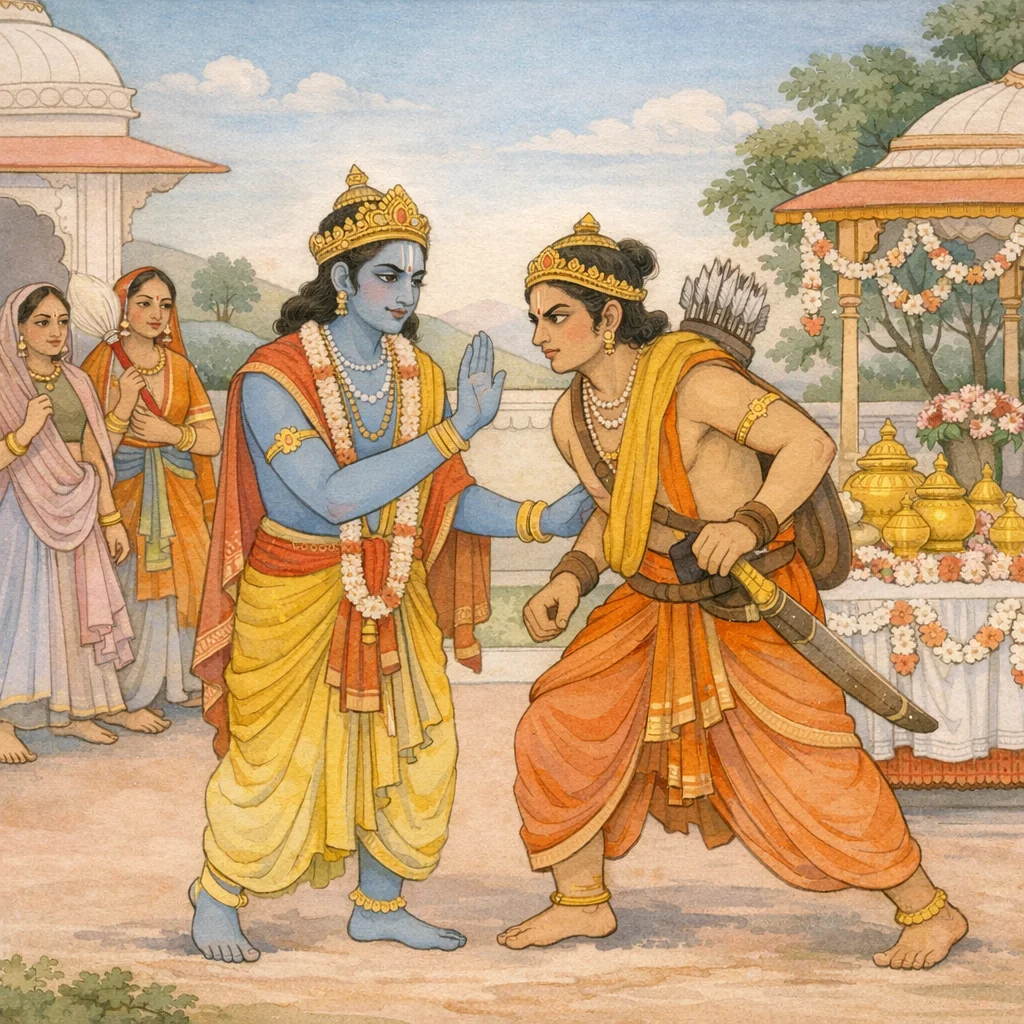
Sarga 22 centers on Rāma’s composed intervention in Lakṣmaṇa’s anger after the coronation is obstructed. Approaching Lakṣmaṇa—depicted as ‘hissing like a king cobra’ with wrath-widened eyes—Rāma restrains the emotional spiral by prescribing dhairya (fortitude) and immediate administrative action: withdraw the abhiṣeka arrangements without creating further obstacles. He argues that continuation of preparations would intensify Daśaratha’s mental anguish, since the king fears the moral breach of unfulfilled truth (satya). Rāma frames Kaikeyī’s harsh speech and determination as destiny-driven (daiva/kṛtānta), discouraging blame and retaliation; even sages, he notes, can be shaken by destiny’s pressure. The chapter converts royal ritual materials (pots of consecration water) into ascetic preparation, asserting that forest-dwelling can be ‘more glorious’ than kingship when aligned with dharma. The discourse thus maps a transition from rājyadharma (statecraft and legitimacy) to tapodharma (vowed discipline), while preserving familial non-violence and public order.
Shlokas
Verse 1
अथ तं व्यथया दीनं सविशेषममर्षितम्।श्वसन्तमिव नागेन्द्रं रोषविस्फारितेक्षणम्।।।।आसाद्य रामस्सौमित्रिं सुहृदं भ्रातरं प्रियम्।उवाचेदं स धैर्येण धारयन्सत्त्वमात्मवान्।।।।
Then self-possessed Rāma, steadying his composure with fortitude, approached his dear brother and intimate friend Lakṣmaṇa, who was miserable with anguish—hissing like a lordly serpent, his eyes widened in wrath—and spoke to him as follows.
Verse 2
अथ तं व्यथया दीनं सविशेषममर्षितम्। श्वसन्तमिव नागेन्द्रं रोषविस्फारितेक्षणम्।।2.22.1।।आसाद्य रामस्सौमित्रिं सुहृदं भ्रातरं प्रियम्।उवाचेदं स धैर्येण धारयन्सत्त्वमात्मवान्।।2.22.2।।
Then Rāma, self-possessed and steady, approached Saumitri—his dear brother and trusted friend—who, crushed by anguish and burning with indignation, looked like a great serpent hissing, his eyes widened in rage; and with fortitude Rāma spoke to him, holding firmly to composure.
Verse 3
निगृह्य रोषं शोकं च धैर्यमाश्रित्य केवलम्।अवमानं निरस्येमं गृहीत्वा हर्षमुत्तमम्।।।।उपक्लृप्तं हि यत्किञ्चिदभिषेकार्थमद्य मेसर्वं विसर्जय क्षिप्रं कुरु कार्यं निरत्ययम्।।।।
Restrain both anger and grief; take refuge only in steadfastness. Casting aside this sense of humiliation, hold fast to a higher joy.
Verse 4
निगृह्य रोषं शोकं च धैर्यमाश्रित्य केवलम्।अवमानं निरस्येमं गृहीत्वा हर्षमुत्तमम्।।2.22.3।।उपक्लृप्तं हि यत्किञ्चिदभिषेकार्थमद्य मेसर्वं विसर्जय क्षिप्रं कुरु कार्यं निरत्ययम्।।2.22.4।।
Whatever arrangements have been made today for my consecration—set them all aside. Act quickly, and do what must be done without mishap.
Verse 5
सौमित्रे योऽभिषेकार्थे मम सम्भार सम्भ्रमः।अभिषेकनिवृत्त्यर्थे सोऽस्तु संभारसम्भ्रमः।।।।
O Saumitra, let the same energetic effort with which my coronation was prepared now be applied to bringing those preparations to an end.
Verse 6
यस्या मदभिषेकार्थे मानसं परितप्यते।माता मे सा यथा न स्यात्सविशङ्का तथा कुरु।।।।
Act so that my mother—whose heart burned at the prospect of my coronation—does not remain troubled by doubt.
Verse 7
तस्याश्शङ्कामयं दुःखं मुहूर्तमपि नोत्सहे।मनसि प्रतिसंजातं सौमित्रेऽहमुपेक्षितुम्।।।।
O Saumitra, I cannot bring myself to ignore—even for a moment—the sorrow born of suspicion that has arisen in her heart.
Verse 8
न बुद्धिपूर्वं नाबुद्धं स्मरामीह कदाचन।मातृ़णां वा पितुर्वाऽहं कृतमल्पं च विप्रियम्।।।।
I do not recall ever—whether knowingly or through heedlessness—having done even the slightest thing here that displeased my mothers or my father.
Verse 9
सत्यस्सत्याभिसन्धश्च नित्यं सत्यपराक्रमः।परलोकभयाद्भीतो निर्भयोऽस्तु पिता मम।।।।
May my father—truthful, ever intent on truth, truly steadfast in valor—who fears the other world (and its moral consequence), now be free from fear.
Verse 10
तस्याऽपि हि भवेदस्मिन्कर्मण्यप्रतिसंहृते।सत्यं नेति मनस्तापस्तस्य तापस्तपेच्च माम्।।।।
For if this act—the preparations for my consecration—is not withdrawn, my father too will be scorched by the anguish, ‘My truth has not been fulfilled,’ and that very torment of his will afflict me as well.
Verse 11
अभिषेकविधानं तु तस्मात्संहृत्य लक्ष्मण।अन्वगेवाहमिच्छामि वनं गन्तुमितःपुनः।।।।
Therefore, O Lakṣmaṇa, have the arrangements for the consecration withdrawn; only after that do I wish to depart from here to the forest.
Verse 12
मम प्रव्राजनादद्य कृतकृत्या नृपात्मजा।सुतं भरतमव्यग्रमभिषेचयिता ततः।।।।
Once I depart into exile today, the king’s daughter—her aim accomplished—will then, without hesitation, have her son Bharata consecrated.
Verse 13
मयि चीराजिनधरे जटामण्डलधारिणि।गतेऽरण्यं च कैकेय्या भविष्यति मनस्सुखम्।।।।
When I, clad in bark-cloth and antelope skin and bearing a circlet of matted hair, have gone to the forest, then Kaikeyī will at last have peace of mind.
Verse 14
बुद्धिः प्रणीता येनेयं मनश्च सुसमाहितम्।तं तु नार्हामि संक्लेष्टुं प्रव्रजिष्यामि मा चिरम्।।।।
Since this resolve has been formed and my mind is well-composed, I ought not to distress him; I shall depart into exile without delay.
Verse 15
कृतान्तस्त्वेव सौमित्रे द्रष्टव्यो मत्प्रवासने।राज्यस्य च वितीर्णस्य पुनरेव निवर्तने।।।।
O Saumitri, in my exile—and in the revocation of the kingdom that had been granted—destiny alone should be recognized as the cause.
Verse 16
कैकेय्याः प्रतिपत्तिर्हि कथं स्यान्मम पीडने।यदि भावो न दैवोऽयं कृतान्तविहितो भवेत्।।।।
For how could Kaikeyī have found such resolve to wound me, if this turn of mind and this misfortune were not ordained by destiny?
Verse 17
जानासि हि यथा सौम्य न मातृषु ममान्तरम्।भूतपूर्वं विशेषो वा तस्या मयि सुतेऽपि वा।।।।
You know, dear one, that I never had any sense of distinction among my mothers; nor did she ever, in times past, make any difference between me and her own son.
Verse 18
सोऽभिषेकनिवृत्त्यर्थैप्रवासार्थैश्च दुर्वचैः।उग्रैर्वाक्यैरहं तस्या नान्यद्दैवात्समर्थये।।।।
As for those harsh and fierce words of hers—meant to stop my consecration and to drive me into exile—I can account for them by nothing other than destiny.
Verse 19
कथं प्रकृतिसम्पन्ना राजपुत्री तथागुणा।ब्रूयात्सा प्राकृतेव स्त्री मत्पीडां भर्तृसन्निधौ।।।।
If fate were not at work, how could Kaikeyī—so noble by nature, a princess endowed with such virtues—speak words that wound me, and that too in her husband’s presence, like an ordinary woman?
Verse 20
यदचिन्त्यन्तु तद्दैवं भूतेष्वपि न विहन्यते।व्यक्तं मयि च तस्यां च पतितो हि विपर्ययः।।।।
Destiny is indeed inconceivable, and its force cannot be warded off in any being. It is plain that adversity has fallen—upon me, and upon her as well.
Verse 21
कश्चिद्दैवेन सौमित्रे योद्धुमुत्सहते पुमान्।यस्य न ग्रहणं किञ्चित्कर्मणोऽन्यत्र दृश्यते।।।।
O Saumitri, what man can truly attempt to fight destiny—whose grip cannot be perceived directly, but is known only by the course and outcome of events, and nowhere else?
Verse 22
सुखदुःखे भयक्रोधौ लाभालाभौ भवाभवौ।यच्च किञ्चित्तथाभूतं ननु दैवस्य कर्म तत्।।।।
Happiness and sorrow, fear and anger, gain and loss, birth and death—whatever comes to be in this manner is, surely, the working of destiny.
Verse 23
ऋषयोऽप्युग्रतपसो दैवेनाभिप्रपीडिताः।उत्सृज्य नियमांस्तीव्रान्भ्रश्यन्ते काममन्युभिः।।।।
Even sages of fierce austerities, when oppressed by destiny, abandon their severe disciplines and slip—overpowered by desire and anger.
Verse 24
असङ्कल्पितमेवेह यदकस्मात्प्रवर्तते।निवर्त्यारम्भमारब्धं ननु दैवस्य कर्म तत्।।।।
When an unimagined obstacle suddenly arises here and halts an undertaking already begun, that too is surely the work of destiny.
Verse 25
एतया तत्त्वया बुद्ध्या संस्तभ्यात्मानमात्मना।व्याहतेऽप्यभिषेके मे परितापो न विद्यते।।।।
With this principled understanding, I have steadied my mind by myself; and though my consecration has been thwarted, no grief is found in me.
Verse 26
तस्मादपरितापस्संस्त्वमप्यनुविधाय माम्।प्रतिसंहारय क्षिप्रमाभिषेचनिकीं क्रियाम्।।।।
Therefore, be free from grief as I am; follow my lead, and quickly withdraw the rites and arrangements intended for the coronation.
Verse 27
एभिरेव घटै स्सर्वैरभिषेचनसम्भृतैः।मम लक्ष्मण तापस्ये व्रतस्नानं भविष्यति।।।।
With these very pots of water gathered for the coronation, O Lakshmana, I shall perform the vow-bath for the life of ascetic discipline that lies ahead.
Verse 28
अथवा किं ममैतेन राजद्रव्यमयेन तु।उद्धृतं मे स्वयं तोयं व्रतादेशं करिष्यति।।।।
Or else, what use to me is this water kept in vessels that belong to the king? The water I draw with my own hands will serve for the observances of my vows.
Verse 29
मा च लक्ष्मण सन्तापं कार्षीर्लक्ष्म्या विपर्यये।राज्यं वा वनवासो वा वनवासो महोदयः।।।।
Do not grieve, O Lakṣmaṇa, at this reversal of fortune. Whether it is kingship or forest-dwelling—forest-dwelling is the greater glory.
Verse 30
न लक्ष्मणास्मिन्खलु कर्मविघ्नेमाता यवीयस्यतिशङ्कनीया।दैवाभिपन्ना हि वदत्यनिष्टंजानासि दैवं च तथा प्रभावम्।।।।
O Lakṣmaṇa, in this obstruction to the intended act, our younger mother should not be excessively suspected. Overpowered by destiny she speaks what is unpleasant—you know how strong the force of destiny can be.
Frequently Asked Questions
The dilemma is whether to resist the coronation’s cancellation through anger and confrontation or to preserve dharma by orderly withdrawal. Rāma chooses institutional and familial stability: he instructs Lakṣmaṇa to revoke the abhiṣeka arrangements promptly and proceed toward exile without provoking further harm.
Rāma teaches that composure (sattva) and truth-protection outweigh immediate power. By attributing the crisis to daiva/kṛtānta, he redirects blame away from individuals, preventing violence and enabling a disciplined shift from kingship to tapas as a dharmic response.
Culturally, the sarga highlights the abhiṣeka ritual system (consecration pots, preparations) and the ascetic markers of exile—bark garments, antelope skin, and matted hair. Geographically, the key transition is from Ayodhyā’s palace order toward the forest (vana) as a new ethical and social arena.