Sarga 12
द्वादशः सर्गः — Kaikeyi’s Boons and Dasaratha’s Moral Collapse (Ayodhya Kanda 12)
अयोध्याकाण्ड
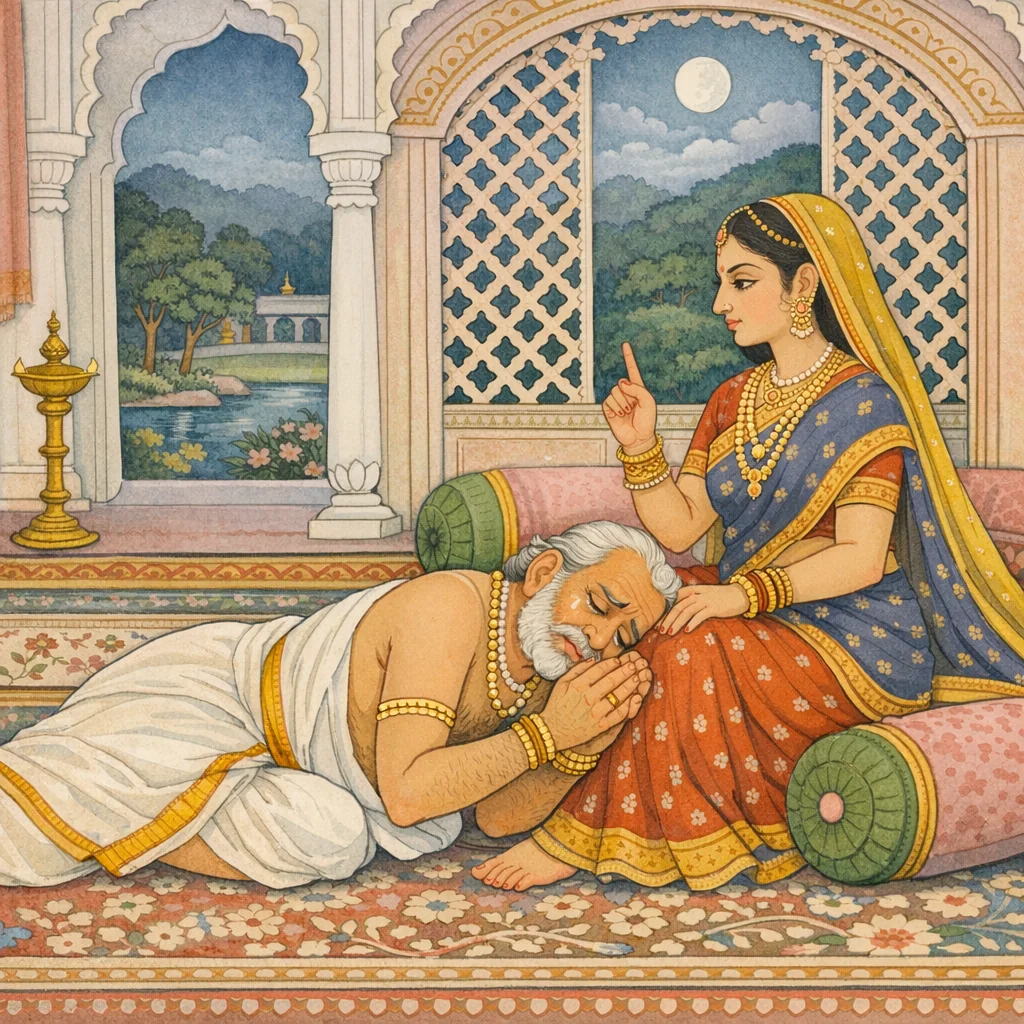
This sarga documents the immediate psychological and ethical rupture after Dasaratha hears Kaikeyi’s “dreadful words” demanding Rama’s forest-exile and Bharata’s installation. The king oscillates between disbelief (dream/hallucination), grief, and indignation, described through vivid similes (deer before tigress; serpent confined by mantra). He argues from Rama’s public virtues—truthfulness, charity, gentleness of speech, service to elders—and frames the demand as a breach of moral order within the Ikshvaku lineage. Kaikeyi counters with a jurisprudence of royal promise: boons once granted must be executed, else the king’s dharmic reputation collapses; she reinforces this with exempla of vow-keeping kings and with threats of self-harm. Dasaratha’s discourse then turns to social consequence (public censure, legitimacy crisis), familial devastation (Kausalya, Sumitra, Sita), and personal self-abasement (supplication at Kaikeyi’s feet). The chapter closes with his physical collapse, marking the transition from deliberation to irreversible tragedy-driven action.
Shlokas
Verse 1
ततश्शृत्वा महाराजः कैकेय्या दारुणं वचः।चिन्तामभिसमापेदे मुहूर्तं प्रतताप च।।।।
Hearing Kaikeyī’s dreadful words, the great king fell into anxious grief, and for a while was seared by intense distress.
Verse 2
किन्नु मे यदि वा स्वप्नश्चित्तमोहोऽपि वा मम।अनुभूतोपसर्गो वा मनसो वाप्युपद्रवः।।।।
“What is this for me—could it be a dream, or a delusion of the mind, or some impending calamity I am about to undergo, or else a disturbance afflicting my mind?”
Verse 3
इति सञ्चिन्त्य तद्राजा नाध्यगच्छत्तदासुखम्।प्रतिलभ्य चिरात्संज्ञां कैकेयीवाक्यताडितः।।।।व्यथितो विक्लबश्चैव व्याघ्रीं दृष्ट्वा यथा मृगः।असंवृतायामासीनो जगत्यां दीर्घमुच्छवसन्।।।।मण्डले पन्नगो रुद्धो मन्त्रैरिव महाविषः।अहो धिगिति सामर्षो वाचमुक्त्वा नराधिपः।।।।मोहमापेदिवान्भूय श्शोकोपहतचेतनः।
Thus reflecting, the king found no comfort. Struck by Kaikeyī’s words, he regained consciousness only after a long while—then, distressed and shaken like a deer seeing a tigress, he sat upon the bare ground, breathing long sighs. Like a highly venomous serpent held in a circle by spells, the lord of men exclaimed in bitter indignation, “Alas, shame!” and again fell into a stupor, his mind overwhelmed by grief.
Verse 4
इति सञ्चिन्त्य तद्राजा नाध्यगच्छत्तदासुखम्।प्रतिलभ्य चिरात्संज्ञां कैकेयीवाक्यताडितः।।2.12.3।।व्यथितो विक्लबश्चैव व्याघ्रीं दृष्ट्वा यथा मृगः।असंवृतायामासीनो जगत्यां दीर्घमुच्छवसन्।।2.12.4।।मण्डले पन्नगो रुद्धो मन्त्रैरिव महाविषः।अहो धिगिति सामर्षो वाचमुक्त्वा नराधिपः।।2.12.5।।मोहमापेदिवान्भूय श्शोकोपहतचेतनः।
Thus reflecting, the king found no comfort. Struck by Kaikeyī’s words, he regained consciousness only after a long while—then, distressed and shaken like a deer seeing a tigress, he sat upon the bare ground, breathing long sighs. Like a highly venomous serpent held in a circle by spells, the lord of men exclaimed in bitter indignation, “Alas, shame!” and again fell into a stupor, his mind overwhelmed by grief.
Verse 5
इति सञ्चिन्त्य तद्राजा नाध्यगच्छत्तदासुखम्।प्रतिलभ्य चिरात्संज्ञां कैकेयीवाक्यताडितः।।2.12.3।।व्यथितो विक्लबश्चैव व्याघ्रीं दृष्ट्वा यथा मृगः।असंवृतायामासीनो जगत्यां दीर्घमुच्छवसन्।।2.12.4।।मण्डले पन्नगो रुद्धो मन्त्रैरिव महाविषः।अहो धिगिति सामर्षो वाचमुक्त्वा नराधिपः।।2.12.5।।मोहमापेदिवान्भूय श्शोकोपहतचेतनः।
Thus reflecting, the king found no comfort. Struck by Kaikeyī’s words, he regained consciousness only after a long while—then, distressed and shaken like a deer seeing a tigress, he sat upon the bare ground, breathing long sighs. Like a highly venomous serpent held in a circle by spells, the lord of men exclaimed in bitter indignation, “Alas, shame!” and again fell into a stupor, his mind overwhelmed by grief.
Verse 6
चिरेण तु नृप स्संज्ञां प्रतिलभ्य सुदुःखितः।।।।कैकेयीमब्रवीत्क्रुद्धःप्रदहन्निव चक्षुषा।
After a long while the king, deeply afflicted, regained consciousness; then, angered—his eyes as if burning—he spoke to Kaikeyī.
Verse 7
नृशंसे दुष्टचारित्रे कुलस्यास्य विनाशिनि।।।।किं कृतं तव रामेण पापं पापे मयापि वा।
O cruel one, of wicked conduct, destroyer of this very lineage—what wrong has Rāma done to you, or what wrong have I done, O sinful woman?
Verse 8
यदा ते जननीतुल्यां वृत्तिं वहति राघव: ।।।।तस्यैव त्वमनर्थाय किंनिमित्तमिहोद्यता ।
When Rāghava (Rāma) conducts himself toward you with the respect due to a mother, for what reason are you here set on bringing harm to such a person?
Verse 9
त्वं मयाऽऽत्मविनाशार्थं भवनं स्वं प्रवेशिता।।।।अविज्ञानान्नृपसुता व्याली तीक्ष्णविषा यथा।
In my ignorance, I brought you—a king’s daughter—into my own house for my self-destruction, like a she-serpent of deadly venom.
Verse 10
जीवलोको यदा सर्वो रामस्याह गुणस्तवम्।।।।अपराधं किमुद्दिश्य त्यक्ष्यामीष्टमहं सुतम्।
When all living beings in the world are voicing a hymn of Rama’s virtues, pointing to what ‘offence’ could I abandon my beloved son?
Verse 11
कौसल्यां वा सुमित्रां वा त्यजेयमपि वा श्रियम्।।।।जीवितं वाऽत्मनो रामं न त्वेव पितृवत्सलम्।
I could abandon Kausalyā or Sumitrā, or even renounce prosperity—yes, even my own life; but I cannot abandon Rāma, who is devoted to his father.
Verse 12
परा भवति मे प्रीतिर्दृष्ट्वा तनयमग्रजम्।।।।अपश्यतस्तु मे रामं नष्टा भवति चेतना।
“When I behold my firstborn son, my joy becomes supreme; but when I do not see Rāma, my very consciousness fails me.”
Verse 13
तिष्ठेल्लोको विना सूर्यं शस्यं वा सलिलं विना।।।।न तु रामं विना देहे तिष्ठेत्तु मम जीवितम्।
“The world might endure without the sun, and crops might exist even without water; but without Rāma, life will not remain within my body.”
Verse 14
तदलं त्यज्यतामेष निश्चयः पापनिश्चये।।।।अपि ते चरणै मूर्ध्ना स्पृशाम्येष प्रसीद मे।
“Enough of this—abandon this resolve, O woman set on a sinful course. Here I bow and touch your feet with my head; be gracious to me.”
Verse 15
किमिदं चिन्तितं पापे त्वया परमदारुणम्।।।।अथ जिज्ञाससे मां त्वं भरतस्य प्रियाप्रिये।अस्तु यत्तत्त्वया पूर्वं व्याहृतं राघवं प्रति।।।।स मे ज्येष्ठस्सुत श्रीमान्धर्मज्येष्ठ इतीव मे।तत्त्वया प्रियवादिन्या सेवार्थं कथितं भवेत्।।।।
“O sinful woman, why have you conceived this utterly dreadful plan? Or is it that you wish to test me about what is pleasing or displeasing regarding Bharata? Let that be as it may. But those words you formerly spoke about Rāghava—‘He is my eldest son, noble, and foremost in dharma’—could they have been spoken by you merely to flatter me?”
Verse 16
किमिदं चिन्तितं पापे त्वया परमदारुणम्।।2.12.15।।अथ जिज्ञाससे मां त्वं भरतस्य प्रियाप्रिये। अस्तु यत्तत्त्वया पूर्वं व्याहृतं राघवं प्रति।।2.12.16।।स मे ज्येष्ठस्सुत श्रीमान्धर्मज्येष्ठ इतीव मे।तत्त्वया प्रियवादिन्या सेवार्थं कथितं भवेत्।।2.12.17।।
“O sinful woman, why have you conceived this utterly dreadful plan? Or is it that you wish to test me about what is pleasing or displeasing regarding Bharata? Let that be as it may. But those words you formerly spoke about Rāghava—‘He is my eldest son, noble, and foremost in dharma’—could they have been spoken by you merely to flatter me?”
Verse 17
किमिदं चिन्तितं पापे त्वया परमदारुणम्।।2.12.15।।अथ जिज्ञाससे मां त्वं भरतस्य प्रियाप्रिये। अस्तु यत्तत्त्वया पूर्वं व्याहृतं राघवं प्रति।।2.12.16।।स मे ज्येष्ठस्सुत श्रीमान्धर्मज्येष्ठ इतीव मे।तत्त्वया प्रियवादिन्या सेवार्थं कथितं भवेत्।।2.12.17।।
“O sinful woman, why have you conceived this utterly dreadful plan? Or is it that you wish to test me about what is pleasing or displeasing regarding Bharata? Let that be as it may. But those words you formerly spoke about Rāghava—‘He is my eldest son, noble, and foremost in dharma’—could they have been spoken by you merely to flatter me?”
Verse 18
तच्छ्रुत्वा शोकसन्तप्ता सन्तापयसि मां भृशम्।आविष्टाऽसि गृहं शून्यं सा त्वं परवशं गता।।।।
“Hearing that, consumed by grief, you torment me greatly. You have entered this deserted chamber (of sulking); thus you have fallen under another’s influence.”
Verse 19
इक्ष्वाकूणां कुले देवि सम्प्राप्तस्सुमहानयम्।अनयो नयसम्पन्ने यत्र ते विकृता मतिः।।।।
“O queen—once endowed with sound judgment—this great immorality has now come upon the Ikṣvāku dynasty, for your mind has become perverted.”
Verse 20
नहि किञ्चिदयुक्तं वा विप्रियं वा पुरा मम।अकरोस्त्वं विशालाक्षि तेन न श्रद्दधाम्यहम्।।।।
“O large-eyed one, in the past you never did anything improper or displeasing to me; therefore I cannot bring myself to believe (what I am hearing now).”
Verse 21
ननु ते राघवस्तुल्यो भरतेन महात्मना।बहुशो हि सुबाले त्वं कथाः कथयसे मम।।।।
Surely, O childish one, you have often told me that Rāma is as dear to you as the high-souled Bharata.
Verse 22
तस्य धर्मात्मनो देवि वनवासं यशस्विनः।कथं रोचयसे भीरु नव वर्षाणि पञ्च च।।।।
O queen—how can you desire that Rāma, righteous in soul and illustrious, should live in the forest for fourteen years?
Verse 23
अत्यन्तसुकुमारस्य तस्य धर्मे धृतात्मनः।कथं रोचयसे वासमरण्ये भृशदारुणे।।।।
How can you wish that he—so exceedingly tender, and steadfast in dharma—should dwell in the forest, so terribly harsh?
Verse 24
रोचयस्यभिरामस्य रामस्य शुभलोचने।तव शुश्रूषमाणस्य किमर्थं विप्रवासनम्।।।।
O fair-eyed lady, why do you desire the banishment of charming Rāma—who is devoted to serving you?
Verse 25
रामो हि भरताद्भूयस्तव शुश्रूषते सदा।विशेषं त्वयि तस्मात्तु भरतस्य न लक्षये।।।।
Rāma, indeed, serves you even more than Bharata does, always; therefore I do not see any special ground in you for favoring Bharata over him.
Verse 26
शुश्रूषां गौरवं चैव प्रमाणं वचनक्रियाम्।कस्ते भूयस्तरं कुर्यादन्यत्र मनुजर्षभात्।।।।बहूनां स्त्रीसहस्राणां बहूनां चोपजीविनाम्।
Who, other than Rāma—the bull among men—would render you greater service and honor, treat your word as authority, and carry out your commands, even amid thousands of women and many attendants?
Verse 27
परिवादोऽपवादो वा राघवे नोपपद्यते।।।।सान्त्वयन्सर्वभूतानि राम श्शुद्धेन चेतसा।गृह्णाति मनुजव्याघ्र प्रियैर्विषयवासिनः।।।।
Neither blame nor reproach is applicable to Rāma.
Verse 28
परिवादोऽपवादो वा राघवे नोपपद्यते।।2.12.27।।सान्त्वयन्सर्वभूतानि राम श्शुद्धेन चेतसा।गृह्णाति मनुजव्याघ्र प्रियैर्विषयवासिनः।।2.12.28।।
With a pure heart, Rāma—tiger among men—wins over the inhabitants of the realm by acts that please them, soothing and reassuring all beings.
Verse 29
सत्येन लोकान् जयति दीनान् दानेन राघवः।गुरूञ्छुश्रूषया वीरो धनुषा युधि शात्रवान्।।।।
By truth Rāghava wins the people; by generosity he wins the poor; by service he wins his elders and teachers; and in battle the hero conquers his enemies by the might of his bow.
Verse 30
सत्यं दानं तपस्त्यागो मित्रता शौचमार्जवम्।विद्या च गुरुशुश्रूषा ध्रुवाण्येतानि राघवे।।।।
Truthfulness, generosity, austerity, renunciation, friendship, purity, straightforwardness, learning, and devoted service to one’s elders—these virtues are firmly established in Rāma, the scion of the Raghus.
Verse 31
तस्मिन्नार्जवसम्पन्ने देवि देवोपमे कथम्।पापमाशंससे रामे महर्षिसमतेजसि।।।।
How, O Queen, can you wish harm upon Rāma—upright in conduct, godlike in presence, and radiant like a great sage?
Verse 32
न स्मराम्यप्रियं वाक्यं लोकस्य प्रियवादिनः।स कथं त्वत्कृते रामं वक्ष्यामि प्रियमप्रियम्।।।।
I cannot recall a single harsh word from Rāma, who speaks pleasantly to all people; how then, for your sake, could I speak to my beloved Rāma words that are painful and unwelcome?
Verse 33
क्षमा यस्मिन्दमस्त्याग सत्यं धर्मः कृतज्ञता।अप्यहिंसा च भूतानां तमृते का गतिर्मम।।।।
Without him—Rāma—in whom abide forgiveness, self-restraint, renunciation, truth, righteousness, gratitude, and non-violence toward all beings, what refuge or course remains for me?
Verse 34
मम वृद्धस्य कैकेयि गतान्तस्य तपस्विनः।दीनं लालप्यमानस्य कारुण्यं कर्तुमर्हसि।।।।
O Kaikeyī, you ought to show compassion to me—aged, near death, and pitiably wailing in distress.
Verse 35
पृथिव्यां सागरान्तायां यत्किञ्चिदधिगम्यते।तत्सर्वं तव दास्यामि मा च त्वां मन्युराविशेत्।।।।
Whatever can be obtained on this earth bounded by the ocean—of all that I will give you everything; let anger not take hold of you.
Verse 36
अञ्जलिं करोमि कैकेयि पादौ चापि स्पृशामि ते।शरणं भव रामस्य माऽधर्मो मामिह स्पृशेत्।।।।
O Kaikeyī, I fold my hands to you, and I touch your feet as well. Be a refuge to Rāma—let not adharma touch me in this matter.
Verse 37
इति दुःखाभिसन्तप्तं विलपन्तमचेतनम्।घूर्णमानं महाराजं शोकेन समभिप्लुतम्।।।।पारं शोकार्णवस्याशु प्रार्थयन्तं पुनः पुनः।प्रत्युवाचाथ कैकेयी रौद्रा रौद्रतरं वचः।।।।
Thus, as the great king—scorched by grief—lamented senselessly, reeling and submerged in sorrow, repeatedly begging to be carried quickly to the far shore of this ocean of grief, Kaikeyī, fierce by nature, replied with words even more fierce.
Verse 38
इति दुःखाभिसन्तप्तं विलपन्तमचेतनम्।घूर्णमानं महाराजं शोकेन समभिप्लुतम्।।2.12.37।।पारं शोकार्णवस्याशु प्रार्थयन्तं पुनः पुनः। प्रत्युवाचाथ कैकेयी रौद्रा रौद्रतरं वचः।।2.12.38।।
Thus, as the great king—scorched by grief—lamented senselessly, reeling and submerged in sorrow, repeatedly begging to be carried quickly to the far shore of this ocean of grief, Kaikeyī, fierce by nature, replied with words even more fierce.
Verse 39
यदि दत्त्वा वरौ राजन्पुनः प्रत्यनुतप्यसे।धार्मिकत्वं कथं वीर पृथिव्यां कथयिष्यसि।।।।
If, O King, after granting the two boons you now repent, then how, O valiant one, will you speak of your righteousness before the world?
Verse 40
यदा समेता बहवस्त्वया राजर्षय स्सह।कथयिष्यन्ति धर्मज्ञ तत्र किं प्रतिवक्ष्यसि।।।।
O knower of righteousness, when many royal seers assemble with you and question you about this matter, what answer will you give them then?
Verse 41
यस्याः प्रसादे जीवामि या च मामभ्यपालयत्।तस्याः कृतम् मया मिथ्या कैकेय्या इति वक्षयसि।।।।
Will you say, ‘To Kaikeyī—by whose favor I live, and who once protected me—I have made my promise false’?
Verse 42
किल्बिषत्वं नरेन्द्राणां करिष्यसि नराधिप।यो दत्वा वरमद्यैव पुनरन्यानि भाषसे।।।।
O king, you would bring a stain upon kingship—having granted a boon today, you speak again in a different way.
Verse 43
शैब्यश्श्येनकपोतीये स्वमांसं पक्षिणे ददौ।अलर्कश्चक्षुषी दत्वा जगाम गतिमुत्तमाम्।।।।
King Śaibya, in the tale of the hawk and the pigeon, gave his own flesh to the bird; and King Alarka, giving away his eyes, attained the highest state.
Verse 44
सागरस्समयं कृत्वा न वेलामतिवर्तते।समयं माऽनृतं कार्षीः पूर्ववृत्तमनुस्मरन्।।।।
The ocean, having made its compact, does not pass beyond the shore; remembering the deeds of former kings, do not make your pledge false.
Verse 45
स त्वं धर्मं परित्यज्य रामं राज्येऽभिषिच्य च।सह कौसल्यया नित्यं रन्तुमिच्छसि दुर्मते।।।।
So—abandoning righteousness and installing Rāma in the kingdom—you, O perverse-minded man, wish to live in constant pleasure with Kausalyā!
Verse 46
भवत्वधर्मो धर्मो वा सत्यं वा यदि वाऽनृतम्।यत्त्वया संश्रुतं मह्यं तस्य नास्ति व्यतिक्रमः।।।।
Let it be dharma or adharma, truth or untruth—there can be no going back on what you have promised to me.
Verse 47
अहं हि विषमद्यैव पीत्वा बहु तवाग्रतः।पश्यतस्ते मरिष्यामि रामो यद्यभिषिच्यते।।।।
If Rāma is consecrated, I will indeed die today itself—drinking much poison—right before you, even as you watch.
Verse 48
एकाहमपि पश्येयं यद्यहं राममातरम्।अञ्जलिं प्रतिगृह्णन्तीं श्रेयो ननु मृतिर्मम।।।।
If I were to see—even for a single day—Rāma’s mother receiving salutations, then surely death would be better for me.
Verse 49
भरतेनात्मना चाहं शपे ते मनुजाधिप।यथा नान्येन तुष्येयमृते रामविवासनात्।।।।
O king, I swear to you by Bharata and by my own life: nothing except Rama’s banishment will satisfy me.
Verse 50
एतावदुक्त्वा वचनं कैकेयी विरराम ह।विलपन्तं च राजानं न प्रतिव्याजहार सा।।।।
Having said only this much, Kaikeyī fell silent; and though the king lamented, she did not reply to him.
Verse 51
श्रुत्वा तु राजा कैकेय्या वृतं परमशोभनम्।रामस्य च वने वासमैश्वर्यं भरतस्य च।।।।नाभ्यभाषत कैकेयीं मुहूर्तं व्याकुलेन्द्रियः।
Hearing Kaikeyī’s utterly inauspicious demand—Rama’s dwelling in the forest and sovereignty for Bharata—the king, his senses thrown into turmoil, could not speak to her for a while.
Verse 52
प्रैक्षतानिमिषो देवीं प्रियामप्रियवादिनीम्।।।।तां हि वज्रसमां वाचमाकर्ण्य हृदयाप्रियाम्।दुःखशोकमयीं घोरां राजा न सुखितोऽभवत्।।।।
The king stared unblinking at the queen—beloved, yet speaking what was unpleasing. For having heard her words, harsh as a thunderbolt and painful to the heart, dread and filled with grief and sorrow, he could find no happiness.
Verse 53
प्रैक्षतानिमिषो देवीं प्रियामप्रियवादिनीम्।।2.12.52।।तां हि वज्रसमां वाचमाकर्ण्य हृदयाप्रियाम्।दुःखशोकमयीं घोरां राजा न सुखितोऽभवत्।।2.12.53।।
The king stared unblinking at the queen—beloved, yet speaking what was unpleasing. For having heard her words, harsh as a thunderbolt and painful to the heart, dread and filled with grief and sorrow, he could find no happiness.
Verse 54
स देव्या व्यवसायं च घोरं च शपथं कृतम्।ध्यात्वा रामेति निश्श्वस्य छिन्न स्तरुरिवापतत्।।।।
Brooding on the queen’s grim resolve and the dreadful oath she had made, he sighed out “Rama!”—and fell like a tree cut down.
Verse 55
नष्टचित्तो यथोन्मत्तो विपरीतो यथाऽतुरः।हृततेजा यथा सर्पो बभूव जगतीपतिः।।।।
The lord of the earth became like one whose mind is lost—like a madman, like a sick man acting against himself, like a serpent whose power has been drained away.
Verse 56
दीनया तु गिरा राजा इति होवाच कैकयीम्।अनर्थमिममर्थाभं केन त्वमुपदर्शिता।।।।भूतोपहतचित्तेव ब्रुवन्ती मां न लज्जसे।
Then the king spoke to Kaikeyī in a broken, humble voice: “By whom have you been led to propose this calamity, which seems to you like a benefit? Speaking to me like one whose mind is seized by a spirit—do you feel no shame?”
Verse 57
शीलव्यसनमेतत्ते नाभिजानाम्यहं पुरा।।।।बालायास्तत्त्वितिदानीं ते लक्षये विपरीतवत्।
I did not know before that such a flaw of character belonged to you—back when you were young; but now, indeed, I see in you the very opposite of what I once knew.
Verse 58
कुतो वा ते भयं जातं या त्वमेवंविधं वरम्।।।।राष्ट्रे भरतमासीनं वृणीषे राघवं वने।
From where has this fear arisen in you, that you ask for such a boon—Bharata enthroned in the kingdom, and Rāghava (Rāma) sent to dwell in the forest?
Verse 59
विरमैतेन भावेन त्वमेतेनानृतेन वा।।।।यदि भर्तुः प्रियं कार्यं लोकस्य भरतस्य च।
Refrain from this intention—or from this false course—if you truly wish to do what is beneficial for your husband, for the people, and for Bharata as well.
Verse 60
नृशंसे पापसङ्कल्पे क्षुद्रे दुष्कृतकारिणि।।।।किन्नु दुखमलीकं वा मयि रामे च पश्यसि।
O cruel one—of sinful resolve, petty and given to wrongdoing—what fault or offense do you claim to see in me or in Rāma?
Verse 61
न कथञ्चिदृते रामाद्भरतो राज्यमावसेत्।।।।रामादपि हि तं मन्ये धर्मतो बलवत्तरम्।
Bharata would never, by any means, accept the kingdom if it required setting Rāma aside; indeed, I regard him as even stronger than Rāma in righteousness.
Verse 62
कथं द्रक्ष्यामि रामस्य वनं गच्छेति भाषिते।।।।मुखवर्णं विवर्णं तु तं यथैवेन्दुमुपप्लुतम्।
When I tell Rāma, ‘Go to the forest,’ how could I bear to look upon his face—turned pale, like the moon under eclipse?
Verse 63
तां हि मे सुकृतां बुद्धिं सुहृद्भिस्सह निश्चिताम्।।।।कथं द्रक्ष्याम्यपावृत्तां परैरिव हतां चमूम्।किं मां वक्ष्यन्ति राजानो नानादिग्भ्य स्समागताः।।।।बालो बताऽयमैक्ष्वाकश्चिरं राज्यमकारयत्।
For I had resolved—after careful thought and in counsel with friends—upon that decision. How could I witness it being turned back, like an army forced into retreat after defeat by enemies? What will the kings, assembled from many regions, say of me? ‘Alas, this Ikṣvāku was a fool—how did he govern the kingdom for so long?’
Verse 64
तां हि मे सुकृतां बुद्धिं सुहृद्भिस्सह निश्चिताम्।।2.12.63।।कथं द्रक्ष्याम्यपावृत्तां परैरिव हतां चमूम्। किं मां वक्ष्यन्ति राजानो नानादिग्भ्य स्समागताः।।2.12.64।।बालो बताऽयमैक्ष्वाकश्चिरं राज्यमकारयत्।
For I had resolved—after careful thought and in counsel with friends—upon that decision. How could I witness it being turned back, like an army forced into retreat after defeat by enemies? What will the kings, assembled from many regions, say of me? ‘Alas, this Ikṣvāku was a fool—how did he govern the kingdom for so long?’
Verse 65
यदा तु बहवो वृद्धा गुणवन्तो बहुश्रुताः।।।।परिप्रक्ष्यन्ति काकुत्स्थं वक्ष्यामि किमहं तदा।
And when many elders—virtuous and deeply learned—question me about Kakutstha (Rāma), what will I be able to say then?
Verse 66
कैकेय्या क्लिश्यमानेन रामः प्रव्राजितो मया।।।।यदि सत्यं ब्रवीम्येतत्तदसत्यं भविष्यति।
‘Tormented by Kaikeyī, I have sent Rāma into exile’—even if I speak this truth, it will be taken as untrue.
Verse 67
किं मां वक्ष्यति कौशल्या राघवे वनमास्थिते।।।।किं चैनां प्रतिवक्ष्यामि कृत्वा विप्रियमीदृशम्।
If Rāghava goes to dwell in the forest, what will Kauśalyā say to me? And having done such a grievous wrong, what answer could I possibly give her?
Verse 68
यदा यदा हि कौशल्या दासीवच्च सखीव च।।।।भार्यावद्भगिनीवच्च मातृवच्चोपतिष्ठति।सततं प्रियकामा मे प्रियपुत्रा प्रियंवदा।।।।न मया सत्कृता देवी सत्कारार्हा कृते तव।
Whenever Kauśalyā attended upon me—like a servant and like a friend, like a wife, like a sister, and like a mother—she, ever seeking my good, the mother of my beloved son, sweet of speech, was truly worthy of honor. Yet because of you, that noble queen was never duly respected by me.
Verse 69
यदा यदा हि कौशल्या दासीवच्च सखीव च।।2.12.68।।भार्यावद्भगिनीवच्च मातृवच्चोपतिष्ठति। सततं प्रियकामा मे प्रियपुत्रा प्रियंवदा।।2.12.69।।न मया सत्कृता देवी सत्कारार्हा कृते तव।
O cruel one, of wicked conduct, destroyer of this very lineage—what wrong has Rāma done to you, or what wrong have I done, O sinful woman?
Verse 70
इदानीं तत्तपति मां यन्मया सुकृतं त्वयि।।।।अपथ्यव्यञ्जनोपेतं भुक्तमन्नमिवातुरम्।
Now that very kindness I once showed you burns me—like food eaten with an unwholesome dish that later torments a sick man.
Verse 71
विप्रकारं च रामस्य सम्प्रयाणं वनस्य च।।।।सुमित्रा प्रेक्ष्य वै भीता कथं मे विश्वसिष्यति।
Seeing the affront to Rāma and his departure for the forest, how will Sumitrā—terrified—ever trust me again?
Verse 72
कृपणं बत वैदेही श्रोष्यति द्वयमप्रियम्।।।।मां च पञ्चत्वमापन्नं रामं च वनमाश्रितम्।
Alas, poor Vaidehī will have to hear two bitter tidings: that I have met with death, and that Rāma has taken refuge in the forest.
Verse 73
वैदेही बत मे प्राणान्शोचन्ती क्षपयिष्यति।।।।हीना हिमवतः पार्श्वे किन्नरेणेव किन्नरी।
Alas, Vaidehī, consumed by sorrow, will waste away my very life—like a kinnarī on Himavat’s slopes, bereft of her kinnara.
Verse 74
न हि राममहं दृष्ट्वा प्रवसन्तं महावने।।।।चिरं जीवितुमाशंसे रुदन्तीं चापि मैथिलीम्।
Indeed, having seen Rāma living away in the great forest—and Maithilī weeping—I do not expect to live long.
Verse 75
सा नूनं विधवा राज्यं सपुत्रा कारयिष्यसि।।।।न हि प्रव्राजिते रामे देवि जीवितुमुत्सहे।
You will surely rule the kingdom as a widow, together with your son. For once Rāma is exiled, O queen, I truly have no will to live.
Verse 76
सतीं त्वामहमत्यन्तं व्यवस्याम्यसतीं सतीम्।रूपिणीं विषसंयुक्तां पीत्वेव मदिरां नरः।।।।
Just as a man, before drinking, takes poisoned wine to be fine because of its attractive appearance, so too I had firmly believed you to be a chaste woman—though in truth you are unchaste despite your great beauty.
Verse 77
अनृतैर्बहु मां सान्त्वै स्सान्त्वयन्ती स्म भाषसे।गीतशब्देन संरुध्य लुब्धो मृगमिवावधीः।।।।
With many soothing yet false words you used to appease me; and then—like a hunter who traps a deer by luring it with song—you have struck me down.
Verse 78
अनार्य इति मामार्याः पुत्रविक्रायकं ध्रुवम्।धिक्करिष्यन्ति रथ्यासु सुरापं ब्राह्मणं यथा।।।।
On the public roads, respectable people will surely denounce me as ‘base’—as though I had sold my own son—just as they would revile a brahmin who drinks liquor.
Verse 79
अहो दुःखमहो कृच्छ्रं यत्र वाचः क्षमे तव।दुःखमेवंविधं प्राप्तं पुराकृतमिवाशुभम्।।।।
Alas—what grief, what hardship—that I must endure your words! Such suffering has come upon me, as though it were the consequence of some former evil deed.
Verse 80
चिरं खलु मया पापे त्वं पापेनाभिरक्षिता।अज्ञानादुपसम्पन्ना रज्जुरुद्बन्धिनी यथा।।।।
O sinful woman, for a long time I protected you—sinfully and in my ignorance—like someone preserving a rope that later proves to be a noose for hanging.
Verse 81
रममाणस्त्वया सार्धं मृत्युं त्वां नाभिलक्षये।बालो रहसि हस्तेन कृष्णसर्पमिवास्पृशम्।।।।
While I took delight with you, I did not recognize you as death itself—like a child, alone, touching a black serpent with his hand.
Verse 82
मया ह्यपितृकः पुत्र स्समहात्मा दुरात्मना।तं तु मां जीवलोकोऽयं नूनमाक्रोष्टुमर्हति।।।।
By me—wicked at heart—that great-souled son has been made fatherless; therefore this living world is surely justified in condemning me.
Verse 83
बालिशो बत कामात्मा राजा दशरथो भृशम्।यः स्त्रीकृते प्रियं पुत्रं वनं प्रस्थापयिष्यति।।।।
‘Alas—how utterly foolish and desire-driven is King Daśaratha,’ they will say, ‘for he is sending his beloved son to the forest for a woman’s sake.’
Verse 84
व्रतैश्च ब्रह्मचर्यैश्च गुरुभिश्चोपकर्शितः।भोगकाले महत्कृच्छ्रं पुनरेव प्रपत्स्यते।।।।
Already worn down by vows, celibate discipline, and the strict training of his teachers, he will again fall into great hardship—at the very time when he should be enjoying the rightful comforts of life.
Verse 85
नालं द्वितीयं वचनं पुत्रो मां प्रतिभाषितुम्।स वनं प्रव्रजेत्युक्तो बाढमित्येव वक्ष्यति।।।।
My son will not answer me with a second word; if I tell him, “Go to the forest,” he will only reply, “So be it.”
Verse 86
यदि मे राघवः कुर्याद्वनं गच्छेति चोदितः।प्रतिकूलं प्रियं मे स्यान्न तु वत्सः करिष्यति।।।।
If, when urged by me—“Go to the forest”—Rāghava were to act contrary to my command, that would suit my desire; yet my dear son will not do so.
Verse 87
शुद्धभावो हि भावं मे न तु ज्ञास्यति राघवः।।।।स वनं प्रब्रजे त्युक्तो बाढ मित्येव वक्षयति।
Rāghava, pure in heart, will not discern my inner intention; when told, “Go into the forest,” he will only say, “So be it.”
Verse 88
राघवे हि वनं प्राप्ते सर्वलोकस्य धिक्कृतम्।।।।मृत्युरक्षमणीयं मां नयिष्यति यमक्षयम्।
If Rāghava reaches the forest, scorned by all the world and unforgiven, Death will lead me to Yama’s realm.
Verse 89
मृते मयि गते रामे वनं मनुजपुङ्गवे।।।।इष्टे मम जने शेषे किं पापं प्रतिपत्स्यसे।
When I am dead and Rāma—the best of men—has gone to the forest, what further wrongdoing do you intend against those of my people who remain devoted to me?
Verse 90
कौशल्या मां च रामं च पुत्रौ च यदि हास्यति।।।।दुःखान्यसहती देवी मामेवानुमरिष्यति।
If Queen Kauśalyā loses me—and Rāma and the sons as well—then, unable to bear such grief, the queen will follow me into death.
Verse 91
कौसल्यां च सुमित्रां च मां च पुत्रैस्त्रिभिस्सह।।।।प्रक्षिप्य नरके सा त्वं कैकेयि सुखिता भव।
Having cast Kauśalyā, Sumitrā, me, and the three sons into hell—O Kaikeyī—be happy, such as you are.
Verse 92
मया रामेण च त्यक्तं शाश्वतं सत्कृतं गुणैः।।।।इक्ष्वाकुकुलमक्षोभ्यमाकुलं पालयिष्यसि।
You will rule the Ikṣvāku line—ever revered for its virtues—yet, abandoned by me and by Rāma, it will be thrown into turmoil and grief.
Verse 93
प्रियं चेद्भरतस्यैतद्रामप्रव्राजनं भवेत्।।।।मा स्म मे भरतः कार्षीत्प्रेतकृत्यं गतायुषः।
If this exile of Rāma is truly pleasing to Bharata, then let Bharata not perform my funeral rites when my life has ended.
Verse 94
हन्तानार्ये ममामित्रे सकामा भव कैकयि।।।।मृते मयि गते रामे वनं पुरुषपुङ्गवे।सेदानीं विधवा राज्यं सपुत्रा कारयिष्यसि।।।।
Alas, O ignoble one—O my enemy, Kaikeyī—may your desires indeed be fulfilled!
Verse 95
हन्तानार्ये ममामित्रे सकामा भव कैकयि।।2.12.94।।मृते मयि गते रामे वनं पुरुषपुङ्गवे।सेदानीं विधवा राज्यं सपुत्रा कारयिष्यसि।।2.12.95।।
When I am dead, and when Rāma—the foremost of men—has gone to the forest, then you, a widow, will rule the kingdom together with your son.
Verse 96
त्वं राजपुत्रीवादेन न्यवसो मम वेश्मनि।अकीर्तिश्चातुला लोके ध्रुवः परिभवश्च मे।।।।सर्वभूतेषु चावज्ञा यथा पापकृतस्तथा।
You lived in my palace under the pretext of being a princess; yet in the world, for me, dishonour beyond measure and certain humiliation have arisen. And among all beings there will be contempt for me, as though I were a doer of sin.
Verse 97
कथं रथैर्विभुर्यात्वा गजाश्वैश्च मुहुर्मुहुः।।।।पद्भ्यां रामो महारण्ये वत्सो मे विचरिष्यति।
How will my dear son Rāma—accustomed to riding again and again in royal state on chariots, elephants, and horses—wander in the great wilderness on foot?
Verse 98
यस्य त्वाहारसमये सूदाः कुण्डलधारिणः।।।।अहंपूर्वाः पचन्ति स्म प्रशस्तं पानभोजनम्।स कथन्नु कषायाणि तिक्तानि कटुकानि च।।।।भक्षयन्वन्यमाहारं सुतो मे वर्तयिष्यति।
How will my son survive on wild food—eating astringent, bitter, and pungent things—he for whom, at mealtime, the cooks wearing earrings used to prepare abundant, excellent food and drink with proud attention?
Verse 99
यस्य त्वाहारसमये सूदाः कुण्डलधारिणः।।2.12.98।।अहंपूर्वाः पचन्ति स्म प्रशस्तं पानभोजनम्।स कथन्नु कषायाणि तिक्तानि कटुकानि च।।2.12.99।।भक्षयन्वन्यमाहारं सुतो मे वर्तयिष्यति।
How will my son survive on wild food—eating astringent, bitter, and pungent things—he for whom, at mealtime, the cooks wearing earrings used to prepare abundant, excellent food and drink with proud attention?
Verse 100
महार्हवस्त्रसंवीतो भूत्वा चिरसुखोषितः।।।।काषायपरिधानस्तु कथं भूमौनिवत्स्यति।
How will he—long accustomed to comfort and clad in costly garments—live (and sleep) on the bare ground, wearing only ochre robes?
Verse 101
कस्यैतद्धारुणं वाक्यमेवंविधमचिन्तितम्।।।।रामस्यारण्यगमनं भरतस्याभिषेचनम्।
Whose dreadful words are these—this unthinkable scheme: Rama’s going to the forest and Bharata’s consecration as king?
Verse 102
धिगस्तु योषितो नाम शठा स्स्वार्थपरास्सदा।न ब्रवीमि स्त्रिय स्सर्वा भरतस्यैव मातरम्।।।।
Shame on what is called ‘woman’—deceitful, ever bent on self-interest! Yet I do not say this of all women—only of Bharata’s mother.
Verse 103
अनर्थभावेऽर्थपरे नृशंसे ममानुतापाय निविष्टभावे।किमप्रियं पश्यसि मन्निमित्तं हितानुकारिण्यथवाऽपि रामे।।।।
O you whose nature tends to harm, who are greedy and cruel, fixed on tormenting me—what fault, for my sake, do you see in Rama, who acts for the good of others?
Verse 104
परित्यजेयुः पितरो हि पुत्रान्भार्याः पतींश्चापि कृतानुरागाः।कृत्स्नं हि सर्वं कुपितं जगत्स्याद्दृष्ट्वैव रामं व्यसने निमग्नम्।।।।
Seeing Rama plunged into calamity, the whole world would blaze with anger; fathers would forsake their sons, and wives—though devoted—would abandon even their husbands.
Verse 105
अहं पुनर्देवकुमाररूपमलङ्कृतं तं सुतमाव्रजन्तम्।नन्दामि पश्यन्नपि दर्शनेन भवामि दृष्ट्वैव च पुनर्युवेव।।।।
And I—whenever I see that son of mine, handsome as a celestial youth and splendidly adorned, approaching—rejoice; by the mere sight of him I become young again, as it were.
Verse 106
विनाऽपि सूर्येण भवेत्प्रवृत्तिरवर्षता वज्रधरेण वाऽपि।रामं तु गच्छन्तमित स्समीक्ष्य जीवेन्न कश्चित्त्विति चेतना मे।।।।
Even if the world’s activity could somehow continue without the sun, or even if Indra, wielder of the thunderbolt, withheld the rains—no one, I am convinced, would live on after seeing Rāma depart from here.
Verse 107
विनाशकामामहिताममित्रामावासयं मृत्युमिवात्मनस्त्वाम्।चिरं बताङ्केन धृतासि सर्पी महाविषा तेन हतोऽस्मि मोहात्।।।।
You who desire my ruin—harmful, like an enemy—I sheltered you as one shelters death itself. Alas, for a long time I kept upon my lap a highly venomous she-serpent; and by that delusion I am destroyed.
Verse 108
मया च रामेण च लक्ष्मणेन प्रशास्तु हीनो भरतस्त्वया सह।पुरं च राष्ट्रं च निहत्य बान्धवान् ममाहितानां च भवाभिहर्षिणी।।।।
With me, with Rāma, and with Lakṣmaṇa removed, let Bharata rule the city and the kingdom together with you—after my kinsmen have been struck down—becoming a source of delight to my enemies.
Verse 109
नृशंसवृत्ते व्यसनप्रहारिणि प्रसह्य वाक्यं यदिहाद्य भाषसे।न नाम ते केन मुखात्पतन्त्यधो विशीर्यमाणा दशना स्सहस्रधा।।।।
O woman of cruel conduct, who strikes when one is in distress—why do the teeth in your mouth not fall down, shattered into a thousand pieces, as you now forcefully speak such words?
Verse 110
न किञ्चिदाहाहितमप्रियं वचो न वेत्ति रामः परुषाणि भाषितुम्।कथन्नु रामे ह्यभिरामवादिनि ब्रवीषि दोषान्गुणनित्यसम्मते।।।।
Rāma does not utter even the slightest harmful or unkind word; he does not even know how to speak harshly. How, then, can you allege faults in Rāma—whose speech is pleasing and who is ever esteemed for his virtues?
Verse 111
प्रताम्य वा प्रज्वल वा प्रणश्य वा सहस्रशो वा स्फुटिता महीं व्रज।न ते करिष्यामि वच स्सुदारुणं ममाहितं केकयराजपांसनि।।।।
Grieve if you will, burn if you will, perish if you will—even if you were to fall upon the earth shattered into a thousand pieces: I will not carry out your terrible, harmful demand, O disgrace upon the house of Kekaya.
Verse 112
क्षुरोपमां नित्यमसत्प्रियंवदां प्रदुष्टभावां स्वकुलोपघातिनीम्।न जीवितुं त्वां विषहेऽमनोरमां दिधक्षमाणां हृदयं सबन्धनम्।।2.12,112।।
Like a razor—ever speaking pleasing falsehoods, wicked in intent, a destroyer of your own lineage—you are joyless to behold, and you seek to burn the heart with all its bonds. I cannot endure that you should live.
Verse 113
न जीवितं मेऽस्ति पुनःकुत स्सुखं विनाऽऽत्मजेनाऽत्मवतः कुतो रतिः।ममाहितं देवि न कर्तुमर्हसि स्पृशामि पादावपि ते प्रसीद मे।।।।
There is no life for me without my son—what then of happiness? And for a self-respecting man, where could pleasure be? O queen, you ought not to do what is harmful to me; I will even touch your feet—have mercy on me.
Verse 114
स भूमिपालो विलपन्ननाथवत्स्त्रिया गृहीतो हृदयेऽतिमात्रया।पपात देव्याश्चरणौ प्रसारितावुभावसम्स्पृश्य यथाऽतुरस्तथा।।।।
That king, wailing like one without refuge—his heart held fast beyond measure by a woman—fell down; for the queen drew back and spread apart both her feet, and he collapsed like a sick man, unable to touch them.
Frequently Asked Questions
The central dharma-sankat is whether a king must execute promised boons even when they mandate an ethically catastrophic outcome—Rama’s exile and Bharata’s installation—pitting satya (promise-keeping) against rāja-dharma as protection of the righteous heir and social order.
The sarga frames dharma as multi-layered: truthfulness is essential for royal credibility, yet coercive demands can weaponize dharma-language; the episode illustrates how moral authority collapses when vows are extracted or enforced without compassion and proportionality.
Key landmarks are Ayodhya as the seat of Ikshvaku legitimacy and the forest (araṇya/mahāvan) as the counter-space of exile; culturally, the sarga highlights coronation protocol (abhiṣeka), the institution of boons and oaths, and exempla of vow-keeping kings used as normative precedents.