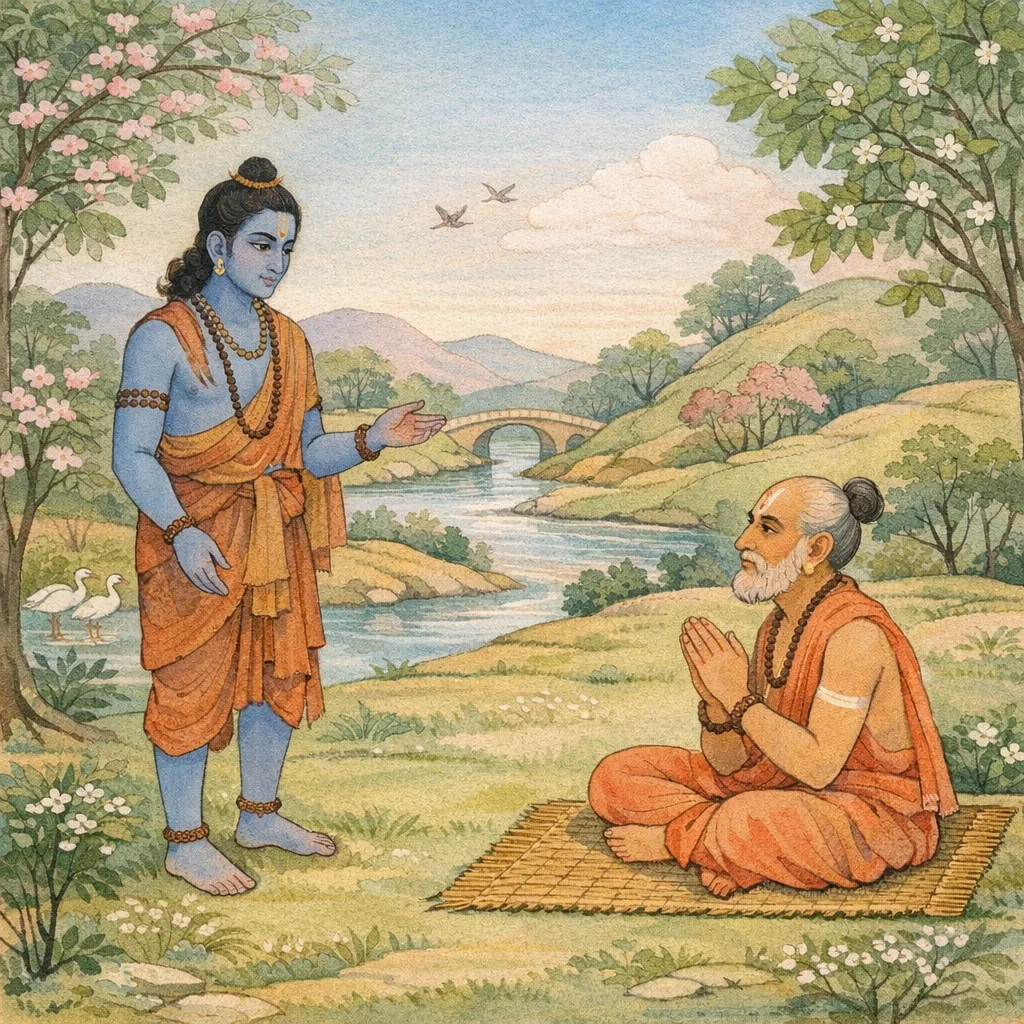
Sarga 109
सत्यधर्मप्रतिपादनम् (Rama’s Defense of Truth and Dharma in Reply to Jabali)
अयोध्याकाण्ड
Sarga 109 records a sustained ethical rebuttal by Rāma to Jābāli’s counsel that had attempted to persuade him toward a pragmatic return. Rāma first acknowledges the respectful intent behind the advice yet classifies it as harmful when measured against dharma and maryādā. He argues that kingship is eternally grounded in satya and ahiṃsā, and that the world’s stability rests on truth; sages and gods affirm truth as the highest virtue. Rāma frames falsehood as socially repellent and spiritually corrosive, asserting that charity, sacrifice, tapas, and even the Vedas stand upon truth as their foundation. He then applies the principle to his personal situation: having sworn before his father to accept forest life, he refuses to “break the bridge of truth,” rejecting motives such as greed, delusion, or ignorance. He warns that unstable, untruth-inclined persons find their offerings rejected by gods and ancestors, and he embraces exile as a virtuous burden aligned with the practice of the good. The chapter includes a polemical section (noted as potentially interpolated) where Rāma condemns atheistic reasoning; Jābāli responds by clarifying that his earlier stance was situational persuasion and reaffirms an āstika posture, seeking to pacify Rāma and guide him toward beneficent counsel.
Shlokas
Verse 1
जाबालेस्तु वचश्श्रुत्वा राम स्सत्यात्मनां वरः।उवाच परया भक्त्या स्वबुद्ध्या चाविपन्नया।।2.109.1।।
Having heard Jābāli’s words, Rāma—foremost among the truthful—replied with deep respect, guided by his own judgment, steady and unshaken.
Verse 2
भवान्मे प्रियकामार्थं वचनं यदिहोक्तवान्।अकार्यं कार्यसङ्काशमपथ्यं पथ्यसम्मतम्।।2.109.2।।
What you have said to me, intending to please, only looks like a proper course of action; in truth it is something that ought not be done—harmful though presented as beneficial.
Verse 3
निर्मर्यादस्तु पुरुषः पापाचारसमन्वितः।मानं न लभते सत्सु भिन्नचारित्रदर्शनः।।2.109.3।।
A man who transgresses all bounds, is joined to evil conduct, and looks upon life with a character opposed to the good—such a person wins no honour among the virtuous.
Verse 4
कुलीनमकुलीनं वा वीरं पुरुषमानिनम्।चारित्रमेव व्याख्याति शुचिं वा यदि वाऽशुचिम्।।2.109.4।।
Whether a man is truly high-born or not, truly brave or merely vain of his manhood, pure or impure—character alone reveals it.
Verse 5
अनार्यस्त्वार्यसङ्काश श्शौचाद्दीनस्ताथाऽशुचिः।लक्षण्यवदलक्षण्यो दुश्शीलश्शीलवानिव।।2.109.5।।अधर्मं धर्मवेशेण यदीमं लोकसङ्कुरम्।अभिपत्स्ये शुभं हित्वा क्रियाविधिविवर्जितम्।।2.109.6।।कश्चेतयानः पुरुषः कार्याकार्यविचक्षणः।बहुमंस्यति मां लोके दुर्वृत्तं लोकदूषणम्।।2.109.7।।
If I were to be ignoble while merely seeming noble—devoid of cleanliness yet appearing clean; lacking virtue yet seeming virtuous; depraved yet posing as a man of good conduct—
Verse 6
अनार्यस्त्वार्यसङ्काश श्शौचाद्दीनस्ताथाऽशुचिः।लक्षण्यवदलक्षण्यो दुश्शीलश्शीलवानिव।।2.109.5।।अधर्मं धर्मवेशेण यदीमं लोकसङ्कुरम्।अभिपत्स्ये शुभं हित्वा क्रियाविधिविवर्जितम्।।2.109.6।।कश्चेतयानः पुरुषः कार्याकार्यविचक्षणः।बहुमंस्यति मां लोके दुर्वृत्तं लोकदूषणम्।।2.109.7।।
—and if, abandoning what is auspicious, I were to embrace unrighteousness disguised as righteousness—bringing confusion into the world and casting aside ordained rites and disciplines—
Verse 7
अनार्यस्त्वार्यसङ्काश श्शौचाद्दीनस्ताथाऽशुचिः।लक्षण्यवदलक्षण्यो दुश्शीलश्शीलवानिव।।2.109.5।।अधर्मं धर्मवेशेण यदीमं लोकसङ्कुरम्।अभिपत्स्ये शुभं हित्वा क्रियाविधिविवर्जितम्।।2.109.6।।कश्चेतयानः पुरुषः कार्याकार्यविचक्षणः।बहुमंस्यति मां लोके दुर्वृत्तं लोकदूषणम्।।2.109.7।।
What sensible person—able to discern what should and should not be done—would honor me in the world, if I became corrupt and a blemish upon society?
Verse 8
कस्य दास्याम्यहं वृत्तं केन वा स्वर्गमाप्नुयाम्।आनया वर्तमानो हि वृत्त्या हीनप्रतिज्ञया।।2.109.8।।
If I break my vow while living by this way of life, to whom could I commend righteous conduct—and by what means could I attain heaven?
Verse 9
कामवृत्तस्त्वयं लोकः कृत्स्न स्समुपवर्तते।यद्वृत्ता स्सन्ति राजानस्तद्वृत्ता स्सन्ति हि प्रजाः।।2.109.9।।
This whole world acts according to its own impulses; and indeed the subjects take on the very conduct that their kings display.
Verse 10
सत्यमेवानृशंसं च राजवृत्तं सनातनम्।तस्मात्सत्यात्मकं राज्यं सत्ये लोकः प्रतिष्ठितः।।2.109.10।।
Truth—and compassion without cruelty—are the eternal conduct of kings. Therefore, kingship must be grounded in truth; the world itself stands established upon truth.
Verse 11
ऋषयश्चैव देवाश्च सत्यमेव हि मेनिरे।सत्यवादी हि लोकेऽस्मिन्परमं गच्छति क्षयम्।।2.109.11।।
Sages and gods alike have held truth alone to be supreme. In this world, the one who speaks truth attains the highest state.
Verse 12
उद्विजन्ते यथा सर्पान्नरादनृतवादिनः।धर्म स्सत्यं परो लोके मूलं स्वर्गस्य चोच्यते।।2.109.12।।
People recoil from a man who speaks falsehood as they would from a serpent. In this world, truth is the highest dharma, and it is said to be the very root of heaven.
Verse 13
सत्यमेवेश्वरो लोके सत्यं पद्माश्रिता सदा।सत्यमूलानि सर्वाणि सत्यान्नास्ति परं पदम्।।2.109.13।।
In this world, truth itself is Lord; and Padmā (Lakṣmī) ever rests in truth. All things have truth as their root—beyond truth there is no higher goal.
Verse 14
दत्तमिष्टं हुतं चैव तप्तानि च तपांसि च।वेदा स्सत्यप्रतिष्ठाना स्तस्मात्सत्यपरो भवेत्।।2.109.14।।
Gifts, sacrifices, oblations, austerities, and ascetic practices—and even the Vedas—stand founded upon truth. Therefore, one should be devoted to truth.
Verse 15
एकः पालयते लोकमेकः पालयते कुलम्।मज्जत्येको हि निरय एक स्स्वर्गे महीयते।।2.109.15।।
One man safeguards the world; another merely maintains his family. One sinks into hell, while another is honored in heaven—such are the outcomes shaped by truth and untruth.
Verse 16
सोऽहं पितुर्नियोगं तु किमर्थं नानुपालये।सत्यप्रतिश्रव स्सत्यं सत्येन समयीकृतः।।2.109.16।।
I—one who is true to his pledged word—am bound by truth itself. Why, then, should I not carry out my father’s command?
Verse 17
नैव लोभान्न मोहाद्वा न ह्यज्ञानात्तमोऽन्वितः।सेतुं सत्यस्य भेत्स्यामि गुरो स्सत्यप्रतिश्रवः।।2.109.17।।
True to my father’s pledge, I will not break the bridge of truth—not from greed, nor from delusion, nor from ignorance and darkness of mind.
Verse 18
असत्यसन्धस्य सतश्चलस्यास्थिरचेतसः।नैव देवा न पितरः प्रतीच्छन्तीति नः श्रुतम्।।2.109.18।।
We have heard that neither the gods nor the ancestors accept the offerings of one who is bound to untruth—fickle and unsteady in mind.
Verse 19
प्रत्यगात्ममिमं धर्मं सत्यं पश्याम्यहं स्वयम्।भार स्सत्पुरुषाचीर्णस्तदर्थमभिमन्यते।।2.109.19।।
I myself see this dharma—truth—as the very inner Self; practised by the virtuous, it makes even this burden (of exile) meaningful to me.
Verse 20
क्षात्रं धर्ममहंत्यक्ष्ये ह्यधर्मं धर्मसंहितम्।क्षुद्रैर्नृशंसैर्लुब्धैश्च सेवितं पापकर्मभिः।।2.109.20।।
I would renounce that so-called ‘kṣatriya dharma’—which is really adharma disguised as dharma—pursued by the petty, the cruel, the greedy, and evildoers.
Verse 21
कायेन कुरुते पापं मनसा सम्प्रधार्य तत्। अनृतं जिह्वया चाह त्रिविधं कर्मपातकम्।।2.109.21।।
After first conceiving evil with the mind, one commits sin by the body, and then speaks falsehood with the tongue—thus wrongdoing becomes threefold: mental, physical, and verbal.
Verse 22
भूमिः कीर्तिर्यशो लक्ष्मीः पुरुषं प्रार्थयन्ति हि। सत्यं समनुवर्तने सत्यमेव भजेत तत:।।2.109.22।।
Land, fame, renown, and prosperity seek a man indeed; therefore, in one’s conduct, one should cleave to truth alone.
Verse 23
श्रेष्ठं ह्यनार्यमेव स्याद्यद्भवानवधार्य माम्।आह युक्ति करैर्वाक्यैरिदं भद्रं कुरुष्व ह।।2.109.23।।
What you have judged ‘excellent’ and urged me to do as ‘auspicious’—with cleverly reasoned words—would in fact be ignoble.
Verse 24
कथं ह्यहं प्रतिज्ञाय वनवासमिमं गुरॊ:। भरतस्य करिष्यामि वचो हित्वा गुरोर्वचः।।2.109.24।।
Having vowed before my father to live in the forest, how could I act on Bharata’s request, setting aside my father’s word?
Verse 25
स्थिरा मया प्रतिज्ञाता प्रतिज्ञा गुरुसन्निधौ।प्रहृष्यमाणा सा देवी कैकेयी चाभवत्तदा।।2.109.25।।
In my father’s presence I made a firm vow; and at that time Queen Kaikeyī became greatly delighted.
Verse 26
वनवासं वसन्नेव शुचिर्नियतभोजनः। मूलपुष्पफलैः पुण्यैः पित्रून् देवांश्च तर्पयन्।।2.109.26।। सन्तुष्टपञ्चवर्गोऽहं लोकयात्रां प्रवर्तये। अकुह श्श्रद्धधानस्सन्कार्याकार्यविचक्षणः।।2.109.27।।
Living the life of forest-exile in this manner—pure in conduct and restrained in food—I shall satisfy the ancestors and the gods with sacred offerings of roots, flowers, and fruits.
Verse 27
वनवासं वसन्नेवं शुचिर्नियतभोजनः।मूलैः पुष्पैः फलैः पुण्यैः पित्रून् देवांश्च तर्पयन्।।2.109.26।।सन्तुष्टपञ्चवर्गोऽहं लोकयात्रां प्रवर्तये।अकुह श्श्रद्धधानस्सन्कार्याकार्यविचक्षणः।।2.109.27।।
With the five senses kept content, I shall carry on the course of my life—honest, full of faith, and discerning what ought to be done and what ought not to be done.
Verse 28
कर्मभूमिमां प्राप्य कर्तव्यं कर्म यच्छुभम्।अग्निर्वायुश्च सोमश्च कर्मणां फलभागिनः।।2.109.28।।
Having come to this ‘field of action’, one should perform whatever auspicious duty is to be done; for Agni, Vāyu, and Soma themselves partake of the fruits of rites.
Verse 29
शतं क्रतूनामाहृत्य देवराट् त्रिदिवं गतः।तपांस्युग्राणि चास्थाय दिवं याता महर्षयः।।2.109.29।।
Having completed a hundred sacrifices, the king of the gods attained heaven; and great seers, undertaking severe austerities, likewise reached the heavenly world.
Verse 30
अमृष्यमाणः पुनरुग्रतेजाः निशम्य तं नास्तिकवाक्यहेतुम्।अथाब्रवीत्तं नृपतेस्तनूजो विगर्हमाणो वचनानि तस्य।।2.109.30।।
But the fierce and radiant prince, having heard the reasoning couched in irreligious words, could not endure it; and the king’s son then spoke—censuring those statements.
Verse 31
सत्यं च धर्मं च पराक्रमं च भूतानुकम्पां प्रियवादितां च।द्विजातिदेवातिधिपूजनं च पन्थानमाहुस्त्रिदिवस्य सन्तः।।2.109.31।।
The virtuous declare that truth, righteousness, valour, compassion toward beings, gentle speech, and honouring brahmins, gods, and guests—these are the path that leads to heaven.
Verse 32
तेनैवमाज्ञाय यथावदर्थमेकोदयं सम्प्रतिपद्य विप्राः।धर्मं चरन्त स्सकलं यथावत्काङ्क्षन्ति लोकागममप्रमत्ताः।।2.109.32।।
Therefore, brahmins—having rightly understood the meaning and having embraced the single true aim—practise the whole of dharma as prescribed, vigilant and uncareless, desiring the attainment of higher worlds.
Verse 33
निन्दाम्यहं कर्म कृतं पितुस्तद्यस्त्वामगृह्णाद्विषमस्थबुद्धिम्। बुद्ध्याऽनयैवंविधया चरन्तं सुनास्तिकं धर्मपथादपेतम्।।2.109.33।।
I condemn that act of my father—who accepted you, of crooked and perilous judgment—wandering with such a mindset: a thoroughgoing unbeliever, fallen away from the path of dharma.
Verse 34
यथा हि चोर: स तथा हि बुद्धस्तथागतं नास्तिकमत्र विद्धि। तस्माद्धि य: शङ्क्यतमः प्रजानाम् न नास्तिकेनाभिमुखो बुध: स्यात्।।2.109.34।।
Just as a thief is to be regarded (with suspicion), so too is the ‘Buddha’; know here the Tathāgata as an unbeliever. Therefore, since such a person is most to be distrusted by the people, a learned man should not turn toward an unbeliever.
Verse 35
त्वत्तो जनाः पूर्वतरे द्विजाच्श्र शुभानि कर्माणि बहूनि चक्रुः। जित्वा सदेमं च परं च लोकं तस्माव्दिजा स्वस्ति हुतं कृतं च।।2.109.35।।
Men greater than you in earlier generations performed many auspicious deeds and thereby won both this world and the next; therefore the twice-born offer oblations and perform rites for the welfare of all.
Verse 36
धर्मे रता: सत्पुरुषै: समेतास्तेजस्विनो दानगुणप्रधानाः। अहिंसका वीतमलाश्च लोके भवन्ति पूज्या मुनयः प्रधानाः।।2.109.36।।
Supreme sages—radiant, devoted to dharma, in the company of the virtuous, foremost in generosity, non-violent, and purified of stain—are rightly revered in this world.
Verse 37
इति ब्रुवन्तं वचनं सरोषं रामं महात्मानमदीनसत्त्वम्। उवाच पथ्यं पुनरास्तिकं च सत्यं वच: सानुनयं च विप्रः।।2.109.37।।
As Rāma—great-souled and undaunted—spoke those angry words, the brāhmaṇa replied again with gentle persuasion: beneficial, truth-aligned speech, affirming faith.
Verse 38
न नास्तिकानां वचनं ब्रवीम्यहं न नास्तिकोऽहं न च नास्ति किञ्चन।समीक्ष्य कालं पुनरास्तिकोऽभवं भवेय काले पुनरेव नास्तिकः।।2.109.38।।
I do not truly speak the doctrine of atheists; I am not an atheist, nor do I deny anything. Considering the occasion, I became a believer again; at another time, by circumstance, I might speak otherwise.
Verse 39
न चापि कालोऽय मुपागतश्शनैर्यथा मया नास्तिकवागुदीरिता।निवर्तनार्थं तव राम कारणात् प्रसादनार्थं च मयैतदीरितम्।।2.109.39।।
And now the proper time has gradually come for me to speak as I did: those atheist-sounding words were uttered for your sake, O Rāma—both to turn you back and to win your favor.
Frequently Asked Questions
Rāma faces the dilemma of whether to accept persuasive counsel to return (a pragmatic, outcome-driven option) or to uphold his sworn commitment to forest exile made before his father; he chooses vow-keeping as the decisive dharmic action.
The chapter teaches that satya is not merely personal honesty but the metaphysical and civic foundation of rājadharma: truth sustains social trust, religious efficacy, and moral authority, and therefore cannot be compromised even under pressure or seemingly beneficial arguments.
The principal cultural landmark is the institution of वनवास (forest-exile) as a dharmic discipline, along with Vedic-ritual culture (yajña/kratu, dāna, tapas, Vedas) and the cosmological destinations of स्वर्ग and नरक used to frame consequences of truth and untruth.